TL;DR
- Everstage Best Fit: Mid-market teams (50–500 reps) with complex plans, strong commission, rep visibility, and ASC 606 compliance.
- Limitations: Not ideal for small teams; learning curve exists; advanced reports sometimes need support tickets.
- Comparison Criteria: Evaluate plan design, team size, integrations, reporting depth, AI features, forecasting, and total implementation cost.
- Top Alternatives: CaptivateIQ, Xactly, QuotaPath, Spiff, Qobra, Varicent, SAP, Anaplan, Performio, and Forma.ai.
- Decision Guidance: Match team and plan complexity to tool strengths; demo with real plans to validate fit before committing.
If you are reading this, you are probably one of three people.
- You are currently using Everstage and something is not working the way you expected: Maybe the reports do not go as deep as needed, maybe it is difficult to understand and navigate through the platform, or maybe you are facing a different issue.
- You have Everstage on your shortlist and want to see the full market before you commit: You came across Everstage and it looked good. But you do not know if it fits your budget. You also heard it takes time to learn. You are still checking other tools before you decide.
- You are new to this space: You came across Everstage while looking for a sales comp tool. You want to understand the full landscape before you begin.
This guide is written by Everstage. We walk you through what Everstage does well, where it genuinely falls short, and which platforms are actually the better choice for specific situations.
By the end, you will know if your concerns are real, how to judge any tool in this space, and which tool is the right fit for you.
Ten Alternatives to Everstage
These are the tools that come up most when teams look beyond Everstage. Here is how each tool stacks up against the checklist criterion.
10 tools considered as alternatives to Everstage
Why People Search Everstage Alternatives
Before getting into criteria and comparisons, it is worth being direct about the reasons people look for alternatives to Everstage. Some of these are valid. Some are based on perception myths that are worth correcting.
1. Pricing Is Not Published
Everstage does not list pricing on its website. You want a number before you commit, and that is a valid concern. But pricing depends on your team size and what you need, so a flat rate would not tell you much. We also do not want small teams to overspend on tools they do not fully need.
Here is the thing, though. Most tools in this space do not list pricing either. For example, tools like Xactly, CaptivateIQ, Performio, Forma.ai, and Varicent all do the same.
If you want to know the cost, book a demo and we will share a number based on your team.
2. CRM Sync Does Not Happen in Real Time
- CRM Sync Does Not Happen in Real Time
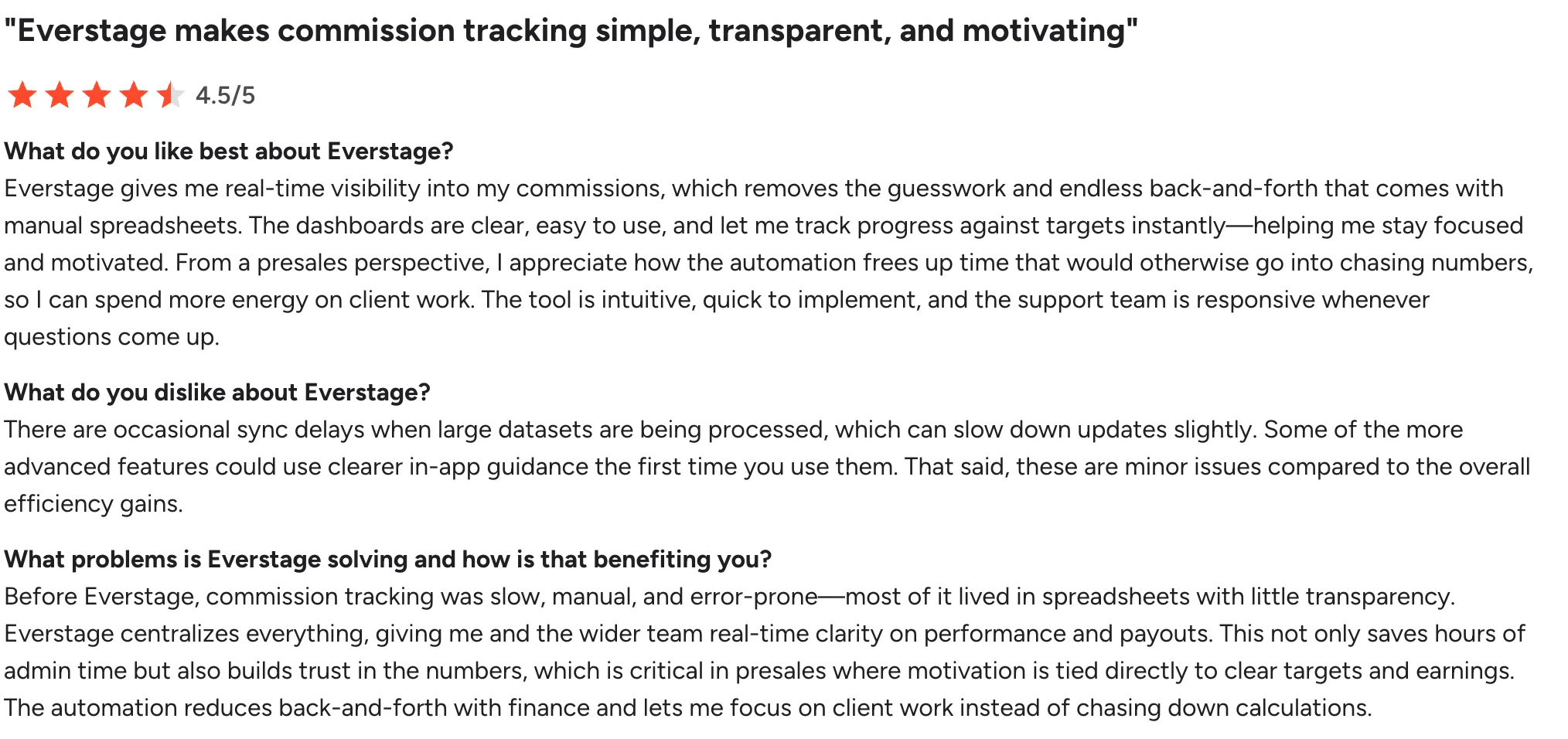
One complaint that comes up constantly on both G2 and Capterra is that daily sync takes all morning. During that time, some actions get blocked. So, you cannot lock statements or add elements while it runs.
Source: G2
But we at Everstage want to clarify this. The delays happen only when large datasets are being processed, and they are not a daily issue for most teams.
The same reviewers also called it a minor concern. They said the gains far outweigh any rare delay. Like any software, Everstage slows down at times, but this is not a recurring problem.
As a reviewer puts it, “There are occasional sync delays when large datasets are being processed, which can slow down updates slightly. Some of the more advanced features could use clearer in-app guidance the first time you use them. That said, these are minor issues compared to the overall efficiency gains.”
If you face a sync issue, our support team can help. Reach out at support@everstage.com.
3. Some Plan Changes Still Need Our Team
Reviews say that some changes still require the support team to step in, and teams that expected full control found this surprising.

Source: Capterra
Here is our side of it. Most day-to-day changes, like adjusting rates, thresholds, or targets are something your ops team can handle on their own. But when changes involve complex plan logic, having our team step in prevents costly errors. One wrong change in a complex plan can affect payouts across your entire team.
Our CSM calls help you tighten comp logic and improve workflows. They also share what works and doesn't work for your team.
4. Everstage Is Not Plug and Play for Every Team
Across 1,900+ G2 reviews, 46 mention a learning curve. For a 4.8-rated platform, that is worth noting. Complex plans need more setup time than simpler tools.
But once users get past the early stage, the story changes. One G2 reviewer said they learned the system just by watching the team work. Most users say it becomes the clearest and most useful tool they have worked with.
5. Everstage Is Not Built for Small Teams
Everstage is built for teams with 50 or more reps. Smaller teams may find it more than they need. Median spend sits around $41,000 a year, and that is a lot for a team under 30 reps.
Third-party reviews are clear about this. Under 30 payees, a lighter tool will serve you better. Everstage is built for complex plans, large data, and teams that have grown past spreadsheets.
According to verified reviewers, Everstage works best if your team looks like this:
- Mid-market org with 50 to 500 employees and 25 to 250 commissioned reps
- Salesforce-standardized, since the integration works well and consistently
- Moving from spreadsheets or older tools, as the improvement is instant and clear
- Sales teams where reps do not trust their numbers yet
- Moderate plan complexity with tiers, accelerators, and basic SPIFFs
- B2B SaaS, IT services, financial services, or construction
So, yes. Everstage is not built for smaller teams. For smaller teams, QuotaPath or Qobra fit better. Both are built for your size and priced right.
6. Reports Do Not Go as Deep as Some Teams Need
Standard dashboards cover rep statements, team leaderboards, and quota views. But anything beyond that often needs a support ticket. For daily reporting teams, this becomes a real limit.
A Capterra reviewer in civil engineering said it directly. “Customizing reports is challenging and not very flexible”.
Some reviewers also say they can see the final number but not how it was worked out. James S., an Account Manager on Capterra, said he knows what he is owed but cannot see the math behind it. He ends up working backward on his own.
Before you commit, check two things in your demo:
- Bring a real custom report your team runs. Ask if we at Everstage build it natively or route it to a support ticket.
- Ask us for a full breakdown for a rep on a complex plan. This way, we make sure the full math is visible to your team, instead of just the final number.
Now you know what is real and what is not. Next, we give you the standard to judge every platform, including us.
1. CaptivateIQ
Best for: Mid-market to enterprise teams that need deep no-code plan design with sandbox testing before any plan goes live.
CaptivateIQ is built around a no-code formula engine. Admins build and change complex commission plans without engineering help. A sandbox lets teams test plan changes against real data before anything goes live.
CaptivateIQ Ratings
What Makes it Unique
The depth of sandbox testing.
You can test how any plan change affects every rep's payout before you deploy it. Everstage has Time Machine for financial impact. CaptivateIQ goes a step further and lets you test the formula logic itself in a no-code environment. No other tool here does this at the same depth.
What it Does not Cover Well
- Pricing scales with participant count and grows fast for larger teams
- AI features are newer and less developed than Everstage
2. Xactly
Best for: Large, regulated enterprises that need deep ICM governance and a full connected suite.
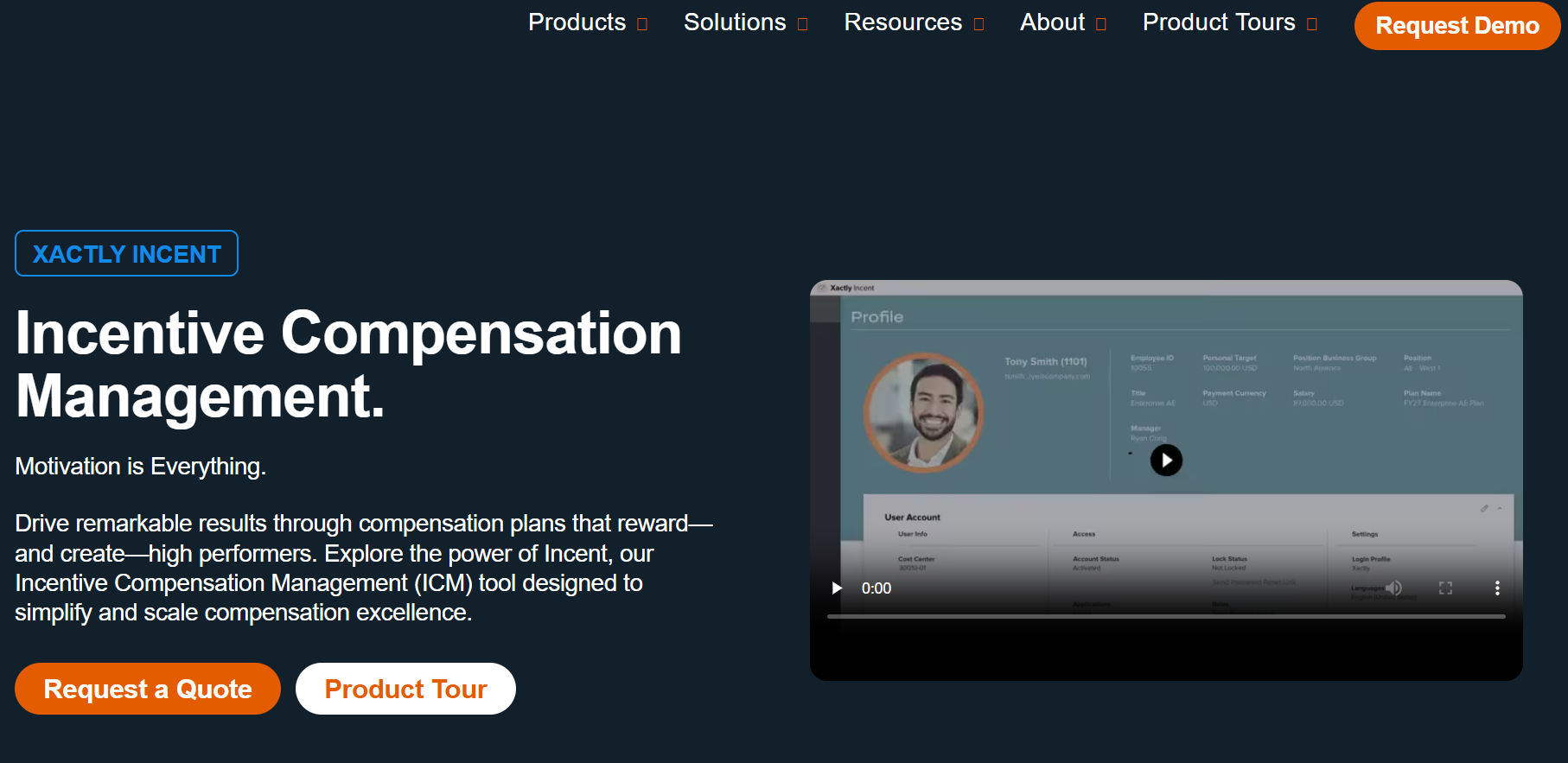
Xactly has been in this space for over 20 years. It covers commission management, territory and quota, sales planning, and forecasting as separate but connected products. For large, regulated teams where compliance and audit trails are non-negotiable, the depth is a genuine fit.
Xactly Incent Ratings
What Makes it Unique
Benchmarking data.
Xactly has 20+ years of anonymized commission data from thousands of companies. You can compare your OTE ratios, accelerator structures, and quota attainment against your industry. No other tool in this list offers this.
What it Does not Cover Well
- Plan changes go through the vendor, not your ops team
- Rep-facing experience can be hard to navigate
- Implementation is long and expensive
- AI features are limited
3. SAP Commissions
Best for: Large enterprises already running their full ERP, HCM, and finance stack on SAP.
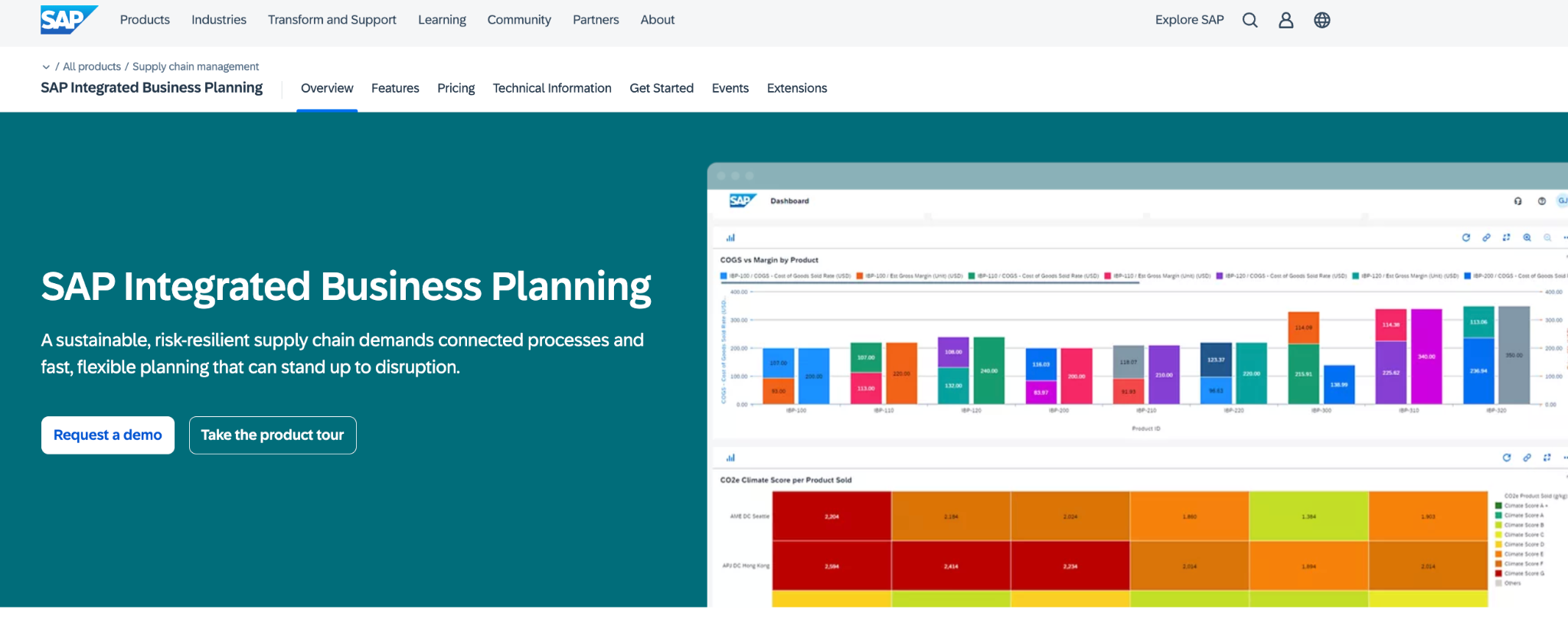
SAP Commissions is part of SAP Sales Cloud. It integrates natively with SAP S/4HANA, SAP SuccessFactors, and the broader SAP ecosystem. For SAP-native organizations, it removes an integration layer every other tool in this list requires.
SAP IBP Ratings
What Makes it Unique
Native SAP integration.
For organizations running SAP as their core ERP, this is not just a feature. It is the reason the platform exists.
What it Does not Cover Well
- Outside the SAP ecosystem, the advantage disappears entirely
- Plan design is complex and needs SAP-specialized resources
- Implementation is expensive and slow
- Forecasting is not a core strength
4. Performio
Best for: Mid-market teams that want a vendor-guided setup and strong calculation accuracy without a strong internal RevOps function.
Performio pairs its commission engine with a dedicated implementation team. They work through setup alongside your organization. This makes it practical for teams that do not have a strong internal ops function to own the process.
Performio Ratings
What Makes it Unique
The guided deployment model.
Performio's own team walks through every step of setup with you. Other tools offer self-serve or third-party consultants. Performio's team does it alongside yours.
What it Does not Cover Well
- Plan changes involve the vendor, not your own team
- Commission forecasting is limited
- Territory and quota management is not a core strength
5. Varicent
Best for: Very large enterprises with layered, multi-level crediting structures across global sales teams.
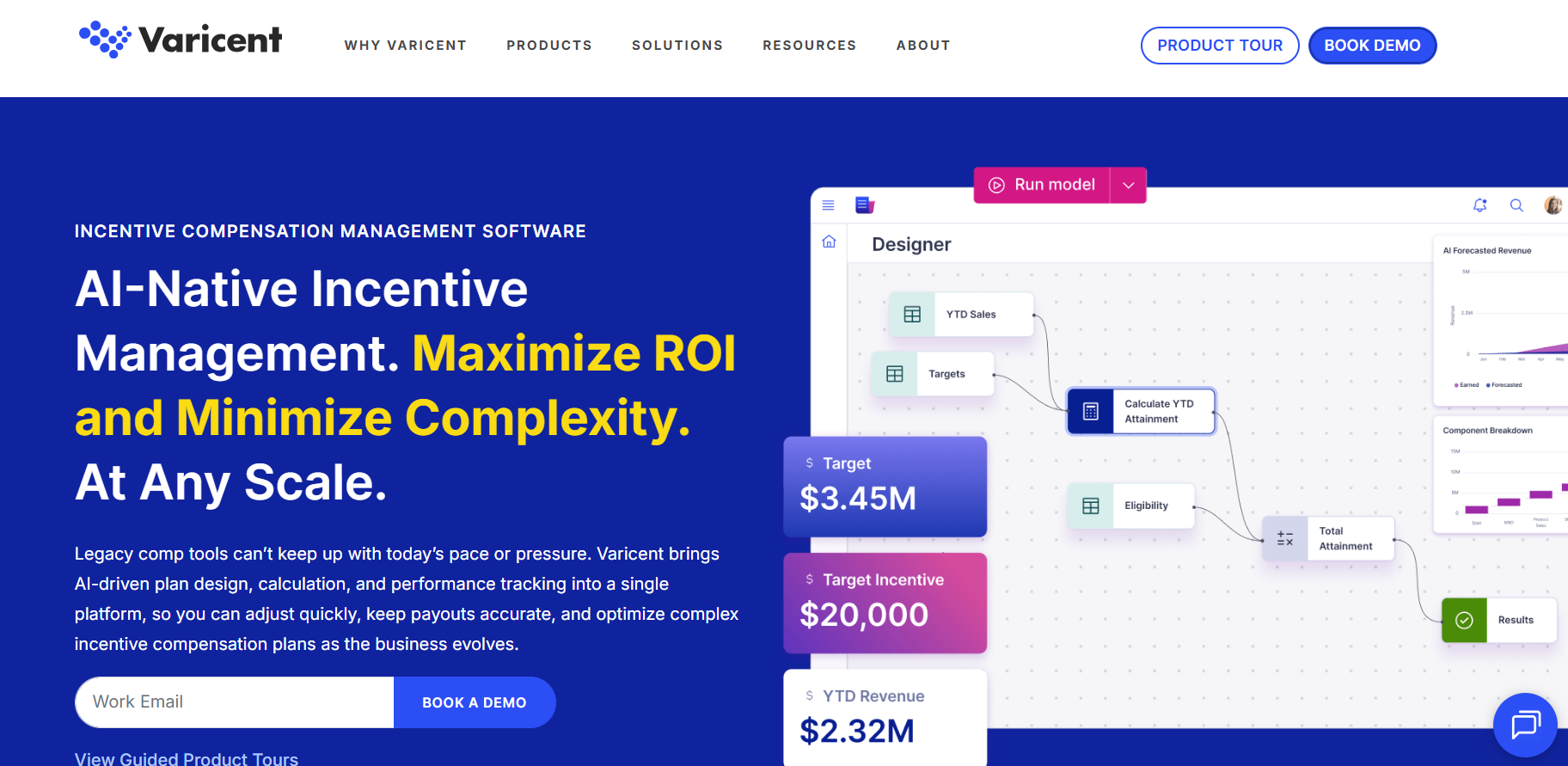
Varicent, formerly IBM Cognos ICM, handles the complexity that most platforms cannot. Layered roles, overlapping territory crediting, and multi-level commission structures at global scale are where it operates best.
Varicent Ratings
What Makes it Unique
The crediting engine.
Varicent handles overlapping crediting structures at a depth and scale no other tool in this list matches. For organizations where revenue crediting involves dozens of overlapping territory rules, this is where it earns its place.
What it Does not Cover Well
- Plan design needs dedicated technical resources, not self-serve
- Rep-facing experience is dated and hard to navigate
- Implementation is long and very expensive
6. Qobra
Best for: European SMB and mid-market teams that want a self-serve platform their ops team can run from day one.
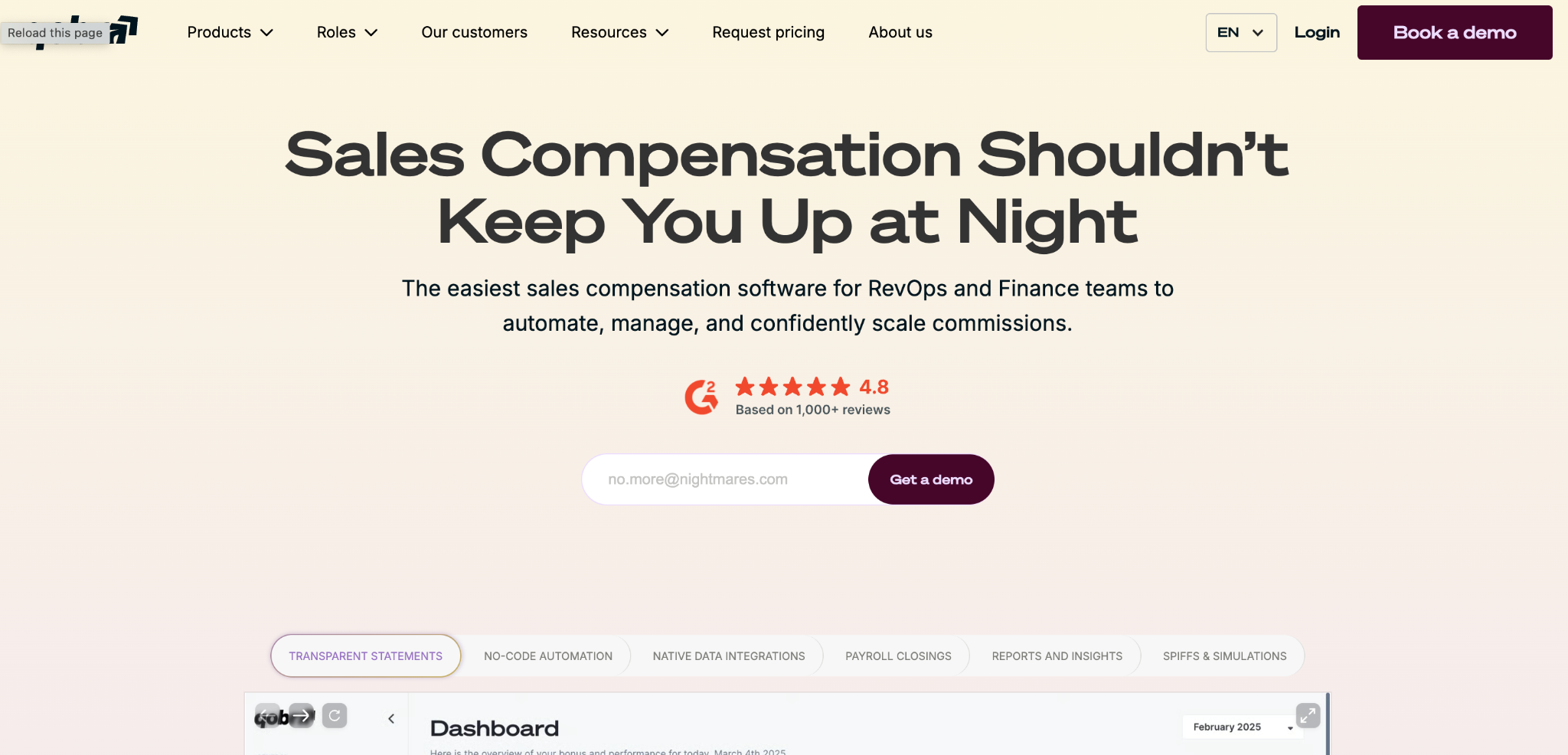
Qobra is a no-code commission platform used by teams at ElevenLabs, Contentsquare, Botify, and GoCardless. RevOps and Finance run the full commission cycle without external help. Multi-currency support and fast setup make it strong in European markets.
Qobra Ratings
What Makes it Unique
The fastest path to full self-sufficiency in the category for European teams.
Reviewers consistently describe going fully independent within weeks of setup. No other tool in this list matches this for European mid-market teams.
What it Does not Cover Well
- ASC 606 and deep finance compliance are limited
- Territory and quota management is not a core strength
- Less established in North American markets
7. QuotaPath
Best for: Small sales teams under 50 payees running simple commission plans.
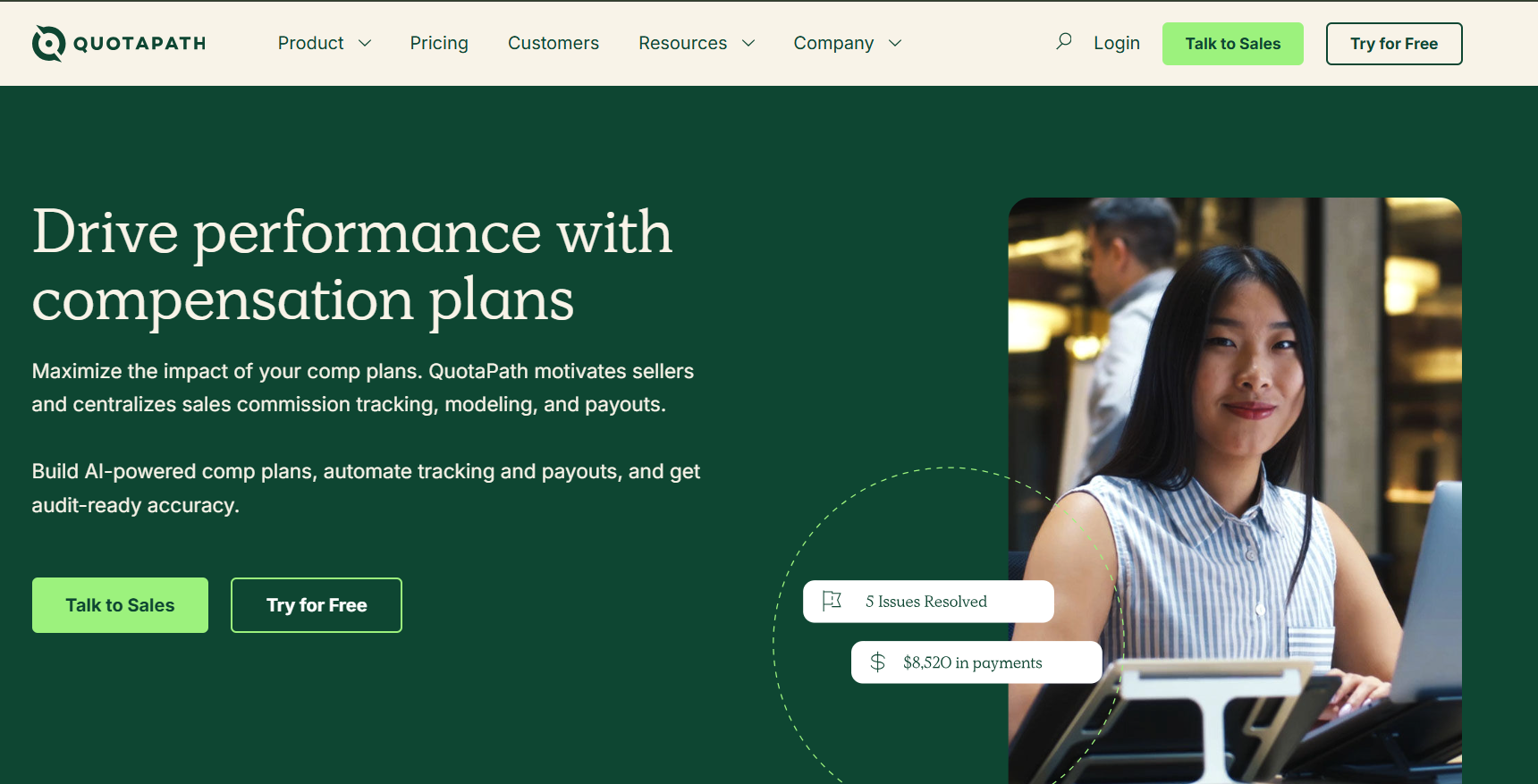
QuotaPath connects to Salesforce and HubSpot, gives reps clear attainment dashboards, and is fast to set up. For small teams that want commission automation without enterprise cost or complexity, it delivers.
QuotaPath Ratings
What Makes it Unique
Transparent pricing.
QuotaPath is the only tool in this list that publishes pricing on its website. Plans start at $25 per user per month. Every other tool in this list requires a sales call to get a number.
What it Does not Cover Well
- CRM sync has up to 24-hour delays, not real time
- Complex plans, accelerators, and multi-tier logic are not supported
- ASC 606 and finance compliance are limited
- Not suited for teams over 50 payees
8. Salesforce Spiff
Best for: Organizations whose entire sales motion runs inside Salesforce and want reps to see commissions without a separate login.
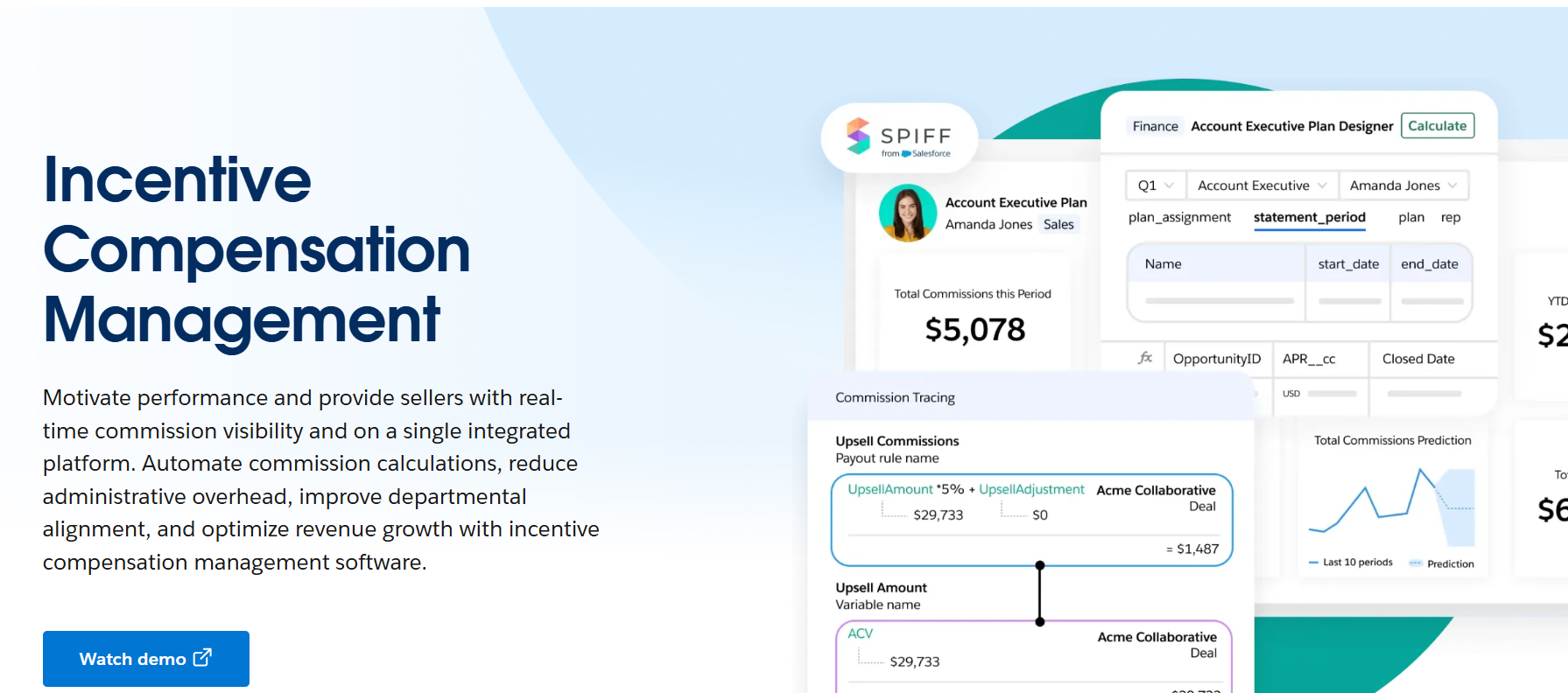
Spiff, acquired by Salesforce, is built to live natively inside Salesforce. Commission data updates in real time from deal activity. Reps see their earnings inside the CRM they already use, with no separate app and no adoption barrier.
Spiff Ratings
What Makes it Unique
Native Salesforce experience.
Spiff is the only tool in this list where reps see commission data inside Salesforce itself without a separate login. For Salesforce-standardized teams, the sync and adoption problems most ICM tools face simply do not exist.
What it Does not Cover Well
- Outside Salesforce, the integration advantage disappears
- Finance compliance and ASC 606 support are limited
- Territory and quota management is basic
- Post-acquisition roadmap pace is an open question
9. Anaplan
Best for: Large enterprises already using Anaplan for FP&A that want to extend into sales compensation without adding a separate system.
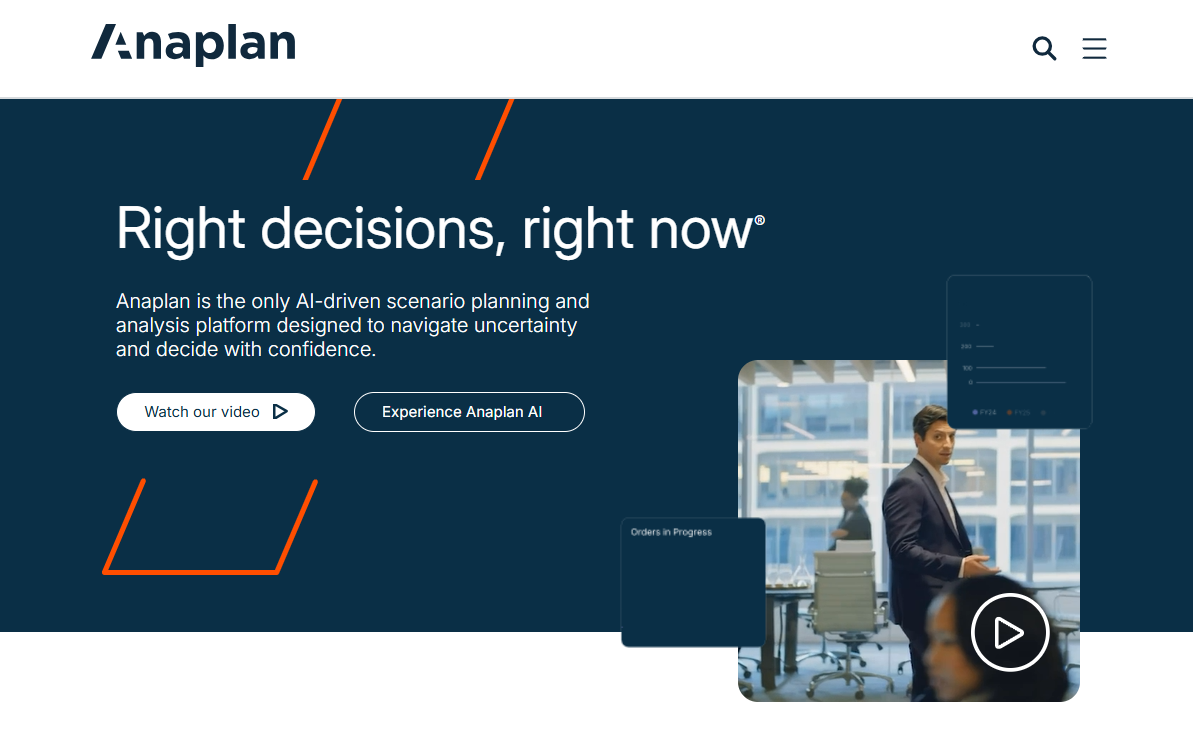
Anaplan is a connected planning platform. It covers financial planning, workforce planning, and sales performance management in a single data model. For organizations where FP&A, headcount planning, and commission management currently sit in separate systems, Anaplan can bring them together.
Anaplan Ratings
What Makes it Unique
Connected planning across FP&A, workforce, and SPM in one data model.
Anaplan is the only tool in this list that is not just an ICM tool. If you already plan on Anaplan, extending into comp keeps everything in one place with no integration layer.
What it Does not Cover Well
- Commission calculation needs customization, it is not purpose-built ICM
- Plan design requires significant setup, not self-serve
- Implementation is complex and very expensive
10. Forma.ai
Best for: Enterprise sales operations teams that want AI-driven plan design and a unified territory, quota, and compensation system.
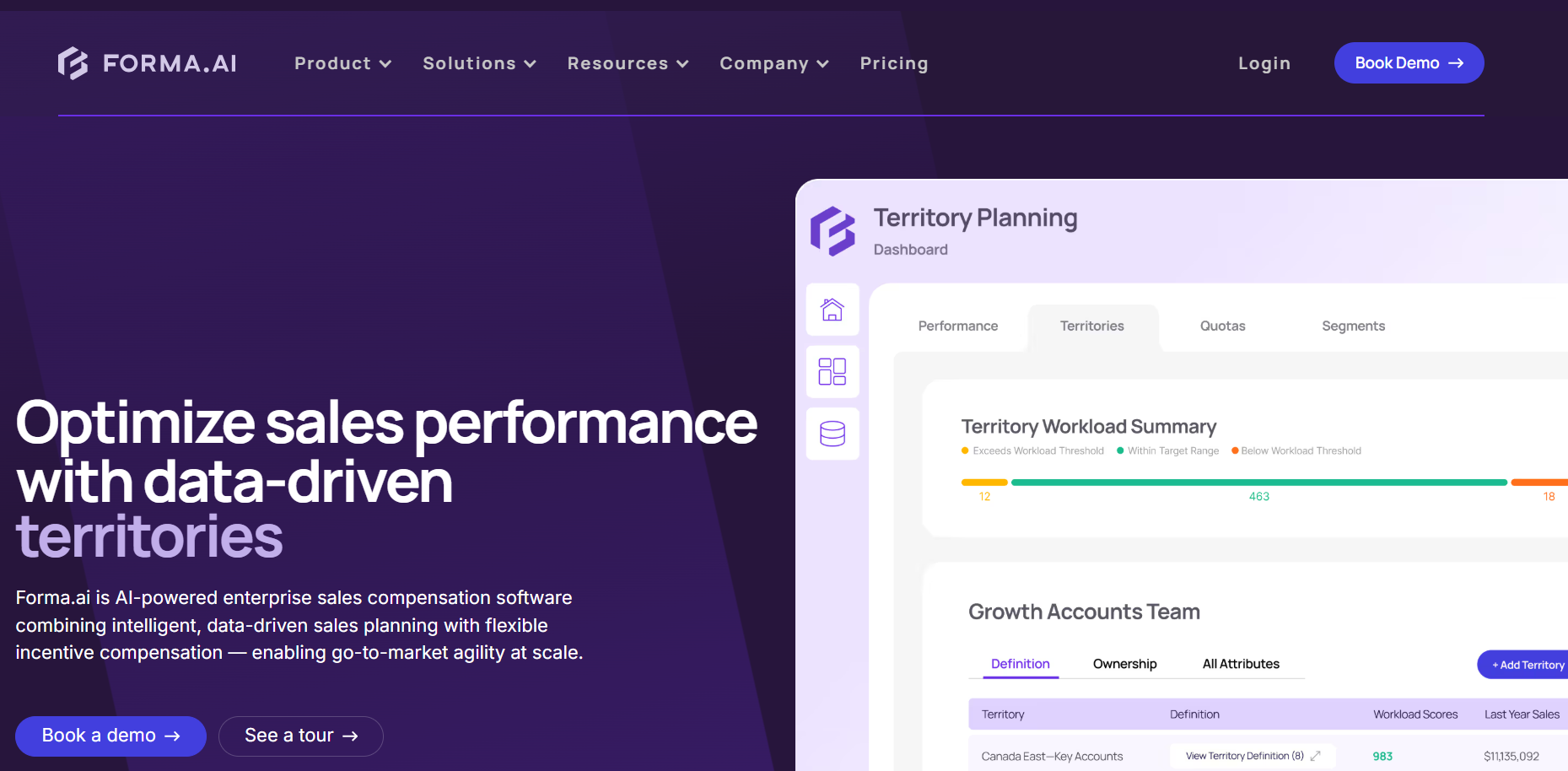
Forma.ai is an AI-native SPM platform. It covers territory management, quota setting, and incentive compensation in a single connected system. The AI layer recommends plan structures and surface optimization opportunities based on your historical data.
Forma.ai Ratings
What Makes it Unique
The AI recommendation engine. Forma.ai is the only tool in this list where AI actively suggests better plan designs based on your data. Every other tool automates existing workflows. Forma.ai uses data to tell you what your plan should look like. For teams that want data-driven plan strategy, this is the most purpose-built option here.
What it Does not Cover Well
- Finance compliance and ASC 606 are not clearly documented
- Newer product with less market history than established players
- AI recommendations depend on the quality of your historical data
Where Everstage Stands Against These Criteria
Here is where Everstage stands on each criterion.
Where Everstage Is Not the Right Fit
No platform is right for every team. These are the cases where you should look elsewhere.
- Under 30 payees with simple plans: The platform is more than you need and priced for larger teams. Tools like QuotaPath or Qobra will serve you better.
- You need everything inside Salesforce: Spiff is built natively inside Salesforce. Your reps see commissions without a separate login.
- Very large enterprise with layered crediting rules: If your plans involve hundreds of overlapping territory rules, Varicent and Xactly are built for it.
- Already on SAP ERP: SAP Commissions is built for the SAP ecosystem. If your stack runs on SAP, it is the more natural fit.
Everstage is built for a specific type of team. If yours does not match that profile, the below section covers a list of tools that fits you better.
The Standard Every Sales Comp Platform Should Meet
Before you compare any tool, you need a standard. These are the things every sales comp platform should cover. Use this checklist to make your own call.
Plan Design and Administration
Your team should build and change plans without calling the vendor. Look for a no-code builder with version control and the ability to test changes before they go live.
Data Integration
The platform should connect to your CRM, ERP, and HRIS natively. Check if the sync is real time or end of day, and how it handles late deals and cancellations.
Commission Calculation
Calculations should be automatic, accurate, and auditable. Every payout should trace back to its source data. If the numbers are not clearly conveyed, that is a red flag.
Rep-Facing Visibility
Reps should see their earnings in real time. They should be able drill down to the deal level and forecast earnings directly from their pipeline.
Finance Compliance
Look for ASC 606 support, audit trails, and replayable payout history. Finance should answer why a rep was paid a specific amount on a specific date.
Territory and Quota Management
Not every platform includes this, and some charge extra for it. If your team manages territories and quotas, confirm it is part of the core product.
Forecasting and Scenario Modeling
Check whether you are able to test plan change before it goes live. This protects Finance from budget surprises and helps Sales leaders test plans before a new quarter begins.
Implementation and Total Cost
License cost is not the only cost to consider. Add setup fees, consultant costs, and admin hours too. Also count the time your team spends managing the tool each quarter. Platforms that need a vendor for every plan change cost more over time.
AI Capabilities
Many platforms label basic features as AI. Real AI does three specific things:
- It finds errors in your data before payroll runs.
- It flags and helps resolve disputes faster.
- It also suggests better plan designs from your own data.
Ask to see all three working live in your demo.
This checklist has nine things to look for. If the platform covers at least six of them, it is a strong fit. Fewer than six, skip the one you considered and keep looking for a better one.
How to Pick the Right Tool
You have seen the criteria, the tools, and where each one stands. Here is the direct answer for your situation.
- Your team has under 30 payees and runs simple plans: QuotaPath. It is the only tool in this list with published pricing. Setup takes just a few days.
- You are a European team that wants full control from day one: Qobra suits you best. Your ops team runs it without external help, and reviewers consistently go fully independent within weeks.
- Your entire sales stack runs inside Salesforce: Spiff is the natural fit. It is the only tool where reps see commissions inside Salesforce without a separate login.
- You need to test plan changes against real data before they go live: CaptivateIQ has the strongest sandbox in this list. You test formula logic and financial impact before anything reaches your reps.
- You are already fully on SAP ERP: SAP Commissions removes an integration layer every other tool here requires. Outside the SAP ecosystem, look elsewhere.
- You already use Anaplan for FP&A and want to extend into comp: Staying with Anaplan makes the most sense. It keeps everything in one place with no extra integration layer.
- Your plans involve layered, overlapping crediting across a global team: Varicent handles this at a depth no other tool in this list matches.
- You need a full suite and want to benchmark your plan design against your industry: Xactly is the only option here with that capability. Twenty years of anonymized data lets you compare your OTE ratios and quota attainment against others in your space.
- You do not have a strong internal RevOps function to own the setup: Performio works well here. Their team guides you through every step without needing you to own the process internally.
- You want AI to recommend better plan designs, not just automate existing ones: Forma.ai is the most purpose-built for this. The AI engine suggests plan structures from your historical data. The review base is small though, so verify in a live demo.
- You are a mid-market team with 50 to 500 reps, complex plans, and you need self-serve plan control: Everstage is worth a proper evaluation. Commission calculation, rep visibility, finance compliance, and self-serve plan management are all strong. ASC 606 is covered. The CRM sync runs end of day, and some complex changes may still need our team. If those trade-offs work for you, book a demo and bring your most complex plan.
Choose the Right Fit, Not Just the Popular One
Some of the concerns that sent you here are real. Some are not. The criteria give you a standard to judge any tool, and the decision guide narrows it down to one.
Some of the concerns that sent you here are real. Some are not. But held to the same standard, the alternatives each win only a slice while Everstage stays strong across the three criteria that matter most: accurate calculation, real-time rep visibility, and finance-grade compliance.
That is the difference. The others ask you to trade one strength for another. Everstage does not. For a mid-market team with complex plans and reps who need to trust their numbers, the checklist keeps coming back to this.
Book a demo to see firsthand how Everstage handles your specific plans, data, and reporting needs.
Frequently Asked Questions
Does Everstage support multi-currency payouts?
Yes. Everstage supports multi-currency payouts and handles commissions across multiple entities and geographies. If your team operates across regions, confirm the specific currency pairs you need in your demo.
Can Everstage handle commission splits and overrides?
Yes. Commission splits, overrides, and adjustments are built into the platform. RevOps configures these without engineering help through the no-code plan builder.
Does Everstage integrate with HubSpot?
Yes. HubSpot is a native integration. Deal data flows directly into commission calculations. The same end-of-day sync limitation applies as with Salesforce.
Does Everstage work for customer success and post-sales teams?
Yes. Teams like Chargebee run commission plans for customer success, renewals, and post-sales alongside new business on the same platform. The plan builder handles any role-based structure.