


Everstage vs Spiff: 2026 In-Depth Comparison
Sales commission platforms shouldn't lock you into ecosystems or drag implementations past six months. Spiff and Everstage both aim to replace spreadsheet chaos, but deliver vastly different experiences. One ties tightly to Salesforce; the other offers true platform independence with lightning-fast deployment.

Introduction
The best commission software becomes invisible infrastructure that just works, regardless of which CRM you choose today or migrate to tomorrow. As businesses grow, they inevitably swap tools, consolidate vendors, or expand into new markets with different system requirements. Organizations need compensation platforms that adapt to their technology decisions rather than dictating them, ensuring continuity even as the surrounding tech landscape shifts beneath their feet.
Spiff positions itself as a low-code platform with real-time commission visibility built for tight CRM integration. The Salesforce acquisition has raised questions about long-term platform independence and innovation trajectory for existing customers. Everstage takes a platform-agnostic approach, built as a true no-code solution for enterprises that value flexibility. With native integrations across multiple systems and consistently faster implementations, Everstage delivers enterprise power without ecosystem lock-in or lengthy deployment cycles that slow time to value.

Head-to-Head Comparison
Setup & Admin Configuration
Functionality | Spiff | Everstage |
|---|---|---|
Data management | Syncs with Salesforce but limited integrations outside the ecosystem. | Native sync with CRMs like Salesforce, ERPs, HRIS: integrations without lock-in. |
Plan modeling | Low-code builder offers speed but lacks sandbox for safe plan testing. | No-code drag-and-drop builder with sandbox and Time Machine simulation. |
Custom permissions & access control | Record locks aid audits but role flexibility and access are limited. | Granular RBAC and audit trails combine flexibility with compliance. |
Quota management | Quota tracking tied to CRM objects, rigid for other systems. | Automated, flexible quota engine handles territories and role changes. |
Commission Processing
Functionality | Spiff | Everstage |
|---|---|---|
Payout approvals | Lightweight workflows work for small teams but fail to scale easily. | Customizable automated workflows scale seamlessly across orgs. |
Contextual overrides | One-off changes possible but exception handling grows messy at scale. | Flexible override system adds audit trails without compliance risk. |
Query resolution | In-app commenting resolves disputes but is still reactive and manual. | AI-powered query resolution gives instant, auditable answers. |
Contract management | No native contract workflows, external add-ons required. | Built-in contract workflows include e-signatures and automation. |
User management | Bulk upload manages data but requires CRM-heavy admin effort. | Full lifecycle management enables granular roles across regions. |
Insights & Reporting
Functionality | Spiff | Everstage |
|---|---|---|
Real-time calculations | Live commission updates visible in CRM but tied only to Salesforce. | True real-time processing provides instant visibility across teams. |
Payout forecasting | What-if payout estimates tied to CRM deals but accuracy is limited. | Crystal-powered forecasts provide accurate, transparent earnings. |
Personalized dashboards | Rep-facing dashboards exist but customization options are minimal. | BI-powered dashboards deliver predictive insights across teams. |
Why Everstage Outperforms Spiff
Implementation & Time-to-Value
Spiff limitation:
Third-party consultants often drive implementations, dragging projects beyond 6 months and inflating costs. The first half of many contracts is spent on setup rather than value delivery, with delays compounding as organizations discover gaps between promises and reality.
Everstage advantage:
Delivers go-live in 6-8 weeks with in-house onboarding, zero consultant requirements, and predictable timelines. Our implementation team owns the entire process from data scoping to admin training, ensuring faster time-to-value without external dependencies.
Platform Independence & Integration Flexibility
Spiff limitation:
Tightly bound to the Salesforce ecosystem following acquisition, restricting flexibility for organizations using multiple CRMs, ERPs, or planning future platform migrations. Integration options outside Salesforce remain limited, creating potential vendor lock-in concerns.
Everstage advantage:
Native integrations across CRMs, ERPs, and HRIS ensure smooth, real-time data sync without ecosystem lock-in. Whether you use Salesforce today or plan to evaluate alternatives tomorrow, Everstage adapts to your technology decisions rather than dictating them.
Plan Design & Modification Speed
Spiff limitation:
Low-code interface offers speed improvements over legacy platforms but still requires technical knowledge to manage formulas and plan logic. Each plan change demands careful syntax work, limiting how quickly non-technical teams can iterate.
Everstage advantage:
True no-code drag-and-drop builder lets business users design and modify plans without any coding or formula knowledge. RevOps teams gain complete autonomy to iterate on compensation structures in minutes, not days or weeks.
Plan Testing & Risk Management
Spiff limitation:
Lacks sandbox environments for safe plan testing before production rollout. Teams must test changes carefully in live environments or rely on external staging setups, increasing risk and slowing confident iteration on compensation structures.
Everstage advantage:
Built-in sandbox with Time Machine simulation enables unlimited testing without production risk. Model plan changes against historical data, evaluate financial impact across scenarios, and launch new structures with complete confidence in outcomes.
Reporting & Analytics Depth
Spiff limitation:
Rep-facing dashboards provide basic visibility but customization options remain minimal. Advanced reporting often requires exports to external tools, and organizations struggle to build executive-level analytics within the platform itself.
Everstage advantage:
BI-powered analytics engine delivers customizable dashboards for every stakeholder, from rep-level earnings to executive spend analysis. Build sophisticated reports with dynamic filters, role-based security, and predictive insights without leaving the platform.
Support Quality & Pricing Transparency
Spiff limitation:
Post-acquisition support quality has declined according to user reviews, with longer response times and reduced proactive engagement. Onboarding fees ($3,000+), per-user surcharges for first-month support ($100/user), and consultant reliance drive up total cost of ownership.
Everstage advantage:
Transparent, all-inclusive pricing with proactive in-house support as standard, no hidden fees, no premium tiers, no consultant dependencies. Dedicated customer success managers provide ongoing strategic guidance included in your subscription.
Voice of the Customer
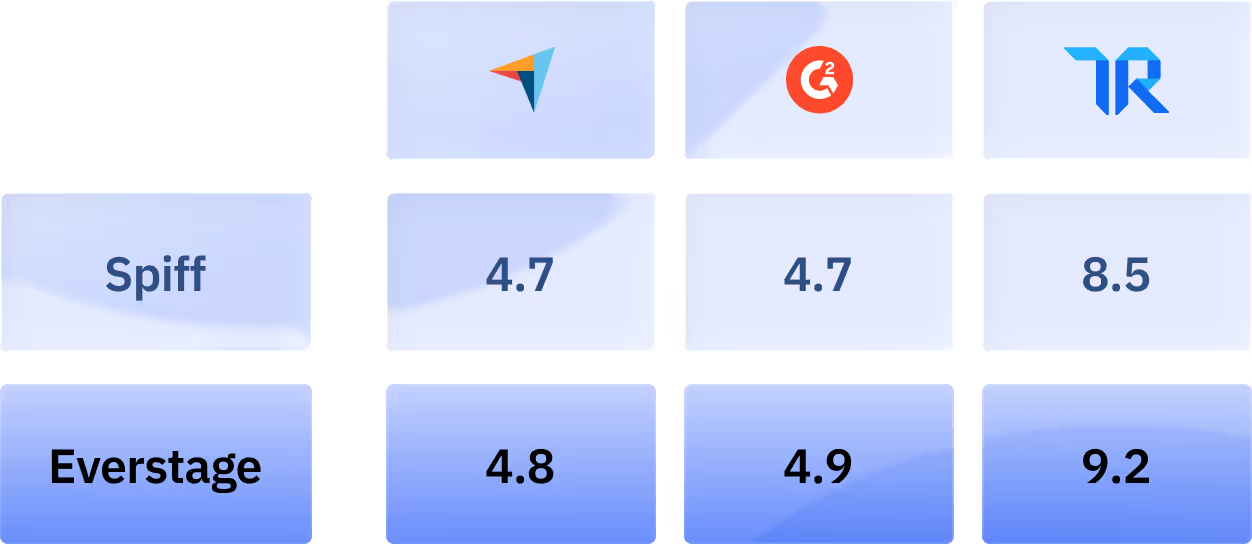
Customer reviews offer an unfiltered look at how each platform performs in real-world environments. Below is a snapshot of feedback themes taken from G2, Capterra, Gartner, and TrustRadius.




Spiff vs Everstage: Finding the Balance
Spiff and Everstage both tackle sales compensation automation, but they've taken notably different paths. Spiff positions itself around low-code interfaces with real-time visibility, particularly appealing to organizations already invested in specific CRM ecosystems. However, its recent acquisition has raised questions about long-term platform independence, innovation trajectory, and the flexibility organizations need as their tech stacks evolve.
When choosing commission software, success hinges on meeting distinct stakeholder needs:
- Finance leaders value faster implementation cycles with predictable budgets, ecosystem independence that protects against vendor lock-in, and platforms that maintain data integrity without requiring external consultants. They need assurance that compensation systems will adapt as the business grows and technology decisions shift.
- RevOps teams want testing environments that enable confident iteration, plan design tools that don't require technical knowledge, and the freedom to optimize compensation without being constrained by platform limitations. They expect software that accelerates their work rather than creating new dependencies.
- Sales executives demand real-time performance insights that inform coaching decisions, accurate forecasting that drives pipeline strategy, and transparency that builds credibility with their teams. They need compensation systems that motivate sellers rather than generate trust issues.


Everstage combines enterprise power with platform independence and no-code simplicity
Organizations need compensation software that adapts to their technology choices rather than dictating them, delivering rapid implementations, intuitive management, and complete transparency without ecosystem constraints.
Frequently asked questions
Is Spiff still available after Salesforce acquired it?
Yes. Salesforce completed the acquisition in February 2024, and the product is now sold as Salesforce Spiff. It works as a Sales Cloud add-on or as a standalone purchase for non-Salesforce users. The product still operates, but its roadmap now sits inside Salesforce's Sales Cloud strategy rather than being driven by an independent team.
Can Spiff and Everstage handle accelerators, SPIFs, and clawbacks?
Yes, both platforms support these structures. Spiff handles accelerators, tiers, triggers, splits, and SPIFs. Everstage covers the same range, plus clawbacks and draws. In practice, the difference is setup effort: Spiff's complex plans often need formula-based syntax, while Everstage configures logic visually.
How does each platform support global sales teams with multi-currency commissions?
Yes, both. Spiff supports multi-currency payouts and FX rate management for global teams, with configuration options for rate type and conversion logic. Everstage offers automated FX based on transaction date and shows rep earnings in local currency. The main difference is granularity vs automation in how exchange rates are applied.
What does migrating from Spiff to Everstage typically involve?
Switching starts with a proof of concept where Everstage rebuilds one of your Spiff plans so you can validate accuracy upfront. Historical data and plan configurations then get migrated, with both systems running in parallel for one or two payout cycles. Once results match, reps cut over, and Spiff is decommissioned. Historical statements stay accessible for audit continuity.
Do Spiff and Everstage support compliance frameworks like ASC 606 and SOC 2?
Yes, both. Spiff supports ASC 606 and IFRS 15 with automated commission expense reports and is SOC 2 compliant. Everstage holds SOC 2 Type II certification along with SOC 1 Type II, ISO 27001, GDPR, and CCPA, and includes ASC 606 amortization functionality.
What types of companies are Spiff and Everstage best suited for?
Both primarily serve mid-market organizations, per G2 review segments. Spiff fits companies that run on Salesforce as their main CRM, with strong adoption in healthcare and related industries. Everstage spans a wide range of tech stacks commonly used in SaaS, technology services, telecom, and manufacturing, scaling from growth-stage teams to multi-thousand-payee enterprises.