


Everstage vs Varicent: 2026 In-Depth Comparison
Enterprise commission software shouldn't require coding skills or consultant armies. Varicent and Everstage both target complex compensation needs, but differ drastically in execution. One demands technical expertise and lengthy implementations; the other delivers no-code simplicity with enterprise power in 6-8 weeks.

Introduction
The hidden cost of commission software isn't the license fee but the ongoing tax it places on your team's time and agility. Every plan change that requires a developer, every update that needs a consultant, and every quarter spent waiting for reports adds friction that compounds over years. Organizations need to calculate not just implementation costs but the cumulative burden of maintaining their compensation infrastructure across dozens of plan cycles.
Neither platform escapes the challenges inherent to their design choices. Varicent implementations are typically lengthy and complex, requiring coding expertise, consultant dependencies, and significant administrative overhead as data volumes increase. Varicent, though easier to set up, lacks the depth needed for sophisticated commission structures and struggles when organizations outgrow basic tracking needs. Both can process commissions, but limitations in adaptability and enterprise readiness persist.Everstage delivers a modern alternative with no-code plan design, real-time processing, predictive analytics, and faster deployment, enabling organizations to move past the constraints that limit both legacy systems and lightweight tracking tools.

Head-to-Head Comparison
Setup & Admin Configuration
Functionality | Varicent | Everstage |
|---|---|---|
Data management | Handles large data volumes but performance slows with complex datasets. | Native integrations with CRMs, ERPs, HRIS: bi-directional Salesforce sync without ecosystem lock-in. |
Plan modeling | Provides modeling but no true simulation tool for testing impact of plan changes. | No-code drag-and-drop with sandbox and Time Machine for safe simulations. |
Custom permissions & access control | Role-based access works, though flexibility and audit depth are limited. | Granular RBAC with detailed audit trails, balancing flexibility and compliance. |
Quota management | Quotas supported but updating them across roles or territories can be cumbersome. | Automated quota engine adapts to territories, hierarchies, and role changes. |
Commission Processing
Functionality | Varicent | Everstage |
|---|---|---|
Payout approvals | Approval processes supported but workflows often manual and slow to adapt. | Customizable automated workflows streamline approvals across the org. |
Contextual overrides | Overrides possible but require heavy admin effort and lack audit depth. | Flexible override system with compliance-friendly audit trails. |
Query resolution | Queries often handled via tickets or manual reconciliations, slowing response times. | AI-powered query resolution with instant, auditable answers. |
Contract management | Supports contract-linked payouts but workflows are basic and limited. | Built-in contract workflows include e-signatures and automation. |
User management | Admin-heavy setup: requires coding knowledge or consultants for configuration. | Full lifecycle management across roles and geographies with intuitive setup. |
Insights & Reporting
Functionality | Varicent | Everstage |
|---|---|---|
Real-time calculations | Accurate payouts but batch processing slows visibility on large data sets. | True real-time calculations across systems, ensuring instant payout visibility. |
Payout forecasting | Forecasting exists but lacks scenario modeling or sandboxing. | Crystal-powered forecasting with precise, scenario-based payout simulations. |
Personalized dashboards | Reporting available but limited customization and slower performance with scale. | BI-powered dashboards with predictive, customizable insights for every stakeholder. |
Why Everstage Outperforms Varicent
Implementation & Time-to-Value
Varicent limitation:
Implementations stretch 6-9 months with heavy coding requirements, consultant dependencies, and frequent project overruns. The complexity of configuration means organizations invest significant time and budget before seeing any return, with deployment timelines that disrupt multiple compensation cycles.
Everstage advantage:
Delivers go-live in 6-8 weeks with in-house onboarding, zero consultant requirements, and predictable timelines. Our implementation team handles everything from data integration to admin training, ensuring you're processing live commissions while Varicent customers are still in technical design phases.
Technical Complexity & Admin Burden
Varicent limitation:
Requires coding knowledge or dedicated technical resources to implement and maintain. Even routine plan changes demand developer involvement, creating operational bottlenecks and forcing finance teams to remain dependent on IT or external consultants for ongoing management.
Everstage advantage:
True no-code platform eliminates coding requirements entirely. Business users configure plans, manage workflows, and build reports through intuitive visual interfaces, no developers, no scripting, no technical barriers between your team and compensation agility.
User Experience & Learning Curve
Varicent limitation:
Clunky interface and steep learning curve slow adoption across admins, managers, and payees. The outdated design requires intensive training sessions, reduces user engagement, and makes even simple tasks feel unnecessarily complex for modern software expectations.
Everstage advantage:
Modern, intuitive interface designed for immediate productivity without extensive training. Clean workflows and logical navigation mean teams get productive quickly, from finance admins configuring plans to sales reps checking earnings, all without help desk dependencies.
Reporting Performance & Analytics
Varicent limitation:
Reporting slows significantly with large datasets and complex queries, limiting visibility when organizations need it most. The analytics capabilities struggle at enterprise scale, forcing teams to export data to external BI tools or accept delayed insights during critical business periods.
Everstage advantage:
Industry-leading BI-powered analytics that maintains performance regardless of data volume. Build sophisticated dashboards with dynamic filters, predictive insights, and role-based security that scale effortlessly from hundreds to thousands of payees without performance degradation.
Plan Testing & Scenario Modeling
Varicent limitation:
Lacks true simulation capabilities for testing plan changes before production deployment. Organizations struggle to model financial impacts or evaluate plan effectiveness without risking live data, forcing conservative approaches that limit compensation innovation.
Everstage advantage:
Sandbox environment with Time Machine simulation enables unlimited scenario testing against historical data. Model plan changes confidently, analyze spending impacts across quarters, and launch new structures knowing exactly how they'll perform, all without touching production systems.
Total Cost of Ownership & Support Predictability
Varicent limitation:
Consultant fees, hidden service charges, and support add-ons create unpredictable and escalating ownership costs. Organizations discover that the initial license fee represents only a fraction of true TCO as ongoing maintenance, upgrades, and expert resources compound expenses over time.
Everstage advantage:
Transparent, all-inclusive pricing with proactive in-house support as standard, no consultant dependencies, no hidden fees, no premium support tiers. Dedicated customer success managers provide strategic compensation guidance included in your subscription, ensuring predictable budgets and rapid ROI.
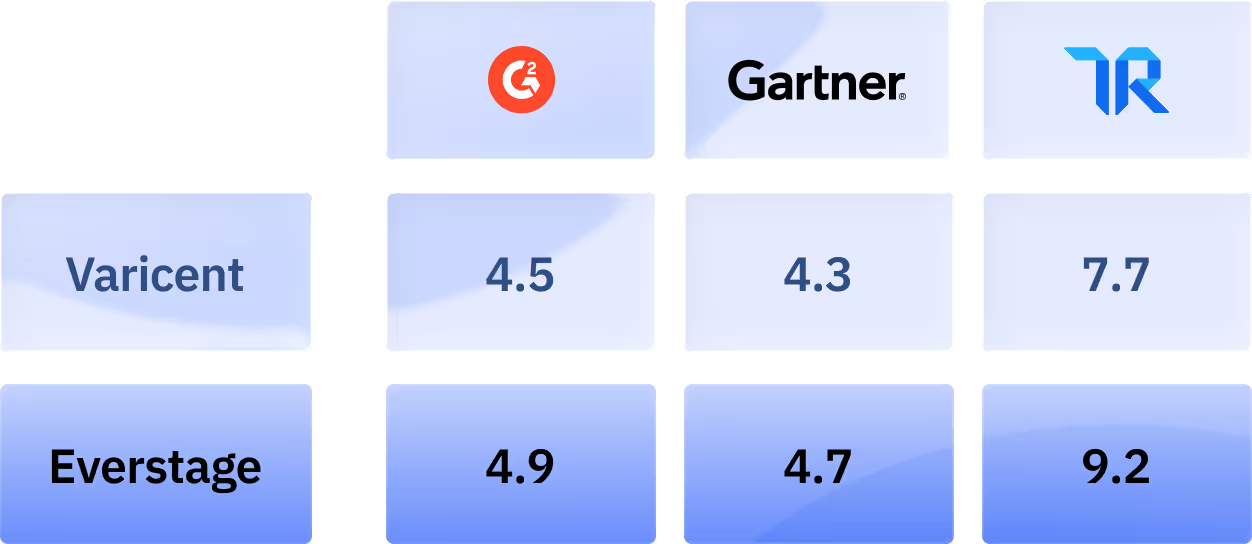
Voice of the Customer
Customer reviews offer an unfiltered look at how each platform performs in real-world environments. Below is a snapshot of feedback themes taken from G2, Capterra, Gartner, and TrustRadius.


Varicent vs Everstage: Finding the Balance
Varicent and Everstage both target enterprise-level compensation management, but they approach the challenge from entirely different eras. Varicent represents long-established systems built for large organizations with extensive feature depth accumulated over years. However, that history comes with technical complexity, coding requirements, and implementation timelines that clash with the speed modern businesses demand.
When selecting commission platforms, executive teams weigh critical factors across their organizations:
- Finance leaders need faster implementations that don't stretch across multiple fiscal periods, transparent pricing without escalating consultant costs, and platforms that deliver audit-ready compliance without requiring technical specialists. They expect systems that provide enterprise control while remaining financially predictable.
- RevOps teams demand business-user-friendly tools that eliminate coding dependencies, safe testing environments for modeling plan changes confidently, and the flexibility to adapt compensation structures as strategies shift. They want platforms that enable rapid iteration rather than creating technical barriers.
- Sales executives expect real-time performance visibility that informs coaching conversations, transparent earnings that build credibility with their teams, and systems that drive motivation through clarity rather than complexity. They need compensation platforms that energize sales behaviors instead of generating confusion.


Everstage brings enterprise sophistication without the technical burden
Organizations need commission software that combines powerful capabilities with modern usability, delivering no-code simplicity, rapid deployment, and strategic agility without the coding requirements or consultant dependencies that weigh down legacy platforms.
Frequently asked questions
How does Varicent's coding-based configuration compare to Everstage's no-code builder for ongoing plan changes?
Varicent uses its proprietary scripting framework, where plan changes often require consulting partners to write or modify rule logic. Everstage uses a no-code visual builder where business users configure plans directly. For routine changes like mid-year accelerator updates, the difference is hours of admin work versus days of consultant work.
Varicent's sandbox is widely regarded as best in class. Does Everstage offer comparable plan-testing capabilities?
Both offer sandbox testing. Varicent's sandbox is rated 5.0 in independent ICM rubrics for deep historical replay against modified plans, especially valuable for complex enterprise scenarios. Everstage's Time Machine simulation covers the same use case with a no-code interface that business users can operate without a consultant's help.
Varicent is strong in insurance and financial services — does Everstage have comparable depth for these industries?
Varicent has documented depth in insurance, including Celent's Luminary distinction for insurance commission management. Everstage serves customers in financial services, insurance, and life sciences and has a growing presence in these verticals. For complex multi-tier producer hierarchies, Varicent has the longer track record; Everstage covers the same use cases with a newer architecture.
How do Varicent and Everstage compare in terms of implementation effort and consultant dependency?
Varicent implementations typically take 6 to 9 months, with mandatory involvement from a consulting partner and significant internal IT resourcing. Everstage targets 6 to 8 weeks with its in-house team and no consultant dependency. The ongoing difference is who maintains plan changes: Varicent customers often keep consulting partner relationships indefinitely; Everstage customers handle most in-house.
For data analytics beyond commission calculation, how do Varicent (with Symon.AI) and Everstage compare?
Varicent's Symon.AI is a separate no-code data preparation and machine learning platform that goes beyond commission analytics into broader revenue intelligence. Everstage offers BI-powered dashboards and Crystal forecasting directly within the commission platform. If you actively use Symon.AI for non-commission analytics, plan for a separate data tool when switching.
How does pricing actually compare between Varicent and Everstage at enterprise scale?
Both use custom enterprise quotes. Varicent typically prices per payee with multi-year discounts, plus separate implementation and ongoing consultant fees. Everstage uses all-inclusive quote-based pricing with in-house implementation and support included. Year-one TCO often varies by 30-50 percent depending on customization needs and the consulting partner's scope.