
TL;DR
- Pay-for-performance programs fail without software that links goals, ratings, and payouts in a single auditable workflow. Spreadsheets introduce errors and bias at every handoff between performance management and payroll.
- The best platforms cover the full loop: goal-setting, real-time performance tracking, plan modeling, automated calculations, and transparent dashboards showing how performance maps to earnings.
- Sales and revenue teams have the most complex pay-for-performance needs, requiring configurable commission tiers, accelerators, SPIFFs, and multi-currency support.
- Integration depth matters more than feature count. Tools that embed natively in your CRM, HRIS, and payroll system eliminate manual reconciliation, which slows comp cycles.
- We break down a buying guide overview of the best tools available for compensation structures, depending on your needs.
Introduction
Linking compensation to performance sounds straightforward, but most HR and comp teams still run merit cycles and bonus calculations through spreadsheets.
If you're an HR leader, Total Rewards manager, RevOps professional, or comp practitioner evaluating software to operationalize pay-for-performance, this guide is for you.
We evaluate 10 platforms spanning incentive compensation, salary planning, performance management, and full HR suites. The list covers tools for teams of different types and company sizes, from growth-stage startups to global enterprises. For teams focused specifically on automating commissions, our roundup of the best incentive management system options offers a deeper comparison of dedicated platforms.
Everstage leads the list for organizations where sales and revenue teams need automated, auditable incentive compensation. Each review includes key features, pros, cons, and pricing to support your shortlist.
Quick Comparison: Best Pay for Performance Comp Software at a Glance
Comparison table of the best pay for performance software
G2 ratings verified Q1 2026. Check g2.com for current scores.
The 10 Best Pay for Performance Comp Software Tools
Here's a clear-eyed look at the top pay for performance platforms, what they're built for, and what to consider when evaluating each one.
1) Everstage
Best for: Sales and revenue teams that need automated, auditable incentive compensation at scale
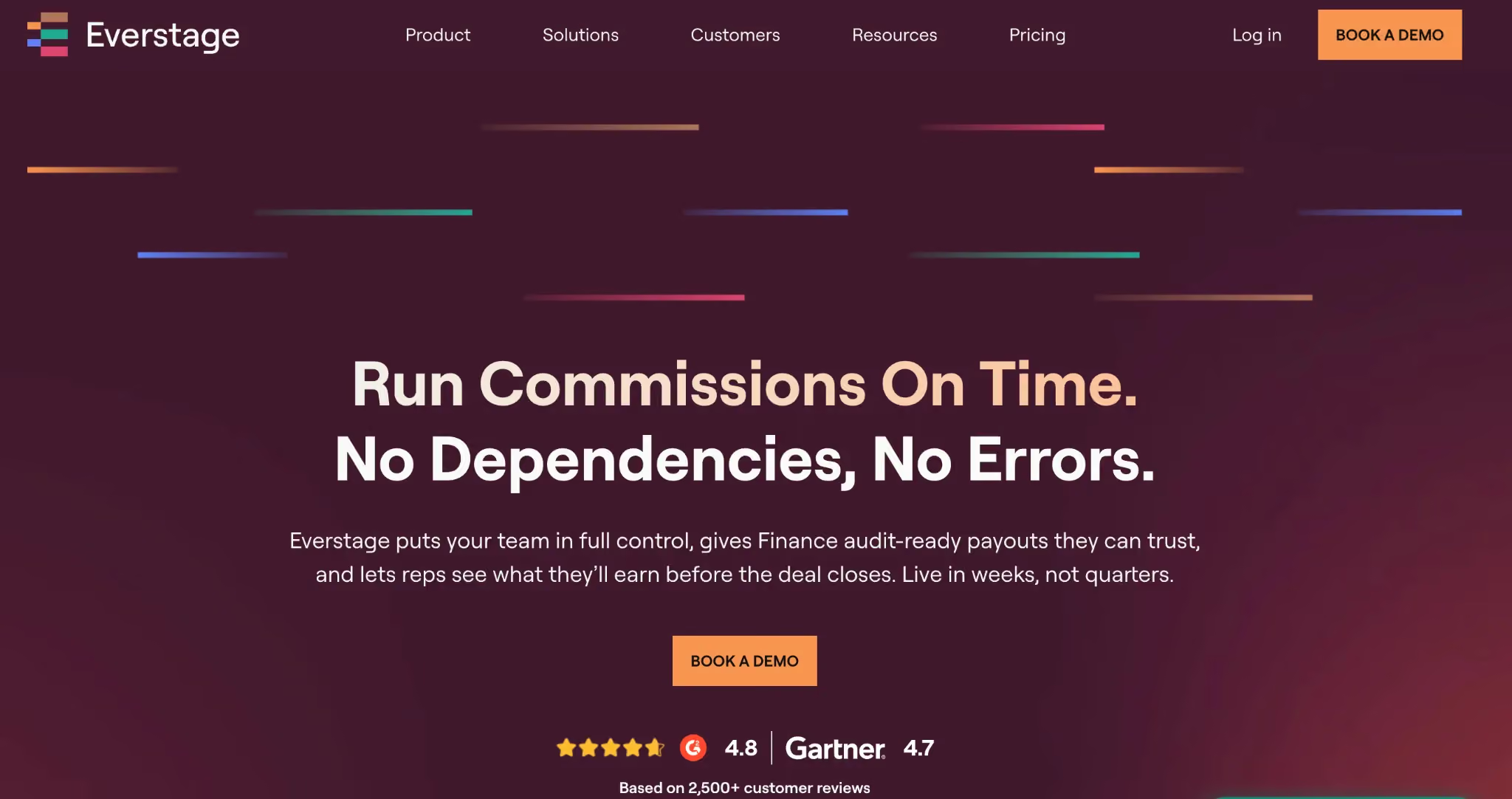
Everstage is an AI-first Sales Performance Management platform built to replace spreadsheets and legacy ICM tools for commission-heavy organizations. It covers incentive compensation management today, with CPQ and planning modules extending the platform's reach. If your primary pay-for-performance population is sales, CS, or revenue teams, Everstage is purpose-built for the calculation complexity those roles demand.
Why Everstage is best for sales and revenue team incentive compensation
Sales-focused pay-for-performance programs carry the highest calculation complexity and the highest cost of error. Inaccurate commissions erode rep trust and drive attrition.
Everstage was built from the ground up for this use case. The platform handles tiered rates, accelerators, multi-currency payouts, split credits, and SPIFFs natively; these are core design assumptions, not edge cases layered onto a merit-cycle engine.
It serves organizations from growth-stage (Nitro runs 100+ payees with a single admin) to enterprise scale (Chargebee runs 300+ reps with 16x faster calculations than spreadsheets).
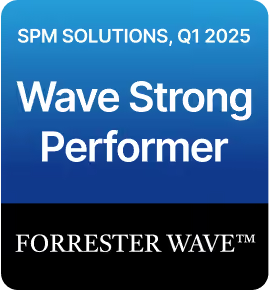
Third-party recognition backs that positioning: Strong Performer in the Forrester Wave SPM Q1 2025, and #1 on Gartner Peer Insights with a 97% recommendation rate across 2,000+ reviews.
Everstage Key Features
- AI-powered plan design and calculation engine: Comp admins can model multi-tier commission plans, apply accelerators and decelerators, and run what-if scenarios without writing code or filing support tickets. The AI layer automates payout calculations across complex rule sets, cutting cycle time from days to minutes. Chargebee reports 95% fewer admin questions after moving off spreadsheets. Nitro reports 95% faster validations.
- Native Salesforce embed and CRM integration: Everstage lives inside Salesforce, so reps see real-time earnings without switching tabs. Every number traces back to the underlying deal data, amount, close date, crediting rule, plan tier, creating the transparency that makes pay for performance credible to the people it's designed to motivate. No separate login, no waiting for monthly statements.
- Crystal and Time Machine: Crystal gives reps and managers a live view of attainment, projected earnings, and leaderboards, answering "How am I tracking?" in real time. Time Machine lets admins and finance reconstruct any prior payout state, down to the deal level, for audits or dispute resolution. Together, they address the two trust problems that most commonly derail incentive comp programs: reps can't see where they stand, and finance can't verify how a number was calculated.
- Speed to value with free POC: Diligent replaced Xactly and completed a proof of concept in 1.5 weeks, a process that had taken months with the previous vendor. Everstage offers every prospect a free POC with two working plans built on their actual data, giving teams a no-risk way to validate fit and accuracy before committing budget. That speed matters when you're running another quarter on broken spreadsheets.
- Enterprise-grade compliance: Everstage holds SOC 2 Type II, SOC 1 Type II, ISO 27001, ISO 42001:2023, GDPR, and CCPA certifications. Pay-for-performance data includes individual earnings, performance ratings, and payout formulas, some of the most sensitive information in any organization. The security and compliance controls around it need to match that sensitivity, especially for publicly traded companies and those operating across regulated industries.
What Users Like
- Automating commissions unlocked time for big-picture thinking: By removing the burden of manual data entry and formula checks, Everstage gave ACME Healthcare the bandwidth to focus on incentive strategy and long-term planning.
"When I was stuck doing data entry, double and triple-checking numbers, and updating formulas, I didn't have the bandwidth for forward-thinking or strategic planning. Now, Everstage has significantly relieved my workload and allowed me to focus on big-picture and future-facing initiatives." - John Smith (Anon) — Vice President of Admissions, ACME Healthcare. See full success story
- Live commission visibility rebuilt adviser confidence: Capricorn's advisers went from waiting until payout to tracking earnings to monitoring their commission progress in real time, driving measurable improvements in trust and performance accountability.
"We built dashboards to allow real-time access for our advisers to see how their commissions grow throughout the month and not just at payout time. This drastically improved broker confidence, and people could start measuring themselves." - Kyle Van Der Net — Chief Financial Officer, Capricorn Financial Consultancy. See full success story
- Compensation teams took full ownership: Avaya's compensation team moved from IT-dependent execution to self-serve plan management, reducing IT involvement by roughly 70% through Everstage's no-code architecture.
"We're not coders, we just want to manage sales compensation and Everstage allowed us to do just that. The IT team is probably involved in 30% of what they were before." - Trenli Crest — Senior Director, Sales Compensation, Avaya. See full success story.
What to Consider
- Sales and revenue focus: Everstage is optimized for commission and incentive comp. Broader workforce merit cycles and salary planning fall outside the current product scope.
- Not a payroll processor: Payout data integrates with your payroll provider. Everstage doesn't process payroll directly.
- Agent Core AI: Everstage's next-generation AI capabilities are in active rollout. Evaluate based on features available in production at the time of your assessment.
Everstage Pricing
Custom pricing based on payee count and modules. Implementation and ongoing support are included. The free POC with two working plans is the recommended starting point.
If your pay-for-performance challenge centers on sales commissions, SPIFFs, or variable revenue compensation, book a demo with Everstage to see your own plans modeled live.
Everstage Rating
2) Lattice
Best for: Mid-market HR teams linking performance reviews to merit and bonus cycles.
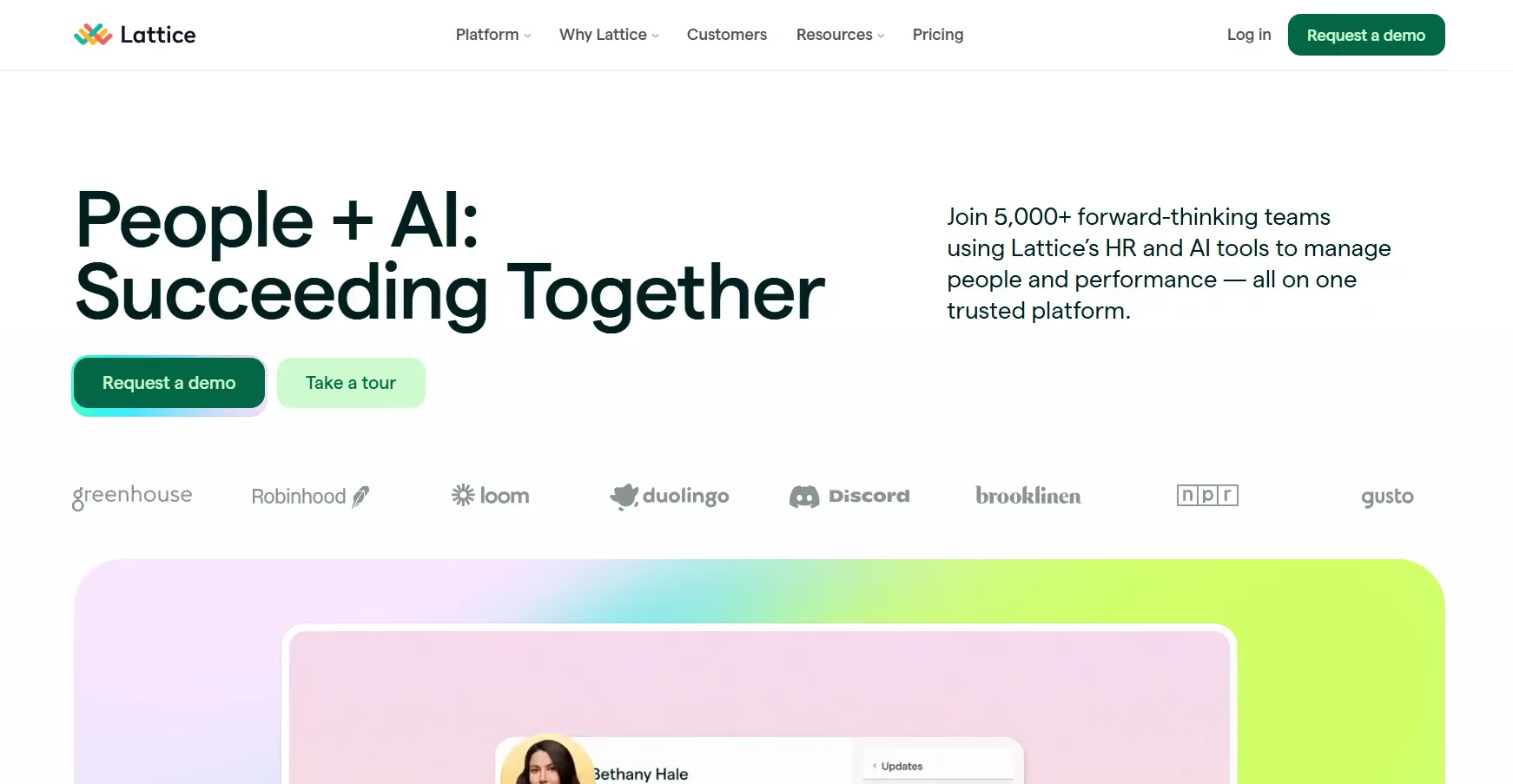
Lattice is a people management platform that integrates performance reviews, goals, engagement surveys, and compensation planning into a single system. For HR teams looking to operationalize pay for performance across the entire workforce, Lattice offers one of the tightest integrations between performance data and merit cycle execution.
Lattice Key Features
- Performance-to-comp workflow. Managers see performance review scores directly inside merit cycle worksheets, removing the spreadsheet handoff that introduces bias and errors in pay-for-performance decisions.
- Compensation benchmarking. Lattice pulls in market data so comp teams can set salary bands and merit budgets anchored to external benchmarks, not gut feel.
- Calibration tools. HR can run calibration sessions to ensure rating distributions and pay increases are consistent across managers—a core requirement for defensible pay-for-performance programs.
- OKR and goal tracking. Goals cascade from company to team to individual, giving comp teams a structured performance record to reference during merit cycles.
What Users Like
- Strong unified experience for performance reviews and comp cycles in one platform (Source: G2)
- Clean manager UX that drives adoption of structured review processes (Source: G2)
- Growing pay equity analytics alongside performance data (Source: Capterra)
What to Consider
- Commission management and complex variable pay (tiered accelerators, SPIFFs) aren't native strengths; better suited for workforce merit than sales incentive comp (Source: G2)
- Payroll isn't built in; it requires integration with a separate payroll provider
- Enterprise configurability for global multi-currency comp can be limited compared to dedicated comp platforms (Source: G2)
Lattice Rating
Lattice Pricing
Lattice prices per person per month across modular tiers. The compensation module is an add-on. Contact Lattice for a custom quote. Free trial is not available.
3) beqom
Best for: Large enterprises with complex global compensation structures.
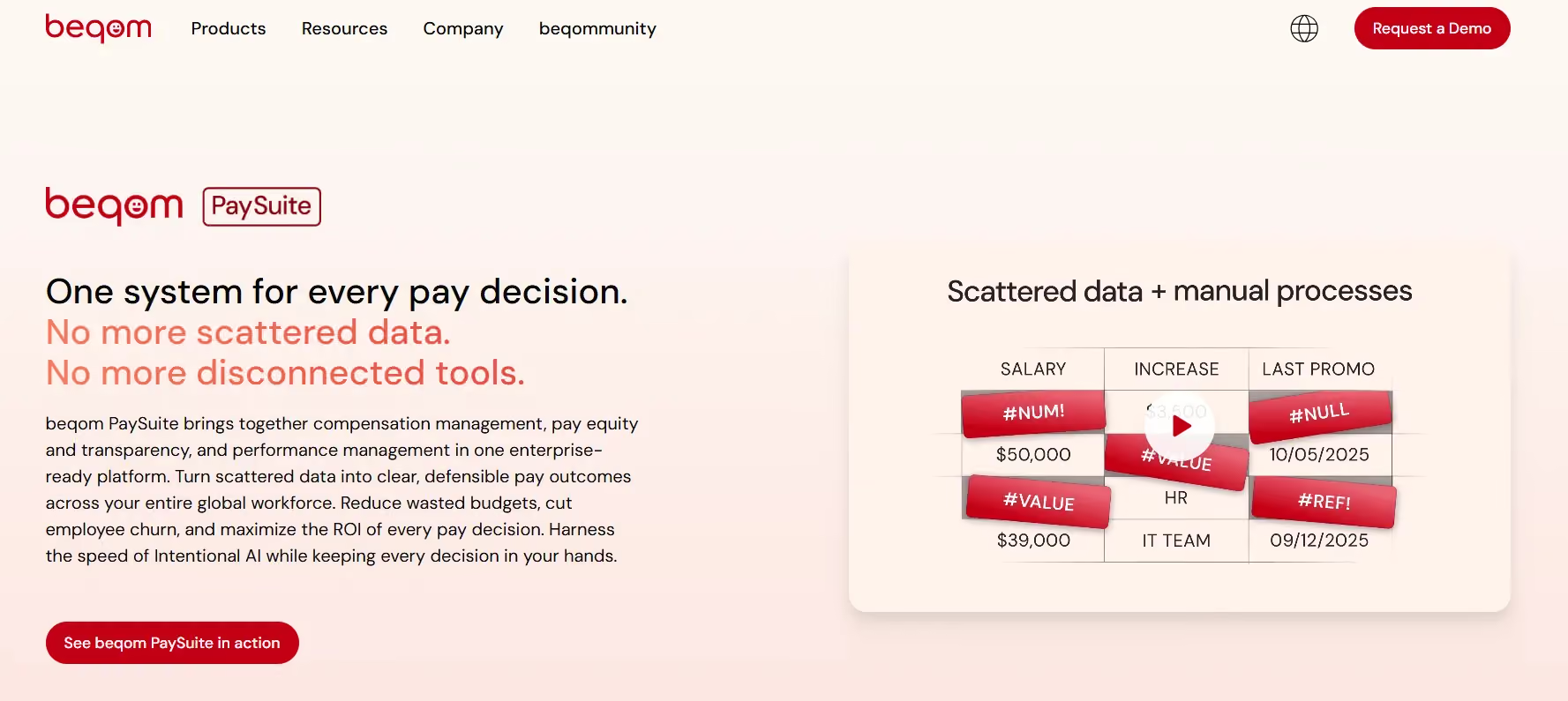
beqom is an enterprise total compensation management platform covering salary planning, bonus allocation, long-term incentives, and pay equity analytics. It's built for large, global organizations with multi-country comp structures and positions explicitly around pay for performance, linking transparent criteria to compensation outcomes across the full workforce.
beqom Key Features
- Global comp planning engine: Supports multi-country salary structures, local statutory rules, and currency conversions in a single configurable model. Designed for organizations running pay for performance across dozens of countries.
- Pay equity analytics: Built-in tools identify pay gaps by gender, ethnicity, location, and level. This helps HR prove that performance-based pay decisions aren't amplifying existing inequities, a growing regulatory priority.
- Variable pay and bonus management: Configurable bonus pools, individual performance multipliers, and MBO-based payouts handle both discretionary and formula-driven variable comp.
- Manager allocation workflows: Managers allocate merit increases and bonuses within guided budgets, with visibility into team performance data and recommended ranges.
What Users Like
- Deep global compensation capabilities for complex, multi-entity organizations (Source: G2)
- Strong pay equity and compliance analytics built into the comp cycle (Source: G2)
- Flexible enough to model merit increases, bonuses, LTI, and equity grants in one platform (Source: G2)
What to Consider
- Implementation complexity and cost position beqom for enterprise budgets; mid-market orgs may find it over-scoped (Source: G2)
- Sales commission management with tiered rates, deal-level splits, and real-time attainment dashboards isn't the core focus
- UI can feel dense compared to newer, design-forward platforms (Source: G2)
beqom Ratings
Beqom Pricing
beqom uses custom enterprise pricing based on employee count and modules. No self-serve tier. Contact beqom for a proposal. Free trial is not available.
4) Xactly Incent
Best for: Enterprise sales comp teams with deep benchmarking needs
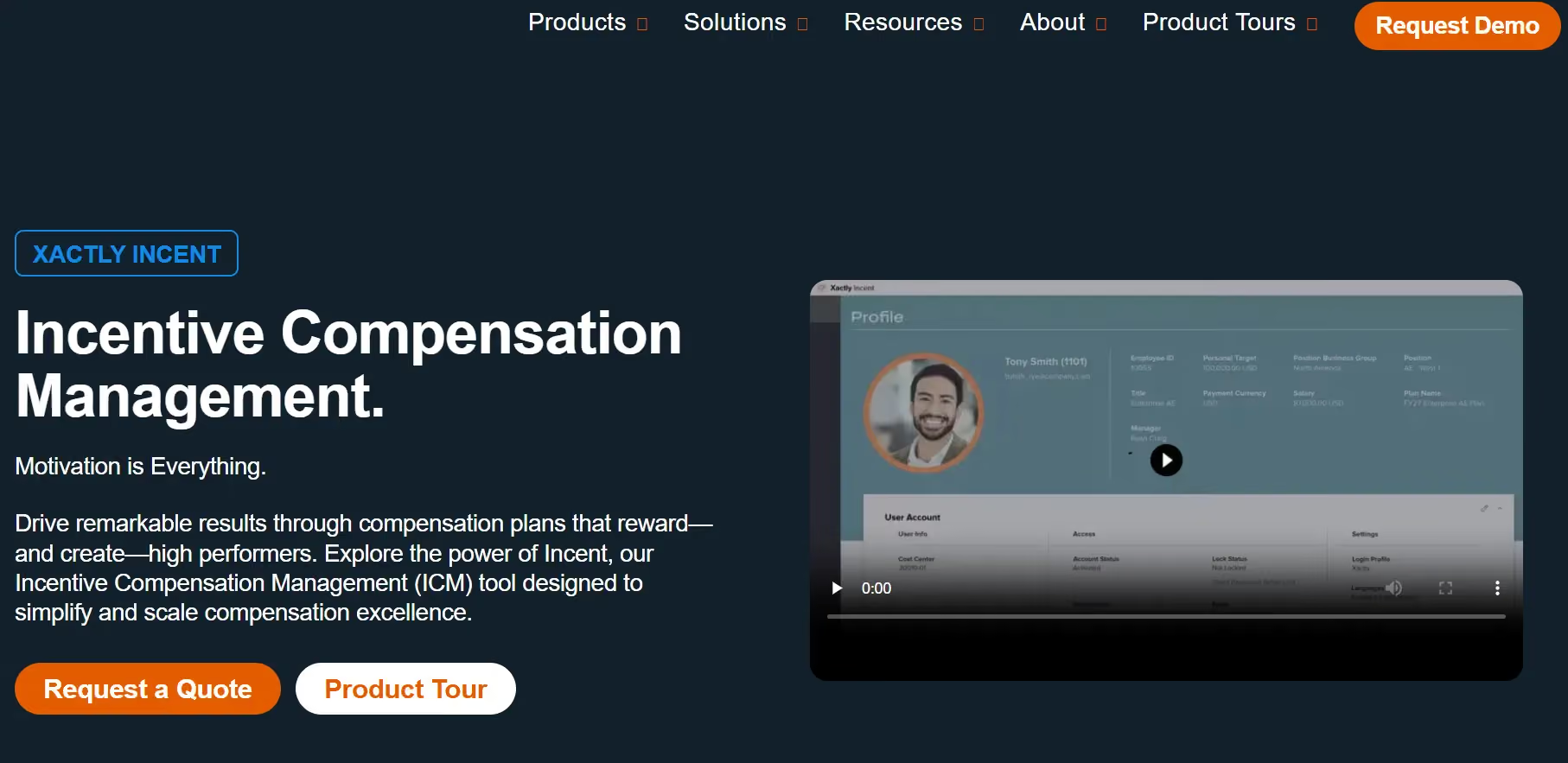
Xactly is one of the longest-standing incentive compensation management platforms on the market, serving enterprise sales organizations. It offers commission management, plan design, forecasting, and benchmarking powered by a large dataset of anonymized pay and performance data. Xactly is a frequent incumbent that teams evaluate against newer platforms.
Xactly Incent Key Features
- Incent (commission management): Automates complex sales commission calculations, including tiered rates, accelerators, crediting rules, and exceptions. Handles high-volume payee populations across large sales organizations.
- Benchmarking data: Xactly's proprietary compensation dataset lets comp teams compare their plans against industry peers. Useful for designing competitive pay-for-performance structures that attract and retain top performers.
- Forecasting module: Projects commission expense based on pipeline and historical performance, giving Finance visibility into the cost side of pay for performance before payouts hit the books.
- Plan design and modeling: Admins can model plan changes and simulate payout impact before rolling live. Supports what-if analysis across multiple scenarios.
What Users Like
- Extensive benchmarking dataset built over 15+ years of compensation data (Source: G2)
- Deep enterprise sales comp logic for complex, multi-rule commission plans (Source: G2)
- Forecasting capabilities that help Finance model budget impact of performance-based pay (Source: Capterra)
What to Consider
- Implementation timelines and cost can run significantly longer than newer platforms, often months per published customer accounts (Source: G2)
- User interface and admin experience are frequently cited as dated compared to modern SPM tools (Source: G2)
- Broader workforce pay for performance (merit cycles, non-sales bonuses) isn't the core product focus
If you're weighing CaptivateIQ specifically against Xactly's deeper benchmarking dataset and enterprise pedigree, see our direct comparison of Xactly and CaptivateIQ on implementation time, plan complexity, and reporting depth
Xactly Incent Ratings
Xactly Incent Pricing
Xactly uses custom enterprise pricing. No public pricing tiers. Requires sales engagement for a quote. Free trial is not available.
5) CaptivateIQ
Best for: RevOps teams needing custom commission logic with a familiar spreadsheet feel.
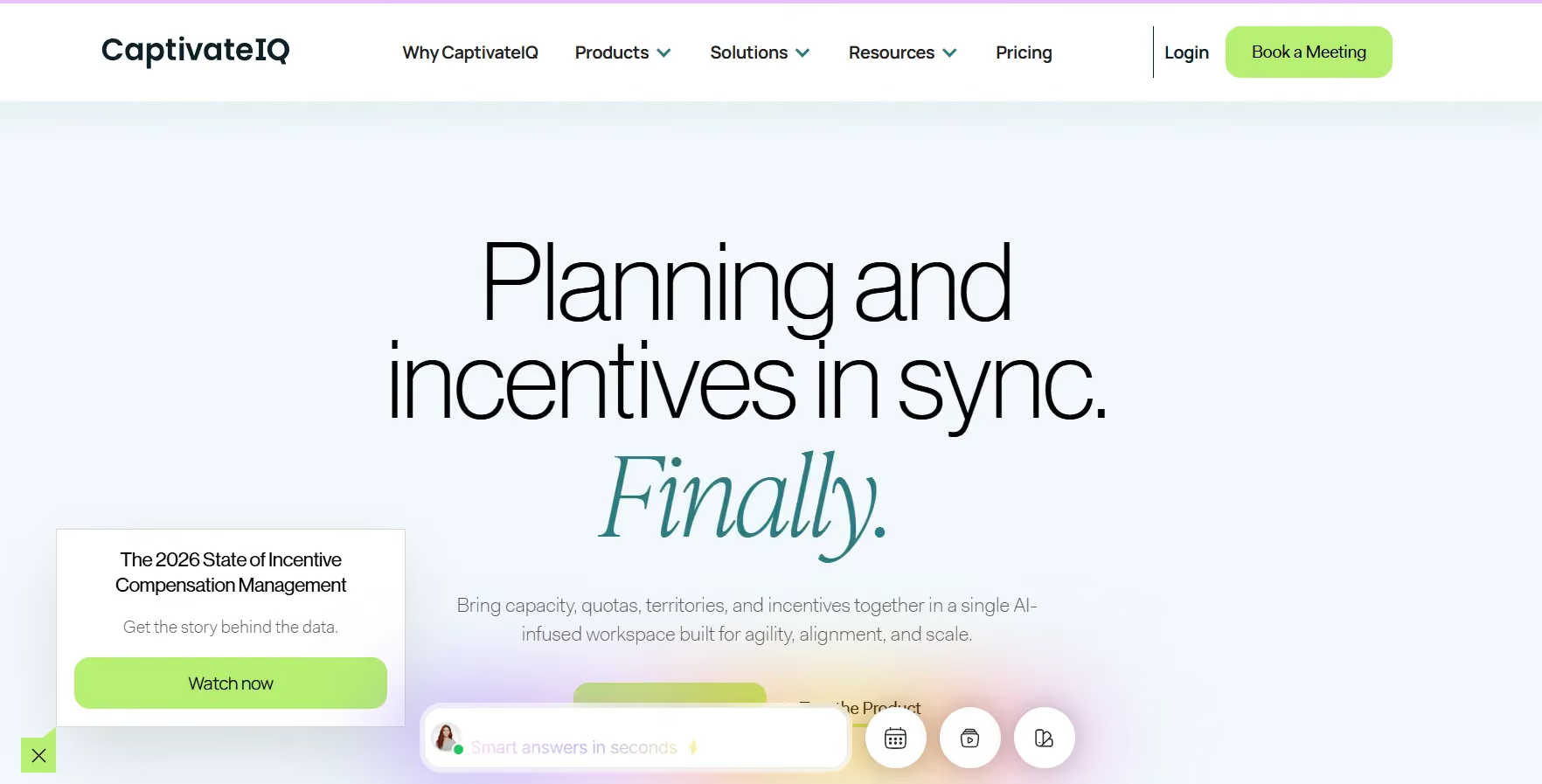
CaptivateIQ is a commission management platform built for RevOps and Finance teams who need flexibility to model complex commission plans without engineering support. Its spreadsheet-like plan builder appeals to teams migrating from Excel who want a familiar interface with automation, auditability, and real-time reporting underneath.
CaptivateIQ Key Features
- Flexible plan builder: A drag-and-drop, spreadsheet-style interface lets admins build commission logic using formulas they already understand. This reduces dependency on consultants for ongoing plan changes.
- Real-time commission statements: Reps see live earnings, deal-level breakdowns, and projected payouts. This transparency is critical for pay-for-performance models to actually influence rep behavior.
- Workflow automation: Automated data ingestion from CRM, approval routing for exceptions, and scheduled payout runs reduce manual effort in each commission cycle.
- Analytics and insights: Dashboards showing attainment distribution, plan effectiveness, and cost-per-dollar-earned help comp teams evaluate whether their pay-for-performance structure is driving the right outcomes.
What Users Like
- Intuitive plan builder that feels familiar to teams used to spreadsheets (Source: G2)
- Strong real-time transparency for reps, supporting the visibility pay for performance depends on (Source: G2)
- Good mid-market fit with faster implementations than legacy ICM tools (Source: Capterra)
What to Consider
- Focused exclusively on commissions; doesn't cover broader workforce merit cycles, bonuses, or salary planning (Source: G2)
- Enterprise-scale complexity (very high payee counts, multi-entity global structures) may push the limits of the platform (Source: G2)
- Fewer native CRM integrations and less embedded CRM experience compared to platforms with native Salesforce components (Source: G2)
CaptivateIQ Pricing
CaptivateIQ offers tiered pricing based on payee count. No public pricing available. Contact CaptivateIQ for a custom quote. Free trial is not available.
CaptivateIQ Ratings
6) Varicent
Best for: Enterprise sales orgs connecting territory design, quota allocation, and incentive comp
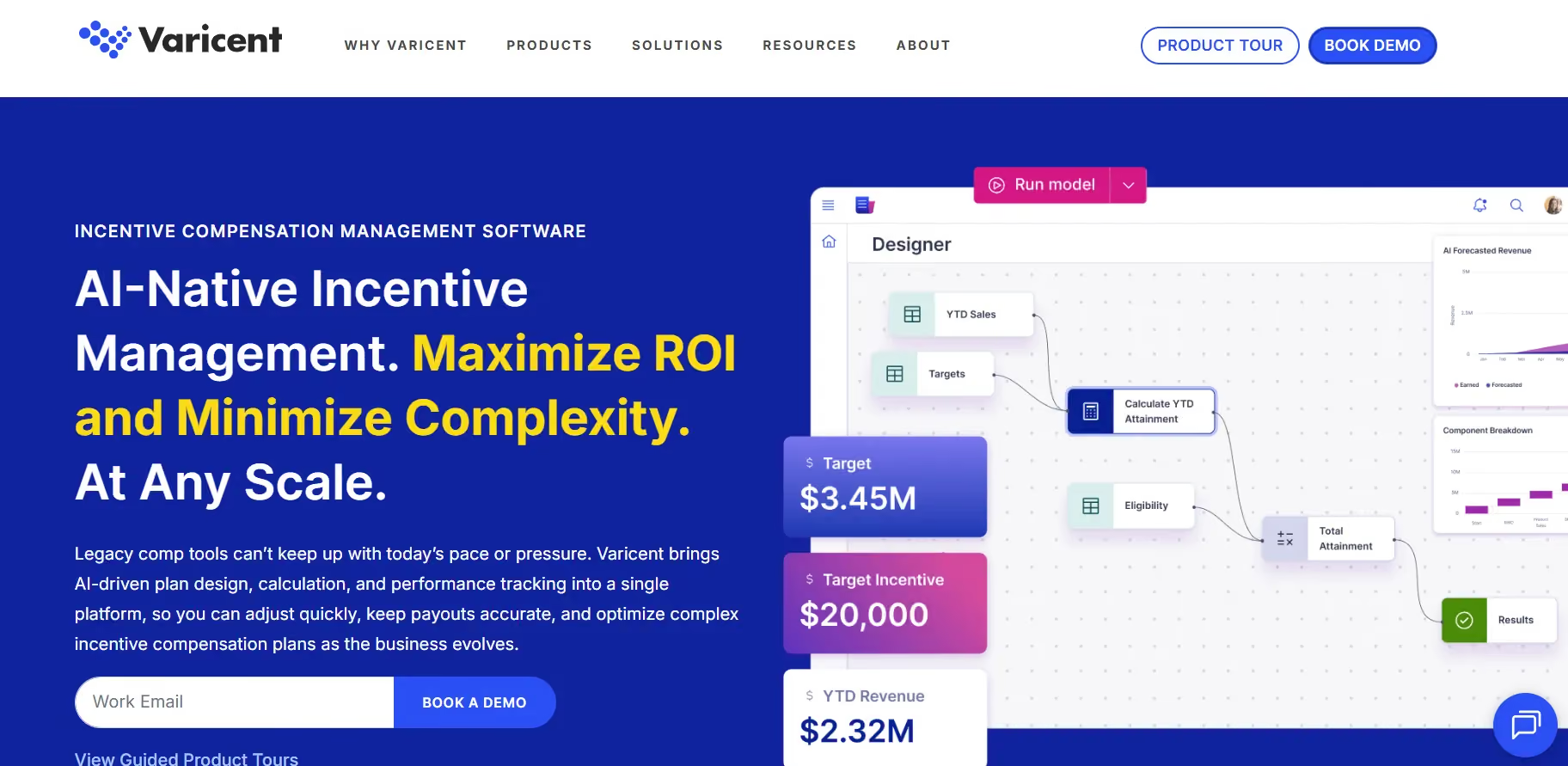
Varicent is a sales performance management platform that combines incentive compensation management with territory planning, quota setting, and revenue intelligence. It targets large enterprise sales organizations that need to connect pay for performance to broader go-to-market planning. Varicent was originally IBM's ICM product before spinning out independently.
Varicent Key Features
- Incentive compensation management: Automates commission and bonus calculations for complex enterprise sales plans. Supports crediting rules, splits, overrides, and draw-against-commission structures at scale.
- Territory and quota planning: Connects territory design and quota allocation to incentive plans, ensuring pay-for-performance targets are achievable and balanced across the sales org. Getting this right upstream prevents the downstream problem of unattainable quotas killing rep motivation.
- Revenue intelligence: AI-driven insights into pipeline health and rep performance help sales leaders identify where incentive compensation structures are working and where they need adjustment.
- Comp plan modeling: Simulates the financial and behavioral impact of plan changes before they go live. Useful during annual plan redesign cycles when comp teams need to balance cost control with rep competitiveness.
What Users Like
- Uniquely combines ICM with territory and quota planning for end-to-end sales performance management (Source: G2)
- Strong enterprise pedigree with large-org complexity handling, including multi-entity and multi-currency (Source: G2)
- Revenue intelligence adds a forward-looking dimension to pay-for-performance analysis (Source: G2)
What to Consider
- Implementation complexity and timeline lean enterprise; not ideal for mid-market teams seeking fast deployment (Source: G2)
- Admin interface and configuration require specialized expertise, often supported by consulting partners (Source: G2)
- Non-sales pay for performance (merit increases, company-wide bonuses) falls outside product scope (Source: Capterra)
Varicent Ratings
Varicent Pricing
Varicent uses custom enterprise pricing. No self-serve or published tiers. Contact Varicent for a tailored proposal. Free trial is not available.
7) Payscale
Best for: Comp teams focused on pay equity, market alignment, and salary structure design.
Payscale is a compensation management and market data platform that helps HR and Total Rewards teams build salary structures, run pay equity analyses, and manage merit cycles. It's strongest for organizations where pay for performance starts with getting base compensation right and ensuring performance-based decisions don't introduce inequity.
Payscale Key features
- Market compensation data: Payscale's proprietary salary dataset covers thousands of roles across industries and geographies. Comp teams use it to benchmark pay bands and ensure performance-based increases stay market-competitive.
- Pay equity analytics: Identifies statistically significant pay gaps by gender, race, and other dimensions. Essential for organizations building pay-for-performance models that need to demonstrate fairness under increasing regulatory scrutiny.
- Compensation planning workflows: Managers allocate merit increases and bonuses within budget guardrails, guided by market data and performance inputs from your HRIS or performance tools.
- Salary structures and range management: Build and maintain job-level salary ranges that anchor pay-for-performance decisions to defensible structures. This prevents the drift that comes from ad hoc manager decisions.
What Users Like
- Industry-leading compensation benchmarking data for building competitive, fair pay structures (Source: G2)
- Strong pay equity tools that help ensure performance-based pay doesn't amplify bias (Source: G2)
- Useful for Total Rewards teams focused on the salary and merit side of pay for performance (Source: Capterra)
What to Consider
- Not designed for sales commissions, variable incentive plans, or real-time attainment tracking (Source: G2)
- Performance management (goals, reviews, ratings) isn't built in; it requires integration with a separate performance tool (Source: Capterra)
- Payroll isn't included; comp decisions must be exported to a payroll system for processing (Source: G2)
Payscale Rating
Payscale Pricing
Payscale offers tiered plans. Pricing depends on employee count and modules selected. Contact Payscale for a quote. Free trial is available.
8) Leapsome
Best for: Growth-stage companies unifying goal-setting, continuous feedback, and comp reviews
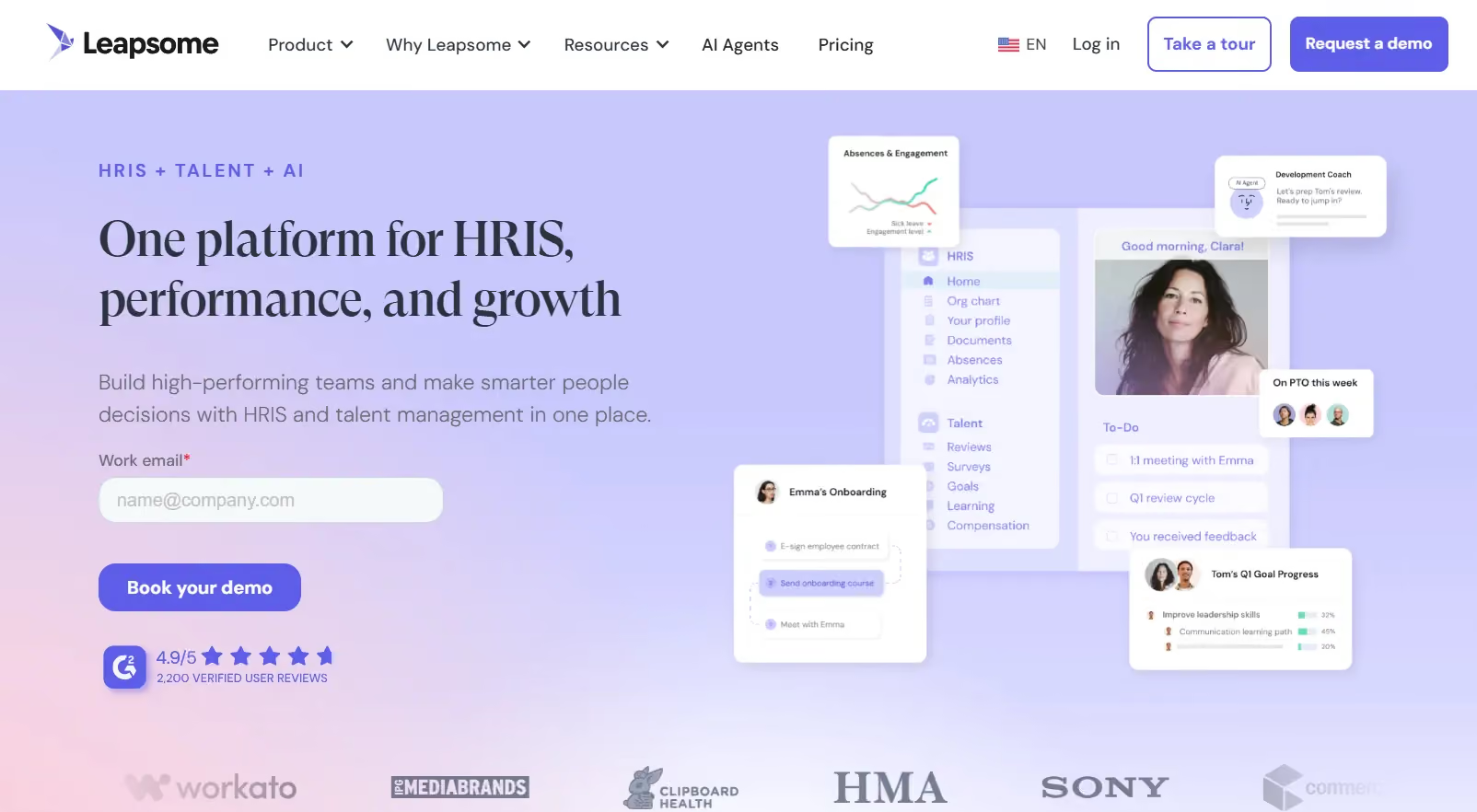
Leapsome is a people enablement platform covering performance reviews, OKRs, engagement surveys, learning, and compensation reviews. It's popular with growth-stage and mid-market companies that want a single platform linking goal-setting, continuous feedback, and pay decisions. Leapsome's strength is the tight feedback loop between performance signals and comp reviews.
Leapsome Key Features
- Compensation reviews tied to performance cycles: HR can run compensation review rounds where managers see each report's performance history, goal attainment, and peer feedback alongside salary and bonus recommendations.
- OKR and goal management: Goals cascade from company to individual. Performance against these goals feeds directly into comp review data, creating the structured link pay for performance requires.
- 360-degree reviews and continuous feedback: Multiple data points reduce reliance on a single manager rating, which mitigates one of the biggest bias risks in performance-based pay decisions.
- Engagement surveys: Pulse surveys help HR track whether pay-for-performance programs are perceived as fair and motivating—an often-overlooked feedback loop that can catch trust issues early.
What Users Like
- Clean, modern UX that drives manager and employee adoption of performance processes (Source: G2)
- Strong OKR-to-comp linkage for organizations building goal-based pay-for-performance models (Source: G2)
- Good fit for growth-stage companies (200–2,000 employees) that need structure without enterprise complexity (Source: Capterra)
What to Consider
- Commission management and sales-specific incentive logic aren't core capabilities (Source: G2)
- The comp module handles merit and bonus reviews but lacks the depth of dedicated platforms for salary structure modeling or equity grants (Source: G2)
- Payroll isn't included; comp decisions must be exported to a separate payroll system (Source: Capterra)
Leapsome Pricing
Leapsome prices per person per month with modular plans. Compensation reviews are an add-on. Contact Leapsome for pricing. Free trial is not available.
Leapsome Rating
9) BambooHR
Best for: Small businesses launching their first structured pay-for-performance program
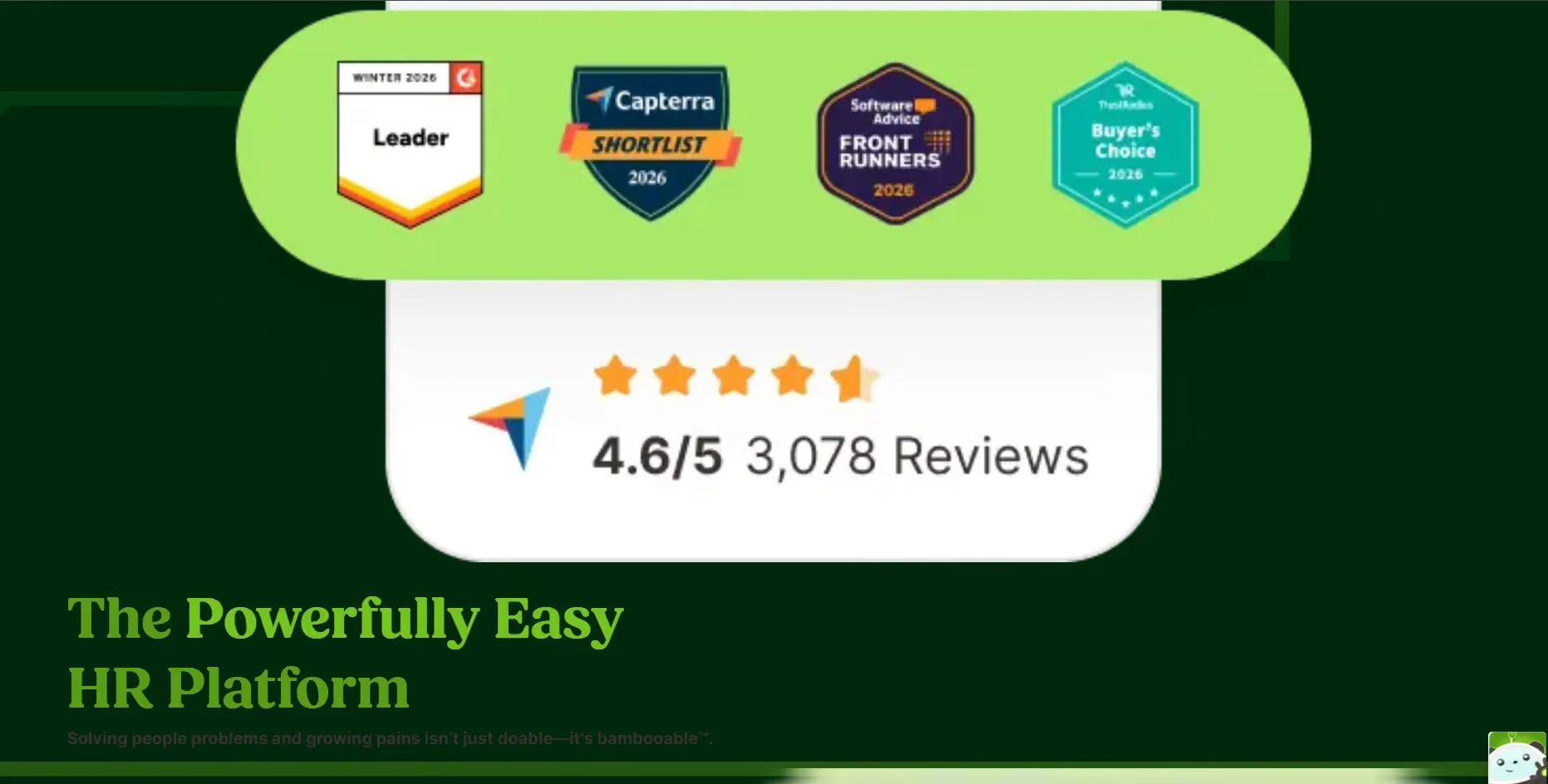
BambooHR is an HR platform built for small and mid-sized businesses. It covers core HR (employee records, onboarding, time tracking), performance management, and basic compensation tools in a single system. For smaller organizations that don't yet have a dedicated comp function, BambooHR provides an accessible starting point without a multi-vendor stack.
Bamboo Key Features
- Performance management module: Includes goal tracking, performance reviews, and manager assessments. This gives HR structured performance data to back pay-for-performance decisions with documentation instead of anecdotes.
- Compensation management: Managers can view compensation history alongside performance records. HR can run basic comp planning to allocate merit increases within budgets, though it's simpler than dedicated comp platforms.
- Employee self-service: Employees access pay stubs, compensation history, and performance records in one portal. Transparency helps smaller orgs build trust in pay for performance without a separate communication tool.
- Reporting and analytics: Standard reports on compensation, headcount, and performance distributions. Useful for documenting pay-for-performance outcomes at a basic level, though less advanced than dedicated analytics platforms.
What Users Like
- All-in-one HR platform that's intuitive for small teams without dedicated comp staff (Source: G2)
- Fast setup and low admin burden compared to enterprise-grade tools (Source: Capterra)
- Performance and compensation data live in the same system, eliminating CSV handoffs for basic merit decisions (Source: G2)
What to Consider
- Compensation tools are basic; no support for complex variable pay, commission tiers, or bonus formulas (Source: G2)
- Pay equity analytics and advanced comp modeling are limited compared to dedicated comp platforms (Source: G2)
- Most organizations above 500–1,000 employees with multi-country complexity will outgrow it (Source: Capterra)
BambooHR Rating
Bamboo HR Pricing
BambooHR offers per-employee-per-month pricing across two tiers. Performance management is included in the higher tier. Free trial is available.
10) ADP Workforce Now
Best for: Mid-market organizations that need payroll and performance management in one system.
ADP Workforce Now is a mid-market HR and payroll suite covering payroll processing, benefits administration, time and attendance, talent management, and compensation planning.
Its strength for pay-for-performance programs is the direct connection between compensation decisions and payroll execution, eliminating the handoff that most standalone comp tools require.
ADP Workforce Now Key Features
- Integrated payroll and compensation: Merit increases and bonus amounts approved in the comp module flow directly into payroll processing. This closed loop cuts errors and speeds up time between performance-based pay decisions and actual employee payouts.
- Performance management: Goal-setting, reviews, and manager ratings are built into the platform. Performance data is available during comp planning cycles so managers can reference documented results when making pay recommendations.
- Compliance and tax automation: ADP handles federal, state, and local tax calculations, statutory filings, and wage-and-hour compliance. Critical for processing pay-for-performance bonuses and variable pay correctly across jurisdictions.
- Benefits and total rewards statements: Employees see a holistic view of compensation, benefits, and bonuses. This helps communicate the full value of performance-based rewards beyond the base paycheck.
What Users Like
- Payroll-to-comp integration eliminates the most error-prone step in pay-for-performance execution (Source: G2)
- Deep compliance engine for U.S. tax and labor law, reducing risk when processing variable pay (Source: G2)
- Broad mid-market HR footprint means less vendor sprawl for organizations that want one system (Source: Capterra)
What to Consider
- Sales commission management with tiered rates, accelerators, and real-time dashboards isn't a core capability (Source: G2)
- Performance management module is functional but not as deep as dedicated platforms (Source: G2)
- Configuration for complex comp plans often requires ADP professional services, adding cost and timeline (Source: Capterra)
ADP Workforce Now Rating
ADP Workforce Now Pricing
ADP Workforce Now pricing is quote-based, varying by employee count and selected modules. Contact ADP for a proposal. Free trial is not available.
G2 Ratings Comparison
Ratings sourced from G2 as of May 2026. Verify at g2.com for current scores.
Comparison rating table for the best pay for performance software via G2
Capterra Ratings Comparison
Ratings sourced from Capterra as of May 2026. Verify at capterra.com for current scores.
Comparison rating table for the best pay for performance software via Capterra
Why Pay-for-Performance Software Matters for HR Teams
Here's why the tools your team uses to manage compensation are just as important as the strategy behind it.
1. Replaces spreadsheet-driven comp cycles with automated workflows.
Most HR and comp teams still run merit and bonus cycles through spreadsheets as each handoff, introducing version errors, broken formulas, and missing approvals that are nearly impossible to audit. Pay-for-performance software enforces budget guardrails automatically, logs every approval, and creates a defensible record of how each compensation decision was reached. That audit trail matters when leadership, legal, or regulators come asking.
2. Creates a transparent link between performance and compensation
When employees can't see how goals or results translate into earnings, trust erodes, and top performers start looking elsewhere. Self-service dashboards showing attainment, projected payouts, and decision criteria make transparency operational across every team.
3. Reduces pay equity and bias risk
Without structured guardrails, performance ratings flowing into pay decisions amplify existing biases, producing gaps by gender, ethnicity, or level that compound year over year. Calibration workflows, compa-ratio analysis, and built-in gap detection turn pay equity compliance from a periodic manual project into a continuous, automated process.
4. Accelerates payout cycles and reduces admin burden
Slow payouts weaken the link between performance and reward — if employees wait weeks for bonus calculations, the motivational impact fades. Automated engines process tiered commissions, merit multipliers, and MBO bonuses in minutes, freeing HR and Finance to focus on plan design instead of reconciliation.
5. Gives Finance real-time visibility into incentive cost
CFOs need to forecast compensation cost continuously, not discover budget overruns after payouts have processed. Real-time dashboards showing budget vs. actuals and scenario modeling for plan changes mean better decisions and fewer end-of-quarter surprises.
Features to Prioritize When Evaluating Pay-for-Performance Software
Before you finalize your decision, get clear on the capabilities that separate platforms that scale from ones that just add complexity.
1. Configurable plan logic without code
Why it matters: Pay-for-performance plans change frequently like new tiers, adjusted accelerators, mid-year SPIFF additions, and role-specific exceptions. If every change requires a support ticket or consulting engagement, your comp team loses agility and falls behind the business.
What good looks like: A no-code plan builder where admins model merit formulas, commission tiers, and bonus multipliers independently. Look for version control on every plan change, built-in approval workflows, and the ability to test changes in a sandbox before pushing live.
2. Real-time earnings visibility for employees and reps
Why it matters: Performance-based pay only motivates when people can see how they're tracking against targets. Delayed or opaque statements erode trust and generate support tickets that eat into HR and RevOps time every cycle.
What good looks like: Self-service dashboards showing live attainment, projected earnings, and deal-level or goal-level breakdowns that update as underlying data changes. The strongest platforms embed this visibility inside tools employees already use, a CRM or HRIS portal, so there's no separate login.
3. Auditable calculation engine with drill-down
Why it matters: Disputes and calculation errors are the fastest way to destroy confidence in a pay-for-performance model. A single unexplained payout discrepancy can undo months of trust-building with reps and employees.
What good looks like: Every payout traces back to the underlying data (deals closed, goals met, ratings received), the specific plan rules applied, and the approval chain that authorized it. Historical reconstruction should be possible for any prior period, so Finance and compliance can audit past cycles without relying on screenshots or archived spreadsheets.
4. Native integrations with CRM, HRIS, and payroll
Why it matters: Pay-for-performance data lives across multiple systems. Manual CSV transfers between them introduce errors and delays that compound with every comp cycle.
What good looks like: Pre-built, bidirectional integrations that sync employee records, deal data, performance ratings, and payout amounts automatically. Prioritize vendors with native connectors for your specific CRM, HRIS, and payroll stack. Native integrations save months compared to custom API builds and reduce ongoing maintenance for your IT and ops teams.
5. Pay equity and calibration tools
Why it matters: Performance-based compensation can unintentionally amplify bias if rating distributions or payout patterns are skewed by gender, race, or manager. Without built-in guardrails, you may not catch the problem until an external audit surfaces it.
What good looks like: Analytics that flag statistically significant pay gaps during the comp cycle — before approvals close. Calibration workflows that let HR normalize ratings and pay recommendations across managers and teams. Look for breakdowns by demographic, level, and department that update in real time as managers submit recommendations.
6. Implementation speed and proof-of-concept options
Why it matters: Long implementations lead to months of ongoing spreadsheet pain and delayed ROI. They also increase organizational risk — the longer a rollout takes, the more likely internal priorities shift, or stakeholder support fades.
What good looks like: Vendors that offer a working proof of concept built with your actual data and plan logic, delivered in days or weeks rather than months. This lets your team validate the accuracy of calculations, the integration fit, and the user experience before committing budget. Ask every vendor on your shortlist for their median time-to-first-live-payout with orgs of similar complexity.
How to Choose the Right Pay-for-Performance Software
1. Is your Primary pay-for-performance population sales/revenue teams or the broader workforce?
This is the single biggest forking decision. Sales-focused programs need commission tiers, real-time attainment dashboards, CRM integration, and SPIFF logic. Broader workforce programs need merit cycle workflows, calibration, and performance review integration. Some tools cover both, but most are stronger on one side. Start by identifying which population is your highest-stakes challenge.
2. Do you need the tool to run payroll, or just plan and calculate comp?
If your payroll system is already in place, you need a comp or incentive tool that integrates with it cleanly. If you want payroll and comp in one platform, your options narrow to HR suites with embedded payroll. Knowing this upfront prevents you from evaluating tools that can't fit your architecture.
3. How complex are your current plans, and how often do they change?
Count the number of distinct plan types, tiers, geographies, and exception rules you manage today. If your plans are simple and stable, a lighter tool works. If you have 20+ plan variants with mid-year changes, you need a configurable engine that admins can adjust without vendor support.
4. What systems must the tool integrate with on day one?
List your CRM, HRIS, payroll provider, and any ERP or data warehouse that holds performance or financial data. Check vendor integration pages before scheduling demos. Native integrations save months compared to custom API builds and reduce ongoing maintenance.
5. What's your acceptable timeline from vendor selection to first live payout?
If you need to run your next comp cycle on the new tool, the timeline is a hard constraint. Ask vendors for the median implementation timeline and whether they offer a proof-of-concept phase using your actual plan data. Reference customer case studies with similar org complexity to validate the estimates you hear in sales conversations.
Final Roundup
Ready to Operationalize Pay for Performance?
If your pay-for-performance program still relies on spreadsheets, manual handoffs, or legacy tools that take months to reconfigure, accuracy and trust will continue to slip.
Everstage helps sales and revenue teams close that gap. Here's what that looks like in practice:
- Automate complex commission and bonus calculations with 99.5% accuracy
- Give reps and employees real-time visibility into earnings and attainment
- Launch a working proof of concept with your actual plans in under two weeks
- Eliminate the spreadsheet reconciliation that delays every comp cycle
- Maintain full auditability with SOC 2 Type II, ISO 27001, and GDPR compliance
Questions worth asking
The things most people want to know before they commit.
1. What is pay for performance?
Pay for performance is a compensation strategy that ties part of an employee's earnings to measurable results. It covers sales commissions, merit increases based on review scores, bonuses tied to KPIs, and team-based gainsharing programs. It requires fair, data-driven pay structures to work effectively.
2. What are the advantages of pay for performance?
It attracts and retains high performers by rewarding results over tenure. It aligns employee behavior with business goals and supports internal equity through transparent, objective criteria. Productivity improves when employees see a direct link between effort and earnings, but only with consistent, fair application.
3. What are the disadvantages of pay for performance?
Individual rewards can harm collaboration, subjective ratings introduce bias, and unattainable targets demotivate employees. Narrow metrics encourage short-term thinking. Software with calibration workflows, audit trails, and equity analytics helps reduce these risks by adding transparency and structure to decisions.
4. How effective is pay for performance?
Effectiveness depends entirely on implementation quality. Clear metrics, transparent criteria, and timely payouts improve engagement and retention. Opaque rules and delayed rewards produce the opposite. The strongest predictor of success is whether employees trust the system to measure and reward their contributions fairly.
5. What is the difference between merit-based pay and variable pay?
Merit-based pay is a permanent base salary increase tied to performance ratings, usually awarded annually. Variable pay — commissions, bonuses, SPIFFs — is a one-time payment that doesn't change base salary and resets each cycle. Most programs use both: merit for sustained performance and variable for immediate motivational impact. Teams managing these incentives at scale often evaluate dedicated variable compensation software to automate calculations and ensure payout accuracy.