
TL;DR
- Diagnose first. Structural problems need a structural fix, behavioral problems need a behavioral one, and getting the order backwards wastes a comp cycle.
- A missed quota isn't automatically a talent problem. Run the diagnostic first: is the shape of your attainment curve bimodal, cohort-skewed, or threshold-clustered? Each one points to a different fix.
- The 60/40 rule: if fewer than 60% of reps are hitting quota, check quota calibration before you touch the plan.
- A deal with a typical 60-day cycle that closes in 2-3 days is usually a deal that got held back, and it's a plan design problem more than a rep problem.
- Recognition within 24 hours has 4x the behavioral impact of recognition delivered a month later.
- Onboarding might be your biggest retention lever. Whether a new rep makes a friend in their first 90 days predicts whether they're still around in year two.
Your VP pulls up the dashboard, sees 58% attainment, and asks the question that's been asked in every sales org since quotas existed: "What's wrong with the plan?" That might be the wrong question to ask first.
At Sales Comp '26 in Boston this week, Matt Flotard (VP RevOps, Gong) and Brian Galonek (President, AllStar Incentives) spent an hour making the case that most teams skip a step: figuring out whether a missed number is a plan problem, a behavior problem, or a bit of both, before anyone touches a single accelerator.
The expert view: what the attainment curve is actually telling you
Matt opened by junking the industry's favorite stat, the 40-60% average attainment number everyone quotes and nobody actually interrogates, because an average that coarse buries whatever's really happening underneath it.
His framework sorts a messy attainment report into three shapes, each pointing somewhere different. A bimodal curve, where most reps sit far above or far below target with almost nobody in the middle, usually traces back to an accelerator or threshold set at the wrong point.
Veterans clearing quota easily while new reps miss across the board is a cohort-skewed pattern, quota calibration dressed up as a performance issue.
And when reps pile up right around 100% attainment with a steep drop right after, the accelerator itself is priced badly, a threshold-clustered problem.
The case study that landed hardest: a team staring down 58% attainment, convinced they had a performance crisis. The actual number underneath it was that the team had set quota 22% above the prior year's real median, with zero adjustment for territory. Once that got corrected, the plan itself held up fine, and nobody had to coach a rep who was never the problem.
Which bucket does it actually belong to
The distribution tells you where to look. The next step is figuring out which bucket the problem belongs to.
Once structural and design issues are ruled out, the next question is whether behavior is the actual constraint. That's the half of the argument data alone can't answer, and it's where Brian picked up the mic.
Once structural and design issues are ruled out, only then is it worth asking whether behavior is the real constraint.
His numbers, pulled from Gallup's 2026 State of the Global Workplace report, made the case plainly. Highly engaged sales teams post 18% higher productivity and 23% higher profitability, and right now only 31% of US employees count as engaged. Recognition, he argued, is as much about timing as generosity. Recognition delivered within 24 hours carries four times the behavioral impact of recognition delivered a month later, and comp cycles only reset once a year.
One line from the discussion worth stealing directly: automated feedback loops often surface problems faster than manager conversations, because reps read them as less judgmental and more objective. Less defensiveness tends to mean faster behavior change.
Solid bytes from the room
A few lines worth screenshotting, straight from the session materials:
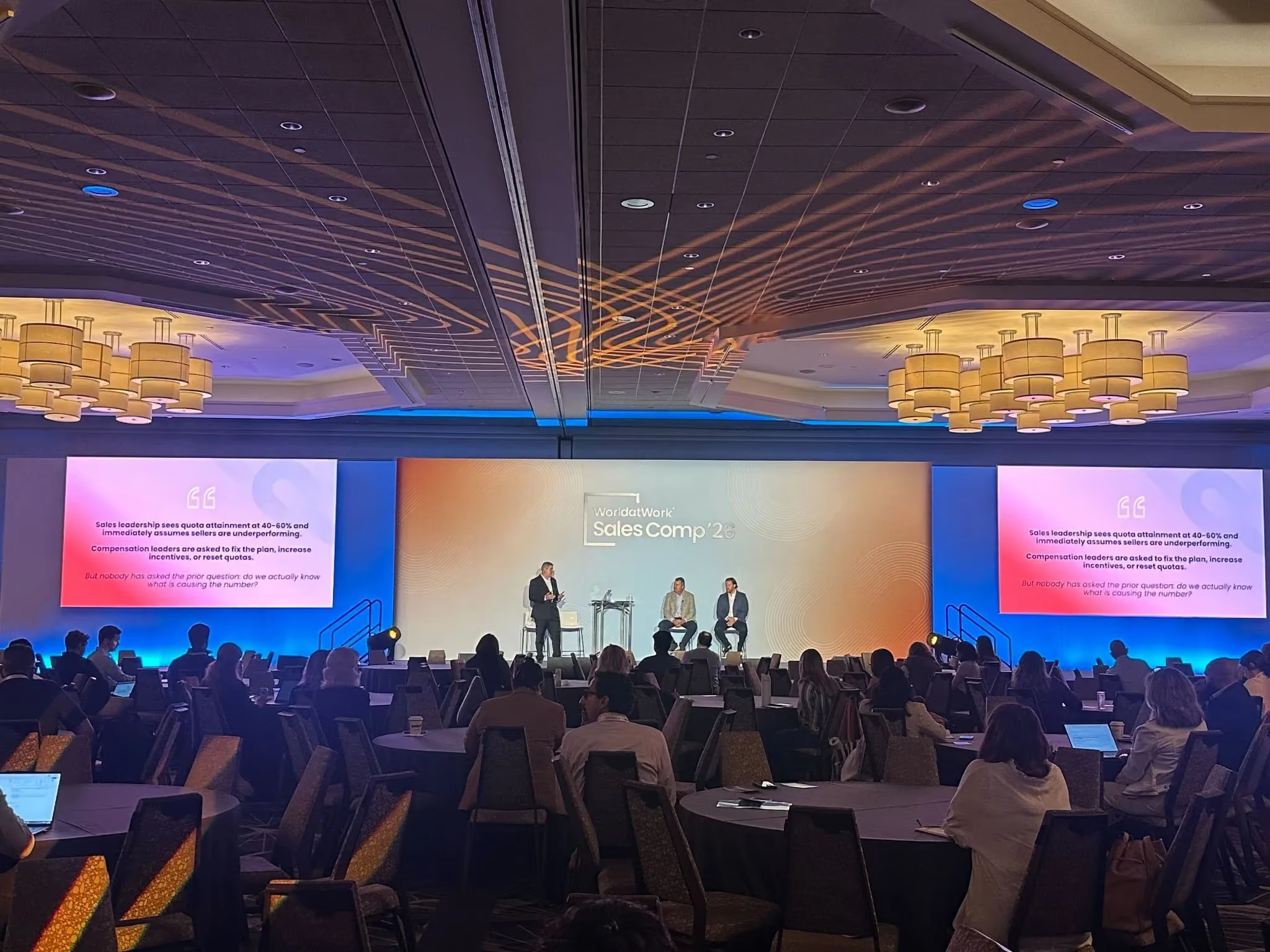
"Sales leadership sees quota attainment at 40-60% and immediately assumes sellers are underperforming... But nobody has asked the prior question: do we actually know what is causing the number?"
"Salespeople will maximize income within the plan's structure. Sandbagging usually comes down to a plan design problem."
"Recognition within 24 hrs = 4x the behavioral impact of recognition 30 days later."
Onboarding as a retention lever
The session's other big thread looked like a pure HR topic at first, but it loops straight back into comp. Brian's data point on new hires: whether a rep makes a friend at work in their first 90 days predicts whether they're still there in year two. Time to first deal came up as the early-warning metric worth tracking. It tends to predict whether a rep succeeds and gets promoted, and whether they stick around at all, well before a full ramp period ends.
For early-career reps especially, a slow start is hard to shake. They're already wondering if they belong, and a delayed first deal (or a manager who never makes time for them) tends to confirm the doubt instead of fixing it.
Poor onboarding can look exactly like poor quota performance from a dashboard. If a new rep never had a fair shot at ramping, the attainment data ends up telling the wrong story about them.
The session's real argument was about sequence, not about whether comp plans matter: most teams skip the diagnosis and go straight to redesigning the plan anyway. Before you rewrite an accelerator or raise a commission rate, look at the actual shape of the data first. The right fix tends to show itself once you ask the right question.
This is the first entry in Boston Notes, Everstage's live coverage of Sales Comp '26. A few more sessions are still on the agenda this week.