TL;DR
- Enterprise deals get closed by teams, and most comp plans still pay like one rep did all the work. That mismatch is where credit disputes come from.
- Deal-level crediting holds up better than account-level once a single account splits across multiple business units.
- Partner credit needs a real gate, hard-sourced versus partner-assisted, not just a partner's name sitting in the CRM.
- Product specialists work better with quota scoped to their own product line. A shared, uncapped quota turns a team player into a solo closer.
- NRR decline is a comp signal worth watching before it shows up as a revenue miss, and the fix often comes down to when the payment trigger fires: at booking or at go-live.
- TCV-based comp inflates attainment optics and rewards discounting. An ACV-plus-kicker structure keeps the incentive pointed at real revenue instead.
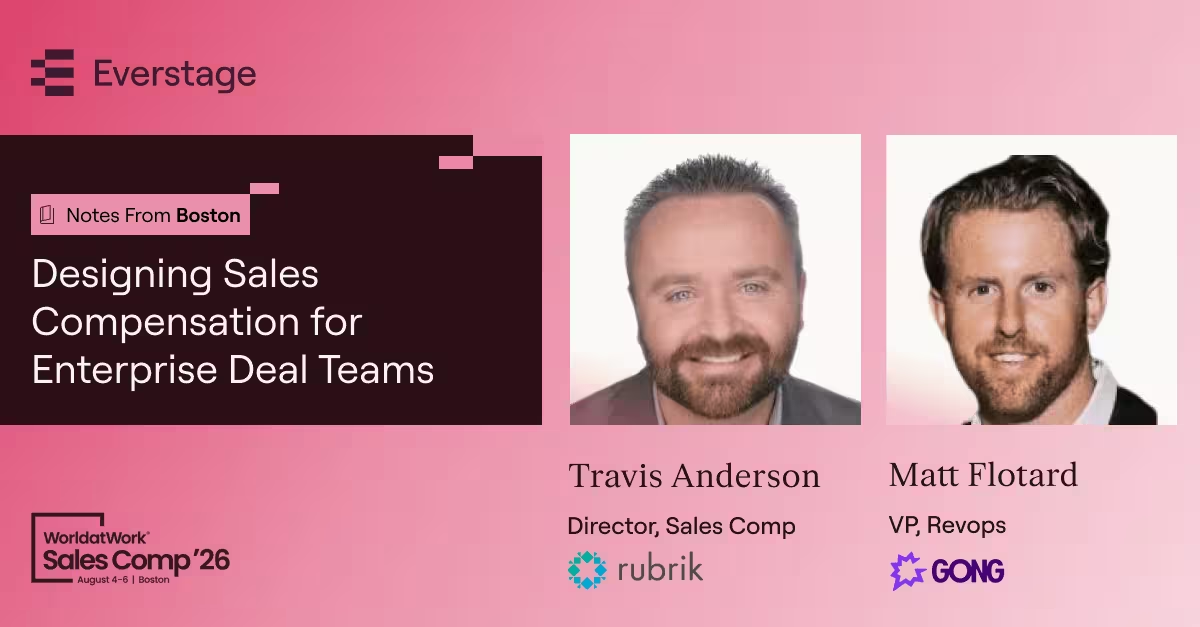
Enterprise deals rarely close because of one person. A deal that touches three business units usually has an account executive, a solutions engineer, a customer success lead, and sometimes a partner, all doing real work on it. Travis Anderson, Director of Sales Compensation, Samsara and Matt Flotard, VP RevOps at Gong, opened their session at Sales Comp '26 with the plainest version of the problem: most comp plans still pay like a single closer did the work, and the panel spent an hour asking whether teams are paying for who's actually in the deal, or just who's listed in the CRM.
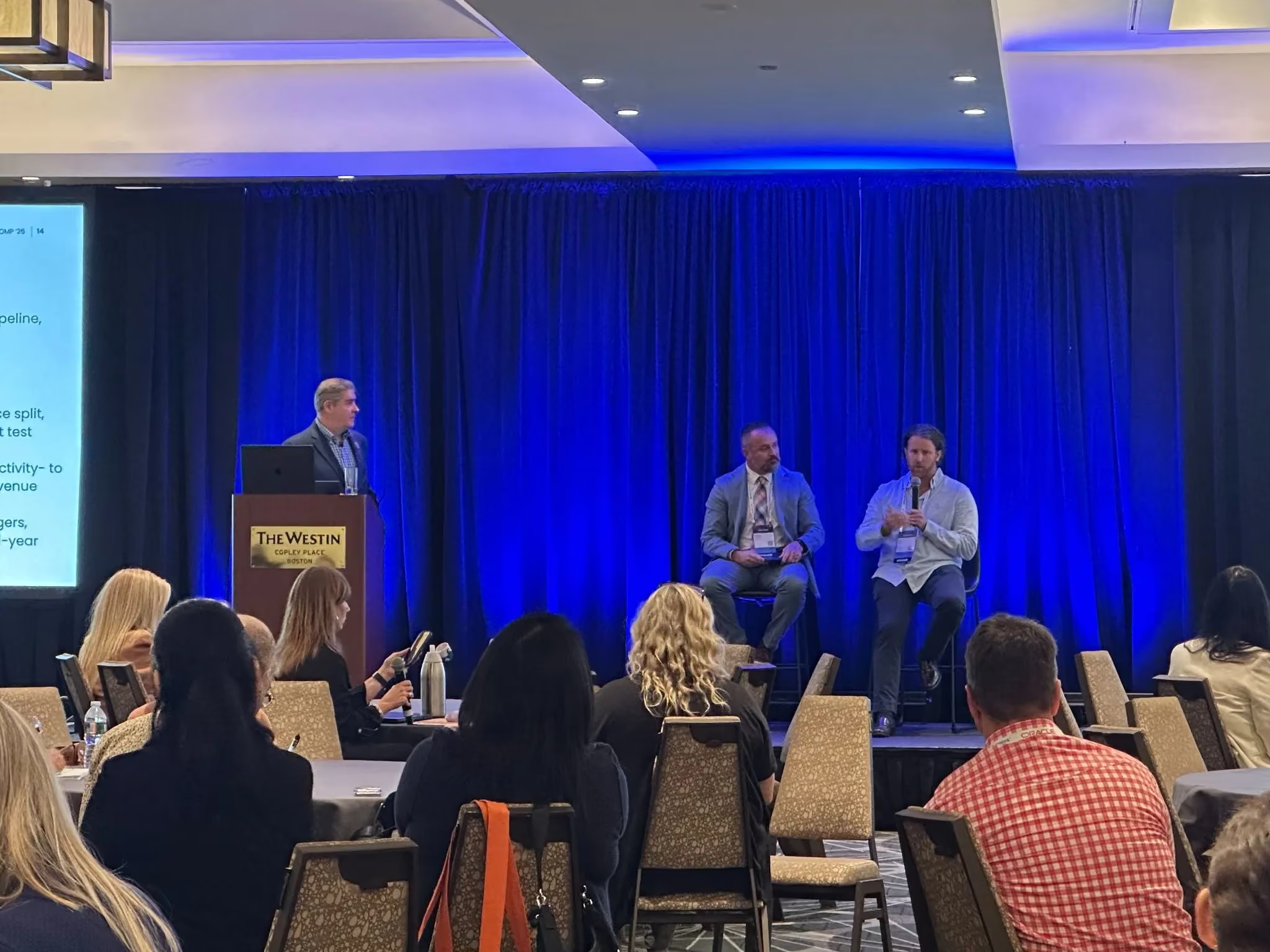
Jose Aleman, VP of GTM Excellence at Everstage, hosted the discussion. The rest of the session worked through five places where that mismatch shows up: who gets credit, how specialist roles get paid, what happens after the deal closes, how multi-year contracts get valued, and what happens when a renewal doesn't land on schedule.
Who actually gets credit for the deal
CRM-based ownership, in Travis's framing, often misrepresents who drove a deal. Activity data tells a more honest story than territory or account assignment, and it exposes something the panel called "ghost credit": people who contributed early in a deal and are gone from the account by the time it pays out.
For a single global logo split across three independent business units, account-level crediting breaks down fast. Commission needs to follow the opportunity, not the account, or the rep managing one business unit ends up paid on work happening in a unit they never touched.
Partner credit is its own trap. A partner's name sitting in the CRM isn't enough to justify a split. Gate it on whether the partner's involvement was hard-sourced or merely assisted, because nominal involvement just taxes the best rep on the deal for no real reason.
The specialist trap
Specialist and overlay roles are, by Travis and Matt's account, the hardest design problem in the enterprise motion. Giving a product specialist a quota scoped only to their own product line keeps them retiring their own number instead of the whole deal, which keeps them working with the account executive instead of against them.
Two overlapping products with separate quotas created internal competition on one team the panel described. Merging both products under a single SKU let the specialist take clean credit and ended the fight.
SE coverage model comes down to product complexity, in their read. A technically deep product wants something close to one SE for every AE. A simpler product can run on a pooled model, though pooling has its own failure mode: an AE leaves, and the SE they were paired with is suddenly without deals.
For roles that never carry a clean quota, closers and deal-rescue specialists among them, a flat rate or an MBO-based bonus works better than forcing a number that doesn't exist. One example from the room: a flat rate around 0.5% on the largest deals for a dedicated closer role. A team-based alternative ties the specialist's pay to the performance of the AE group they support instead of an individual number.
Post-sale incentives and the NRR signal
A comp plan shapes behavior long after the signature. If adoption after close isn't part of anyone's incentive, the account executive disengages the moment the deal is booked, and whatever implementation problems follow become somebody else's job.
The panel's fix for large enterprise accounts: an "accounts for life" model, where the AE keeps ownership through renewal and expansion instead of handing the account to a customer success manager meeting the client for the first time. That preserves the relationship and the account history the AE already built.
The harder question was when the payment trigger fires. Paying at booking disengages the AE right as implementation starts, and a bad rollout becomes someone else's problem to fix. Paying at go-live aligns the AE's payout with the period that actually determines year-two expansion, though the panel was candid that go-live triggers are hard to operationalize and most teams haven't built one yet.
NRR itself works as a comp lever when it's split, roughly half at booking and half tied to net revenue retention over time. That keeps the AE financially interested in whether the account expands, not just whether it signed.
TCV vs ACV: what the number actually incentivizes
Total contract value sounds like the number that should matter most on a multi-year deal. The panel argued it's usually the wrong one to pay on. TCV comp pushes reps toward discounting and contract length instead of the deal's real annual value, inflates attainment numbers without inflating real revenue, and gets hard to set a fair quota against.
The structure the panel landed on instead: base commission on ACV, add a kicker for multi-year durability, and add a second kicker for prepayment, since that's a real cash-flow benefit to the business rather than a vanity number on a rep's dashboard. Accelerators should run on landed ACV, not raw contract value, or a rep ends up earning against year-two and year-three revenue that hasn't happened yet.
Usage-based and consumption deals complicate this further. A kicker that interacts badly with an accelerator can put a rep's earnings out of sync with what corporate finance is tracking. For contracts with uneven year-over-year pricing, tiered up by year three, the panel's advice was to pick one method up front: average price, first-year price, or lowest-year price, and hold to it instead of deciding case by case.
What came up that wasn't on a single slide
A chunk of this discussion never made it onto a deck slide, worth flagging since it came out of the room rather than the materials.
Early renewals that come in flat, at the same value as the prior term, may not deserve incremental payment at all. Chasing "pull forward" renewals just to inflate future bookings burns reps out over a few cycles. One inverse incentive surfaced in the room: reps on ACV quota, not renewal quota, drove early renewals naturally, without anyone designing for it directly.
Late renewals need their rules set before they happen too. The common approach the panel described: reset the deal into the next plan year if it closes after year-end, rather than deciding case by case once it's already late.
Usage-based billing is still unsettled industry-wide. Snowflake's approach pays half at booking and half as usage draws down, which keeps an AE in an account-manager motion long after the deal signs. Other teams still run it the older way: full quota credit at the sale, no drawdown incentive, and the debate over how involved a rep should stay in adoption is still wide open.
For deals with a long gap between signature and start date, the panel's rule was to hold payment until the deal is within about 90 days of the actual contract start. Paying earlier risks a clawback if the deal slips further during implementation, and the trigger timing should match finance's own revenue recognition policy rather than the sales team's preferred timeline.
Diagnosis to design
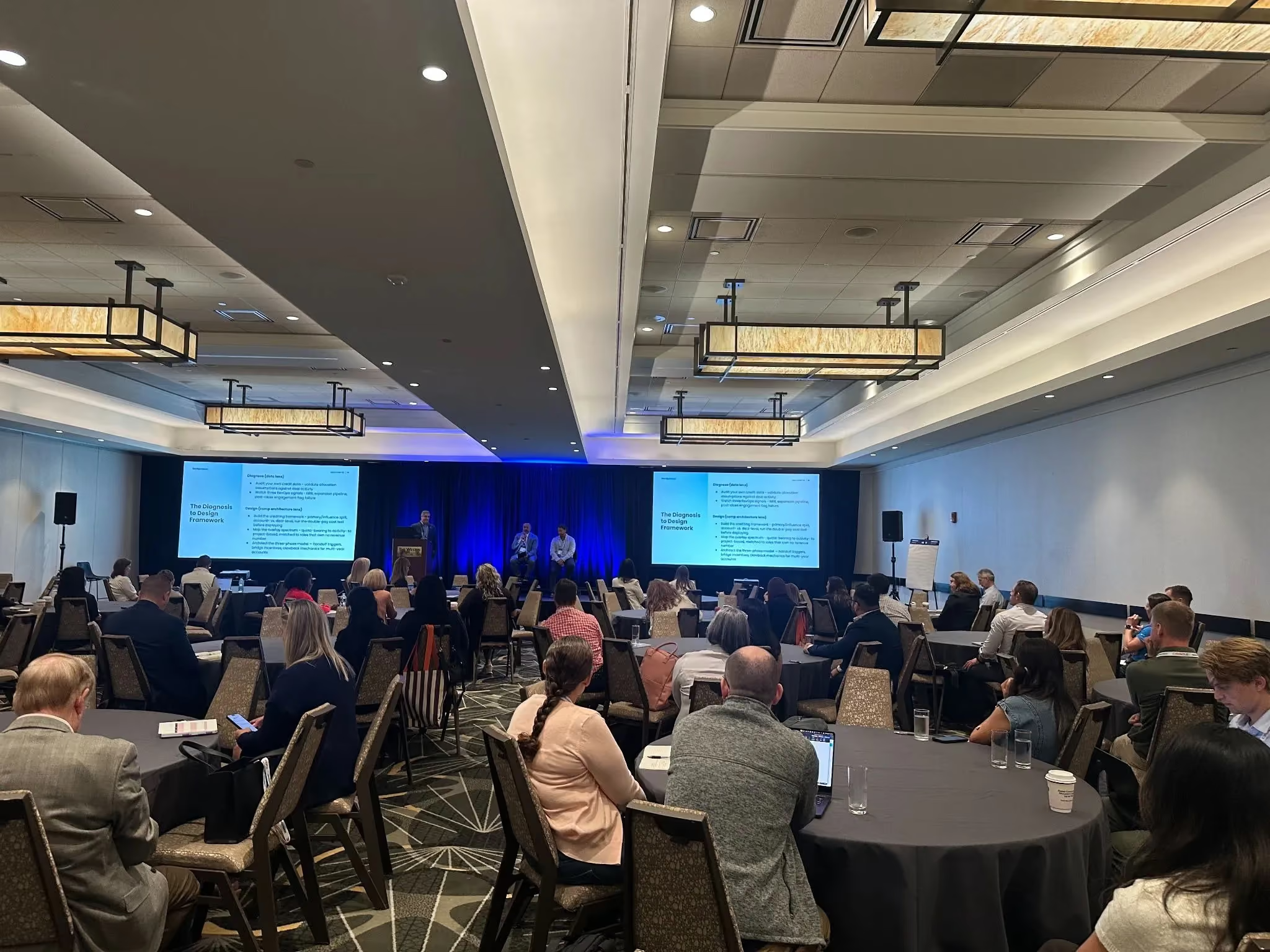
The panel closed with a framework built to outlast this one session: run the data lens first, then the design lens.
Solid bytes from the room
A few lines worth screenshotting, straight from the session materials:
"Enterprise deals are won by teams. Most comp plans still pay like a single closer did the work."
"Are we paying for who's actually in the deal, or just who's in the CRM?"
"Zero visibility after close, a design failure, not a fluke."
Every design choice in this session traced back to the same test: does the plan pay for the work that actually happened, or for whoever's name sits in the system of record. Credit splits, specialist quotas, payment triggers, and TCV versus ACV all come down to that same question asked a different way.
This is the third entry in Boston Notes, Everstage's coverage of Sales Comp '26 and one more to go!