Incentives your bankers can trust and your auditors can trace
Your payouts depend on core reports and one analyst’s spreadsheet. Everstage connects the data, runs every plan and shows how each payout was earned.




Based on 3,500+ customer reviews



Trusted by Leading Marketing & Advertising Companies







“I highly recommend Everstage to drive efficiency as well as visibility to your teams and brokers. It assists with building trust as well.”

“Nice platform to convert those who use manual processes to manage variable compensation for sales teams. From ease of use to support, we have been very pleased with Everstage.”

"I highly recommend Everstage to anyone managing a complex commission structure requiring in-depth calculations. Our team constantly shares positive feedback on how easy it is to navigate, how much they appreciate their personalized dashboards, and how these insights contribute to their individual success."

"I highly recommend Everstage to anyone managing a complex commission structure requiring in-depth calculations. Our team constantly shares positive feedback on how easy it is to navigate, how much they appreciate their personalized dashboards, and how these insights contribute to their individual success."

Your incentive plan runs on core reports and one analyst’s workbook

Month-end starts with a core export
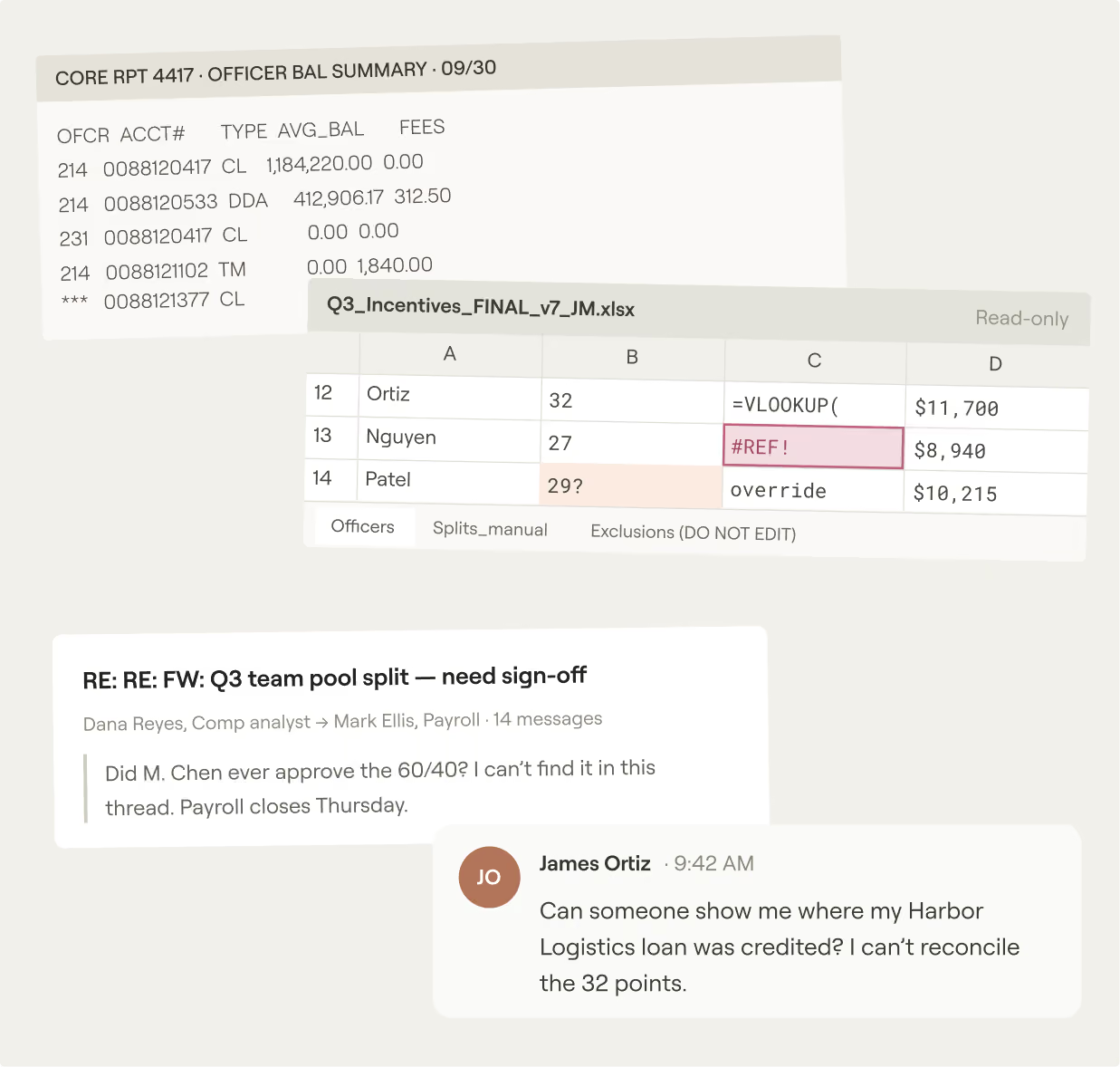
Someone exports balances and fees from the core and matches them to officer codes, fixing every account that moved. The workbook it all lands in was built by one person, and nobody else wants to touch it. If they take a week off, payouts wait for them to get back.
*Automated data mapping

Some of that revenue doesn’t count
Some fees aren’t bonus-eligible, and the reason changes by product. Every month someone strips them out by hand before the math starts, and the rule lives in their head.
*Rule-based exclusions

The sign-off is somewhere in an email thread
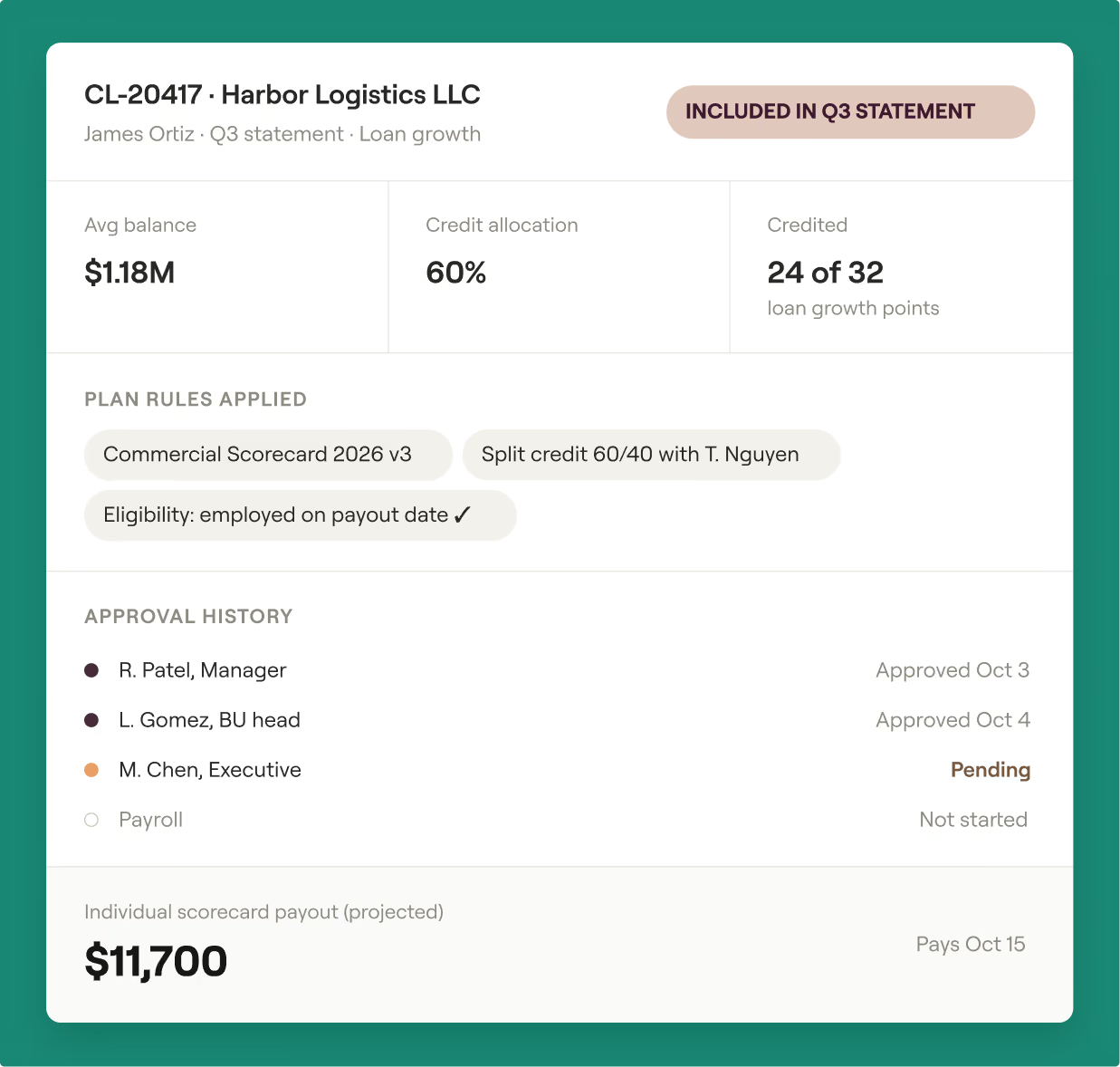
A team split goes from manager to business unit head to executive to payroll, one forward at a time. Then an examiner asks who signed off, and someone’s searching their inbox.
*Tracked approval workflows

“Why didn’t this loan count?”
Your officers keep their own tallies. When their number and yours don’t match, the emails start, and you end up answering each one by hand.
*Line-level payout visibility

The accrual is a guess until payroll runs
Finance books each month’s accrual from last quarter’s run rate. Then the real payout lands, and someone has to explain the difference to the controller.
*Monthly accruals from live data

Nobody can say which plan grew deposits
You pay out across commercial, branch, mortgage and wealth plans, but the payout data and the balance data never sit in the same file. So when the board asks which incentive grew deposits or brought in new members, the answer is a guess.
*Payouts and balances in one place
How Everstage runs a plan, from core balances to payroll
Pull in your data, leave out what doesn’t count
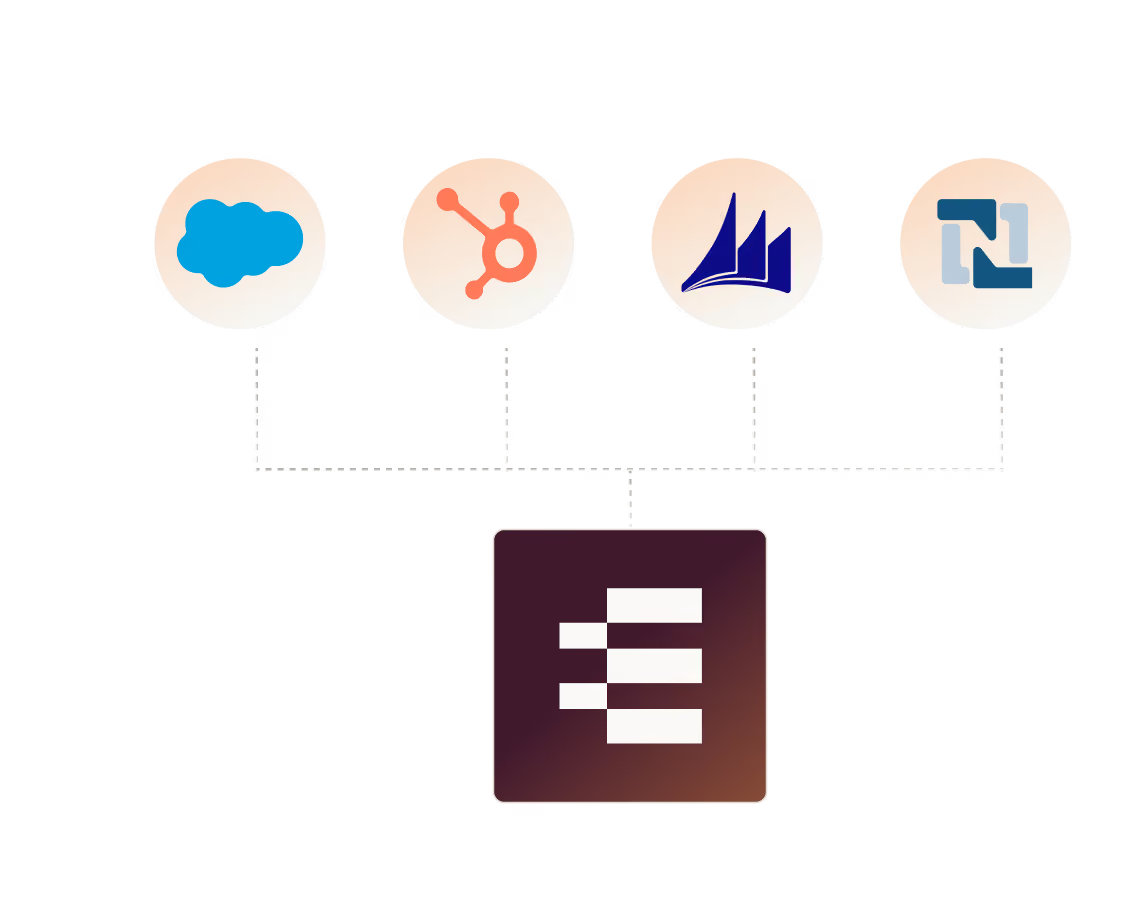
Connect your core banking system, CRM, POS and HR systems through APIs. Data can also come from a warehouse or a scheduled file. Every account and transaction is mapped to the right officer, and revenue your plan doesn’t pay on is filtered out before the payout run.
Build plans from the components you already pay on
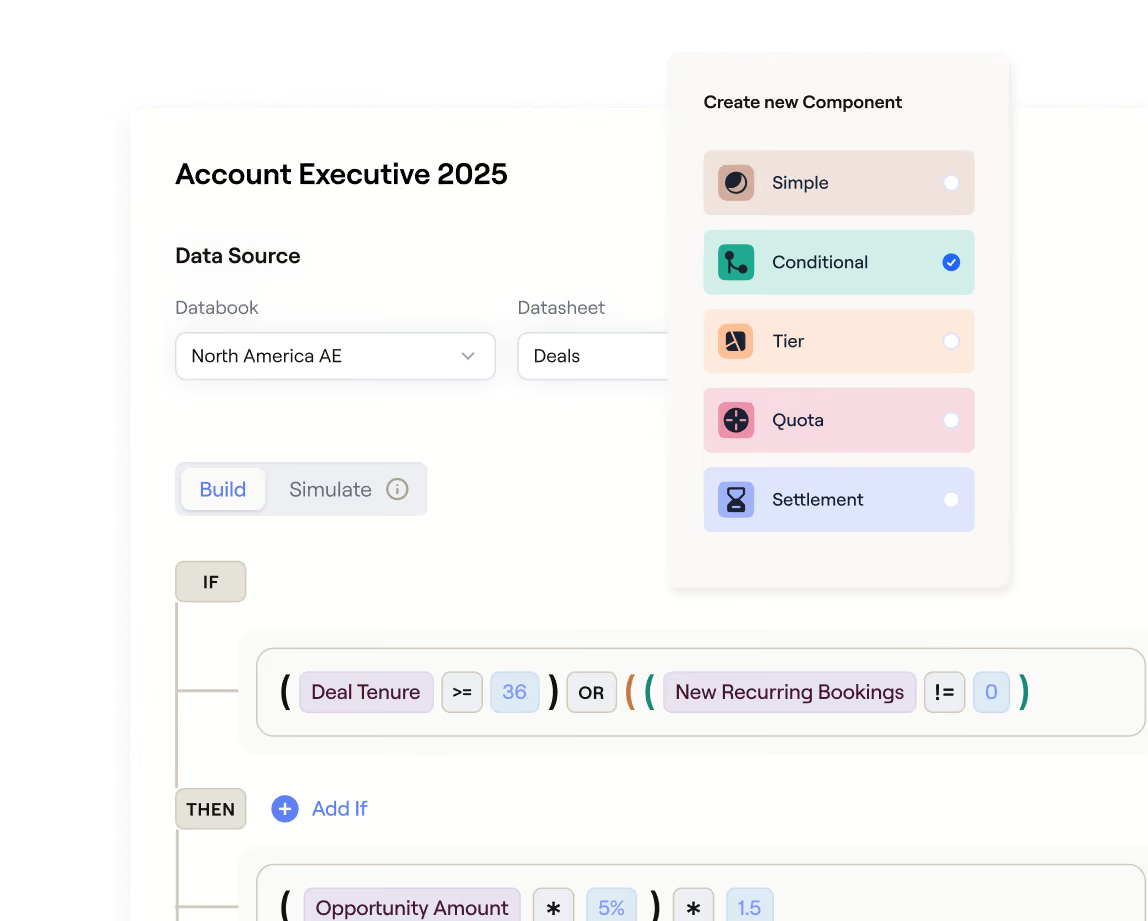
Use tiered commission on revenue, a flat percentage of portfolio, weighted scorecards and team pools. Decide who gets credit when two officers share a relationship, and check eligibility before anyone gets paid. Before a plan goes live, test it in Time Machine to see what each officer would earn and what the plan costs.
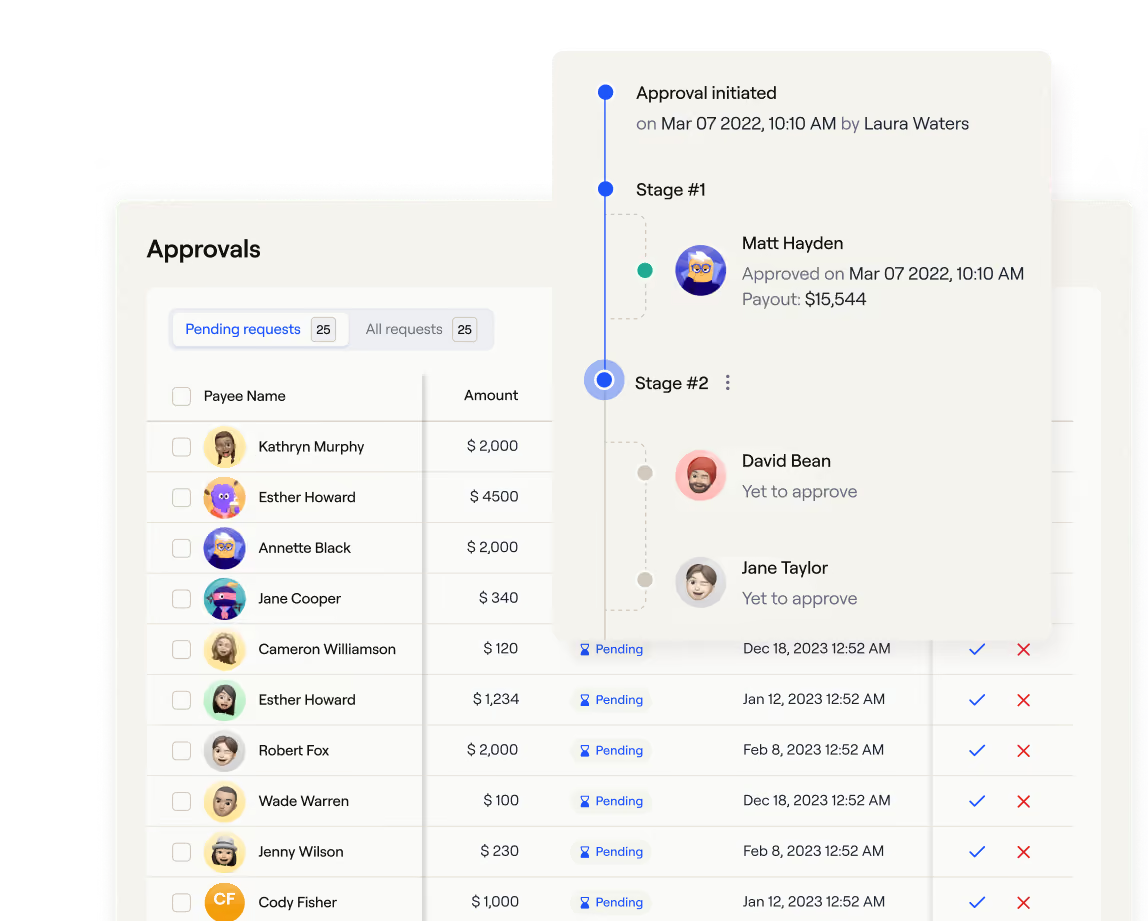
Route every approval with a name and a timestamp
Approvals move from a manager up through senior leadership to payroll, including an approver outside the reporting line. Nothing goes to payroll until every approver signs off, and you can see who signed what.
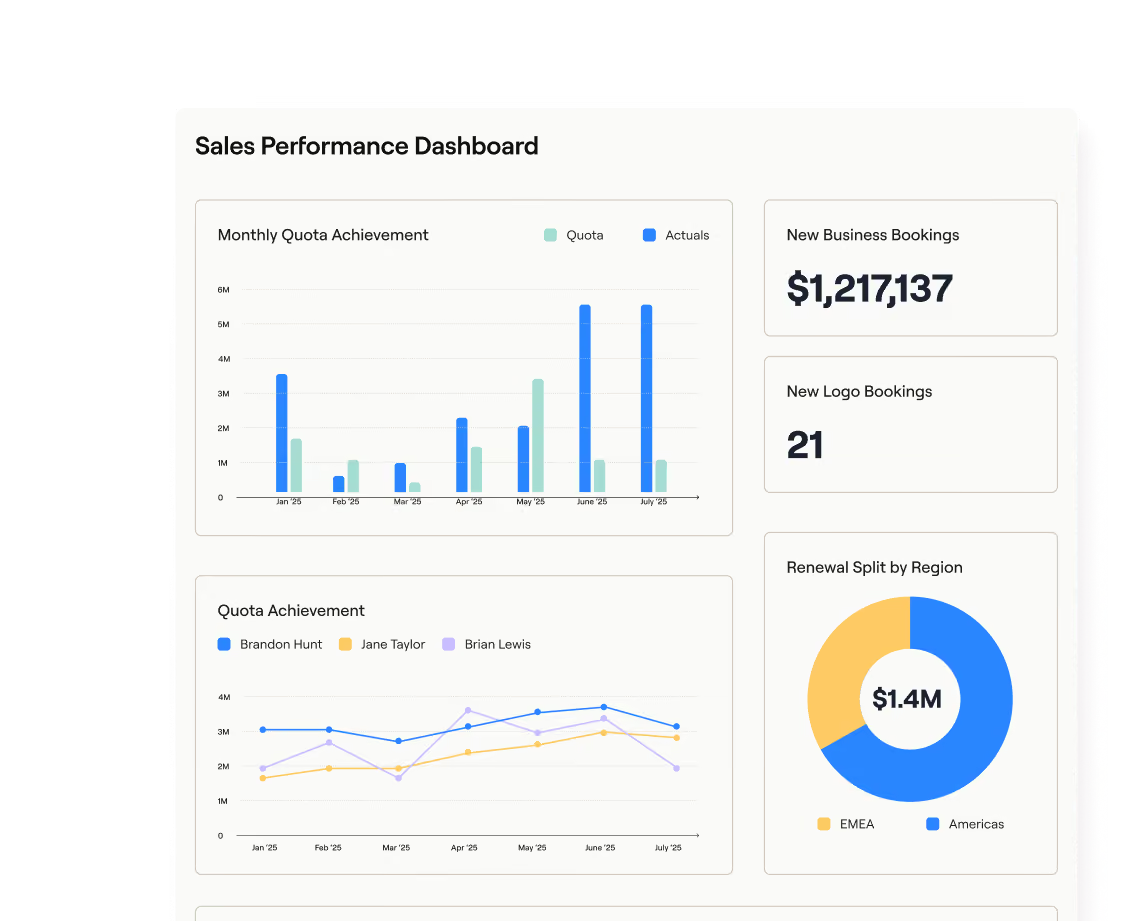
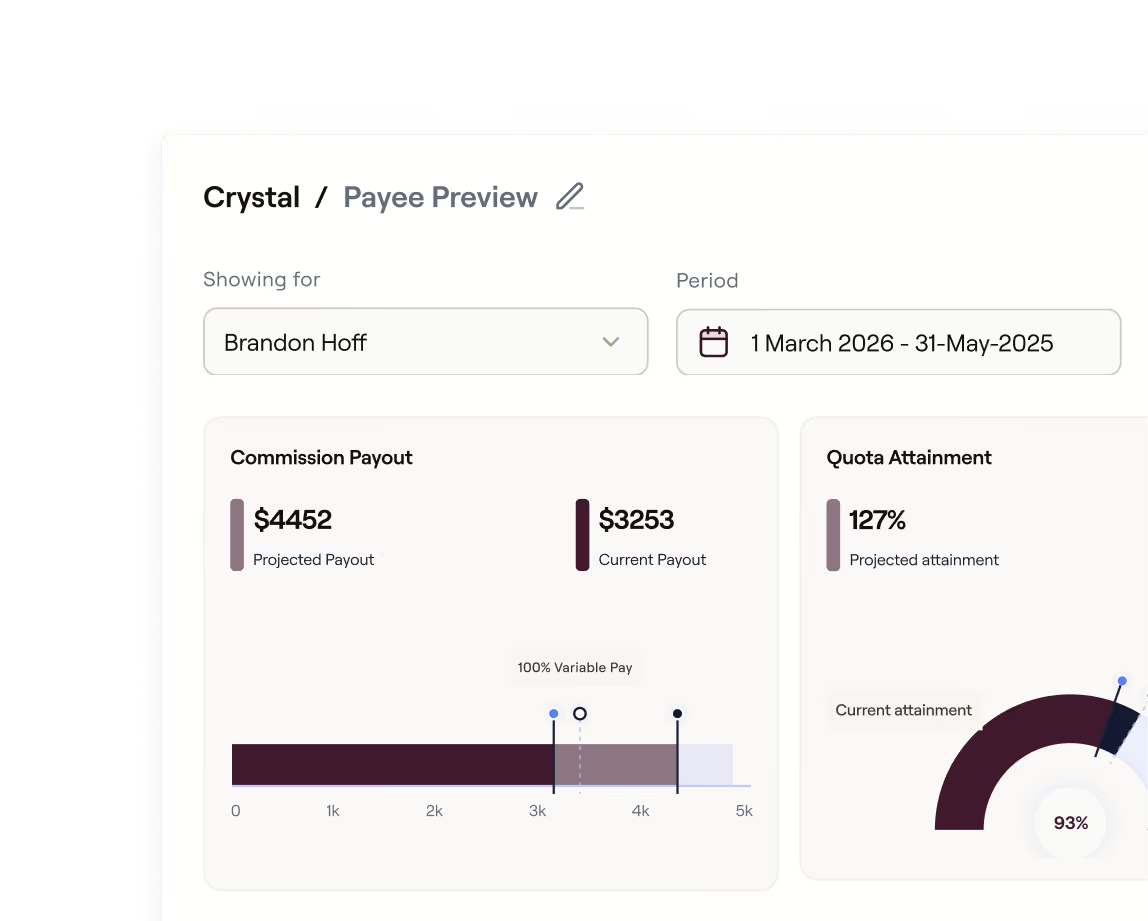
See how every plan is performing
Dashboards show how each plan is tracking against goal and what each officer is earning. Finance can watch payout trends across quarters and spot overpayments from the history.
One place for every plan your bank or credit union runs
Commercial, branch, mortgage, wealth and payments teams each get paid differently. Tiered rates, flat percentages, scorecards and team pools all run on one set of data.
Commercial banking & treasury management
Tiered rates on loan and treasury management fee revenue, weighted into one scorecard with loan growth and deposits. Managers split the team pool and send it to an executive for sign-off.
Retail branch & referrals
Tellers and universal bankers earn points on new accounts and deposits, and separate points for referrals. Branch managers see how their branch stacks up against goal.
Mortgage
Loan officers earn a flat percentage of funded volume, or tiers that step up as volume grows. Processors and closers get paid per file from the same loan data.
Wealth & trust
Advisors earn a flat percentage of portfolio revenue, with split credit on shared accounts. Trust and brokerage revenue can sit on separate plans.
Payments
Payments and merchant services reps earn tiered commission on processing revenue. Every tier shows on the statement, so a rep can see why their rate stepped up.
Credit unions
Member advisors and loan officers get paid on new memberships, deposits, loans and referrals. Every payout traces back to where its credit came from, so your supervisory committee can follow the plan.
Questions worth asking
The things most people want to know before they commit.
What is incentive compensation software for banks and credit unions?
It calculates and pays the variable pay your bank runs on: officer scorecards, referral points, loan officer commissions and advisor grids. It pulls balances and fees from your systems, applies each plan’s rules, routes approvals and keeps the record behind every payout. It replaces the spreadsheet someone rebuilds from core reports every month.
Can banks and credit unions use the same platform?
Yes. The mechanics are the same: crediting, goals, approvals and payout records. The differences are in the plan rules and the language. A credit union pays member advisors, and its supervisory committee reviews the plan alongside its examiners. Each institution sets up its own plans.
Can Everstage use data from our core system?
Yes. Everstage connects to your core banking system and other source systems through APIs. It can also read from your data warehouse or take scheduled files, so nobody on your comp team rebuilds exports by hand.
Can finance test a plan before it goes live?
Yes. Run next year’s plan through Time Machine against this year’s balances, and you’ll see what it costs and how each officer’s pay moves before anyone signs off. Finance can also track accruals monthly, comparing budget with actual payouts by team or region.
Does Everstage help with audit and examiner reviews?
Yes. Every plan version, input file, exclusion rule and approval is kept with a timestamp and the name of whoever made the change. When an examiner or your internal audit team asks how an officer was paid, you pull the full record for that payout instead of rebuilding it from email. Everstage keeps the record. Your compliance team still decides whether a plan meets the guidance.
Will our infosec and vendor risk teams get what they need?
Yes. Everstage is SOC 1, SOC 2, ISO/IEC 27001, ISO/IEC 42001 and GDPR compliant. Your infosec and vendor risk teams can request the reports and policies they need through our Trust Center.
We're thinking about building this in-house. Why buy?
You can. Someone then has to update the build every time a plan changes, and that person becomes the one nobody can cover for.
How long does implementation take?
Most teams go live in 6 to 8 weeks. Everstage’s in-house team sets up your plans and data, then trains your analysts and officers. Support stays in-house after go-live, with coverage across multiple time zones.
See your scorecard run in Everstage
Bring a plan you pay out today. We’ll build it with you in Everstage and show you the officer statement it produces. Takes 45 min.


Comprehensive security and compliance assured


