Customer stories from the world’s leading revenue teams


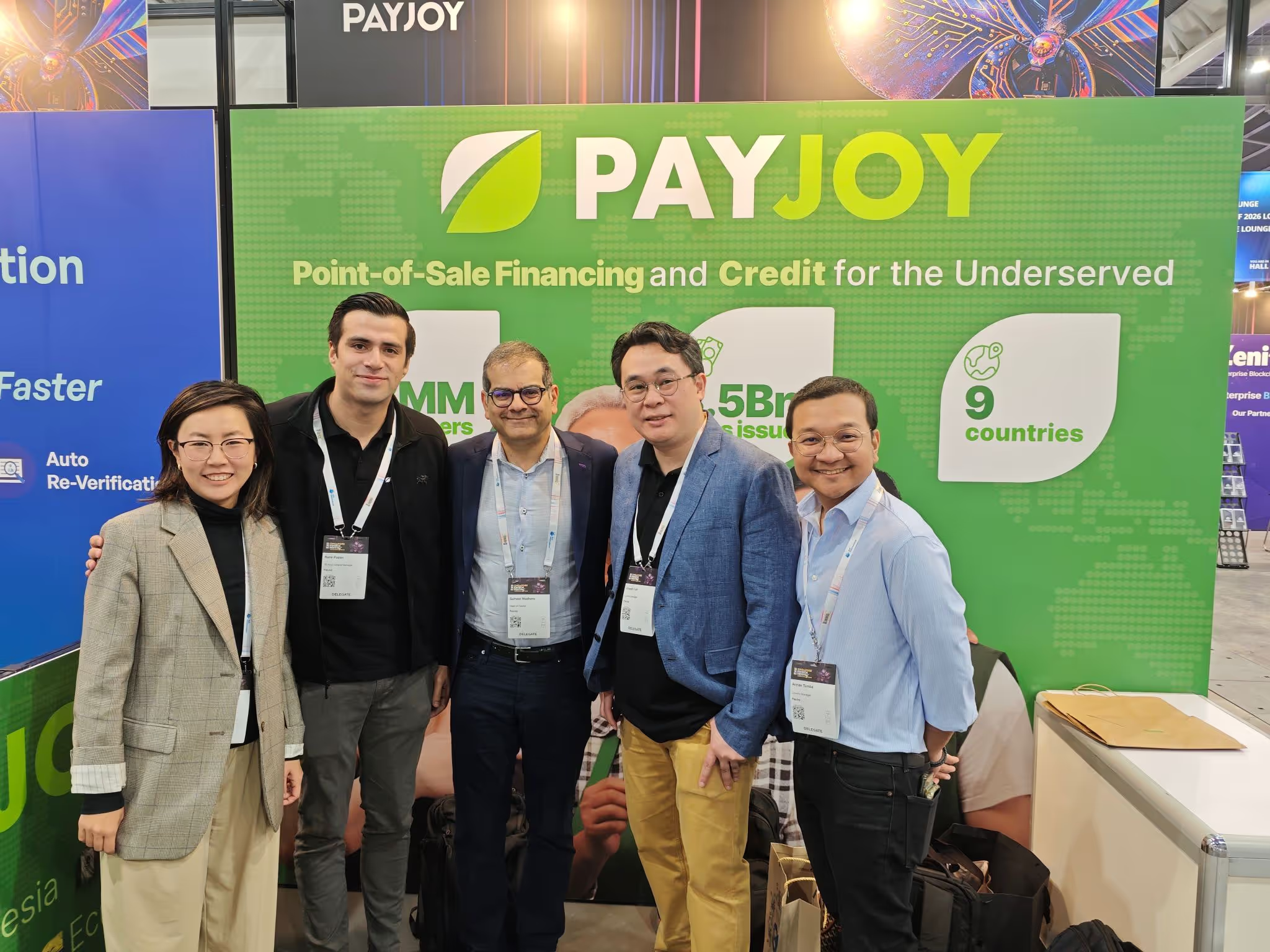

PayJoy scales Commission Management across continents with Everstage
Headquarters
San Francisco, USA
Company Size
1000-5000
Industry
Financial Services


100%
sales team engagement

92%
reduction in monthly commission processing time
PayJoy is a global fintech company operating across eight countries. PayJoy partners with convenience stores, mom-and-pop shops, and major retailers in underserved markets to offer credit access to customers traditionally excluded from the banking system.
The Challenge
Adrian Alvarez, who leads Global Business Operations at PayJoy, handled commission management. Their earlier system built on spreadsheets was riddled with issues. Manual calculations were prone to errors, version control was nearly impossible to maintain, and audit trails were unclear.
For Adrian's lean team, the operational burden was overwhelming. Managing 70 distinct commission plans for over 400 salespeople across 7 countries, handling constant queries about payouts, and ensuring data accuracy consumed enormous amounts of time. Time that should have been spent on strategic revenue operations initiatives.
Sales representatives also had no visibility into their daily performance and progress toward their goals. Unless a rep was technically savvy enough to pull queries and piece together information themselves, they were essentially operating in the dark. The lack of transparency created trust issues and led to frequent disputes about commission calculations.

As PayJoy scaled across multiple countries with diverse languages and currencies, these challenges became increasingly unsustainable. PayJoy needed a scalable solution to manage the complexity of their growing global operations.
The Solution
Seamless implementation and In-house support
When evaluating commission management platforms, PayJoy considered several vendors including Xactly, CaptivateIQ and Salesforce Spiff. However, Everstage stood out for its approach to customer partnership and support.
Unlike competitors who outsourced implementation to third-party consulting firms, Everstage offered in-house implementation with direct access to their support team. This meant PayJoy wouldn't experience fragmented ownership or knowledge gaps during the transition from implementation to ongoing support.
Low-code platform for business users
One of Everstage's most valuable features proved to be its no-code interface, which empowered business owners in different countries to build, troubleshoot, and test commission plans without requiring technical expertise.
Features like the Time Machine that allows businesses to forecast the financial impact of new sales compensation plans and other simulation capabilities allowed PayJoy to test plans against historical data before rolling them out, ensuring accuracy and building confidence in the system.
Custom development and AI product roadmap
Everstage's openness to feedback and product improvements differentiated them from legacy systems with rigid, cookie-cutter approaches. As a growing company working with another growing company, Adrian appreciates Everstage’s receptiveness to working on custom requirements as well the planned features and AI roadmap of Everstage.
The Results
Unprecedented sales rep engagement
The most immediate and noticeable impact was the surge in sales rep engagement with their commission data. After years of operating with minimal visibility, PayJoy's sales team suddenly had access to real-time information about their performance, earnings, and progress toward goals.
Reps began actively tracking deals throughout the month, and engaging with the platform daily. The increase in questions became a positive indicator that meant reps cared about their performance and now had the tools to monitor it. The transparency also improved data integrity, as engaged reps quickly flagged any mismatches or issues.
Enhanced transparency and trust
The transparency enabled by Everstage extended beyond individual sales reps. With Everstage, PayJoy has created a single source of truth accessible to sales reps, sales leaders, finance teams, and HR. Everyone works from the same data, eliminating discrepancies and building organizational trust.
The leadership team can now analyze performance trends across regions, identify top performers, and ensure alignment between incentives and business outcomes.
Improved analytics and reduced operational burden
Everstage's automation capabilities freed up significant time for multiple teams across PayJoy's organization. Sales leaders now only need to submit targets, and the system handles the rest. HR processes were streamlined through direct integration with the HRIS system, automatically provisioning licenses and managing onboarding and offboarding with minimal manual input.
For Adrian's business operations team, the time savings were transformative. Instead of spending hours running calculations, debugging spreadsheet formulas, and answering basic payout questions, the team could focus on strategic analysis. Identifying best performers, understanding which metrics correlate with success, and having informed conversations about sales strategy.