


TL;DR
The benefits of CPQ help sales teams simplify complex deals by automating configuration, pricing, and quoting to improve speed, accuracy, and consistency across the sales process.
- Generate faster, error-free quotes while protecting pricing and margins
- Increase sales productivity by reducing manual work and approval delays
- Deliver better customer experiences with personalized, accurate proposals
- Improve cross-team alignment with standardized workflows and shared data
Sales teams are expected to move faster, quote smarter, and deliver personalized solutions, all without adding headcount or slowing down deals. But in most organizations, the quoting process is still painfully manual.
Reps juggle spreadsheets, chase approval chains, cross-reference pricing rules, and validate product compatibility. A single quote often gets rebuilt three times before it's ready to send. By then, the prospect has already heard from your competitor.
Configure, Price, Quote (CPQ) software automates the most time-consuming parts of quoting, product configuration, pricing calculations, discount approvals, and proposal generation. Instead of manually assembling quotes, reps follow guided workflows that ensure every proposal is accurate, compliant, and ready to close.
The benefits go far beyond speed. CPQ improves sales productivity, protects profit margins, shortens sales cycles, and creates a consistent buying experience. It also aligns sales, finance, and operations by establishing a single source of truth for pricing and product logic.
As product portfolios grow more complex, especially in SaaS, manufacturing, and high-tech, CPQ has evolved from a nice-to-have tool into a foundational system for revenue efficiency.
This guide breaks down what CPQ is, how it works, and the nine most impactful benefits of CPQ for modern businesses. We'll also show how platforms like Everstage CPQ help teams unlock even more value through seamless integrations and real-time automation.
Learn more about the best cpq software to better understand which platforms deliver the most value for modern sales teams.
If you're building expertise in this area, understanding the right CPQ certification can help teams strengthen their skills across pricing, configuration, and quoting workflows.
What is CPQ and How Does It Work?
CPQ stands for Configure, Price, Quote: a software system that automates the process of building product configurations, calculating pricing, and generating sales quotes. It's designed to handle the complexity that manual quoting can't scale: hundreds of product options, dynamic pricing rules, approval workflows, and integration with CRM and ERP systems.
Here's how it works in practice.
- Configure: Sales reps select products and customize configurations based on customer requirements. The CPQ enforces compatibility rules automatically; if two components can't work together, the system prevents that combination. Instead of researching product specs or consulting engineering, reps follow guided workflows that surface only valid options.
- Price: Once the configuration is set, the CPQ calculates pricing based on predefined rules, including list prices, volume discounts, promotional offers, contract terms, and customer-specific pricing agreements. Pricing updates dynamically as configurations change, so reps always see accurate totals. The system also enforces discount limits and automatically routes quotes requiring special approval.
- Quote: After configuration and pricing are finalized, the CPQ generates a professional proposal document with all relevant details, product descriptions, accurate pricing breakdowns, payment terms, and legal language. Quotes are branded, formatted consistently, and ready to send in minutes.
CPQ doesn't operate in isolation. It integrates with your CRM (like Salesforce or HubSpot) to pull opportunity data, customer information, and account history. It connects to ERP systems (like NetSuite or SAP) for real-time product catalog updates, inventory availability, and cost data. This integration ensures sales, finance, and operations work from the same information, eliminating the disconnects that create human errors and delays.
For example, when a rep creates a quote in the CRM, the CPQ tool automatically pulls the customer's pricing tier, applies relevant discounts, and checks inventory availability in the ERP.
If approval is needed, the system routes the quote to the right manager based on discount thresholds or deal size. Once approved, the quote data flows back into the CRM and can sync to billing systems for contract execution.
Now let's look at the specific benefits this automation delivers.
9 Top Benefits of CPQ for Businesses
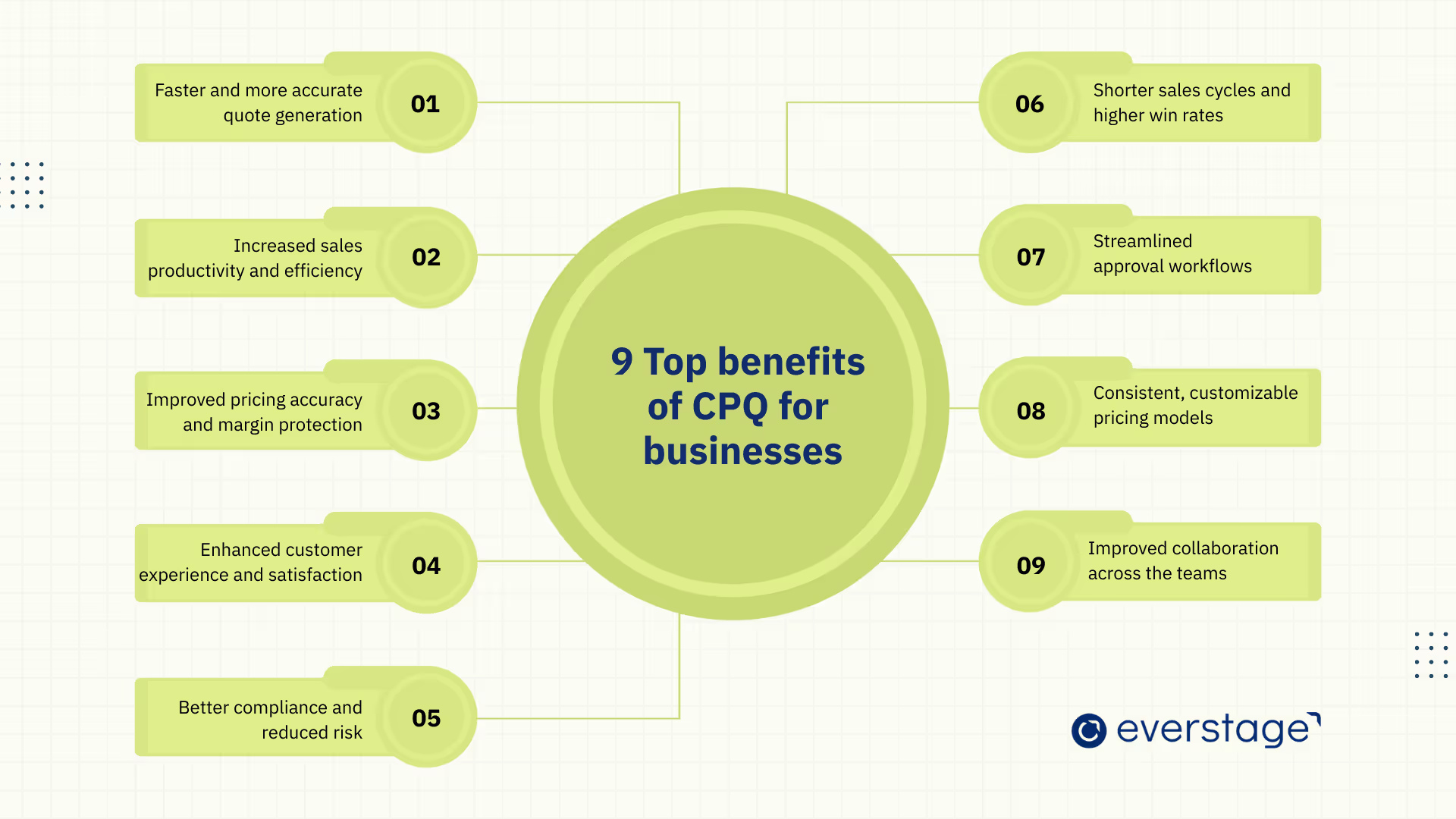
CPQ solutions deliver measurable improvements across multiple dimensions of sales operations. These aren't theoretical advantages; they're outcomes that show up in faster deal cycles, higher win rates, and better margin management.
1. Faster And More Accurate Quote Generation
Manual quoting is slow because it requires research, calculation, and validation at every step. Sales reps look up product specs, check pricing tables, calculate discounts, and verify configurations with engineering or operations. Each of these steps introduces delay and potential error.
CPQ collapses this process into minutes. The system already knows which products work together, what they cost, and what discounts apply. Reps configure products through guided workflows, pricing is calculated automatically, and quotes are generated instantly. What used to take days now happens during the customer conversation.
Accuracy improves dramatically because the system eliminates manual data entry. Pricing comes from a single source of truth, not spreadsheets that might be outdated. Configuration rules prevent incompatible combinations before quotes go out. The result is fewer revision cycles, fewer fulfillment delays, and customers who receive quotes they can trust.
2. Increased Sales Productivity And Efficiency
Sales reps spend roughly 70% of their time on non-selling activities, according to Salesforce research. Quote creation is one of the biggest time sinks: configuring products, calculating pricing, routing approvals, and generating proposal documents.
CPQ automates all of this. Configuration happens through clicks, not research. Pricing is calculated in real-time without manual formulas. Approvals route automatically based on predefined thresholds. Quote documents are generated with branded templates and accurate customer data.
This automation frees up capacity. Instead of spending five hours building a complex quote, reps spend 20 minutes. That saved time gets redirected toward higher-value activities, prospecting, discovery calls, relationship building, and closing deals. The productivity gain compounds across your entire sales team.
3. Improved Pricing Accuracy And Margin Protection
Pricing errors cost margin. A rep might apply the wrong discount tier, miscalculate volume pricing, or forget to include a surcharge for custom configurations. These mistakes either reduce profitability or require embarrassing corrections after the quote is sent.
CPQ prevents these errors through dynamic pricing rules built into the system. List prices come from your product catalog. Discount tiers apply automatically based on customer segment, deal size, or contract terms. Volume pricing calculates correctly regardless of quantity. Surcharges for customization apply according to predefined logic.
The system also protects margins by enforcing discount limits. If a rep tries to offer a discount beyond their approval threshold, the quote routes to a manager automatically. This is easier to enforce consistently when pricing is broken down into a CPQ price waterfall, so every discount and adjustment is visible at each stage rather than buried in the final number
4. Enhanced Customer Experience And Satisfaction
Customers expect fast, accurate responses. When they request a quote, they're comparing your responsiveness against competitors who might get back to them first. Delays create doubt. Errors create frustration. Multiple revisions suggest you don't understand your own products.
CPQ improves the customer experience and customer satisfaction in several ways. First, quotes arrive faster, often within hours instead of days. Second, quotes are accurate, so customers don't receive follow-up emails with corrections or scope changes. Third, quotes are personalized to their specific requirements, showing that you understand their needs.
The system also enables self-service buying experiences. For simpler products or repeat purchases, customers can configure and price solutions through a portal without waiting for a sales representative. This flexibility meets buyers where they are; some want guided selling, others prefer self-service efficiency.
5. Better Compliance And Reduced Risk
Every industry has pricing regulations, approval requirements, and compliance standards. Financial services must follow disclosure rules. Healthcare has strict pricing transparency requirements. Manufacturing needs to track regulatory certifications for components.
CPQ builds compliance into the quoting process. The system applies required disclosures automatically based on product type or customer location. It enforces approval workflows that ensure proper review before quotes go out. It maintains audit trails showing who configured what, when pricing was applied, and which approvals were obtained.
This standardization reduces compliance risk. Quotes follow the same process every time, eliminating the variability that creates violations. When audits happen, you have documentation showing that your quoting process adheres to policies and regulations.
6. Shorter Sales Cycles And Higher Win Rates
Speed matters in competitive deals. The first vendor to respond with an accurate, comprehensive quote has an advantage; they set the baseline that competitors must beat. Delays give buyers time to explore alternatives or reconsider whether they need the solution at all.
CPQ shortens sales cycles by eliminating the delays that slow deals down. Quotes generate faster. Approvals route automatically instead of sitting in email inboxes. Revisions happen in minutes because the system recalculates everything instantly when configurations change.
This speed translates into higher win rates. Customers appreciate responsiveness. They trust vendors who demonstrate operational efficiency in the sales process, which suggests the same efficiency will carry through to delivery and support.
7. Streamlined Approval Workflows
Approval bottlenecks kill deal momentum. A quote sits waiting for a manager's signature while the customer evaluates other options. By the time approval comes through, the buyer has already made a decision.
CPQ automates approval routing based on business rules. Deals within standard discount limits auto-approve. Deals requiring special pricing route to the appropriate manager automatically, with all context included, customer history, competitive situation, and margin impact. The system sends notifications, tracks pending approvals, and escalates if responses don't come within defined timeframes.
Businesses can set multi-level approval workflows based on deal characteristics. A 10% discount might need approval. A 25% discount might require two. Strategic accounts might follow different workflows than transactional deals. The CPQ enforces these rules consistently, ensuring proper oversight without creating unnecessary delays.
Learn more about cpq automation to understand how automated quoting drives speed, accuracy, and margin control across the sales process.
Let’s dive in.
8. Consistent And Customizable Pricing Models
Pricing inconsistency creates problems. One rep quotes a product at one price, another quotes it differently, and customers who compare notes lose trust. Inconsistency also makes forecasting difficult; if pricing varies unpredictably, revenue becomes hard to project.
CPQ standardizes pricing across your entire sales organization. All reps work from the same product catalog, price lists, and discount structures. A customer in Boston gets the same base pricing as a customer in Seattle (unless regional pricing rules specify otherwise).
This consistency builds trust and eliminates the internal conflicts that arise when pricing varies without clear justification.
At the same time, CPQ allows controlled customization. You can define customer-specific pricing agreements, volume discount tiers, promotional pricing windows, and special terms for strategic accounts.
The system applies these variations automatically based on who's buying, what they're buying, and when, without requiring reps to remember exceptions or manually adjust pricing.
9. Improved Collaboration Across Sales, Finance, And Operations
Disconnected systems create silos. Sales quotes from outdated price lists. Finance doesn't know about special pricing until deals close. Operations can't forecast production because they don't see what's being quoted. These gaps slow everything down and create conflicts when information doesn't match.
CPQ creates a single source of truth that all departments access. Sales configures products, knowing the data comes from the current product catalog. Finance sets pricing rules and discount policies that the CPQ enforces automatically. Operations sees what's being quoted in real-time, allowing better capacity planning and inventory management.
This shared visibility improves collaboration. Finance doesn't need to chase sales for deal details; they see everything in the system. Operations doesn't get surprised by orders for products that weren't supposed to be sold; configuration rules prevent those scenarios. Sales doesn't wait days for pricing approvals; the system handles routine approvals automatically and routes exceptions to the right people immediately.
The result is faster deal cycles, fewer internal conflicts, and better alignment on what should be sold at what price.
These nine benefits of CPQ software compound over time. Faster quotes lead to shorter sales cycles. Better pricing accuracy protects margins on every deal. Improved collaboration reduces friction between teams. The operational efficiency gains from CPQ don't just make quoting easier; they make your entire revenue engine more effective.
How Does Everstage Enhance CPQ Benefits?
While CPQ platforms deliver core automation, not all systems are built the same. Some require heavy customization, struggle with integrations, or lack the analytics needed to optimize performance over time.
Everstage CPQ addresses these gaps with features designed specifically for modern sales teams that need speed, flexibility, and visibility.
1. Seamless Integration With Existing Systems
CPQ only works when it connects cleanly with your existing tech stack. Disconnected systems force manual data entry, create version control problems, and undermine the automation benefits you're trying to achieve.
Everstage CPQ integrates natively with major CRM platforms like Salesforce and HubSpot, ERP systems like NetSuite and SAP, and billing platforms for contract execution. These pre-built connectors eliminate custom API development and reduce implementation timelines.
Data flows bidirectionally, opportunity information pulls from your CRM into quote configurations, while completed quotes push back as line items. This is what makes CRM and CPQ work as one system. Product catalogs sync from your ERP in real-time, ensuring reps always work with current pricing and availability.
Changes in one system are reflected everywhere automatically, maintaining data consistency without manual intervention.
This integration flexibility extends to your unique business requirements. Whether you need custom field mappings, specialized approval workflows, or connections to proprietary systems, Everstage adapts to your environment instead of forcing you to rebuild processes around the tool.
2. Real-Time Pricing And Approval Automation
Market conditions change. Costs fluctuate. Promotional pricing windows open and close. If your CPQ can't update pricing dynamically, you're either manually managing constant changes or quoting outdated prices that hurt margins.
Everstage enables real-time pricing updates across your entire product catalog. When costs change in your ERP, pricing adjusts automatically in the CPQ. Launch a promotional campaign? The system applies new discounts immediately to all qualifying quotes. Negotiated customer-specific pricing? It activates the moment the contract is signed.
Approval automation works the same way. The system evaluates every quote against your approval matrix, discount thresholds, deal size limits, product-specific rules, and routes approvals intelligently.
Standard deals auto-approve. Edge cases go to the right manager with full context: customer history, margin impact, competitive situation. No more quotes sitting in generic approval queues waiting for someone to notice.
3. Built-In Analytics For Performance Tracking
Most CPQ systems generate quotes but provide limited visibility into how those quotes perform. Which products are most frequently configured? Where do quotes get stuck? What discount levels actually close deals? Without this data, you can't optimize your quoting strategy.
Everstage includes built-in analytics dashboards that surface these insights automatically. Track quoting velocity by rep, team, or region. Identify which product bundles have the highest win rates. See where approvals create bottlenecks. Analyze discount patterns to understand what pricing strategies work in different segments.
This visibility helps sales leadership make data-backed decisions. If certain product configurations consistently require heavy discounting to close, that's a signal to revisit pricing. If quotes for a specific vertical take twice as long to approve, you can adjust approval processes or workflows.
If one team closes deals faster than another despite similar territories, you can identify what they're doing differently and replicate it.
The analytics also support individual rep coaching. Managers can see which reps struggle with complex configurations, apply excessive discounts, or let quotes sit without follow-up. This data turns coaching from guesswork into targeted development focused on specific skill gaps.
Conclusion
As sales processes grow more complex and buyers expect faster, more personalized interactions, CPQ has become a critical enabler for modern revenue teams. The benefits of CPQ extend far beyond faster quote creation; it brings structure, accuracy, and consistency to every stage of the sales cycle.
By automating product configuration, pricing logic, and approvals, CPQ helps businesses reduce errors, protect margins, and shorten sales cycles. Sales teams become more productive, finance teams retain pricing control, and customers receive accurate, timely proposals that build trust and confidence.
These improvements don’t just streamline operations; they directly impact win rates, deal velocity, and overall revenue performance.
However, realizing the full value of CPQ depends on how well it's implemented and supported over time. The most successful organizations treat CPQ as a continuously evolving system, refining rules, workflows, and pricing strategies as products and markets change. That starts with treating it as a proper CPQ project, not just a software install, with clear ownership and planning before configuration begins.
This is where Everstage stands out. With seamless integrations, real-time pricing and approval automation, and built-in analytics, Everstage CPQ helps teams go beyond basic quoting to create a scalable, insight-driven sales engine. It ensures CPQ remains aligned with business goals while delivering consistent value as your organization grows.
If your sales team is slowed down by manual quoting, pricing inconsistencies, or approval delays, CPQ is no longer optional. It’s a foundation for efficient, predictable growth, and with Everstage, it’s one you can build and scale with confidence. Book a demo with us today.
Questions worth asking
The things most people want to know before they commit.
What's the difference between CPQ and CRM?
CRM systems manage customer relationships, track sales pipelines, and store account data. CPQ automates the specific process of configuring products, calculating pricing, and generating quotes based on your business rules. Most CPQ platforms integrate with CRM systems, pulling opportunity data to create quotes and pushing finalized quotes back as line items. Once a quote is approved, contracting takes over, and the CPQ vs CLM guide explains where one system ends and the other begins
How long does CPQ implementation typically take?
The timeline for implementing CPQ ranges from 4-8 weeks for straightforward product catalogs to 3-6 months for complex configurations with extensive integrations. The timeline depends on how clean your product data is, how many custom workflows you need, and whether you're integrating with legacy systems. Starting with high-volume products and adding complexity gradually often delivers value faster than configuring everything at once.
Can small sales teams benefit from CPQ, or is it only for enterprise?
CPQ delivers value at any scale if your products require configuration or your pricing has multiple variables. Small teams benefit from time savings and error reduction, while larger teams unlock additional value through standardized processes, advanced analytics, and the ability to scale without adding operations headcount. The real determining factor is deal complexity, not team size.
What industries benefit most from CPQ?
Manufacturing, SaaS, telecommunications, high-tech, and financial services see the strongest CPQ impact because they manage configurable products, dynamic pricing, or both. Any industry where sales teams spend significant time building quotes or frequently make configuration errors can benefit from CPQ automation. The common thread is complexity. If customization meets scale in your business, CPQ likely applies
How does CPQ handle pricing changes and product updates?
Modern CPQ systems sync pricing and product data in real-time from your ERP or product catalog, so changes propagate instantly without manual updates. When costs change or new products launch, the system updates automatically across all active quotes and configurations. This centralized management eliminates version control problems and ensures reps always work with the current pricing.
What happens if our products or pricing models change frequently?
Frequent changes make CPQ even more valuable because it handles updates through centralized management, change pricing, or product rules once, and all future quotes reflect the update immediately. The system maintains version history, so old quotes remain valid while new quotes use current rules. The more your offerings change, the more critical CPQ becomes for maintaining accuracy across your sales organization.