TL;DR
- Perplexity's own comp reporting used to take three weeks. Once a diagnostic layer sat on clean data, the team modeled a CFO's spend-and-attainment question and answered it while the CFO was still in the room.
- Perplexity tried building its own comp tool first and scrapped it: too much SQL and mapping for a team that needed something simpler to maintain.
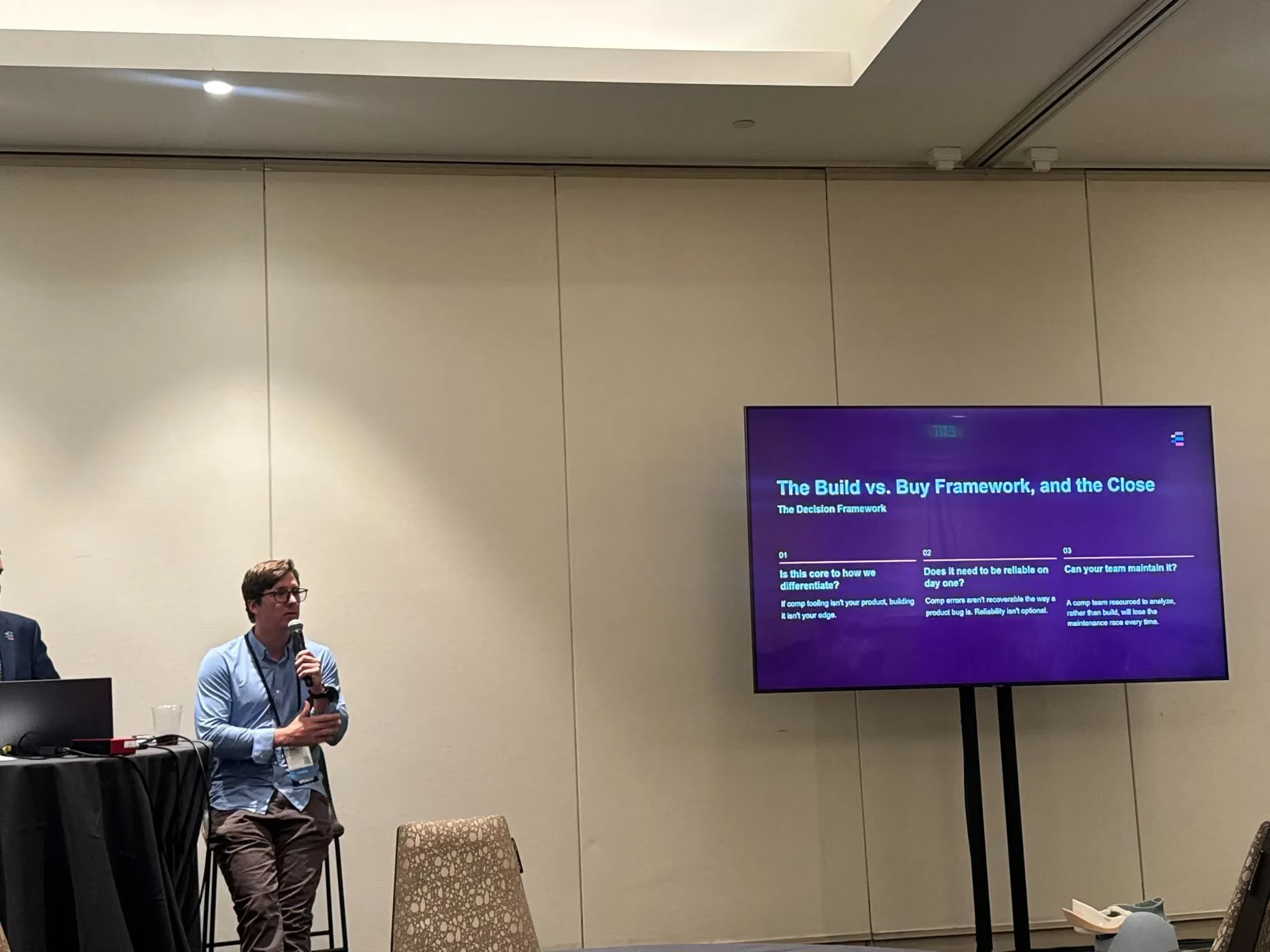
- The build-vs-buy call comes down to three questions: is this core to how you differentiate, does it need to be reliable on day one, and can your team actually maintain it?
- AI amplifies whatever infrastructure already exists underneath it, for better or worse: solid data turns it into a decision engine, and messy data just produces mistakes faster.
Every AI vendor pitch this week has followed the same script: automate your comp workflows, get your numbers faster. Nathan Follen, Head of Enterprise Ops and Systems at Perplexity, opened his session by stepping away from that script entirely. His point was structural: AI doesn't design better comp plans or replace judgment, it changes what a comp team can see and how fast they can act on it. The intelligence gap he named is simple to describe and hard to close: most comp teams can see what they paid out, but not why it worked or whether it should happen again.
Comp data, in Nathan's framing, is one of the richest and most underused datasets sitting inside a GTM stack. It shows what's driving rep behavior and which plan components are actually earning their keep. Most enterprise comp teams already have this data. Getting an answer from it the same day they need one is another matter entirely.
Three questions your comp data probably can't answer
The session broke the intelligence gap into three specific questions most comp stacks can't answer today.
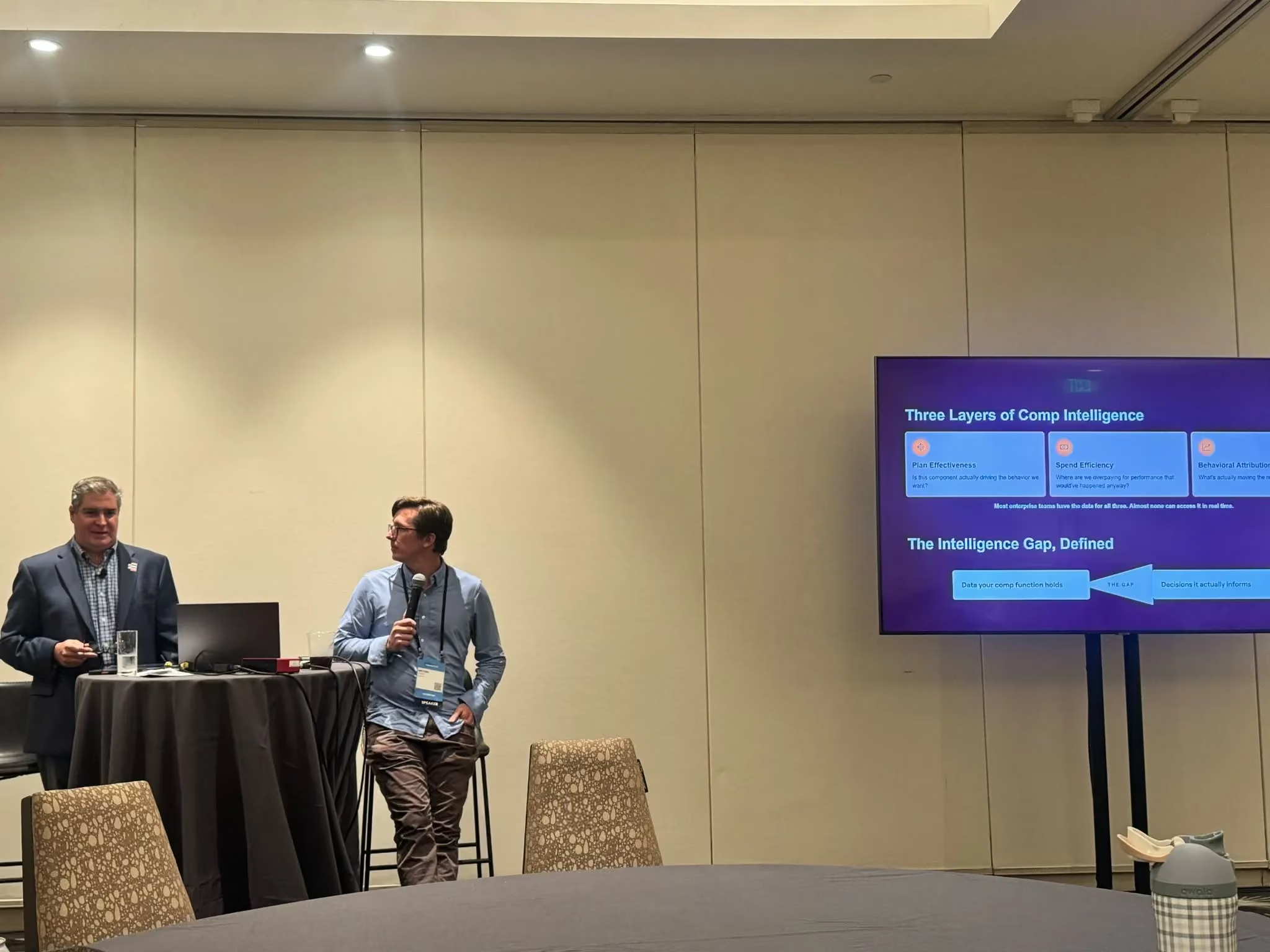
Four things create that gap, per the session. Dashboards go stale the moment they're published. Report cycles take three weeks to turn around a custom question. Data sits siloed across systems that don't talk to each other. And comp teams are resourced to process payments, not to analyze what those payments reveal.
Plan adjustments that should happen mid-quarter don't. QBRs turn into justifying what already happened instead of deciding what's next, and comp spend becomes hard to defend the moment a board asks about it.
Three cases from inside Perplexity's comp team
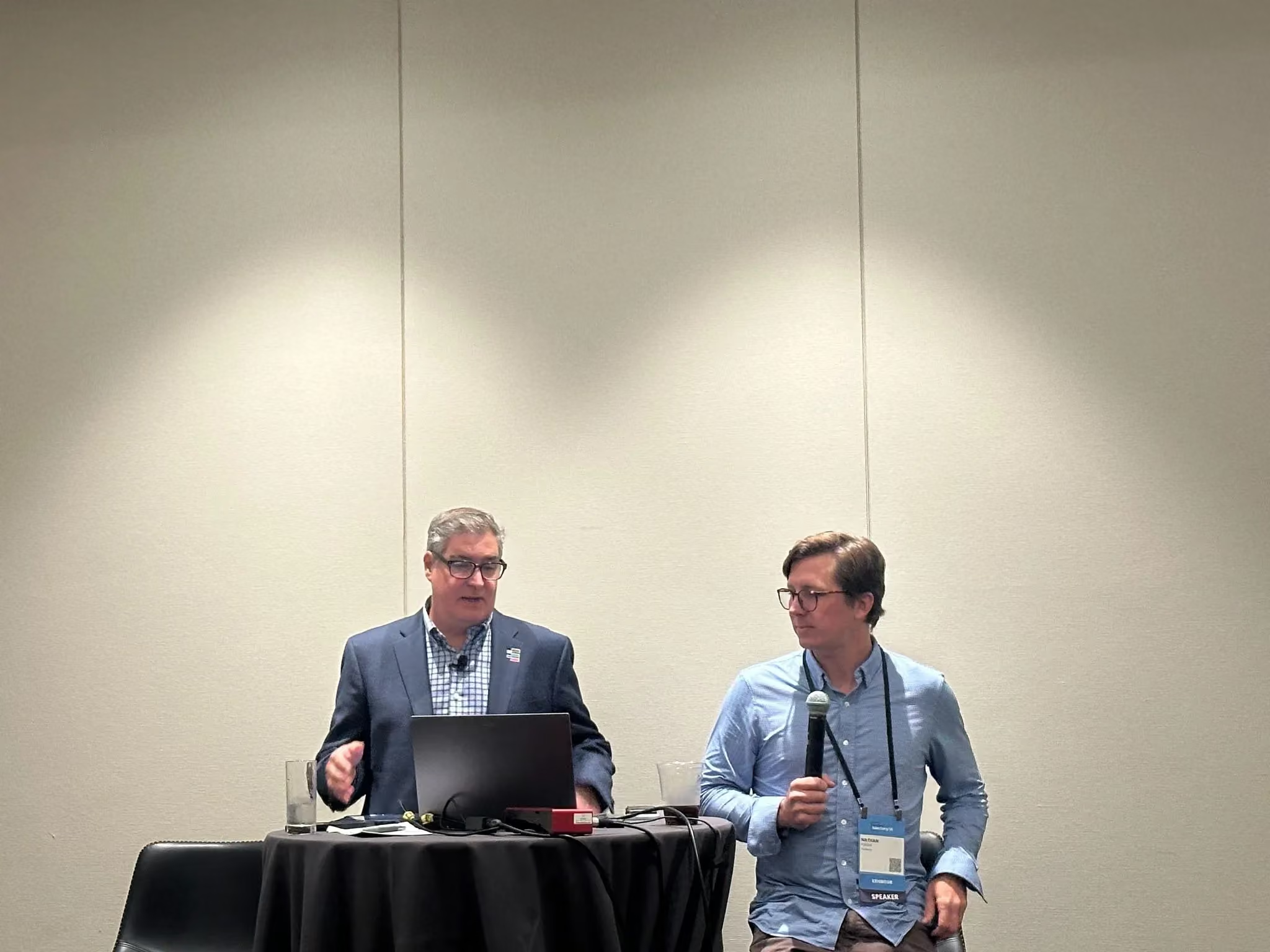
None of this stayed theoretical. The session walked through three real examples from Perplexity's own comp function.
None of these three needed new software built to solve them. They needed a diagnostic layer sitting on top of comp data that was already there.
Building the plan from zero
Perplexity started this whole conversation from zero: no comp plan, and sellers closing deals with no commission attached to them. Once the team prioritized fixing that above every other systems project, the whole thing went from idea to a live plan in about a week and a half. They connected their commission data to their CRM and data warehouse directly, then used Claude, GPT, and other models to back-test multiple plan structures against each other, asking each model to find holes in what the other one had designed.
Once the plan went live, the team noticed something they hadn't planned for: reps preferred speed over size, closing several smaller deals rather than chasing one large account
That pushed Perplexity toward a dual structure: a self-serve, product-led pipeline for volume, plus accelerators reserved for the large enterprise deals. A weekly anomaly check now runs against the data, watching for what changed and what looks off. The goal is one source of truth and fewer arguments at the end of the quarter.
The build-vs-buy call
Perplexity is, by its own description, a build-by-default company. Building was the strong prior going into this: full control over the data pipeline, no dependence on an outside vendor. It got scrapped anyway: too much SQL and mapping to maintain, for a team that needed reliable data in one place more than a custom interface.
Before the team evaluated a single vendor, they built an internal comp model themselves, and that process is what surfaced the actual requirements: OAuth, role-based data visibility, a maintenance cadence they could sustain every quarter. Once it was clear comp tooling wasn't where Perplexity's engineering edge lived, they bought Everstage instead, handing vendors the same must-have list they'd built for themselves rather than starting the conversation from a blank page.
The rule of thumb that came out of the session: if it's not core to your product or competitive advantage, buy it and trust the vendor to own the integrity of what it produces.
One gut check before you build anything
The session closed with a maturity model that doubles as a self-assessment. Four stages: static reporting (backward-looking, manual pulls), descriptive analytics (dashboards and summaries that still lag the business), real-time diagnostic (ask a question, get an answer the same day), and strategic decision engine (comp data drives H2 planning instead of just closing out payout runs).
An in-session poll placed most attendees in the middle two stages, past static reporting but short of a full decision engine.
Solid bytes from the room
A few lines worth screenshotting, straight from the session:
"Everyone here will tell you AI can automate your comp workflows. That's the wrong conversation. The real question is whether comp is producing strategic intelligence, not whether it's faster."
"Bad infrastructure + AI = faster mistakes. Good infrastructure + AI = decision engine."
"If the answer is 'let me pull a report,' you have the gap."
Every part of this session came back to infrastructure. Perplexity had the ambition and the resources to build its own comp tooling, and what decided the outcome was whether the data underneath could support what they were trying to build on top of it. Before your team runs its own AI pilot against comp data, the maturity model above is worth an honest hour: where the function actually sits today, and whether the infrastructure underneath can support the answer you're hoping AI will give you.
This is the final entry in Boston Notes, Everstage's coverage of Sales Comp '26. If you're already thinking about what's next, Everstage is hosting NorthStar on August 20 in New York.