TL;DR
- QuotaPath suits small teams moving off spreadsheets with simple plans, fast setup, and published pricing starting at around $25 per user per month.
- Teams outgrow it as plans add accelerators and splits, CRM sync lags, and finance needs deeper reporting and audit trails.
- A strong alternative reliably syncs CRM data, supports ASC 606 reporting and audit trails, and builds complex plans through no-code design.
- Most platforms quote custom pricing, while QuotaPath publishes tiers, though the total cost of ownership depends more on implementation and support than on the per-seat rate.
- CaptivateIQ suits resourced RevOps teams, Xactly fits regulated enterprises, Spiff favors Salesforce-first orgs, and Performio handles complex, high-volume compliance-heavy plans. Everstage combines no-code complex plans, ASC 606 reporting, and a roughly two-month in-house implementation.
QuotaPath is built for one job: helping growing sales teams move off commission spreadsheets without a heavy rollout. It is quick to set up, syncs with HubSpot and Salesforce, and gives reps real-time visibility into their earnings. For small teams, it offers a simple, affordable way to manage commissions with more transparency.
The challenge appears as teams scale. More reps mean more complex compensation plans, including accelerators, splits, and clawbacks. At the same time, finance teams need reliable reports and audit trails they can trust.
At that stage, a starter platform may start to feel limited. The business now needs deeper reporting, stronger controls, and more flexibility than the platform was designed to provide.
This is why many teams start looking for QuotaPath alternatives. Their needs have expanded beyond simple commission tracking, and they now require a platform that supports more complex plans, stronger financial workflows, and better visibility at scale.
This guide breaks down 5 QuotaPath alternatives for growing sales teams. It covers each platform’s strengths, best-fit use cases, pricing, and when QuotaPath may still be the right choice.
Why Do Teams Outgrow QuotaPath?
QuotaPath helps early-stage sales teams move away from commission spreadsheets without a lengthy implementation. It works especially well for smaller teams that need a simple, fast way to give reps visibility into their earnings.
As teams scale, certain limitations become harder to overlook. Here are the main reasons teams start looking for QuotaPath alternatives.
1.Slower sync with external systems
QuotaPath reviewers mention that syncing with external systems can be slow. This can affect real-time commission visibility, especially when teams depend on CRM or finance data to calculate payouts accurately. As a G2 reviewer mentions, “Whenever I need a new field from our CRM, it takes ~15 minutes for it to sync, so this slows down the process of building out new plans in Quotapath.”
Another notes, “Sometimes the syncing process with CRM takes time.”


2.Learning Curve for New Use Cases
New setups can take time to configure. Reviewers note a learning curve when adding new use cases, and some also cite implementation difficulties or platform complexity. The simpler the compensation plan, the easier QuotaPath is to set up and maintain.
As a user mentions, “I feel that some functions are not so clear at first; it took me a while to get a good understanding of how to adjust certain details.”
3. User selection does not carry across admin tabs
QuotaPath reviewers also mention small workflow issues that can slow down admin work. One example is that user selection does not carry across the Earnings, Approvals, and Payouts tabs.
As one reviewer explains, when they select a rep in Approvals and then move to Earnings, the platform resets the view to the first user. They have to select the same rep again each time.
For one rep, this may feel minor. But during month-end close, admins may need to verify earnings, approve commissions, and confirm payouts for many reps. Repeating the same selection across tabs can add unnecessary manual effort to the process.

These issues can push teams back toward manual work. Finance may export data to spreadsheets for reporting, while RevOps may manually patch sync gaps. That is usually when teams start comparing QuotaPath alternatives. The platform may still work for simple commission tracking, but scaling teams often need more control, deeper reporting, and stronger support for complex compensation plans.
What to Look for in a QuotaPath Alternative
When you evaluate alternatives, the platform should clear this checklist:
Data and Integrations
- ☐ Syncs with your CRM reliably and in near real time
- ☐ Pulls every field finance and ops actually need, with no gaps
Finance and Compliance
- ☐ Deep, sliceable reporting, not just rep-facing dashboards
- ☐ ASC 606-aligned accruals and a complete audit log of plan changes
- ☐ Role-based access and SOC 2-grade security
Plan Flexibility and Operation
- ☐ No-code design for complex logic: tiers, accelerators, SPIFs, splits, clawbacks, overlays
- ☐ Plan changes owned by RevOps and finance, without engineering or consultants
- ☐ Stays efficient to run as headcount and plan complexity grow
Top 5 QuotaPath Alternatives at a Glance
QuotaPath alternatives compared: best fit, pricing, and standout strength
** Pricing figures are third-party estimates where vendors do not publish rates; treat them as directional.
The Top 5 QuotaPath Alternatives in Detail
Let us look at each platform in detail
1. Everstage
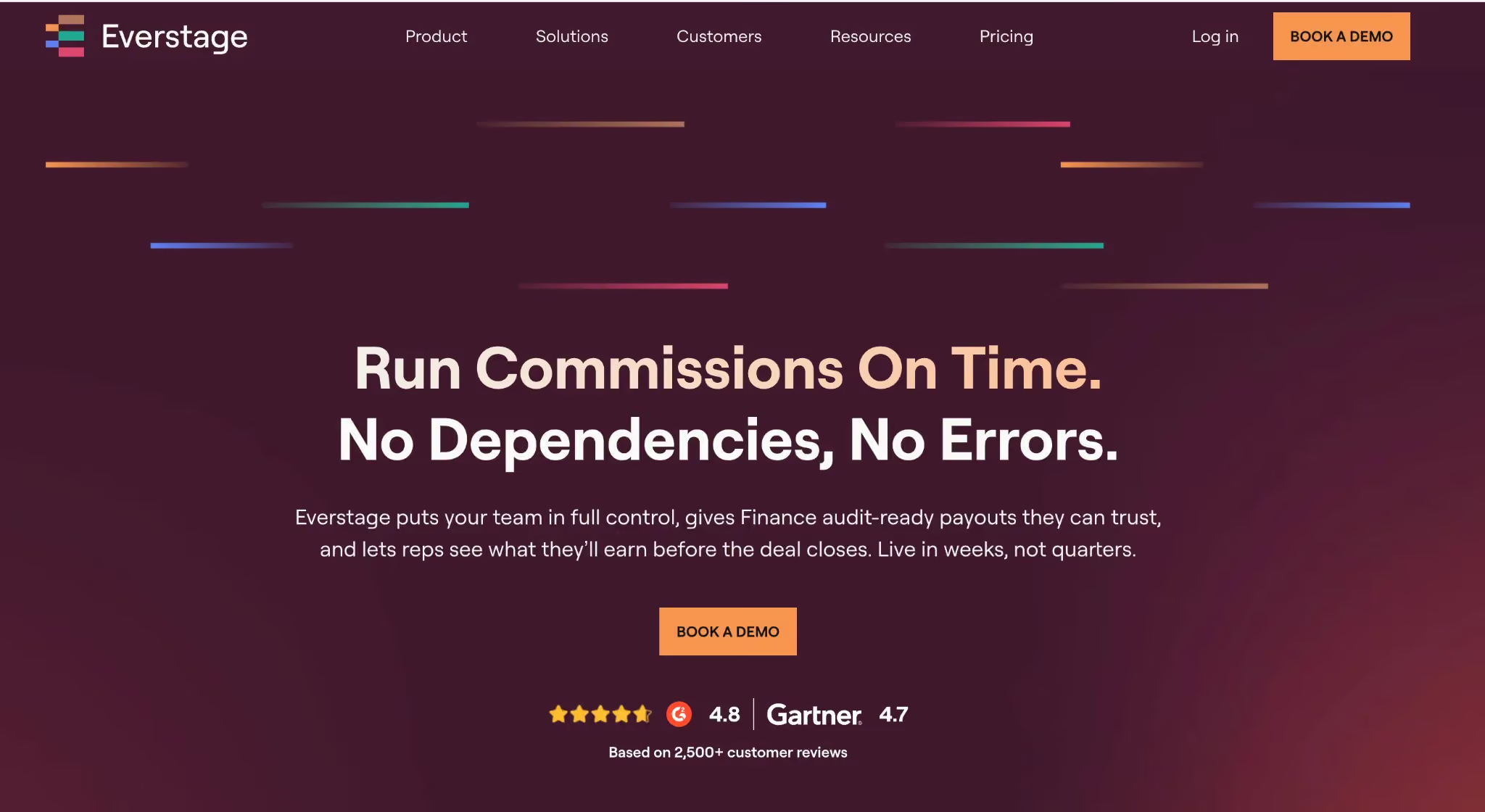
Everstage is a no-code incentive compensation platform built for mid-market and enterprise teams, and it lines up almost exactly with where QuotaPath users hit a ceiling.
It holds a 4.8 out of 5 on G2, and in March 2025 was named a Strong Performer in The Forrester Wave, where the report noted that customers rave about the overall user experience and live support they receive from Everstage.
If QuotaPath is where teams start, Everstage is where many go when comp gets serious.
The QuotaPath Gaps it Closes
1.Complex Plans Without the Upkeep Penalty
Everstage's no-code plan designer lets you build and change intricate plans from scratch. As Everstage describes it, ops owns every change, with no engineering tickets and no consultant queue.
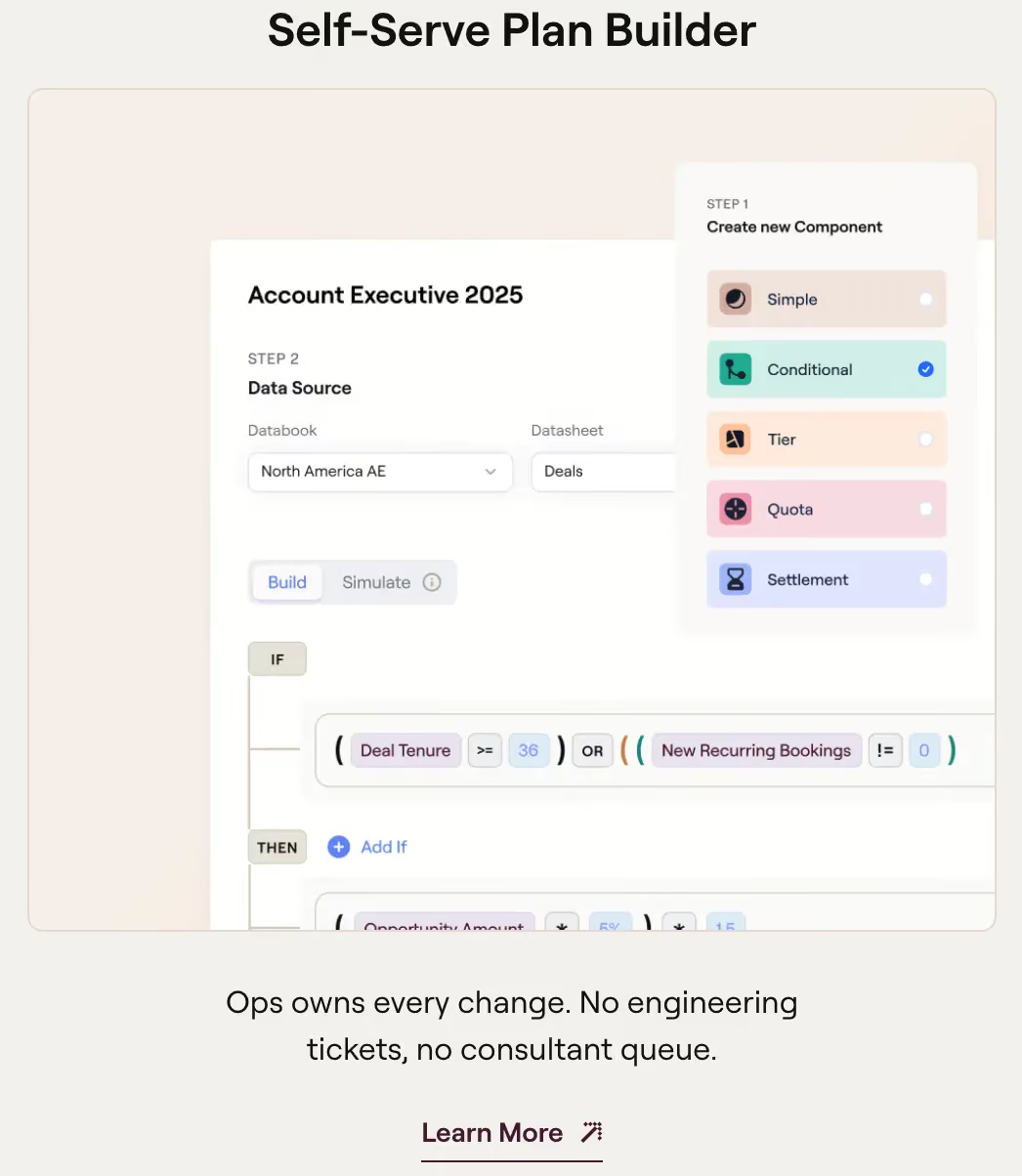
That directly answers the QuotaPath pattern, where customization tightens and maintenance grows as logic becomes more complex.
2.Finance-Grade Reporting and ASC 606
Everstage provides a single audit trail from plan to payout with ASC 606-ready reporting. Its ASC 606 functionality creates commission amortization schedules and waterfalls for expense recognition. Its reporting is BI-powered, going beyond basic statements to custom dashboards.
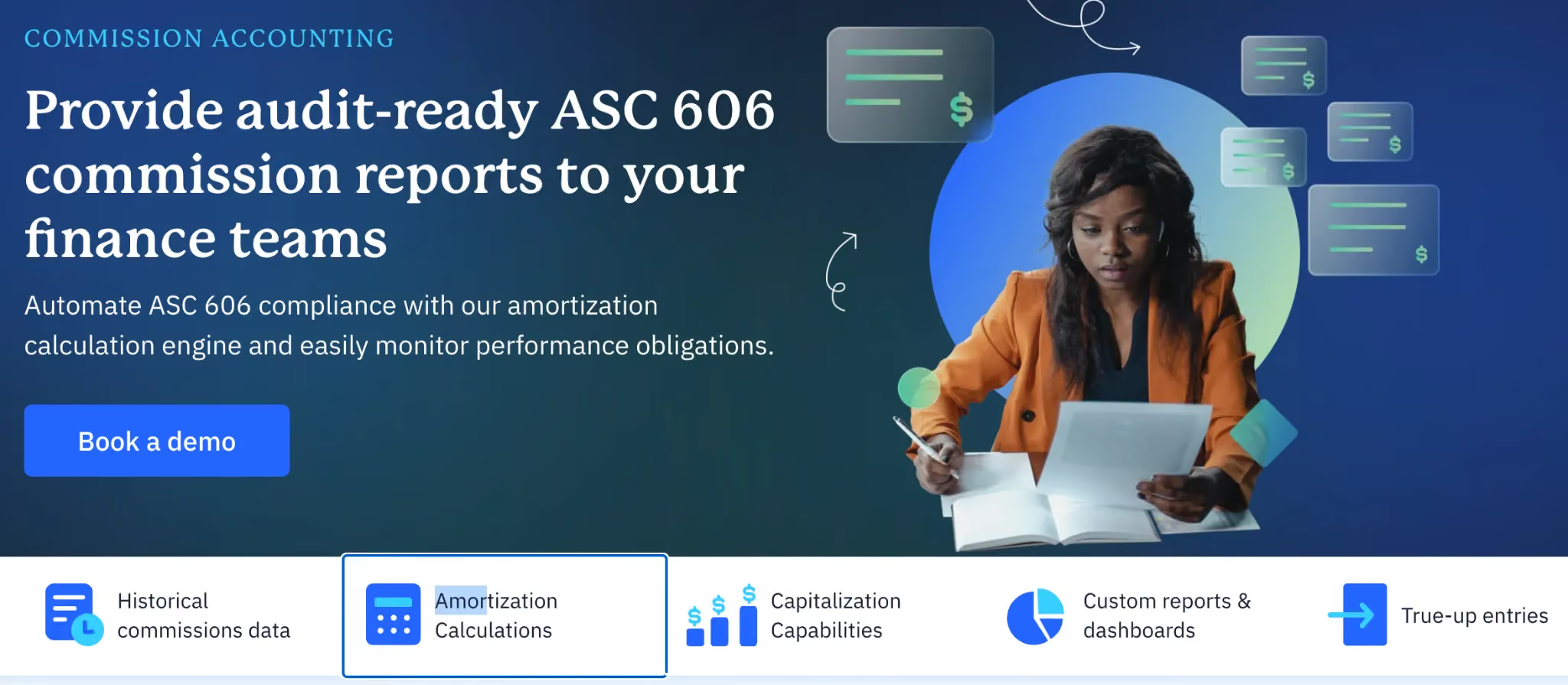
That covers exactly what QuotaPath reviewers said it lacked: real reporting depth, GAAP support, and usable ASC 606.
3.Built to Run at Scale.
Everstage handles implementation in-house rather than through third-party consultants, with a user-reported average go-live time of 2 months on G2. A customer on Everstage's site captures the appeal, describing how easily they got started and that they no longer wait on external support to adjust a rule or update a comp plan.


- Additional Strengths
- Everstage also brings depth across the compensation workflow. Crystal lets reps forecast their own commissions from the live pipeline and see how each deal affects their payout.
- Time Machine modeling simulates plan outcomes against past performance, so teams can validate the financial impact before rollout.
- Everstage Planning adds quota, capacity, and territory management, letting leaders model headcount and simulate quota structures side by side.
- The platform has also moved toward an AI-native, Agentic experience, with AI-powered statements and proactive recommendations for plans, quotas, and territories. It connects to your stack through native integrations across CRM, ERP, HRIS, and data warehouses and offers a mobile app for reps on the go.
QuotaPath vs Everstage
2. CaptivateIQ
CaptivateIQ is one of the most established modern no-code ICM platforms, and a serious option for teams that have outgrown QuotaPath and have the RevOps capacity to run something more powerful. It holds a 4.7 out of 5 on G2 and is built around SmartGrid, a spreadsheet-like calculation engine that gives comp teams deep control over complex plans. It closes the same QuotaPath gaps Everstage does, with one important difference in how much lift it asks of your team.
The QuotaPath Gaps It Closes
- Spreadsheet-Like Control Over Complex Plans: SmartGrid lets compensation admins build and modify complex plans themselves without engineering, covering accelerator tiers, clawbacks, SPIFs, and multi-product splits.
- Accounting-Grade ASC 606 Compliance: Built with CPAs in mind, CaptivateIQ aligns payouts with ASC 606 and ASC 340-40 amortization schedules. It supports asset and portfolio approaches, multi-currency, journal entry support, and audit logs for quarter close.
- Enterprise Scale, With a Heavier Lift: SmartGrid scales to millions of records and complex multi-region plans. It is best for teams with the internal capacity to own the rollout.
Additional Strengths
CaptivateIQ adds a sandbox for testing plan changes before they go live, CaptivateIQ Planning for territory and quota workflows, and AI built for comp through CaptivateIQ Agents.
Its data-agnostic connectors pull from Salesforce, NetSuite, Snowflake, and more, and the spreadsheet-like interface suits admins who already live in Excel.
QuotaPath vs CaptivateIQ
3. Xactly
Xactly is the enterprise incumbent, the category veteran that has been in this market longer than most competitors. It closes QuotaPath's gaps thoroughly, but it asks for the most overhead of any tool here.
The QuotaPath Gaps It Closes
- A Configurable Engine for Intricate Plans: Xactly's engine handles complex multi-tier plans, accelerators, and SPIFs at global scale, well beyond QuotaPath's simpler templates.
- Deep ASC 606 and Revenue Compliance: Xactly's Commission Expense Accounting delivers full capitalization and amortization in compliance with ASC 606 and IFRS 15, plus territory and quota modules.
- Enterprise Governance, Enterprise Overhead: Xactly scales to global, high-volume programs, but the lift is heavy: implementations can run up to six months, ongoing professional services are standard rather than optional, and pricing runs far higher than mid-market tools.
Additional Strengths
Xactly's long tenure shows in its proprietary pay and performance benchmark data and AI-driven forecasting, and it offers mature territory, quota, and planning modules proven across large global and public companies.
QuotaPath vs Xactly
4. Salesforce Spiff
Spiff, acquired by Salesforce in 2023, is the natural pick for organizations standardized on Salesforce. It is known for a modern rep experience and real-time visibility inside the CRM. Its strengths and its limits both trace back to that Salesforce-centric design.
The QuotaPath Gaps It Closes
- Native Salesforce Sync: Spiff pulls opportunity data directly from Salesforce without manual uploads, giving reps real-time visibility within the CRM and addressing the sync-lag complaints QuotaPath users raise about Salesforce-heavy stacks.
- Complex Plan Logic via Spiff Designer: Spiff Designer models more complex plan logic than QuotaPath's templates, though it relies on proprietary scripting that can create specialist dependencies.
- Strongest Inside the Salesforce Ecosystem: The experience shines for Salesforce-standardized teams, but it is less compelling outside that stack, and post-acquisition reviews flag deteriorating support and forced platform migrations, with non-Salesforce connectors typically costing extra.
Additional Strengths
Spiff offers a polished, engaging rep interface with a commission estimator, and for teams living entirely in Salesforce, it feels like a native extension of the CRM rather than a separate tool.
QuotaPath vs Salesforce Spiff
5. Performio
Performio is a veteran sales performance management platform built for complex, high-volume commission programs. It specializes in organizations whose plans other tools struggle to model.
The QuotaPath Gaps It Closes
- Component-Based Plans at Volume: Performio's component-based, drag-and-drop plan builder handles multi-tiered plans, and the engine reliably processes massive transaction volumes across tens of thousands of payees, far beyond QuotaPath's range.
- ASC 606 and SOX Compliance: Performio fully supports ASC 606 and SOX compliance, with audit trails and audit logs that automatically track calculations and provide role-based visibility, covering the depth of compliance that QuotaPath lacks.
- Built for Scale, Dated in Places: Performio is reliable at scale, but reviewers note the trade-off: the UI can feel utilitarian compared to Spiff or QuotaPath, with a steeper learning curve for new admins, and some report slow updates.
Additional Strengths
Performio offers deep incentive modeling for budget forecasting, AI-powered analytics, flexible data import from almost any source, and robust data security, with integrations such as Salesforce and NetSuite.
QuotaPath vs Performio
QuotaPath Alternatives Compared Side by Side
This table maps how each platform is positioned across key capabilities. "Strong" marks a core, well-established strength. "Moderate" marks a capability the platform supports as a secondary focus.
Capability comparison across QuotaPath and the alternatives
QuotaPath's standout columns are exactly what a small team needs: fast setup, real-time dashboards, and a fit for simpler plans. The other platforms pull ahead as complexity and scale grow, which is where most evaluations begin.
Pricing Comparison
Most sales commission software is quote-based. QuotaPath is the exception, with published tiers from around $25 per user per month (Essential) up to $50 (Premium).
The rest price on request, so public figures are third-party benchmarks and only directional: Xactly runs roughly $900 to $1,800 per user per year, CaptivateIQ around $660, and Spiff, Everstage, and Performio are quote-only (one source puts Everstage's median in the low $40,000s annually).
What matters more is the total cost of ownership. Implementation effort, plan complexity, and support tier drive the actual number, so a heavy consultant-led rollout costs well above the license fee, while a faster in-house implementation keeps it down. That favors Everstage and its reported two-month, in-house go-live.
Integrations
QuotaPath connects to common stacks including HubSpot, Salesforce, Stripe, and accounting and data warehouse tools, with its HubSpot integration.
Everstage offers native integrations across Salesforce, HubSpot, Pipedrive, NetSuite, Snowflake, and BI tools like Power BI and Tableau, and surfaces commission data, including Crystal forecasts, inside Salesforce.
CaptivateIQ supports Salesforce write-back. Spiff's advantage is native Salesforce automation. Xactly and Performio cover Salesforce and the wider enterprise stack.
Security and Compliance
Everstage provides SOC 2 Type II security, role-based access controls, and full audit trails on plan changes and adjustments.
CaptivateIQ, Xactly, and Performio similarly offer enterprise-grade security and audit capabilities, with Xactly and Performio especially built with auditability in mind for larger, regulated organizations. Confirm current certifications and data-residency options with any vendor during due diligence.
Support and Implementation
Everstage's customers work directly with its own product and implementation teams rather than third-party consultants, which ties to its fast go-live and high satisfaction.
QuotaPath earns consistent praise for responsive support and hands-on onboarding, a fit for its smaller-team base.
Larger enterprise platforms more often route implementation through partners or longer professional services engagements, adding capability at the expense of time and cost.
Choosing the Right QuotaPath Alternative
QuotaPath does its job well. It moves small teams off spreadsheets quickly and affordably, and gives reps real-time clarity they can trust. The need for an alternative comes with growth. As plans grow more complex, finance needs audit-grade reporting, and headcount rises, teams start looking for a platform built for that scale.
For most teams outgrowing QuotaPath, Everstage is the strongest all-around fit, with a no-code designer for complex plans, ASC 606-ready finance reporting, and fast in-house implementation.
The others fit more specific needs. CaptivateIQ suits teams that have the RevOps resources to run a powerful, flexible engine. Xactly is well-suited to large, regulated enterprises that need deep compliance and governance. Spiff is the natural choice for Salesforce-first organizations. Performio is built for complex, high-volume plans in compliance-heavy environments.
The fastest way to know is to see it on your own plans. Book a demo with Everstage and run your real numbers before you commit.
Frequently Asked Questions
1.How does Everstage compare to QuotaPath?
QuotaPath is designed for small teams and simple plans, with published entry pricing and fast setup. Everstage targets mid-market and enterprise teams needing complex plans, deeper forecasting, and finance-grade control. Both rate highly; they suit different stages of growth.
2.What are QuotaPath's main limitations?
The most cited limitations are limited customization for complex plans, lighter reporting and forecasting than on larger platforms, and missing financial features like budget management. For simple plans, these rarely matter; they surface as plans and headcount scale.
3.What does sales commission software cost in 2026?
Most vendors quote custom pricing. QuotaPath is the exception, starting around $25 per user per month. Third-party benchmarks put Xactly near $900 to $1,800 per user per year. Total cost of ownership usually matters more than the per-seat rate.
4.How long does implementation take?
Everstage reports an average go-live of around two months, fast for the category, partly because its own team handles implementation. Enterprise platforms like Xactly run for longer, often for several months, depending on plan complexity.
5.How do you migrate from QuotaPath to Everstage?
Map your comp plans and historical data, rebuild them in Everstage's no-code designer, connect your CRM and finance systems, then run both platforms in parallel for one cycle to validate payouts before cutover. Everstage's own team guides it.
6.Who should stay on QuotaPath?
Small teams running simple, stable plans who value published pricing, fast setup, and ease of use. If you are not yet hitting limits on plan complexity, forecasting, or reporting, there may be no reason to move.