Why we built Eva, and what it means for revenue execution
By Siva Rajamani, CEO, Everstage
Spend a day with a RevOps team at month-end and you see the same thing everywhere. A rep messages to ask why their commission is short. The CFO asks for commission cost by segment, and someone loses two days exporting data to build it. A new hire lands on the wrong ramp, and nobody notices until payday. Someone rebuilds the same plan scenario in a spreadsheet for the third time because leadership changed one assumption.
None of this is strategy. All of it is necessary. And it eats the week.
That's the problem we set out to solve with Eva, which we're launching today in Everstage Incentives.
Revenue execution is where strategy meets the rep
When we started Everstage, we were focused on getting people paid accurately. Over time it became clear that commission plans are something bigger. They are the most precise expression of a company's go-to-market strategy. Every accelerator, every SPIF, and every split rule is a decision about what the business wants its sellers to do. Quotas and territories decide where sellers spend their time. Pricing and quoting rules decide what they sell, and at what margin.
We call this revenue execution: turning strategy into the rules that plan, price, and pay for revenue, then running those rules accurately every day. That's why Everstage now spans Planning, CPQ, and Incentives on one platform. When those three live in separate systems, strategy gets lost in translation between them. When they share the same data and the same rules, a change in one shows up correctly in the others.
AI is changing what RevOps is for
The way RevOps works is changing fast. AI can now handle much of the execution work that used to fill a RevOps team's calendar: pulling data, reconciling numbers, building the first draft of a plan or a report. That raises a fair question for every RevOps leader. If the execution work goes away, what's left?
My answer: the most important part. Someone has to decide what the rules should be. Someone has to set the guardrails, decide what needs approval, and own the outcome when the CFO asks why commission costs went up. That's the architect's job, and it's the job most RevOps teams have always wanted to do but never had the time for.
There's a catch. AI makes decisions faster than most organizations can explain them. In a lot of software, that's acceptable. In compensation, it isn't. An unexplained payout is a dispute. An untraceable change to a plan is an audit finding. A rep who can't understand how they were paid starts looking for a company where they can. In the parts of the business that touch people's pay, quotas, and forecasts, AI needs a governor.
Delegate the work. Keep the control.
That idea shaped every decision we made building Eva.
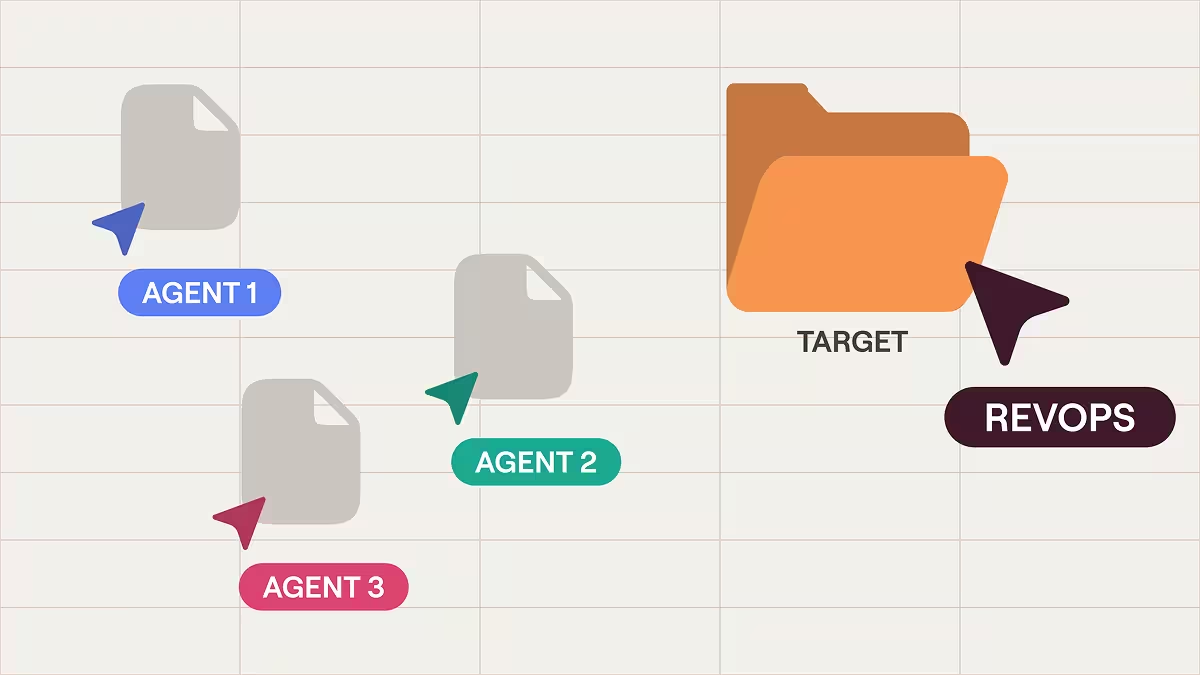
Eva takes on the work that keeps RevOps tactical. It checks every commission run for errors before payday. It keeps plans, quotas, and ramps in sync as people join, move, and leave. It drafts new plans from a plain-language description. It answers questions on demand and builds dashboards from a description, so the executive request that used to take a week of spreadsheets comes back the same day.
But Eva does not act on its own. Every change it proposes comes back to a person for review, through the approval chains your admins already control. Every answer is computed against the same rules that produce official payouts. Every action is traceable. RevOps makes the calls. Eva does the legwork behind them.
Why it has to be one platform
You can bolt an AI chat window onto almost any software. What you can't bolt on is context. An AI that doesn't know your plan rules, your quota assignments, your approval policies, and your payout history is guessing. In revenue operations, a confident guess is worse than no answer.
Eva works because it sits on everything Everstage already knows: the plans, the data, the permissions, and the history. And because Everstage spans planning, quoting, and incentives, Eva is built to work across all three on the same foundation, with the same controls. As we bring Eva to more of the platform, customers don't have to learn a new tool or trust a new system. They get more out of the one they already rely on.
That's what we mean by a platform. Not a bundle of products that happen to share a logo, but one system where strategy, data, and AI work from the same source of truth.
What changes for our customers
The measure of Eva isn't how impressive the demo looks. It's whether a comp admin goes home on time at month-end. Whether a RevOps leader walks into the QBR with the analysis already done. Whether the team finally redesigns the plan they've been meaning to fix for two years.
With most software, you know what you're buying before you buy it. Eva works differently. Because it learns your plans, your data, and your history, it can show you where it helps before you know to ask: the plan logic that has drifted, the report someone rebuilds every quarter, the check nobody has time to run. The most valuable uses of Eva are often the ones customers didn't come looking for.
We built Eva so RevOps can stop chasing exceptions and start setting the strategy. That's the work worth doing, and now there's time to do it.