

.avif)
TL;DR
Sales productivity hacks show how automation, focus systems, and smarter tools can help sales professionals close more deals in less time.
- Automate repetitive admin tasks like CRM updates, emails, and scheduling to free up selling hours.
- Use time blocking and task batching to stay focused and minimize productivity loss from context switching.
- Qualify leads early and consistently using frameworks like BANT or MEDDIC to avoid wasting time on poor-fit prospects.
- Build a personal sales operating system with weekly planning, data tracking, and compensation transparency to stay aligned and motivated.
If you’re a sales professional, you’ve probably had days when you felt like you worked nonstop, yet by evening, you barely moved the needle on your pipeline. Between updating your CRM, chasing down unresponsive prospects, and scrambling to prepare for meetings, your selling hours disappear fast.
And that’s the real challenge: you’re hired to close deals, but much of your day gets eaten up by tasks that don’t directly bring in revenue.
This is exactly where sales productivity hacks come in. They are quick, repeatable strategies that let you increase sales productivity and get more done in less time, without sacrificing quality.
In this blog, you’ll discover nine practical sales productivity hacks that top-performing reps already use to outperform their peers. You’ll also learn why many sales reps struggle with productivity today, plus a step-by-step checklist you can start applying right away.
What Are Sales Productivity Hacks?
Sales productivity hacks are quick, repeatable sales productivity techniques that help you accomplish more in less time, without cutting corners on quality. They can take many forms: workflow automation, pre-built templates, lead qualification frameworks, or even simple calendar tricks that reduce distractions.
Why does this matter?
Because selling hours are your most valuable resource. Research by McKinsey shows that McKinsey reports that non-selling activities consume about two-thirds of the average sales team’s time, and top performers free up more of that to focus on customer-facing (selling) work.
By reclaiming even one or two hours a day through smarter sales processes, you can significantly increase both pipeline efficiency and revenue output. When you apply the right productivity hacks, you start seeing three big shifts:
- Better use of selling hours: Instead of juggling CRM updates, you spend more time in conversations that actually move deals forward.
- Higher ROI per rep: Every task you complete is directly tied to outcomes, whether it’s a booked meeting or a closed deal.
- Improved pipeline efficiency: With fewer bottlenecks, you progress opportunities faster, which means shorter sales cycles and a healthier funnel.
9 Sales Productivity Hacks to Close More Deals in Less Time
.avif)
Sales reps often find themselves buried under endless tasks, leaving little time for what really matters: closing deals. Here are 9 actionable sales productivity hacks that will help you sell smarter, streamline your process, and close more deals in less time.
1. Automate Your Repetitive Tasks
If you’re spending half your day sending routine follow-ups, updating CRM fields, or scheduling meetings, you’re not selling, you’re just maintaining. And that’s a massive productivity leak when you consider this: according to Salesforce’s State of Sales report, sales reps spend only 28% of their time actually selling, while the remaining 72% is consumed by admin and data-entry work.
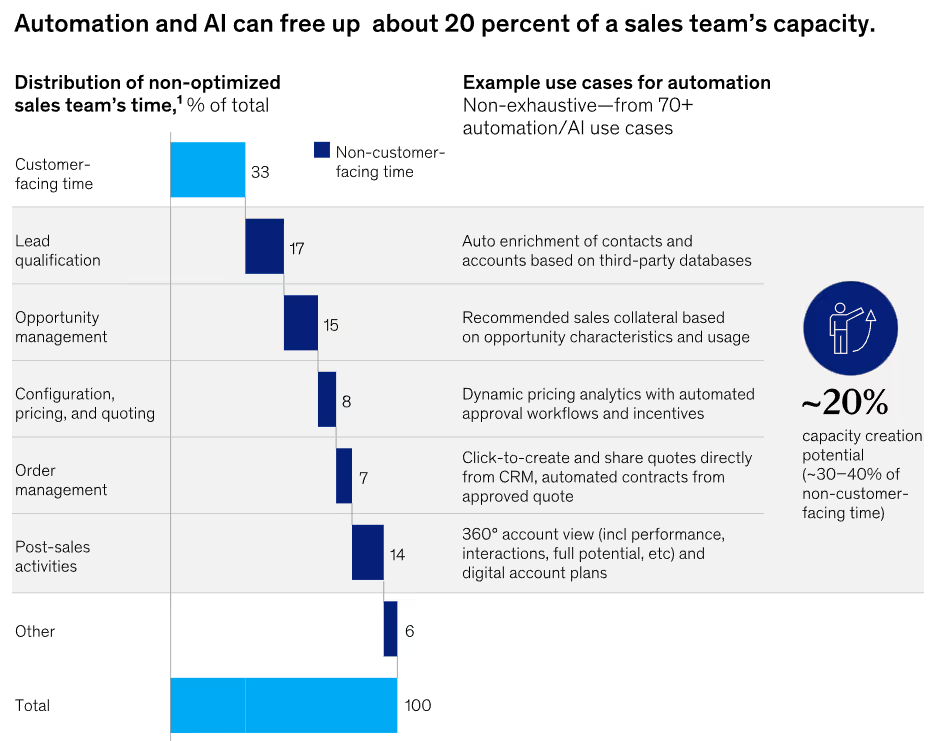
Tasks you should automate right now:
Start with the repetitive tasks that don’t require creativity or judgment:
- Emails: Automate cold outreach, meeting reminders, and post-demo follow-ups using tools like HubSpot Sequences or Outreach.
- CRM updates: Set up workflows that log calls, update deal stages, and assign tasks automatically.
- Meeting scheduling: Replace back-and-forth emails with scheduling links that sync with your calendar via Calendly or Chili Piper.
- Data entry & lead routing: Use automation to capture inbound leads, enrich data, and route them to the right sales rep instantly. Tools like Zapier or Tray.io can connect your CRM, form, and chat systems seamlessly.
- Proposal generation: Integrate automation tools like PandaDoc or Qwilr to pull deal data directly from your CRM and generate personalized proposals in seconds.
These are often the biggest time sinks, and automating them frees up hours every week.
2. Master Time Blocking & Task Batching
Sales isn’t just about volume; it’s about focus. Every time you switch between cold calling, updating a proposal, and checking Slack, those time-consuming shifts make your brain lose momentum. Research from the American Psychological Association found that frequent task switching can cut productivity by up to 40%.
For sales reps, that means fewer calls made, less thoughtful outreach, and slower pipeline movement. Time blocking helps you combat this by carving out uninterrupted chunks of focus time.
How to structure your sales day using time blocks
Think of your calendar as a productivity map. Instead of reacting to tasks as they come in, design your day around focused time blocks that align with your natural energy levels.
9:00–11:00 AM – High-Energy Work (Creative + Strategic)
This is your prime energy window. Block it for new outreach, discovery calls, or demos that require enthusiasm and sharp thinking. Avoid admin or internal meetings here; guard this slot for activities that directly move deals forward.
11:00 AM–1:00 PM – Deep Focus Tasks
Leverage this steady focus period to personalize follow-up messages, qualify leads, or analyze pipeline health. You’re still alert, but better suited for analytical work than spontaneous conversations.
2:00–4:00 PM – Moderate Energy Work (Execution Mode)
Energy naturally dips post-lunch, making it ideal for routine or process-driven tasks, responding to inbound leads, updating CRM fields, or preparing proposals. Use automation here to handle the repetitive parts faster.
4:00–5:30 PM – Low-Energy Wrap-Up (Reflect + Plan)
End your day with light admin work: CRM clean-up, summarizing key conversations, and setting your top three priorities for tomorrow. This small act of closure helps you start fresh the next day.
Pro Tip: Try batching similar tasks into these blocks. You’ll eliminate the micro-delays of context switching and stay in flow longer. Over a week, this simple structure can reclaim hours of productive selling time.
Time blocking works best when it's reinforced at the team level too — see our guide to B2B sales productivity for how sales leaders can build this and other habits into a scalable, org-wide system
Tools for calendar blocking & habit reinforcement
Simple tools like Google Calendar are enough to get started. Block time for “outreach” or “demos” and treat those appointments as unbreakable. For more structure, apps like Sunsama and Motion help reps combine task management with calendar views, so you know exactly when to work on each priority.
3. Use Pre-Built Templates That Actually Convert
Starting every email, LinkedIn message, or objection response from scratch is not only exhausting, it’s inefficient. High-performing sales reps rely on templates to save time while keeping messaging consistent. Templates aren’t shortcuts to laziness; they’re a way to scale proven language that works.
Must-have templates
There are three types of templates you should keep ready at all times:
- Cold email templates that break the ice quickly and establish relevance in the first two lines.
- Follow-up templates that remind prospects of value without sounding pushy.
- Objection-handling templates that address common barriers like budget, timing, or competition.
And if you’re looking for ready-to-use resources, start with our
- Sales Performance Management (SPM) Software RFP Template to streamline vendor evaluation
- Sales Commission Agreement Template for 2025 to standardize your incentive plans with clarity and compliance.
When these are ready to go, you can respond to opportunities in minutes rather than hours.
4. Qualify Leads Smarter and Sooner
One of the biggest productivity drains in sales is spending weeks nurturing prospects who were never a good fit to begin with. Every hour spent on a poor-fit lead is an hour lost that could have gone to a prospect with real buying intent.
Use frameworks like BANT, CHAMP, or MEDDIC
Frameworks exist for a reason; they give you a structured way to filter prospects quickly and consistently.
- BANT (Budget, Authority, Need, Timeline) helps you check if the basics are in place.
- CHAMP (Challenges, Authority, Money, Prioritization) puts more emphasis on pain points.
- MEDDIC (Metrics, Economic Buyer, Decision Criteria, Decision Process, Identify Pain, Champion) is a favorite in complex B2B sales because it forces you to dig into both buyer motivation and process.
When applied properly, these frameworks and sales training principles reduce wasted cycles and ensure your pipeline is full of prospects who can realistically close
Early-disqualification questions that save time
Instead of waiting until the second or third call to filter out bad leads, insert simple disqualification questions into your very first conversation. For example:
- “What’s your budget range for solving this?”
- “Who else on your team needs to be involved in this decision?”
- “How urgent is this problem for you right now?”
If the answers reveal misalignment, it’s better to step away early than to sink weeks into a dead-end.
5. Create a High-Impact Follow-Up System
You already know that “fortune is in the follow-up.” But most reps underestimate just how true this is. Most salespeople leave money on the table because they don’t have a structured follow-up process. A systemized follow-up sales strategy keeps you top of mind, helps in building relationships, and ensures no deal falls through the cracks.
Ideal timing, frequency, and channels
There’s both art and science to effective follow-up. Too frequent, and you risk being seen as pushy. Too infrequent, and prospects forget you. A good rhythm often looks like:
- Day 1: Send a recap or thank-you message within hours of your first call.
- Day 3–4: Share an insight, case study, or resource relevant to their challenge.
- Day 7: Light check-in to see if they had time to review.
- Ongoing: Weekly touchpoints across email, LinkedIn, or even a quick voicemail, until you get a clear yes or no.
Mixing channels matters—an email plus a LinkedIn note often has higher visibility than email alone.
Follow-up automation sales tools and sequences
Manually remembering who to follow up with and when is a recipe for things slipping through. Tools like Yesware and Lemlist let you build automated follow-up sequences with personalized touches baked in. Some even track opens and responses so you know exactly when your message is being seen.
6. Visualize & Track Your Sales Metrics Weekly
If you don’t measure sales productivity, you can’t improve it. Yet many reps and their sales managers only look at their numbers when it’s time for quarterly reviews. That’s too late. Tracking your metrics weekly helps you spot issues before they snowball. The most important sales productivity metrics include:
- Response time (how quickly you reply to leads)
- Close rate (percentage of deals won vs. lost)
- Touches per deal (emails, calls, or meetings before a close)
- Deal velocity (how long it takes an opportunity to move through the pipeline)
Feedback loops: when to adjust based on data
Metrics are only as useful as the actions you take from them. If your response time has slowed, set aside the first 30 minutes of every morning for lead replies. If touches per deal are too high, revisit your messaging and qualification strategy. Regular feedback loops turn numbers into improvements instead of just reports.
7. Optimize Your Sales Stack for Flow, Not Flash
It’s tempting for sales organizations to stack their toolkit with the latest shiny platforms.. But more tools don’t always equal more productivity. In fact, Salesforce reports that 66% of sales reps feel overwhelmed by the number of tools they’re expected to use. If half your time is spent toggling between apps, the tools aren’t serving you; they’re slowing you down.
The first step is to review your current stack and honestly ask: which tools do you use daily, and which ones are just noise?
Integrate tools to avoid context switching
Integrations solve this problem by bringing data and workflows into a single flow. For example, syncing your CRM with your email platform ensures every message gets logged automatically. Tools like Zapier or Make (Integromat) can connect otherwise siloed systems, reducing friction.
Audit your stack every quarter
Sales environments evolve quickly, and so should your stack. A quarterly audit helps you identify what’s working and what’s outdated. Ask yourself:
- Are we paying for tools we barely use?
- Do our core tools integrate seamlessly, or are we duplicating effort?
- Is the stack aligned with how prospects prefer to communicate today?
Flashy tools may look good in a demo, but only a streamlined, well-integrated stack will keep you productive day after day.
8. Build a Personal Sales Operating System (OS)
A sales operating system is like your personal command center. A single place where you track deals, outreach, tasks, and goals. Without one, your work lives across too many platforms: a to-do list on paper, deals in your CRM, notes in a Google Doc, reminders in email. That fragmentation makes it harder to stay focused. Tools like Notion, Trello, and Airtable allow you to centralize everything: daily tasks, pipeline tracking, and even personal learning notes.
Weekly planning + reflection rituals
High-performing reps don’t just work harder during the week; they plan smarter.
- Set aside 30 minutes every Sunday or Monday to plan your week.
- Define your top three sales priorities, identify must-close deals, and schedule time blocks for prospecting.
- At the end of each week, take 15 minutes to reflect: what worked, what slowed you down, and what you can adjust.
When you build a personal sales operating system, you stop operating in reactive mode and start running your day with intention. Instead of asking “what should I do next?”, you always know where your focus belongs.
9. Use a Sales Compensation Platform to Align Incentives and Output
You can have the best CRM, the sharpest templates, and the most refined playbook, but if your sales compensation plan is unclear or unfair, motivation crumbles. When reps don’t understand how their work translates into earnings, they waste energy chasing the wrong deals or burning out on low-value activities.
Common productivity roadblocks caused by poor compensation systems
Misaligned or outdated comp systems create friction in more ways than one. Reps may:
- Spend time double-checking commission calculations instead of selling.
- Focus on short-term deals that don’t align with company goals.
- Lose trust in leadership when payouts are opaque or delayed.
These inefficiencies hurt both individual productivity and overall revenue growth.
How a modern comp platform solves this
Sales compensation platforms streamline the entire process by making incentives transparent and easy to track. Tools like Everstage give reps real-time visibility into earnings, quota attainment, and potential upside. This clarity helps you prioritize the right deals, align your actions with company goals, and stay motivated throughout the quarter.
Why Sales Reps Struggle with Productivity Today
.avif)
1. Manual Tasks Still Dominate Their Day
Most teams don’t have a clear system for managing leads, onboarding, follow-ups, or progress tracking. Despite the rise of sales automation tools, reps still spend most of their day buried in manual work like updating CRM fields, logging calls, and typing out meeting notes. These low-value tasks drain hours that could be spent selling or nurturing relationships.
The fix: Automate wherever possible. Use tools that sync meeting data, auto-log activities, and update CRM fields in real time.
2. Chasing the Wrong Leads Too Often
Reps often waste time chasing prospects who were never a real fit. Without clear qualification criteria or a reliable lead scoring system, they end up filling pipelines with noise instead of opportunities.
The fix: Define and enforce your Ideal Customer Profile (ICP) and lead scoring model. Equip reps with clear signals that indicate buying intent, such as engagement patterns or firmographic data.
3. Poor CRM Hygiene Creates Confusion
A messy CRM isn’t just an inconvenience; it’s a silent productivity killer. Incomplete fields, duplicate records, and outdated contacts make forecasting unreliable and follow-ups easy to miss.
The fix: Establish CRM hygiene as a team habit. Set clear data entry standards, schedule regular cleanups, and use automation to merge duplicates or flag stale records.
4. Reps Burn Out Chasing Unclear Sales Targets
A recent study of 156 B2B salespeople found that unclear expectations and a lack of managerial support directly increase stress and anxiety levels, ultimately hurting performance. In other words, ambiguity doesn’t just lower output; it eats away at mental health and job satisfaction. When reps don’t know exactly what success looks like, motivation takes a nosedive.
The fix: Define success metrics clearly and communicate them often. Managers should review sales goals with reps regularly, ensure expectations are transparent, and connect performance directly to outcomes.
5. Top Sales Performers Focus Differently and It Shows
The best reps don’t hustle harder; they focus smarter. They know which deals deserve attention, which tasks can be automated, and which metrics truly impact results.
The fix: Train your team members to think like top performers. Help them build routines that prioritize high-impact sales activities, adopt the right tools that reduce friction, and regularly review performance data to double down on what’s working.
Sales Productivity Hacks Checklist
Morning Routine
- Review the top three goals for the day
- Check the CRM dashboard and task list
- Respond to urgent emails or messages
- Block calendar time for focused outreach
Outreach & Follow-Ups
- Send at least 15 new outbound messages
- Follow up on yesterday’s outreach
- Respond to new leads within 30 minutes
- Personalize emails for top-tier prospects
Meetings & Demos
- Prepare agendas and objectives before each call
- Take and log notes in CRM immediately
- Send follow-up summary within one hour of the call
End-of-Day Routine
- Update CRM stages and activity logs
- Reschedule incomplete tasks
- Reflect on blockers or wins from the day
- Set the top three goals for tomorrow
Final Thoughts
Sales team productivity isn’t about cramming more time-consuming tasks into your day; it’s about focusing on the activities that truly move deals forward. The best reps automate repetitive tasks, block time for deep work, and build follow-up systems that keep opportunities alive.
If you’re just starting, focus on three hacks: automate your admin work, commit to time blocking, and refine your follow-ups. Once those are in place, scale up with weekly metric reviews, a personal sales OS, and streamlined compensation systems that keep you aligned with company goals.
One thing reps often overlook? How much compensation clarity impacts productivity. With a platform like Everstage, you can track commissions in real time, align incentives with KPIs, and eliminate the guesswork. That way, every action feels connected to growth for you and your team.
Start building your productivity system today, with Everstage at the core. Book a demo now.
Questions worth asking
The things most people want to know before they commit.
What is the fastest way to improve sales productivity?
The quickest win is automation. By automating CRM updates, email follow-ups, and meeting scheduling, you free up hours each week. That time can then be spent on high-value selling activities that directly drive revenue.
Which sales productivity hack works best for early-stage reps?
Time blocking paired with template-driven outreach is especially effective. It helps new reps build structure into their day while leveraging proven messaging that converts.
How do sales compensation plans impact productivity?
Clear, transparent compensation plans motivate reps to focus on the right activities. When you can track earnings in real time through a platform like Everstage, you align better with business goals and avoid wasted effort.
Are AI tools really useful for sales productivity?
Yes. AI can score leads, analyze call transcripts, recommend next actions, and even automate follow-ups, giving you smarter ways to sell faster.
How do I measure the impact of a productivity hack?
Track key metrics like response time, follow-up rates, meetings booked, and deal velocity before and after trying a hack. Compare results over 2–4 weeks to see what’s working.
Can sales productivity hacks scale across large teams?
Absolutely. When combined with tools like shared templates, automation workflows, and compensation platforms, productivity hacks can scale across entire sales teams with consistency and accountability.