

.avif)
TL;DR
Sales planning aligns your team’s efforts with business goals, ensuring clear direction, resource allocation, and consistent revenue growth.
- Provides a structured approach to hit sales targets and drive performance
- Helps streamline sales efforts, preventing wasted resources and inefficiency
- Aligns sales strategies with broader company objectives for sustained success
- Boosts team morale by setting clear, achievable goals and accountability
Introduction
Many sales teams struggle to meet their quotas, not due to a lack of effort, but because they lack a clear, structured plan.
In fact, according to the 2023 Sales Performance Scorecard, only 22% of companies saw an increase in the percentage of salespeople hitting their quotas last year, highlighting how a lack of structured planning can directly impact sales performance.
This is where sales planning becomes critical. A strategic sales plan provides the clarity and direction needed to focus efforts, allocate resources efficiently, and drive consistent, measurable growth. Companies that invest in structured sales plans are more likely to meet their revenue targets and outperform competitors.
In this blog, we’ll dive into what sales planning is, why it matters, and how to create a plan that aligns your team’s efforts with your business objectives.
From goal setting to execution, we’ll guide you through each step of the sales planning process, offering actionable tips to help you build a high-performing sales strategy.
Let’s explore the power of structured sales planning and how it can transform your sales efforts.
What Is Sales Planning?
Sales planning is a structured process that aligns sales teams with organizational goals to optimize revenue. It involves forecasting demand, setting targets, and allocating resources efficiently.
A successful sales plan combines strategic goal alignment, data-driven insights, and clear performance metrics. Sales leaders and operations teams work together to create actionable plans that drive growth.
With tools like CRM systems, sales forecasting, and market analysis, companies can refine their approach to meet both short-term and long-term objectives. Effective sales planning leads to better resource allocation and improved team performance, ultimately boosting revenue.
At its core, sales planning provides a structured roadmap that guides teams to hit their revenue and growth targets efficiently.
1. Purpose of Sales Planning
The primary purpose of sales planning is to align daily sales activities with the organization's broader objectives. A well-developed sales plan ensures that every action, from prospecting to closing deals, contributes to the overall success of the business.
Without this strategic alignment, sales teams can become disjointed, leading to missed opportunities and wasted resources. A solid sales plan provides the clarity and direction needed for teams to stay focused on what truly matters: achieving their goals.
2. Key Components of Sales Planning
Successful sales planning incorporates several key components that work together to drive sales performance:
- Goals: Sales goals are the specific, measurable objectives the team is working toward. This could include targets like revenue growth, customer acquisition, or improving retention rates. Goals should be ambitious but achievable, serving as clear benchmarks to measure success.
- Resources: This includes the tools, budget, and personnel necessary to execute the plan. Whether it's customer relationship management (CRM) software, sales training programs, or a team of skilled reps, allocating resources effectively is crucial for success.
- Timelines: A sales plan must outline clear timelines for achieving goals, with milestones along the way. This ensures that the team remains on track and can make necessary adjustments if things start to deviate from the course.
- Responsibilities: Clearly defining roles and responsibilities within the team is key to accountability. This ensures that every sales rep, manager, and other team members know exactly what is expected of them. From assigning individual quotas to determining who handles specific accounts, responsibility is spread across the team.
- Monitoring: Ongoing tracking and performance measurement are essential for assessing the effectiveness of the sales plan. Using Key Performance Indicators (KPIs), such as quota attainment, sales conversion rates, and deal velocity, allows sales teams to track progress, identify bottlenecks, and adjust tactics as needed.
3. Sales Plan vs. Sales Planning Process
It's important to understand the difference between a sales plan and the sales planning process:
- Sales Plan: This is the finished product, a comprehensive document that outlines specific sales targets, strategies, and tactics. It provides the team with a clear roadmap of what needs to be done to achieve business objectives.
- Sales Planning Process: This refers to the series of actions taken to create the sales plan. It includes assessing past sales performance, conducting market research, defining sales goals, and determining the resources needed.
In essence, the sales planning process is a series of steps that result in the creation of the sales plan. The process is ongoing, flexible, and focused on continuous improvement, while the plan itself is a static reference document for executing the strategy.
By having both a structured process and a clear plan, sales teams can dramatically increase their chances of meeting targets, improving performance, and driving revenue growth.
Now, let’s dive into why sales planning is so important for achieving business success.
Why Sales Planning Matters
Sales planning is not just a tactical task; it's essential for driving growth, improving performance, and achieving long-term success.
Without a clear sales plan, teams risk wasting time, missing targets, and falling behind competitors. A well-crafted sales plan, however, provides a clear direction, enhances efficiency, and boosts team morale.
Let's take a closer look at why sales planning is so crucial by examining the key benefits and the risks of not having a plan.
1. Benefits of Sales Planning
Sales planning provides a clear roadmap for aligning team efforts with business goals. It ensures that resources are used efficiently, targets are met, and strategies are adjusted as needed. With a well-structured sales plan, teams can anticipate challenges, stay focused, and drive consistent results.
Improves Forecast Accuracy
One of the biggest advantages of sales planning is the ability to create accurate forecasts. A structured sales plan uses historical data, market insights, and customer behavior to predict future sales more accurately. This allows businesses to:
- Make informed financial decisions
- Allocate resources effectively
- Set realistic revenue targets
For example, companies with a solid sales plan can predict with confidence how much revenue they will generate each quarter, reducing surprises and ensuring stability.
Shortens Sales Cycles
Sales planning helps teams prioritize the right leads and focus their efforts on high-potential prospects. By aligning strategies with well-defined buyer personas and an ideal customer profile (ICP), teams can:
- Identify and focus on high-value opportunities
- Streamline the sales process
- Reduce wasted time on low-quality leads
This targeted approach accelerates the sales cycle, allowing sales reps to close deals faster and with greater efficiency.
Boosts Rep Productivity and Morale
When sales reps have a clear plan to follow, their productivity and morale improve significantly. Sales planning sets clear and realistic goals, defines success metrics, and allocates resources, which enables reps to:
- Stay focused on high-impact activities
- Track their progress against defined goals
- Experience a sense of accomplishment when meeting targets
A structured sales plan helps prevent burnout by ensuring that sales reps have the tools and support they need, which ultimately keeps them motivated and engaged.
Strengthens Customer Targeting
Effective sales planning ensures that teams focus on the right customers. By analyzing the ideal customer profile (ICP) and buyer personas, businesses can:
- Tailor outreach strategies to meet customer needs
- Create personalized messaging that resonates with prospects
- Prioritize accounts that are most likely to convert
With a clear understanding of who the best-fit customers are, sales teams can maximize their impact and close more deals.
2. Risks of Not Having a Sales Plan
While the benefits of a structured sales plan are clear, the risks of neglecting it can be detrimental to a business’s growth. Without a clear strategy, sales teams face several challenges that can hinder performance.
Missed Targets
Without a structured plan, sales teams often lack focus and direction. As a result, they may pursue low-priority leads or miss key opportunities altogether. This lack of alignment can result in:
- Unmet revenue targets
- Missed sales quotas
- Wasted efforts on unqualified prospects
When there is no roadmap to follow, sales teams often fail to meet their goals.
Wasted Resources
Sales teams that operate without a plan often waste valuable time and resources. Without clear priorities, they may invest in:
- Low-impact activities
- Ineffective tools or marketing campaigns
- Unqualified leads
A lack of planning can lead to inefficient resource allocation, draining both time and money while delivering little return on investment.
For example, research from Salesforce's State of Sales Report found that sales reps spend only 25% of their time actively selling, with the remaining 75% absorbed by non-revenue-generating tasks like administrative work and internal meetings.
This misallocation of time further undermines overall sales performance, highlighting the importance of a well-structured plan to maximize resources and drive results.
High Turnover
A lack of clear goals and structure can lead to frustration and burnout among sales reps. When expectations are unclear or goals seem unattainable, reps may feel disengaged or unsupported, which can contribute to:
- Increased turnover rates
- Low morale and job satisfaction
- Decreased productivity
A well-thought-out sales plan gives reps a sense of purpose, clear targets, and the resources they need to succeed, reducing the likelihood of burnout and turnover.
Decreased Accountability and Direction
Without a structured plan, accountability within the sales team can break down. Without clear roles, responsibilities, and timelines, there is often:
- Confusion over who is responsible for what
- Lack of follow-through on critical tasks
- A fragmented approach to sales that leads to inconsistent results
A sales plan helps ensure that every team member knows exactly what’s expected of them and when, which is crucial for driving results and maintaining accountability.
Sales planning is not just about meeting quotas; it’s about creating a strategic framework that drives efficiency, aligns team efforts, and maximizes results. In saturated markets, where customers have more choices than ever, a structured sales plan enables companies to:
- Outperform competitors by focusing on high-value prospects
- Adapt quickly to new market shifts and customer needs
- Maximize resource allocation and minimize inefficiencies
A well-executed sales plan is not just a tool for achieving sales goals; it’s a competitive advantage that positions businesses for sustained growth.
Companies that invest time and resources into developing and executing a strong sales plan are more likely to outperform those that don’t, turning strategic sales efforts into tangible business success.
Now, let’s explore the sales planning process step-by-step, so you can create a roadmap that drives your team toward your sales goals.
The Sales Planning Process (Step-by-Step Guide)
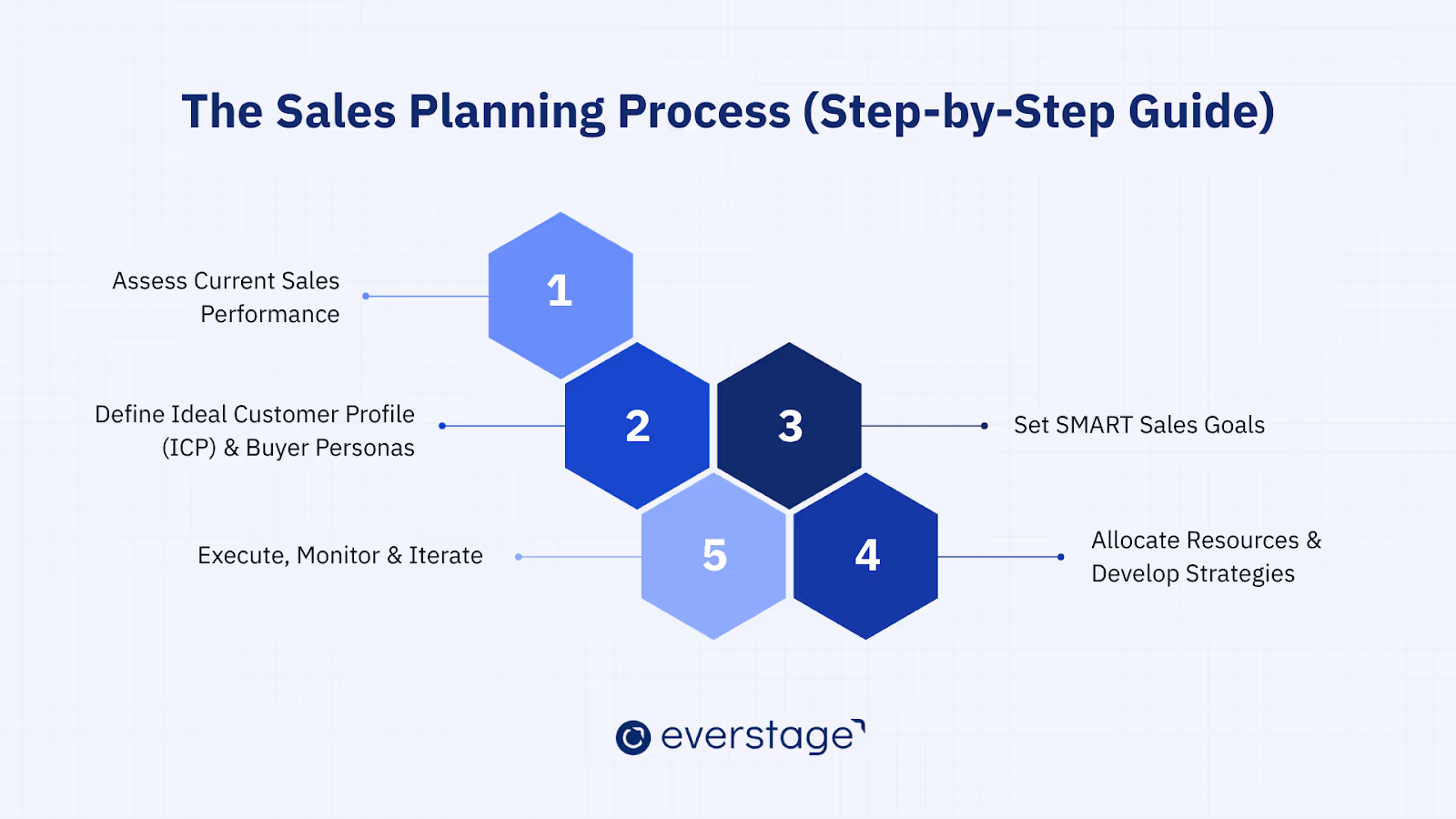
The sales planning process is crucial for aligning sales efforts with business objectives, ensuring that your team has the resources, tools, and direction necessary to achieve their goals. It transforms the concept of a sales plan into an actionable, step-by-step guide that the team can follow.
This section will break down the sales planning process into clear steps, providing practical tips and real-world examples for each one.
Step 1: Assess Current Sales Performance
Before setting new goals and creating strategies, it's essential to take a step back and analyze how your sales team is performing right now. Understanding past performance will give you insights into what’s working and what isn’t, allowing you to make informed decisions as you build your new sales plan.
Key Actions:
- Analyze Past Data: Look at sales metrics like pipeline coverage, conversion rates, average deal size, and win/loss rates. These numbers will help you identify areas of strength and opportunities for improvement.
- Pipeline coverage shows how much potential revenue you have in your pipeline compared to your sales target.
- Conversion rates help you understand how well you’re turning leads into customers.
- Win/loss rates tell you how often your team is winning versus losing deals, which is crucial for understanding the effectiveness of your sales approach.
- Pipeline coverage shows how much potential revenue you have in your pipeline compared to your sales target.
- Conduct a SWOT Analysis: This will help you evaluate your team’s strengths, weaknesses, opportunities, and threats, providing a more holistic view of your current sales capabilities.
- Strengths: What is your team doing well? This might include strong customer relationships, high-quality leads, or an efficient CRM system.
- Weaknesses: Identify any gaps that are holding your team back, such as low win rates, lack of training, or underperforming territories.
- Opportunities: Look for market trends or new customer segments your team could target.
- Threats: Consider potential challenges like increasing competition or economic downturns that may affect sales.
- Strengths: What is your team doing well? This might include strong customer relationships, high-quality leads, or an efficient CRM system.
Tools:
- Use CRM reports (e.g., Salesforce) and Business Intelligence (BI) dashboards (e.g., Tableau) to pull detailed data and visualize trends. These tools make it easier to assess performance and track progress over time.
Step 2: Define Ideal Customer Profile (ICP) & Buyer Personas
Now that you understand your team's performance, the next step is to define who your ideal customers are. This is crucial for sales planning, as targeting the right prospects will save your team time and effort, increasing conversion rates and shortening sales cycles.
Key Actions:
- Define Your Ideal Customer Profile (ICP): The ICP is a detailed description of the type of companies or individuals who are most likely to buy your product or service. This involves analyzing:
- Demographics: Characteristics such as company size, revenue, and location.
- Firmographics: Data related to the industry, company type, and business model.
- Technographics: The technology stack or software tools that your ICP typically uses.
- Pain Points: The specific problems or challenges your ICP faces that your product can solve.
- Demographics: Characteristics such as company size, revenue, and location.
- Create Buyer Personas: These are detailed profiles of the individuals who influence purchasing decisions within your ICP. Typically, you will create personas for:
- Decision-makers: Those who make the final purchasing decisions.
- Influencers: People who influence the decision but may not have the final say.
- End-users: Those who will use your product or service daily and can provide feedback or advocate for the solution.
- Decision-makers: Those who make the final purchasing decisions.
Example:
For a SaaS company, the ICP might be mid-market healthcare providers who are looking for ways to improve digital adoption and streamline operations. The buyer personas could include the CIO (decision-maker), IT managers (influencers), and end-users such as healthcare professionals who would benefit from the software.
Step 3: Set SMART Sales Goals
Setting clear, achievable goals is a critical step in sales planning. The SMART goal framework (Specific, Measurable, Achievable, Relevant, Time-bound) ensures that goals are well-defined and actionable, providing clear direction for your team.
Key Actions:
- Set Specific Goals: Your sales goals should be clear and focused, addressing specific areas of performance such as increasing revenue, gaining market share, or improving customer retention.
- Make Goals Measurable: Ensure that your goals can be quantified. For example, instead of saying "increase sales," say "increase sales by 20% in Q2."
- Ensure Goals Are Achievable: Set goals that are challenging but realistic based on your team's capacity, resources, and historical performance.
- Align Goals with Business Objectives: The sales goals should directly support broader business objectives. For example, if the company is focused on expanding into a new target market, your sales goal might be to gain 15 new accounts in that market.
- Set Time-Bound Targets: Give yourself and your team deadlines to work towards, whether it's a monthly, quarterly, or annual target.
Examples:
- "Increase pipeline by 20% in Q2."
- "Close 15 new accounts in the healthcare vertical within 6 months."
By setting SMART goals, your sales team will have a clear target to aim for, increasing accountability and focus.
Step 4: Allocate Resources & Develop Strategies
Once your goals are defined, it’s time to allocate the necessary resources and develop strategies to achieve those goals. This step ensures that your sales team has everything they need to execute the plan successfully.
Key Actions:
- Assign Territories, Quotas, and Responsibilities: Clearly define the territories each rep will cover and set sales quotas based on market opportunity and team capacity. This also involves assigning specific responsibilities, such as who will handle inbound leads versus outbound sales.
- Allocate Budgets: Determine the financial resources needed to support your sales activities, such as:
- Marketing support for lead generation and campaigns.
- Sales tools and software for CRM, analytics, and communication.
- Travel and event budgets for conferences, client meetings, or territory coverage.
- Marketing support for lead generation and campaigns.
- Develop Sales Strategies: Choose the sales strategies that will best help your team meet its goals. These could include:
- Inbound sales: Attracting prospects through content marketing and SEO.
- Outbound sales: Proactively reaching out to potential customers.
- Account-based sales: Targeting high-value accounts with personalized outreach.
- Partner or channel sales: Leveraging third-party partnerships to expand reach.
- Inbound sales: Attracting prospects through content marketing and SEO.
Effective sales planning includes aligning the right resources with company goals. Everstage streamlines this process by linking compensation to sales targets, ensuring that sales reps are not only clear on their goals but also motivated by an incentive system that drives high performance.
Step 5: Execute, Monitor & Iterate
With your plan in place, it’s time to execute. This involves launching campaigns, monitoring progress, and continuously iterating based on performance.
Key Actions:
- Launch Campaigns: Start executing the strategies defined in your plan. Whether it’s a cold outreach campaign, a content marketing strategy, or a partnership development initiative, make sure everyone is on board and aligned with the plan.
- Track KPIs: Measure performance using key performance indicators (KPIs) that align with your goals. These might include:
- Forecast accuracy: How close your actual sales are to your forecast.
- Quota attainment: Whether sales reps are meeting their targets.
- Churn rate: The rate at which customers are leaving, which impacts long-term growth.
- Forecast accuracy: How close your actual sales are to your forecast.
- Monitor and Adjust: Regularly review sales performance and make adjustments as necessary. This could mean tweaking strategies based on feedback from the team or adjusting goals to account for unexpected changes in the market.
Sales plans should be living documents, regularly reviewed and adjusted. Monthly reviews and quarterly plan adjustments ensure that the team stays aligned with changing market conditions and company priorities.
By following these five steps, you can create a comprehensive and actionable sales plan that positions your team for success.
Now, let’s take a look at the different sales planning approaches and how they can be tailored to your organization’s needs.
Types of Sales Planning Approaches
Sales planning is not a one-size-fits-all process. The approach a company takes largely depends on its size, organizational structure, and goals. There are several methods for structuring sales planning, each with its advantages and disadvantages.
Let’s explore three primary types of sales planning approaches and understand when to use each method to ensure a more effective planning process.
1. Top-Down Sales Planning
In Top-Down sales planning, executive leadership sets the overall sales targets, and those goals are then cascaded down to the sales teams.
This approach starts at the top of the organization and works its way down, with senior management defining the strategic vision and sales targets, while sales managers and reps are tasked with executing the plan.
Key Characteristics:
- Executive leadership drives the sales objectives.
- Clear, high-level targets are communicated to the sales teams, often including revenue goals, market share growth, and product sales targets.
- Sales teams receive directives from upper management and adjust their activities accordingly.
Pros:
- Fast and clear direction: This approach allows companies to quickly set and communicate sales targets, which is particularly important in high-growth or fast-paced industries.
- Aligns with executive vision: With leadership driving the process, this approach ensures that sales objectives are aligned with broader company goals and strategies, creating a unified vision across the organization.
Cons:
- May overlook ground realities: While top executives may have a clear understanding of company-wide goals, they may lack a detailed view of day-to-day sales challenges or market conditions that frontline reps face.
This can lead to unrealistic targets that don't consider the complexities of the sales process.
- Less rep involvement: Sales reps may feel disconnected from the planning process, leading to lower buy-in and a lack of motivation to meet goals that they didn't have a hand in shaping.
When to Use the Top-Down Approach
Top-down planning is ideal for startups or high-growth companies that need quick decision-making and alignment across departments. It's particularly effective when a company has clear strategic goals and needs fast, decisive action.
2. Bottom-Up Sales Planning
In Bottom-Up sales planning, the process starts at the sales team level, with sales reps and frontline managers providing input that is rolled up into the company-wide sales plan.
This approach involves gathering insights from the ground up, where salespeople, who are closest to the market, contribute to shaping the sales strategy based on their firsthand experiences and understanding of customer needs.
Key Characteristics:
- Frontline sales reps and managers have a significant role in developing the plan.
- The plan is built based on input from those who have direct interactions with customers and a clear understanding of market dynamics.
- Feedback and data from the field are used to shape sales goals, quotas, and strategies.
Pros:
- More realistic: Because the input comes directly from the sales team, the sales targets and strategies are more grounded in reality. Sales reps are likely to have a better understanding of what is achievable, given their market knowledge.
- Higher rep buy-in and motivation: Involving reps in the planning process creates a sense of ownership. When they have a say in the targets and strategies, they are more likely to feel motivated to achieve those goals and are less likely to resist them.
Cons:
- Slower process: Gathering input from multiple levels of the organization can take time. The process can be more time-consuming compared to a top-down approach, particularly in larger organizations with complex hierarchies.
- Risk of over-optimistic projections or inconsistencies: Sales teams may have a tendency to overestimate potential sales opportunities or overstate their capacity. This can lead to inflated forecasts and unrealistic goals.
When to Use the Bottom-Up Approach
Bottom-up planning is most effective for established teams that have in-depth knowledge of their target customers and market conditions. It works well when sales reps have valuable insights that leadership may not have access to, and when a company wants to ensure its sales targets are practical and achievable.
3. Hybrid Sales Planning
Hybrid sales planning combines elements of both Top-Down and Bottom-Up approaches. This method aims to balance the strategic direction set by executive leadership with the practical insights provided by the sales teams.
Leadership sets the broad sales objectives, while frontline reps and managers contribute to the plan’s execution by providing input and adjustments based on their market experience.
Key Characteristics:
- Strategic sales targets are set at the top by executives, with input from sales teams used to refine and adjust the plan.
- The approach is a collaborative effort that brings together the high-level vision with practical, on-the-ground insights.
- A combination of clear directives and flexibility in execution.
Pros:
- Strategic alignment plus practical accuracy: The hybrid approach ensures that sales goals are aligned with the company’s broader vision while also being grounded in the realities of the market. This can lead to more balanced and achievable targets.
- Flexibility: The hybrid approach allows for flexibility, enabling sales teams to adjust strategies based on feedback from the field while still maintaining alignment with overarching business goals.
Cons:
- Requires more coordination: Because it combines elements from both top-down and bottom-up approaches, this method requires more collaboration and coordination, which can slow down the planning process.
- May take longer to finalize: With more input from multiple levels of the organization, finalizing the sales plan can take more time compared to a top-down approach, which is typically faster.
When to Use the Hybrid Approach:
Hybrid sales planning is ideal for large enterprises or organizations that need a balance between high-level strategic alignment and input from frontline sales teams.
This approach works well when businesses want to leverage the strengths of both leadership-driven direction and practical market insights to ensure their sales plan is both ambitious and achievable.
Each of these approaches has its own set of strengths and challenges, so understanding your organization’s needs is key to selecting the most effective method for your sales planning process.
To ensure alignment across your organization, it’s crucial to understand the differences between business planning, sales planning, and sales strategy. Let’s explore a clear comparison of these three to see how they work together.
Business Planning vs. Sales Planning vs. Sales Strategy: A Clear Comparison
Business planning, sales planning, and sales strategy play a distinct role in guiding how goals are set, how teams operate, and how revenue is generated.
The table below breaks down these three elements to show how they connect and support one another, helping you build a more focused and effective commercial plan.
Business planning sets the overall direction and goals for the company, while sales planning focuses on actionable sales targets, resource allocation, and execution for the sales team. Sales strategy then defines the specific approaches and tactics the sales team will use to win deals and drive revenue.
Each of these layers of planning supports the next, ensuring that long-term business goals are translated into practical, executable actions across the organization.
Now, let’s look at some of the top sales planning tools and software that can help streamline this process and improve your team’s performance.
Top Sales Planning Tools & Software
To ensure that your sales team operates efficiently and meets targets, it's essential to leverage the right tools.
The following sales planning software solutions provide powerful features that streamline the process of setting goals, tracking performance, and aligning incentives with company objectives. Each of these tools offers practical functionality to help sales leaders and teams execute their sales plans more effectively.
1. Everstage – Incentive Compensation & Sales Planning
Everstage is a powerful platform for sales compensation management and sales planning, offering transparent incentive structures and real-time performance tracking. It ensures that your sales team is aligned with company revenue goals and provides the necessary motivation for success.
Key Features:
- Automates commission tracking and payout calculations: Streamlines the calculation of commissions and ensures accuracy, eliminating manual errors.
- Provides visibility into quota attainment and incentive-driven performance: Gives sales teams and leadership real-time visibility into how close they are to meeting their quotas.
- Aligns compensation levers with company revenue goals: Ensures that compensation plans directly reflect business objectives and sales targets.
How Everstage enhances sales planning:
Everstage directly ties compensation to sales planning, ensuring that quotas and targets are both motivating and realistic. With real-time performance tracking, sales teams can see how their efforts directly contribute to the company’s revenue, fostering engagement and accountability.
2. Salesforce CRM – Customer & Pipeline Planning
Salesforce is a leading CRM platform widely used for sales management and forecasting. It centralizes customer data and pipeline insights, making it easier for sales leaders to track and manage their sales efforts.
Key Features:
- Tracks leads, opportunities, and customer interactions: Provides a comprehensive view of every customer and their journey.
- Forecasting dashboards and quota management: Offers tools for setting quotas, tracking progress, and making accurate revenue forecasts.
- Integrates with marketing and customer service for full-lifecycle visibility: Seamlessly integrates with other departments to ensure a holistic view of customer engagement and sales progress.
How it enhances sales planning:
By centralizing customer intelligence and pipeline data, Salesforce helps sales leaders create more accurate sales forecasts and allocate resources efficiently. The integration of sales, marketing, and customer service data ensures that sales efforts are aligned with the broader business strategy and customer needs.
3. Clari – Sales Forecasting & Revenue Planning
Clari is an AI-driven sales forecasting and revenue platform that empowers sales organizations to improve forecasting accuracy and manage revenue planning more effectively.
Key Features:
- Predictive analytics for deal risk and forecast accuracy: Leverages machine learning to predict deal outcomes and improve the accuracy of revenue forecasts.
- Real-time pipeline visibility and deal inspection: Provides up-to-date insights into the sales pipeline, helping teams spot potential issues early.
- Scenario planning for best/worst-case revenue outcomes: Allows sales leaders to run different scenarios to understand potential revenue outcomes and prepare accordingly.
How it enhances sales planning:
Clari’s predictive analytics and real-time pipeline visibility give sales leaders the confidence to make data-driven decisions. The ability to plan for various revenue scenarios enables teams to adjust their sales plans quickly based on changing market conditions or deal progress.
4. Gong – Sales Enablement & Performance Intelligence
Gong is a revenue intelligence platform that analyzes sales conversations, providing insights to improve coaching, win rates, and forecasting accuracy.
Key Features:
- AI-powered call and email analysis: Analyzes sales interactions to identify trends, best practices, and areas for improvement.
- Deal-risk alerts based on conversation patterns: Flags potential risks early in the sales cycle by analyzing communication patterns that could signal issues.
- Coaching insights to improve rep productivity and ramp time: Provides valuable insights into what top-performing reps do differently, helping managers coach effectively.
How it enhances sales planning:
Gong helps refine sales strategies by identifying the behaviors and tactics of high-performing reps. These insights can be used to improve training, adjust sales plans, and ensure that sales reps are equipped with the skills and strategies needed to meet their targets.
5. ZoomInfo – GTM Data & Territory Planning
ZoomInfo is a B2B go-to-market (GTM) intelligence platform that offers extensive datasets on accounts, titles, technology usage, and buying intent. It helps sales teams with lead generation and territory planning.
Key Features:
- Accurate firmographic, demographic, and technographic data: Provides detailed insights into target accounts, allowing for more precise sales targeting.
- Intent signals to prioritize high-propensity accounts: Helps sales teams focus on accounts that are actively looking for solutions like yours.
- Territory and account segmentation tools: Assists in defining fair territories and high-potential accounts, improving resource allocation.
How it enhances sales planning:
ZoomInfo equips sales teams with the insights needed to build targeted, data-driven territory plans. By identifying high-value accounts and aligning resources accordingly, sales leaders can ensure that their teams focus on the most promising opportunities, improving efficiency and increasing win rates.
Selecting the right sales planning tools can significantly enhance your team's ability to execute on sales strategies and achieve targets.
By integrating these tools into your sales planning process, you can drive more effective decision-making, boost sales performance, and increase revenue predictability.
Now, let’s take a closer look at some of the common pitfalls in sales planning and how you can avoid them to keep your strategy on track and ensure success.
Common Mistakes in Sales Planning (and How to Avoid Them)
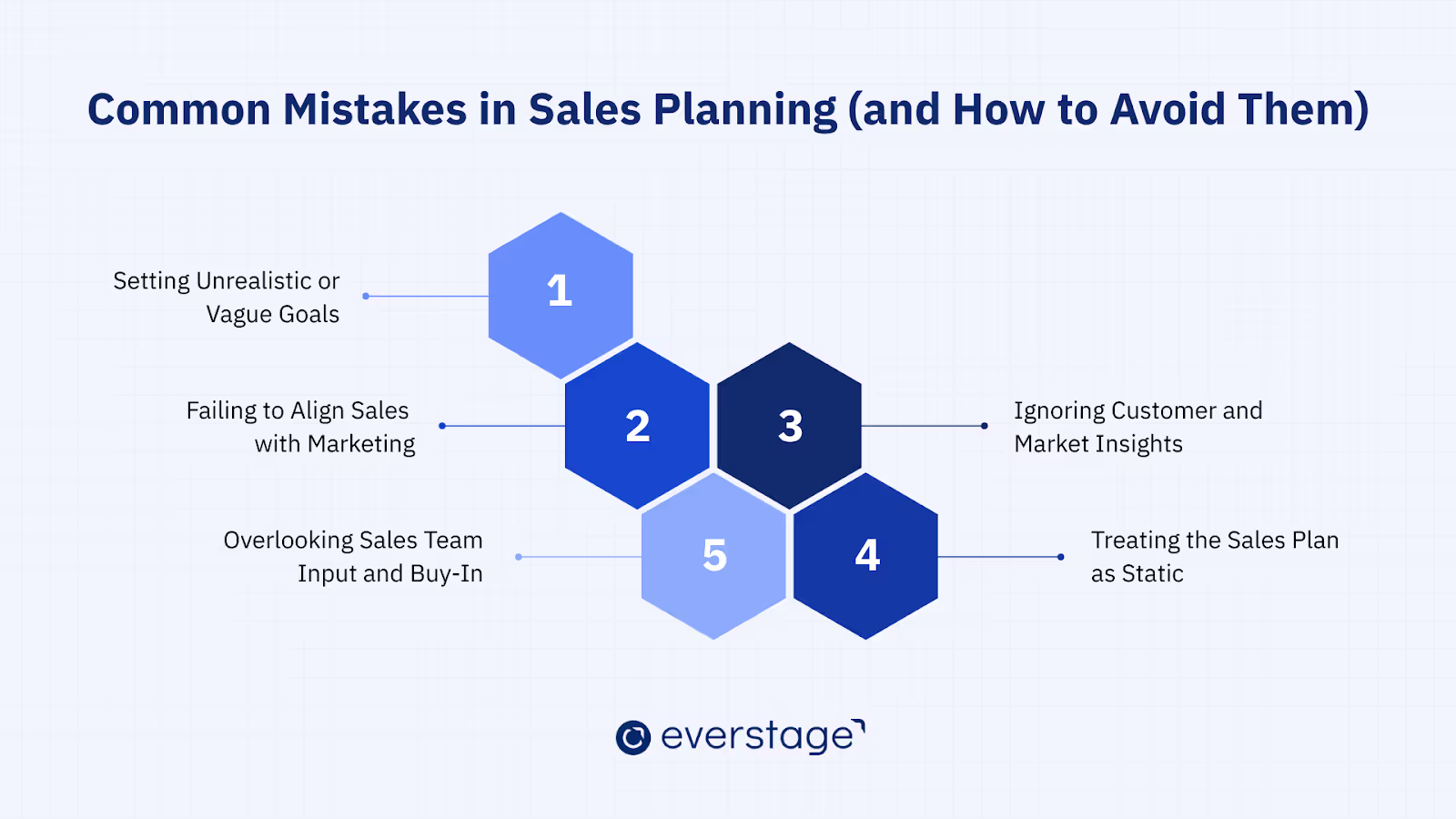
Sales planning is essential for driving performance, but many sales teams face common challenges that can undermine their effectiveness. These mistakes often lead to frustration, missed targets, and wasted resources.
Here are the most common mistakes in sales planning, along with actionable solutions to ensure your sales plan is both effective and achievable.
Mistake 1: Setting Unrealistic or Vague Goals
When sales goals are either unclear or too ambitious, they can lead to frustration and underperformance. Vague or unrealistic goals can leave sales teams feeling disconnected, unsure of how to succeed, or overwhelmed by targets they feel are unachievable.
Solution:
- Use the SMART framework to set goals that are Specific, Measurable, Achievable, Relevant, and Time-bound.
- Example: Instead of setting a vague goal like "boost sales," aim for "Close 25 new deals in the next quarter by focusing on upselling existing clients in the retail sector."
SMART goals provide clarity and help teams stay focused on what they can realistically achieve, which improves motivation and accountability.
Mistake 2: Failing to Align Sales with Marketing
Sales and marketing teams must work hand-in-hand to avoid miscommunication and wasted resources. When these teams aren’t aligned, marketing might generate leads that aren’t ideal for sales, or sales teams may fail to provide feedback that could refine marketing efforts.
According to HubSpot's 2024 Sales Trends Report, companies with aligned teams are 103% more likely to meet or exceed their sales goals.
Solution:
- Build shared KPIs (Key Performance Indicators) to ensure both teams are aligned on common objectives.
- Set up regular cross-team alignment sessions to ensure both sales and marketing are working toward the same goals, sharing insights and adjusting strategies together.
This alignment ensures that both teams focus on the right leads, and marketing’s efforts support the sales process, improving lead quality and conversion rates.
Mistake 3: Ignoring Customer and Market Insights
Sales plans can quickly become outdated if they’re not based on up-to-date customer and market insights. Ignoring customer needs, market trends, or competitive movements can result in plans that no longer resonate with prospects, leading to missed opportunities.
Solution:
- Regularly leverage market research, customer feedback, and competitive analysis.
- Use tools to gather real-time data on customer behavior, competitor offerings, and changing market conditions.
By consistently updating your sales plan with fresh, relevant insights, you ensure that your strategies are aligned with what customers actually want and need, keeping your approach relevant and competitive.
Mistake 4: Treating the Sales Plan as Static
A static sales plan that’s set once and left unchanged can quickly become ineffective. In a fast-paced business environment, sales strategies must evolve to stay relevant, but without regular updates, teams can fall behind, missing opportunities to adapt to market changes.
Solution:
- Review and adjust the sales plan quarterly, or even monthly if necessary, based on real-time data and performance metrics.
- Use performance reviews and feedback from your sales team to continuously improve and tweak the plan to better align with market shifts or customer behavior.
By making your sales plan a living, evolving document, you ensure that it adapts to changing conditions, enabling your team to stay on track and meet their goals even in fluctuating environments.
Mistake 5: Overlooking Sales Team Input and Buy-In
Sales plans that are created without involving the sales team can often fail due to a lack of engagement and ownership. When reps don’t feel included in the process, they may not fully support the plan or feel accountable for meeting its goals.
Solution:
- Involve sales reps and managers in the planning process from the outset, asking for their input on realistic targets, challenges, and customer insights.
- Encourage ownership by assigning responsibilities for specific targets or areas of the plan to individual team members.
When the sales team is part of the planning process, they’re more likely to be invested in its success and motivated to meet their objectives. Their feedback also ensures that the plan reflects on-the-ground realities, improving its overall effectiveness.
By addressing these common mistakes and implementing these solutions, you can create a sales plan that’s actionable, realistic, and aligned with both team goals and market realities, leading to improved performance and consistent results.
Conclusion
Sales planning is essential for business success. It’s about creating a clear, actionable strategy that aligns your sales team’s efforts with broader company goals.
A well-designed sales plan ensures your team stays focused, uses resources effectively, and consistently meets targets.
By following the steps outlined in this guide, you’ll improve forecasting accuracy, boost team productivity, and optimize resource allocation, all leading to better sales performance.
With a solid sales plan in place, you’ll see improvements in goal clarity, rep motivation, and the adaptability of your sales strategy. As you implement these steps, your approach will evolve into one that drives sustainable growth and helps your team hit its objectives.
If you’re looking to enhance your sales planning with a tool that aligns performance with compensation, Everstage can help. Our platform offers transparent incentive structures and real-time tracking to ensure your sales plans are not only realistic but also motivating for your team.
Book a demo with Everstage today and discover how our solution can transform your sales compensation and planning process, driving better results for your business.
Questions worth asking
The things most people want to know before they commit.
What is sales planning?
Sales planning is the process of defining a company's sales strategy to align with its business goals. It includes setting revenue targets, forecasting demand, allocating resources, and managing sales teams to optimize performance. A strong sales plan ensures that the entire sales team is aligned with organizational objectives, enhancing overall revenue growth and operational efficiency.
How do I create an effective sales planning strategy?
Creating an effective sales planning strategy involves analyzing market trends, setting clear goals, aligning teams, and forecasting future sales accurately. Begin by identifying key performance indicators (KPIs), such as quota attainment and pipeline velocity. Next, develop a comprehensive approach that includes resource allocation, territory management, and regular performance evaluations to optimize results.
How can sales planning improve revenue performance?
Sales planning drives revenue performance by providing a structured approach to sales activities. By setting realistic targets, optimizing resource allocation, and tracking key metrics, businesses can identify opportunities and reduce inefficiencies. Forecasting demand and adjusting strategies based on real-time market data further enhances sales performance, leading to better revenue outcomes.
What are the key steps in a sales planning process?
The key steps in the sales planning process include goal setting, forecasting, aligning teams, and resource allocation. First, define clear revenue targets and sales quotas. Next, analyze market conditions and use historical data for accurate forecasting. Allocate resources efficiently, design territories, and ensure proper alignment across teams. Regularly track performance metrics to optimize strategies.
What tools should I use for sales planning?
Sales planning tools include Customer Relationship Management (CRM) software, sales forecasting tools, pipeline management systems, and resource allocation platforms. Popular tools like Salesforce and HubSpot can help manage customer data, track sales performance, and improve forecasting accuracy. These tools streamline processes, improve team collaboration, and ensure data-driven decision-making.