Your 2027 Plan Could Be Costing You Your Best Rep
Forrester and Everstage on the payout curve mistake that costs companies their best reps, and how to avoid it before next year's plan locks.
If you're in RevOps, Sales Ops, or sales leadership, this is built for you.



The #1 sales compensation software on G2 and Gartner based on 2,500+ customer reviews
FORRESTER REPORT
The payout curve that keeps reps pushing past target
No cost, no sales call to unlock it











This is the difference between a payout curve that keeps your reps pushing past target, and one that doesn't.
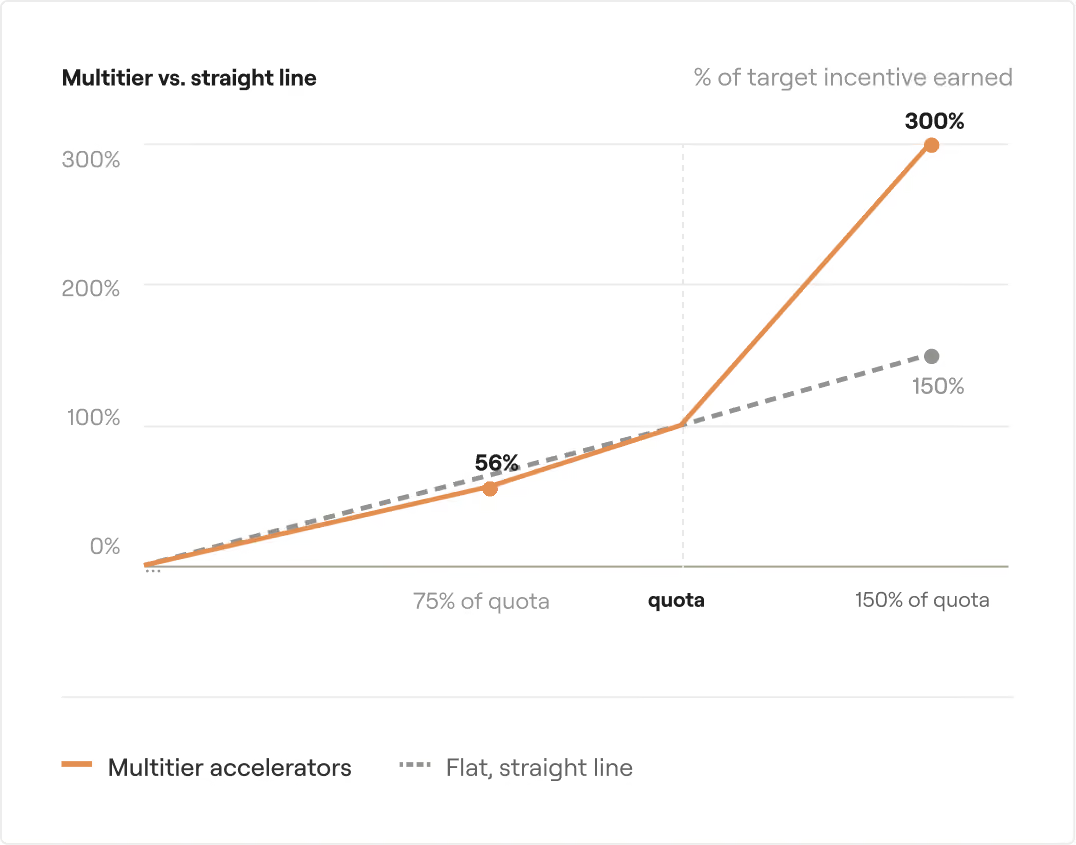
Forrester's research shows how a plan built with tiered accelerators can pay your best reps up to 300% of target incentive at excellence.
- A flat, straight-line curve pays the same rate the whole way, telling your reps that overachievement isn't worth the extra push.
- You'll get the exact math behind a working multitier curve: a rep at 75% of quota earns 56% of target incentive, a rep at 150% earns 300%.
- Where these plans break most often: decelerators that hit cash flow before a rep reaches target, hurdles set without regard for what's achievable, and caps that undo the motivation your plan was built to create.
Who it's for
Built for two people specifically.
RevOps & Sales Ops leaders
You design the curve, and you end up fielding the disputes when it doesn't make sense to reps.
You'll get the tier math and the specific mistakes to avoid before this cycle locks.
CROs & VPs of Sales
You have to explain to the board why a top rep just handed in their notice.
The report has the data behind why a flat payout curve is part of the problem.
Read the research before this cycle locks.
The full tier math, the accelerator and hurdle guidance, and the mistakes that flatten a curve.


ABOUT EVERSTAGE
Everstage started as a way to get commissions right: calculations reps don't have to double-check against a spreadsheet, and real-time visibility into what they've earned. Enterprise customers kept asking us to bring the rest of the revenue process onto the same system, so we built CPQ and territory planning on the same data model.
A rep's quota, their quote, and their payout now come from one place instead of three tools that don't talk to each other. Most teams start with commissions and add the rest when they actually need it.