

.avif)
TL;DR
CPQ improves customer engagement by speeding up quotes, reducing errors, increasing pricing transparency, and keeping buyers engaged throughout complex sales journeys.
- Eliminate quoting and pricing errors that erode buyer trust
- Accelerate sales cycles with faster, more accurate quotes
- Improve customer confidence with transparent, real-time pricing
- Reduce friction across sales, approvals, and customer interactions
Are your teams losing deals not because of your product or pricing, but because the buying process feels slow, unclear, or difficult for customers?
This is a widespread problem. Forrester reports that 86% of B2B purchases stall during the buying process, and 81% of buyers end up dissatisfied with the provider they choose. In many cases, the issue is not what companies sell. It is how easy or frustrating it feels to buy from them.
Customer engagement in B2B is shaped by the moments that follow buyer interest.
How quickly your teams deliver a quote, how accurate and transparent the pricing is, how many revisions are required, and how smoothly a deal moves from configuration to approval to close. These touchpoints influence whether buyers feel confident moving forward or hesitate and disengage.
This is where CPQ plays a critical role. CPQ directly impacts customer-facing experiences at key decision points, where delays, errors, or unclear proposals can erode trust and slow deals.
By streamlining quoting, pricing, and approvals, CPQ helps your teams optimize workflows, reduce friction, improve clarity, and deliver faster, more engaging buying experiences.
In this guide, we will explore how customer engagement CPQ improves the sales journey, builds buyer confidence, and helps teams create smoother, more effective buying experiences.
What is Customer Engagement in CRM?
Customer engagement in CRM is not just about emails, campaigns, or sales calls. It is about how buyers experience your brand across every interaction managed inside your CRM and how easy and confident it feels for them to move forward.
Your CRM acts as the system that connects sales, marketing, customer service, and customer data into one continuous experience. It shapes how quickly your teams respond, how accurate your information is, and how consistent the buying journey feels from first touch to closed deal.
Customer engagement goes far beyond conversations. It includes every operational touchpoint a buyer experiences, such as:
- Quotes and proposals sent to customers
- Pricing updates and discount changes
- Product configurations and revisions
- Approval timelines and deal updates
- Follow-ups, responses, and ongoing communication
Each of these moments influences how buyers perceive your brand. A slow quote, unclear pricing change, or repeated back-and-forth does not feel like an internal process issue. It feels like a poor customer experience.
CRM systems shape engagement by controlling three critical factors:
- Speed: how quickly buyers get answers, quotes, and updates
- Accuracy: how correct pricing, configurations, and information are
- Consistency: how reliable and predictable the buying experience feels
When tools are disconnected or workflows rely on manual steps, friction increases even when your teams are trying to help. Buyers may face delays, conflicting information, or errors that reduce trust and slow decision-making.
Most CRM discussions frame customer engagement as a marketing metric. But in reality, operational systems such as CPQ play a direct role in engagement, especially during quoting, pricing, and approvals. These are often the moments that have the greatest impact on buyer confidence.
Once you see customer engagement as every interaction inside your CRM, it becomes clear why it plays such a big role in whether deals move forward or stall.
Why Customer Engagement Is Critical in Modern B2B Buying
B2B buying has changed. Buyers now spend more time researching on their own, comparing vendors, and forming strong opinions before they ever speak to sales. By the time they engage your team, they expect speed, accuracy, and clarity, not long back-and-forth cycles or unclear answers.
At the same time, tolerance for friction is shrinking. Business buyers increasingly expect B2C-like experiences in B2B, where getting information, pricing, and approvals feels fast, transparent, and straightforward. When the experience falls short, deals slow down or fall apart.
Buyer behavior has shifted in three major ways:
- More self-research: Buyers arrive informed and expect sales conversations to add value, not repeat basics
- Higher expectations for speed: Slow quotes, delayed follow-ups, or long approval cycles frustrate decision-makers
- Greater demand for accuracy: Pricing errors, inconsistent terms, or unclear configurations quickly erode confidence
When customer engagement breaks down during the buying process, it often leads to:
- Deal drop-offs: Buyers disengage when the process feels slow or confusing
- Lost trust: Errors or unclear pricing raise doubts about reliability
- Longer sales cycles: Friction, revisions, and approval delays stretch timelines unnecessarily
In modern B2B buying, engagement is not about how persuasive your messaging is. It is about how easy it is for buyers to move forward. The smoother the experience, the more likely buyers are to maintain momentum and commit with confidence.
B2B sales cycles now average 6–8 months, and enterprise deals often take up to a year to close, according to Norwest’s B2B Sales & Marketing Benchmark Report. When timelines are this long, even small delays in quoting, pricing, or approvals can compound into lost momentum, stalled deals, or dropped opportunities.
Quotes, in particular, play a critical role in modern B2B buying. For many buyers, the quote is the first “real” buying experience. It is where interest turns into commercial intent. If quoting feels slow, inaccurate, or full of revisions, it creates friction at a moment when buyers expect clarity and progress.
Friction during quoting does more than delay deals. It can:
- Damage perception of your brand
- Signal operational inefficiency
- Introduce uncertainty into high-stakes decisions
- Become the deciding factor, even when your product is strong
This is why improving customer engagement is no longer just a marketing initiative. It is a revenue, trust, and experience priority that depends heavily on how well your operational systems perform. CPQ plays a pivotal role by improving engagement at every stage of the sales journey.
How CPQ Improves Customer Engagement Across the Sales Journey
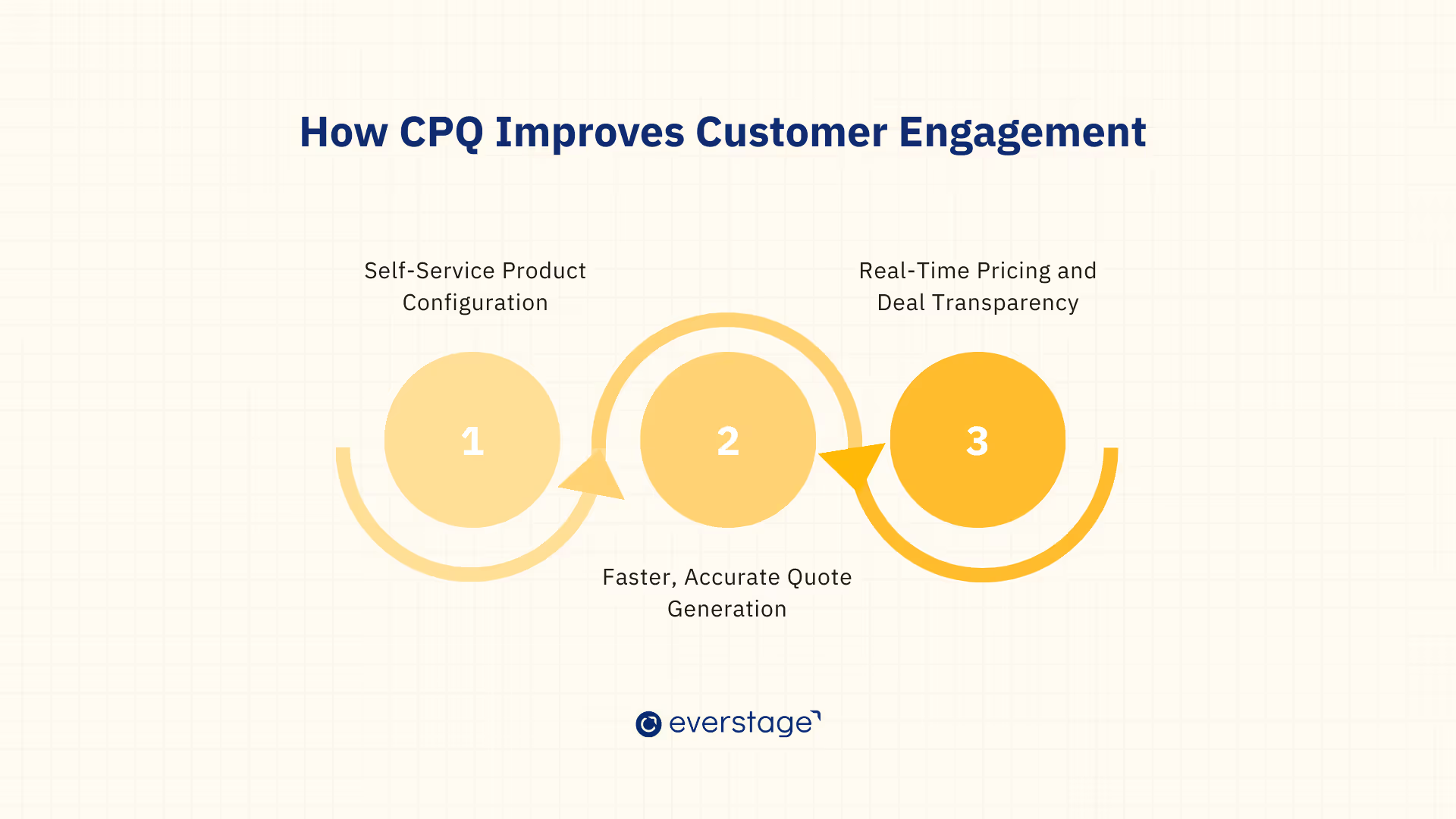
Customer engagement often weakens during the most complex parts of the sales process. Configuration, pricing, quoting, and approvals introduce delays, errors, and uncertainty that slow deals and frustrate buyers.
A CPQ system improves engagement by removing friction from these moments, helping buyers move forward with greater speed, clarity, and confidence.
Instead of relying on manual work, disconnected tools, or back-and-forth emails, CPQ creates a smoother, more predictable buying experience from early exploration to final approval.
1. Self-Service Product Configuration
Modern B2B buyers want more control over how they evaluate solutions. They expect to explore options, compare configurations, and understand trade-offs without waiting for sales teams to validate every request.
CPQ supports this by enabling buyers, or sales reps working with buyers, to configure products using guided selling rules and real-time feedback. These rules ensure only valid combinations are selected, preventing incompatible options, pricing errors, or unrealistic proposals before they reach the customer.
This reduces friction early in the buying journey. Buyers can explore faster, ask more informed questions, and feel more confident in their choices. It also frees sales teams from spending time on basic configuration checks, allowing them to focus on higher-value conversations.
The result is a more fluid discovery phase where buyers stay engaged instead of feeling blocked by complexity or delays.
2. Faster, Accurate Quote Generation
Once buyers move into commercial discussions, speed becomes critical. A slow quoting process, pricing mistakes, or repeated revisions can quickly stall momentum and introduce doubt.
CPQ accelerates this stage by automating pricing calculations, applying discount rules consistently, and generating quotes instantly or within minutes. Instead of rebuilding quotes manually or checking multiple systems, sales teams can respond to buyer requests in real time with accurate, ready-to-send proposals.
This keeps conversations moving while buyer intent is high. Faster quoting reduces the risk of disengagement, minimizes back-and-forth, and helps maintain urgency throughout the sales cycle. It also signals operational maturity, showing buyers that your organization is responsive, organized, and easy to work with.
When quotes arrive quickly and accurately, buyers feel supported rather than slowed down.
3. Real-Time Pricing and Deal Transparency
Pricing uncertainty is one of the biggest sources of friction in B2B buying. Buyers want clarity on what they are paying for, why pricing changes, and how discounts or bundles are applied.
CPQ improves transparency by applying consistent pricing logic in real time. Sales teams can show buyers dynamic price updates, explain discount structures clearly, and avoid last-minute surprises that often derail deals. Instead of renegotiating terms late in the process, pricing expectations are set early and reinforced throughout the journey.
This creates a stronger sense of trust. Buyers feel more confident making decisions when pricing is predictable, explainable, and fair. It also reduces negotiation tension and shortens approval cycles, since fewer unexpected changes arise near the finish line.
Clear, consistent pricing turns what is often a stressful stage into a smoother and more confident buying experience.
By improving configuration, quote speed, and pricing transparency, CPQ transforms complex sales processes into more seamless and buyer-friendly journeys.
These engagement improvements are driven by specific CPQ functions designed to simplify complex sales.
Core CPQ Capabilities That Drive Better Customer Experiences
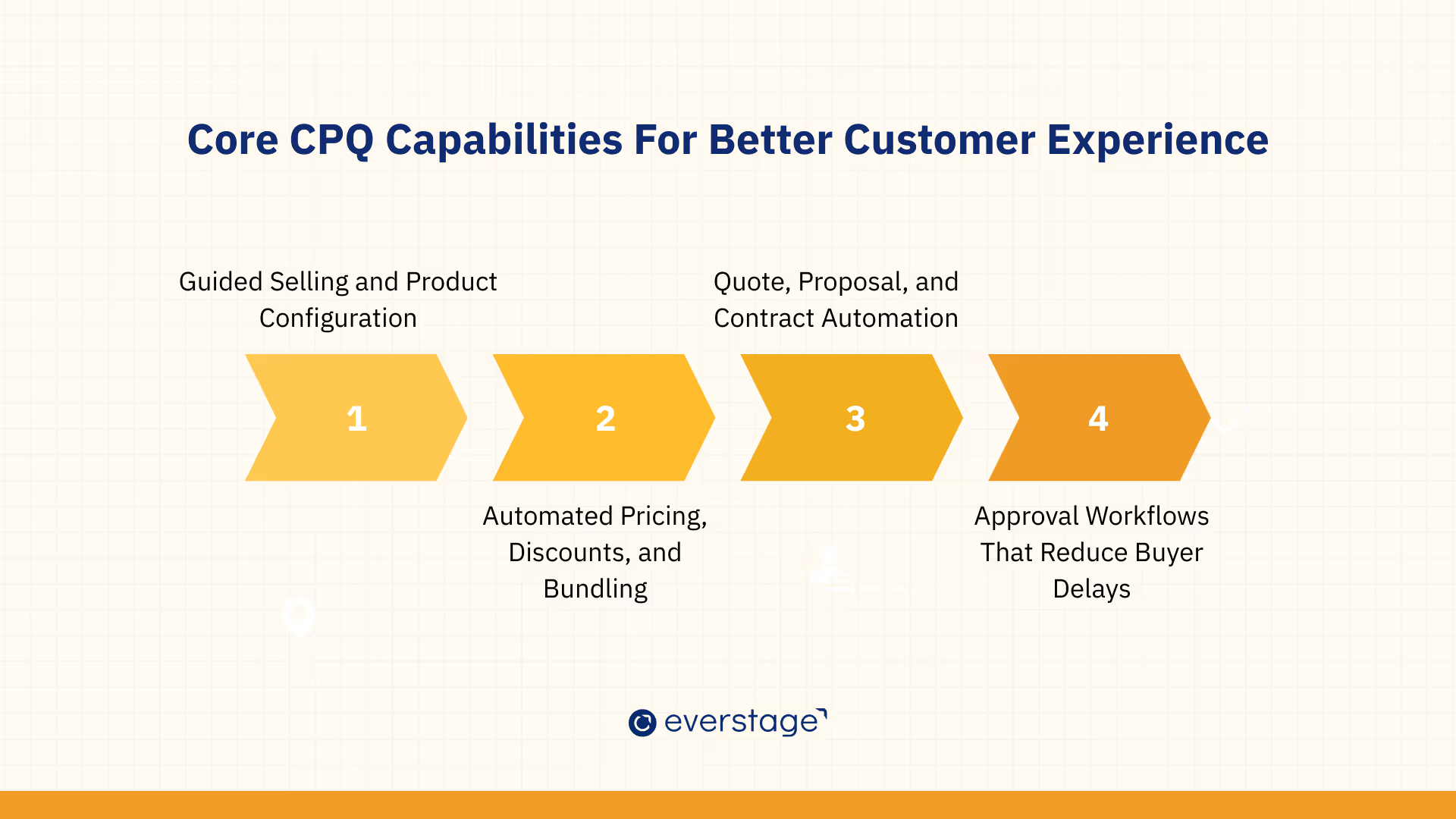
CPQ improves customer experience by removing friction from the most complex parts of the buying journey while supporting long-term scalability. Instead of relying on manual work, guesswork, or disconnected tools, it brings structure, consistency, and speed to configuration, pricing, quoting, and approvals.
Below are the key CPQ capabilities that have the biggest impact on how buyers experience your sales process.
1. Guided Selling and Product Configuration
Complex products can overwhelm buyers and increase the risk of incorrect selections. Without clear guardrails, customers may choose incompatible options, misunderstand requirements, or request solutions that cannot be delivered.
CPQ addresses this with rule-based configurators that guide buyers or sales teams through valid product selections. These systems:
- Enforce compatibility rules to prevent invalid combinations
- Recommend relevant bundles based on customer needs
- Reduce manual validation and rework
- Ensure configurations are accurate from the start
This results in a smoother and more confident buying experience. Buyers see clear, error-free options, avoid last-minute corrections, and spend less time clarifying requirements. It reduces confusion and helps customers move forward faster.
2. Automated Pricing, Discounts, and Bundling
Pricing is one of the most sensitive and high-friction stages in B2B sales. Manual pricing, inconsistent discounts, or unclear bundle logic can quickly erode trust and delay deals.
CPQ automates pricing by applying predefined rules for:
- Base pricing and margin thresholds
- Discount limits and approval boundaries
- Bundle pricing and packaged offers
- Customer- or segment-specific pricing logic
This ensures pricing remains consistent, accurate, and explainable across teams and regions. Buyers receive fewer pricing revisions, experience fewer surprises, and gain clearer visibility into how prices are structured.
As a result, negotiations become smoother, deals progress faster, and pricing discussions feel more transparent and predictable.
3. Quote, Proposal, and Contract Automation
The moment between buyer interest and formal commitment is critical. Slow document creation, inconsistent formatting, or delayed proposals can weaken momentum and create unnecessary friction.
CPQ streamlines this by automating:
- Quote and proposal generation with accurate product and pricing data
- Creation of professional, branded documents
- Contract preparation with pre-approved legal terms
- E-signatures and instant digital delivery
Buyers receive clear, polished, and ready-to-sign documents without waiting days for revisions or formatting fixes. This shortens the gap between decision and approval, keeps momentum high, and reinforces confidence in your organization’s professionalism.
4. Approval Workflows That Reduce Buyer Delays
A slow or fragmented approval process is a common cause of stalled deals. Pricing exceptions, special discounts, or custom terms often require multiple sign-offs, which can slow responses and frustrate buyers.
CPQ improves this through automated approval workflows that:
- Route requests to the right stakeholders instantly
- Apply predefined approval rules and thresholds
- Reduce reliance on email chains and manual follow-ups
- Speed up internal decision-making
For buyers, this translates into shorter waiting times, fewer stalled conversations, and faster deal progression. When approvals move quickly, customers perceive your organization as more responsive, reliable, and easier to work with.
By combining guided configuration, automated pricing, document automation, and streamlined approvals, CPQ transforms complex sales operations into a clearer, faster, and more buyer-friendly experience.
To deliver truly seamless experiences, CPQ must work in sync with the broader revenue ecosystem and customer data systems.
How CPQ and CRM Work Together to Create Seamless Customer Interactions
When CPQ and CRM operate in isolation, customer experience often suffers. Sales teams lack full context, buyers have to repeat information, and interactions can feel fragmented across marketing, sales, and service. When these systems work together, the experience becomes more connected, consistent, and tailored to each customer.
CRM holds critical customer insights, and CPQ uses that data to make quotes, recommendations, and proposals more relevant. This includes:
- Customer history and past interactions
- Previous deals, pricing patterns, and contract terms
- Product preferences and buying behavior
Instead of starting from scratch, your teams build on existing context, creating interactions that feel informed rather than generic.
This connection also reduces one of the most common buyer frustrations: repeating the same information. With shared context, sales teams can avoid re-asking basic questions, continue conversations smoothly, and respond faster because key details are already available. For buyers, this saves time and keeps momentum high.
Quotes and pricing become more relevant when CPQ is guided by CRM insights. Teams can tailor offers based on:
- Past purchases and renewal history
- Account-specific pricing expectations
- Industry, segment, or lifecycle stage
This makes proposals feel more personalized, reduces negotiation friction, and improves buyer confidence in both the offer and your organization.
The CPQ–CRM link also helps maintain consistency across sales, marketing, and customer service. Messaging stays aligned, pricing expectations remain clear, and service teams understand what was promised during the sales process. This prevents miscommunication and builds trust by creating a coordinated, reliable experience.
Finally, integrated data improves follow-ups and ongoing engagement. Teams can send more relevant messages, reference previous conversations, and recommend next steps that feel timely and useful. Follow-ups become contextual and helpful instead of repetitive or generic.
By bringing customer data and commercial workflows together, CPQ and CRM enable more informed conversations, more personalized offers, and smoother customer interactions across the sales journey.
These capabilities come to life most clearly when applied to real-world engagement scenarios.
Customer Engagement Use Cases Enabled by CPQ
CPQ improves customer engagement most clearly when you look at real buying scenarios. Instead of abstract benefits, the impact shows up in how quickly buyers get answers, how smoothly deals progress, and how confident customers feel throughout the sales process.
Here are concrete use cases that show CPQ in action:
- Inbound leads receiving instant customized quotes: When a high-intent lead comes in, CPQ allows your teams to generate accurate, tailored quotes instantly.
Pricing rules, discounts, and configurations are applied automatically, helping you respond while buyer interest is still high and reducing the risk of losing momentum to competitors.
- Enterprise buyers requesting revisions without delays: Large deals often require multiple revisions and negotiation cycles. CPQ enables real-time updates to pricing, configurations, and terms, allowing your teams to generate revised quotes in minutes instead of days.
This keeps enterprise buyers engaged, reduces frustration, and maintains deal momentum across long buying cycles.
- Sales-assisted configuration for complex solutions: For complex or high-value offerings, CPQ helps sales teams guide buyers through structured, rule-based configuration.
It prevents invalid selections, recommends compatible options, and supports tailored bundles, turning complicated buying decisions into a smoother, more collaborative experience.
- Partner or channel sales with consistent pricing: In partner-led sales, CPQ ensures pricing consistency across resellers by enforcing standard discount rules, margin controls, and quote templates.
This protects brand credibility, avoids customer confusion, and creates a more predictable buying experience across channels.
Across inbound, enterprise, complex, and partner-led sales motions, CPQ reduces friction at critical engagement moments. It helps buyers move faster, feel more confident, and experience fewer delays or surprises throughout the journey.
Beyond use cases, CPQ delivers measurable business benefits tied directly to customer engagement.
Business Benefits of Customer Engagement CPQ
When CPQ improves customer engagement, the impact goes beyond smoother sales processes. It directly influences revenue growth, deal speed, customer trust, team productivity, and long-term loyalty.
By reducing friction in quoting, pricing, and approvals, CPQ reshapes how buyers experience your business and how confidently they move forward.
1. Increased Revenue and Deal Velocity
In B2B sales, delays are one of the biggest reasons deals stall or drop off. When buyers wait days for quotes, revisions, or approvals, urgency fades, and competitors get an opportunity to step in. CPQ helps accelerate deal velocity by enabling faster, more accurate quotes and reducing the need for repeated back-and-forth.
When pricing and configurations are correct the first time, buyers stay engaged, decisions happen sooner, and win rates improve. Over time, this translates into more closed deals and faster revenue realization.
2. Higher Customer Satisfaction and Trust
Customer trust is built through consistency, accuracy, and transparency. Errors in pricing, unclear terms, or last-minute changes can quickly undermine credibility and create hesitation. CPQ improves satisfaction by ensuring pricing is reliable, configurations are accurate, and discount logic is consistent across teams and channels.
When buyers clearly understand what they are paying for and why, they feel more confident in both the purchase decision and the vendor. This clarity reduces friction, shortens negotiations, and strengthens long-term trust.
3. Improved Sales Productivity
Without CPQ, sales teams often spend a significant amount of time on manual work such as recalculating prices, correcting quote errors, chasing approvals, or formatting proposals. These tasks slow down deals and take time away from meaningful customer conversations.
CPQ automates many of these processes, allowing sales teams to focus more on advising buyers, building relationships, and closing deals. By reducing rework and internal delays, CPQ shortens sales cycles and enables teams to handle more opportunities without sacrificing speed or quality.
4. Stronger Customer Loyalty
The buying experience plays a major role in how customers perceive your brand, even after a deal is closed. A smooth, transparent, and low-friction sales process creates a positive impression that carries into renewals, upsells, and long-term relationships.
CPQ contributes to stronger loyalty by delivering consistent, professional, and reliable buying experiences that customers remember. When clients associate your company with ease, clarity, and responsiveness, they are more likely to return, expand their partnership, and recommend your business to others.
By improving engagement at critical buying moments, CPQ strengthens the quote-to-cash process, supports faster revenue growth, stronger customer trust, higher team productivity, and deeper long-term loyalty.
But to justify investment, businesses must also measure how CPQ impacts engagement. Let’s understand how to measure it.
How to Measure Customer Engagement Success with CPQ
To understand whether CPQ is truly improving customer engagement, it is important to track metrics that reflect real buying behavior, not just internal adoption. Engagement shows up in how quickly buyers get answers, how often deals get delayed, how smooth revisions are, and how customers feel about the overall experience.
Here are the most meaningful ways to measure customer engagement impact with CPQ:
- Quote turnaround time: Faster quotes are one of the clearest signals of better engagement. When CPQ is working well, teams can generate accurate quotes in minutes instead of days, keeping buyer momentum high and reducing the risk of deal drop-off due to slow responses.
- Revision frequency and rework: A high number of quote revisions often indicates pricing errors, unclear requirements, or configuration complexity. CPQ should reduce rework by validating rules upfront, leading to fewer corrections, less back-and-forth, and a smoother buying experience.
- Deal cycle length: Shorter sales cycles suggest buyers are encountering fewer blockers during evaluation. CPQ can reduce delays in configuration, pricing, approvals, and negotiations, helping deals move from interest to commitment more quickly and confidently.
- Customer feedback and satisfaction indicators: Operational metrics matter, but customer sentiment provides essential context. Feedback on quote clarity, pricing transparency, responsiveness, and ease of buying helps reveal whether CPQ is improving real customer experience and trust.
By tracking quote speed, revision rates, deal duration, and customer feedback, teams gain a clear view of how CPQ is shaping buyer experience in measurable ways. This strengthens both business credibility and decision-making around process improvements.
With measurable impact and real engagement gains, CPQ becomes a strategic advantage.
Conclusion
CPQ does more than improve quoting speed. It shapes how customers experience your business at critical buying moments. When pricing is slow, unclear, or error-prone, buyers do not just feel delayed. They start to lose confidence in how easy and reliable it will be to work with you.
As buyer expectations rise, customer engagement is becoming a real competitive advantage. Teams that rely on manual processes and disconnected systems risk losing deals not because of product gaps, but because the buying experience feels harder than it should. Over time, that can slow growth, weaken trust, and hurt win rates.
Organizations that use CPQ to reduce friction, increase transparency, and accelerate decisions close deals faster, earn stronger customer confidence, and build better long-term customer relationships. The real value of CPQ is not in its features, but in how well it helps you create smoother buying experiences, build trust, and keep deals moving.
If you want to see how this works in real sales workflows, Everstage CPQ helps revenue teams deliver faster, more accurate quotes while creating smoother buying experiences for customers. Book a demo to explore how it can improve customer engagement and speed up deal cycles for your team.
Questions worth asking
The things most people want to know before they commit.
How does CPQ improve customer engagement in B2B sales?
CPQ improves customer engagement by reducing delays, eliminating pricing and configuration errors, and making buying faster and clearer. Faster quotes, transparent pricing, and fewer revisions help buyers stay confident, maintain momentum, and move forward without friction.
Why is CPQ important for improving the B2B buying experience?
CPQ improves the buying experience by simplifying complex decisions, speeding up quote delivery, ensuring accurate pricing, and reducing back-and-forth. It removes operational friction that often frustrates buyers, helping them feel more in control and confident throughout the sales process.
Can CPQ help reduce sales cycle length?
Yes. CPQ shortens sales cycles by automating configuration, pricing, approvals, and proposal generation. Faster turnaround times, fewer revisions, and smoother internal workflows reduce delays, helping deals move from interest to close more quickly and predictably.
How does CPQ work with CRM to improve customer engagement?
CPQ uses CRM data such as customer history, past deals, and preferences to personalize quotes and recommendations. This reduces repeated questions, improves relevance, and enables more informed conversations, creating a smoother and more consistent buying experience.
Is CPQ only valuable for complex or enterprise sales?
While CPQ is especially valuable for complex and enterprise deals, it also benefits mid-market and SaaS teams. Faster quotes, consistent pricing, fewer errors, and smoother approvals improve efficiency and customer experience across deals of all sizes.
How can businesses measure the impact of CPQ on customer engagement?
Businesses can measure CPQ impact through quote turnaround time, revision frequency, deal cycle length, win rates, and customer feedback. Improvements in speed, accuracy, and buyer satisfaction indicate stronger engagement and a smoother buying experience.