
.avif)
TL;DR
CPQ vs CLM are two distinct systems that power different stages of the revenue lifecycle: CPQ automates quoting during sales, while CLM manages contracts post-signature, and integrating both eliminates friction across the entire deal process.
- CPQ speeds quote generation and reduces pricing errors for sales teams selling complex or configurable products
- CLM ensures contracts are compliant, properly negotiated, and tracked from creation through renewal
- Integration connects pricing data to contract terms automatically, preventing manual rework and mismatches
- Revenue teams that align CPQ and CLM close deals faster, reduce errors, and gain better visibility into committed revenue
Introduction
Your sales rep closes a deal. The customer loves the pricing, the product configuration is perfect, and everyone's ready to move forward. Then the quote lands with legal for contracting, and the deal stalls for two weeks.
Legal can't verify the discount structure. Sales has to pull the configuration details again. Finance jumps in to validate terms. What should have taken a day drags into weeks, and your customer questions whether your team is actually organized.
This breakdown happens when CPQ and CLM operate as disconnected systems. CPQ helps sales teams configure products, apply pricing rules, and generate quotes fast. CLM manages contract creation, approvals, negotiations, and compliance after the quote is accepted. Both are essential, but when they don't talk to each other, the handoff becomes a revenue killer.
The "CPQ vs CLM" question often starts with confusion. These aren't competing tools. They power different stages of the same revenue process. CPQ drives the pre-signature phase where speed matters most. CLM governs the post-quote phase where legal precision and risk management protect the business.
Companies that integrate CPQ and CLM eliminate manual handoffs, prevent pricing mismatches, and accelerate deal cycles. Sales, legal, and finance work from the same data, reducing friction and improving visibility across the entire quote-to-contract workflow.
In this guide, we'll break down what CPQ and CLM do, how they differ, when they work together, and how to choose the right approach for your revenue team.
What is CPQ?
CPQ stands for Configure, Price, Quote. It's software that automates the process of building product configurations, applying pricing rules, and generating accurate sales quotes. Instead of sales reps manually calculating prices across spreadsheets or hunting through product catalogs, CPQ handles the complexity automatically.
The system works by centralizing product data, pricing logic, discount rules, and approval workflows in one place. When a rep builds a quote, CPQ ensures every product combination is valid, every price is accurate, and every discount follows company policy. The output is a professional quote document that's ready to send to the customer.
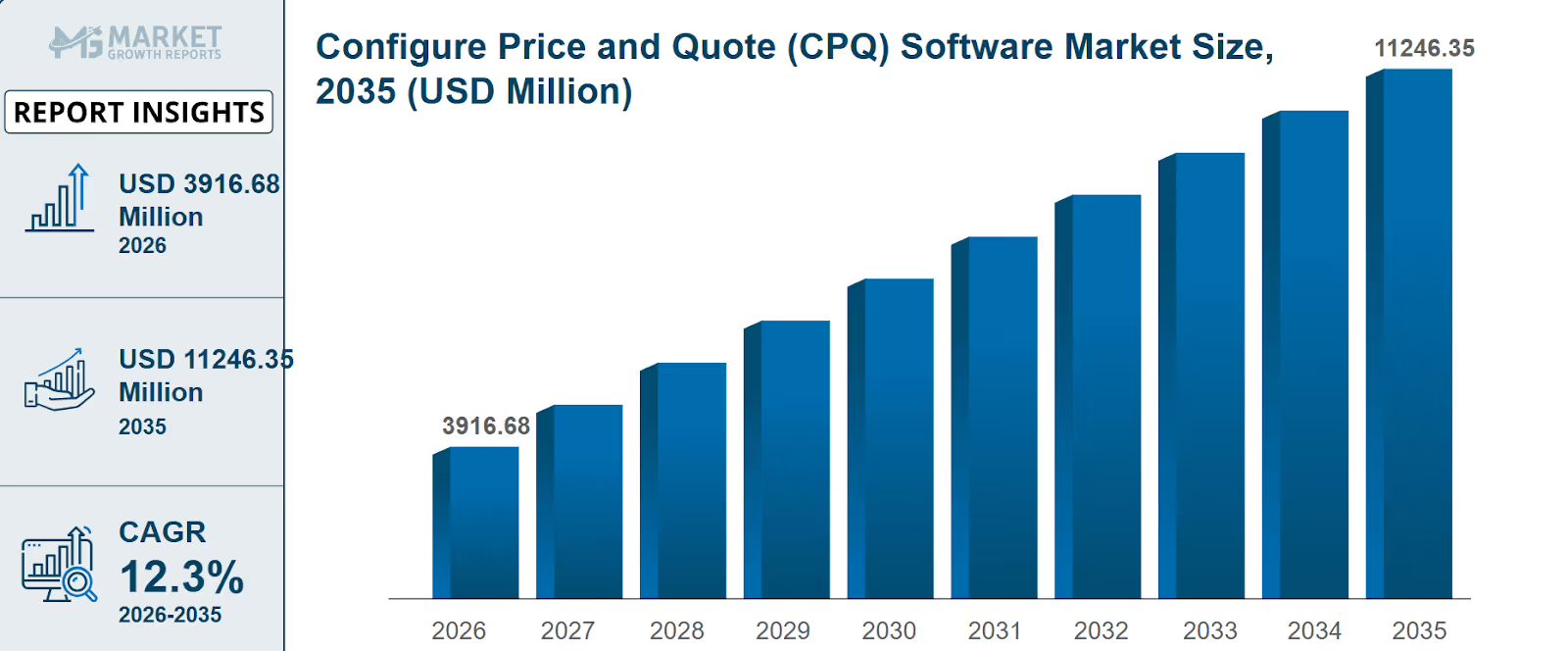
According to recent market data, 78% of companies using CPQ software reduced quote turnaround times by more than 50%, directly improving sales efficiency. The CPQ software market itself has grown significantly, reaching $3 billion in 2024 and exceeding $8.9 billion by 2033.
Benefits of CPQ
1. Faster Quoting
CPQ eliminates the manual work that slows down quote generation. Sales reps configure products in minutes instead of hours. They select from pre-approved options, and the system applies pricing rules automatically. Research shows sales representatives using CPQ produce quotes 10x faster than manual processes, with approval times shortened by 95%.
This speed matters because B2B buyers expect rapid responses. Deals stall when quotes take days to generate. CPQ keeps momentum alive by delivering accurate quotes while prospects are still engaged.
2. Fewer Pricing Errors
Manual quoting creates opportunities for mistakes. Reps miscalculate discounts, forget to apply volume pricing, or miss compatibility issues between products. These errors damage margins, confuse customers, and require rework.
CPQ software enforces pricing rules automatically, ensuring quotes reflect current pricing models, approved discount thresholds, and valid product configurations.
3. Standardized Offers
Without CPQ, different sales reps quote the same products differently. Pricing becomes inconsistent. Customers comparing quotes from multiple reps see different numbers for identical configurations. This inconsistency undermines credibility and creates internal conflict.
CPQ enforces standardization across the sales team. Every rep works from the same product catalog, pricing rules, and discount policies. Customers receive consistent quotes regardless of which rep they talk to, improving both customer experience and internal governance.
What is CLM?
CLM stands for Contract Lifecycle Management. It's software that manages the entire journey of a contract, from initial creation through negotiation, execution, compliance tracking, and eventual renewal or termination. While CPQ handles the quoting phase, CLM takes over once commercial terms are agreed upon.
CLM centralizes contract data, automates approval workflows, tracks obligations, monitors compliance, and provides visibility into contractual risk across the organization. The system ensures contracts follow legal standards, business policies, and regulatory requirements throughout their lifecycle.
The CLM software market reached $2.3 billion in 2024 and is projected to grow to $5.4 billion by 2033, driven by increasing contract complexity and regulatory requirements. Organizations managing high deal volumes recognize that manual contract processes create bottlenecks, compliance risks, and revenue leakage.
Benefits of CLM
1. Risk Management
Contracts define legal obligations, payment terms, liability limits, and dispute resolution mechanisms. When these details live in email threads or disconnected folders, organizations lose track of what they've agreed to. This creates legal exposure, missed renewal dates, and unfavorable terms that slip through unnoticed.
CLM software centralizes contract data and enforces governance standards automatically. The system flags non-standard clauses, tracks expiration dates, and ensures contracts include required legal language.
According to the ROI of Contracting Excellence 2023 report by WorldCC and Deloitte, leading organizations achieve value erosion rates as low as 3%, while underperforming organizations experience erosion exceeding 20%, demonstrating the critical importance of contracting excellence.
2. Improved Compliance
Regulatory requirements around data privacy, procurement, and industry-specific standards demand strict contract governance. Organizations must prove that contracts meet legal standards, contain required disclosures, and follow approval protocols.
CLM automates compliance tracking by applying templates with pre-approved clauses, routing contracts through proper approval chains, and maintaining audit trails. When regulators request documentation, CLM provides complete records of how contracts were created, modified, and executed.
Cloud-based CLM solutions now account for over 70% of deployments, partly because they offer better compliance tracking and security features.
3. Faster Approvals
Traditional contract approval processes involve email chains, manual routing, and delays when approvers are unavailable. Deals stall while contracts wait for signatures from legal, finance, or executive leadership.
CLM software automates approval workflows based on contract value, risk level, and business rules. Standard contracts move through approvals automatically. Edge cases get routed to the right stakeholders with full context attached. The system sends reminders, tracks progress, and maintains transparency across all parties.
This automation significantly reduces contract cycle times and prevents deals from losing momentum during the approval phase.
CPQ vs CLM: Key Differences Explained
CPQ and CLM serve distinct functions in the revenue workflow. Understanding where each system operates clarifies why organizations need both.
CPQ vs CLM by Primary Purpose
CPQ enables sales teams to sell faster and more accurately by automating product configuration, enforcing pricing rules, and generating quotes. The focus is speed and consistency in the pre-contract phase.
CLM manages contractual risk by governing how contracts are created, negotiated, approved, stored, and tracked. The focus is on legal precision, compliance, and obligation management throughout the contract lifecycle.
When sales generates a quote in CPQ, they're creating a commercial proposal. When legal drafts a contract in CLM, they're creating a legally binding agreement with full terms, obligations, and protections.
CPQ vs CLM by Users and Ownership
CPQ is owned by sales, revenue operations, and finance teams. Sales reps use it daily to configure products and generate quotes. RevOps manages pricing rules and discount approvals.
CLM is owned by legal, procurement, or finance teams responsible for contract governance. Legal teams draft contracts and manage negotiations. Procurement handles vendor agreements. Finance tracks payment terms and renewal obligations.
This ownership split creates the handoff challenge. Without integration, data gets lost or misaligned when quotes move from sales to legal for contracting.
CPQ vs CLM by Data Handled
CPQ handles structured commercial data: product SKUs, pricing models, discounts, volume tiers, bundles, and deal-level approvals. The question is "what are we selling and at what price?"
CLM manages legal and contractual data: contract clauses, terms and conditions, obligations, compliance requirements, renewal terms, liability limits, and approval history. The question is "what did we agree to and how do we manage it?"
According to industry research, contract data is typically fragmented across 24 different systems on average. Integration between CPQ and CLM reduces this fragmentation.
CPQ vs CLM by Stage in the Deal Lifecycle
CPQ operates during the pre-signature phase, moving opportunities to approved quotes. The focus is speed, accuracy, and competitive positioning.
CLM takes over once commercial terms are agreed upon, managing everything from contract creation through execution, compliance tracking, and renewal. The focus shifts to legal precision, risk mitigation, and obligation tracking.
The handoff between these stages is where deals often stall. When CPQ and CLM are disconnected, manual coordination introduces delays and errors. Understanding these differences clarifies that CPQ vs CLM isn't about choosing one system; it's about connecting both effectively.
How do CPQ and CLM Work Together?
CPQ and CLM aren't competing systems. They're sequential stages in a unified revenue workflow. When integrated properly, they eliminate the friction that occurs when quotes move to contracts.
How CPQ Hands Off Data to CLM
Once a quote is approved in CPQ, the deal transitions from sales to legal. This is where integration matters most.
In an integrated workflow, CPQ automatically passes approved quote data directly into CLM. This includes product configurations, pricing details, discount percentages, payment terms, customer information, and special conditions negotiated during the sales process.
Without integration, someone manually extracts data from the quote and re-enters it into the contract system. This creates opportunities for errors, version mismatches, and delays. A pricing detail gets transcribed incorrectly. A discount level doesn't match. A product configuration is incomplete.
Sales representatives using CPQ produce quotes 10x faster than manual processes. But those gains disappear if the data has to be manually moved into contracts. Integration preserves the speed advantage by maintaining data accuracy across the handoff.
How CLM Enforces Pricing and Terms from CPQ
CLM helps ensure contracts accurately reflect the commercial terms finalized in CPQ by automatically pulling approved quote data, such as product configurations, pricing, discounts, and payment terms, into contract templates. This reduces manual entry and keeps commercial details consistent from quote to contract.
Most CLM systems enforce this alignment through automated data validation and approval workflows. For example, if contract pricing fields are edited after the quote sync, such as changing discount percentages, payment terms, or unit pricing, the system compares those edits against the original CPQ data and flags mismatches for finance or RevOps review. Some setups also lock pricing fields unless an authorized approval workflow is triggered.
This approach protects margins, maintains pricing discipline, and prevents unauthorized changes. Legal teams draft contracts with confidence, finance retains visibility into approved commercial terms, and sales can be sure the final contract reflects exactly what was quoted to the customer.
Why CPQ and CLM Integration Matters for Revenue Teams
Integration creates a single source of truth across sales, legal, and finance. Everyone works from the same approved data, reducing miscommunication and rework.
When quote data flows automatically into contracts, deals move faster. Sales teams don't wait days for legal to manually draft contracts. Legal teams don't chase sales for missing information. Finance doesn't discover pricing discrepancies after contracts are signed.
The CLM software market reached $2.3 billion in 2024, driven largely by organizations seeking to automate these handoffs and reduce revenue leakage. Companies recognize that disconnected quoting and contracting systems create bottlenecks that cost deals and damage customer experience.
Integration also improves forecasting and reporting. Revenue operations can track deals from initial quote through signed contract without switching systems or reconciling data across platforms. This visibility helps leadership understand where deals are in the pipeline and identify patterns that affect close rates.
When CPQ and CLM systems are seamlessly integrated, the handoff between sales and legal becomes smooth and error-free. Everstage CPQ not only automates the quoting process but also integrates with your CLM system, ensuring that pricing, product configurations, and contract terms are passed over without any manual rework.
By using Everstage CPQ, your sales, legal, and finance teams can collaborate efficiently, reducing deal cycle times and errors.
Key Benefits of Using CPQ and CLM Together
.avif)
When CPQ and CLM operate as an integrated system, organizations see measurable improvements across speed, accuracy, and collaboration. These benefits compound as deal volumes increase.
1. Faster Quote-to-Contract Cycles
Integrated systems eliminate the waiting period between quote approval and contract creation. Once a quote is finalized in CPQ, CLM automatically generates a contract draft using the approved commercial terms. What used to take days now happens in minutes.
Sales teams avoid delays caused by manual contract creation. Legal teams receive complete information immediately, rather than chasing sales for missing details. Customers don't experience the awkward silence that occurs when deals stall between quoting and contracting.
2. Fewer Pricing and Contract Errors
Manual data transfer between systems creates opportunities for mistakes. A discount percentage gets transcribed incorrectly. A product SKU is missing. Payment terms don't match what was quoted.
Integration prevents these errors by maintaining data consistency from quote to contract. The pricing approved in CPQ flows directly into the contract without human intervention. Product configurations remain accurate. Discount structures stay intact.
This accuracy protects margins, reduces post-signature disputes, and maintains customer trust. When customers receive contracts that match their quotes exactly, the buying experience feels professional and reliable.
3. Better Alignment Between Sales, Legal, and Finance
Disconnected systems create information silos. Sales works in CPQ, legal works in CLM, and finance tries to reconcile data from both. This fragmentation leads to miscommunication, duplicate work, and conflicting information about deal terms.
Integration establishes a shared data foundation. Sales, legal, and finance all reference the same approved commercial terms. Questions about pricing, discounts, or contract language can be answered definitively because everyone works from the same source of truth.
This alignment reduces escalations, shortens approval cycles, and improves cross-functional collaboration. Teams spend less time clarifying terms and more time executing deals.
4. Improved Compliance and Audit Readiness
Regulatory requirements and internal policies demand clear documentation of how pricing decisions are made and approved. When CPQ and CLM are disconnected, audit trails exist in separate systems, making compliance verification difficult.
Integration creates a continuous record from the initial quote through the signed contract. Every pricing approval, discount exception, and contract modification is tracked in a unified workflow. When auditors request documentation, teams can provide complete records without manual reconciliation across systems.
Strong contract management practices help organizations minimize value erosion and maintain better control over pricing and terms throughout the deal lifecycle.
5. More Predictable Revenue Operations
Clean deal data improves forecasting accuracy and revenue reporting. When quotes and contracts exist in separate, disconnected systems, finance teams struggle to understand committed revenue versus pipeline opportunity.
Integration provides visibility into the entire deal lifecycle. Revenue operations can track which quotes have converted to contracts, which contracts are pending signature, and which deals are stuck in approval workflows. This transparency helps leadership make informed decisions about resource allocation, hiring, and growth planning.
Finance teams gain better visibility into contracted revenue, payment terms, and renewal schedules. This improves cash flow forecasting and revenue recognition accuracy, especially important for subscription-based business models.
Common Challenges When CPQ and CLM are Not Aligned
.avif)
When CPQ and CLM operate in isolation, predictable problems emerge that cost time, create friction, and slow revenue operations.
1. Quote and Contract Data Mismatches
Manual handoffs create discrepancies. Sales quotes a specific discount in CPQ. Legal drafts a contract with different terms. The customer receives a contract that conflicts with the quote they accepted.
These mismatches surface late in the deal cycle, often during final review or after signature. Correcting them requires rework, delays, and uncomfortable conversations with customers. The root cause is simple: data exists in two places without synchronization.
2. Manual Rework Between Sales and Legal
Sales generates a quote and sends it to legal for contracting. Legal manually extracts pricing details and enters them into contract templates. Questions arise about discounts, payment schedules, and special terms.
Legal contacts sales for clarification. Sales checks their notes. Legal makes changes. More questions emerge. The cycle repeats.
This back-and-forth consumes hours. Legal spends time on data entry instead of reviewing complex terms. Sales answers questions instead of working on new opportunities. Neither team operates efficiently.
3. Slower Deal Approvals and Lost Momentum
Deals build momentum through the sales cycle, then stop when quotes move to legal. Days pass while contracts are manually drafted. Approval workflows stall because stakeholders lack context. Finance questions pricing decisions made weeks earlier.
During this delay, buyer enthusiasm fades. Competitors reach out. Internal priorities shift. What should have closed in days stretches into weeks, and some deals never recover their momentum.
4. Reporting Gaps Across the Deal Lifecycle
Revenue teams need clear visibility into which quotes are pending, which have converted to contracts, and where deals are getting stuck. When CPQ and CLM operate separately, that end-to-end visibility breaks down.
The impact can be measurable. Research from Deloitte shows organizations experience about 8.6% contract value erosion on average due to poor contract visibility, inconsistent data, and disconnected workflows. In practical terms, that means pricing mismatches, missed renewals, or delayed approvals directly affecting revenue.
As a result, teams often fall back on manual reporting, stitching data together from multiple systems. These reports take time to build and are frequently outdated by the time they’re ready. At scale, this leads to weaker forecasting, slower decisions, and avoidable revenue leakage across sales, legal, and finance.
How to Choose Between CPQ, CLM, or Both
Deciding which system to implement depends on where your revenue operations feel the most friction. The answer isn't always "both immediately."
Signs You Need CPQ
CPQ solves sales-side complexity when quoting becomes a bottleneck:
- Your sales process involves complex pricing based on volume, customer segment, or product combinations
- Quote generation is slow and inconsistent, with reps spending hours checking pricing tables manually
- Different reps quote the same products differently, creating pricing inconsistencies
- Pricing errors happen frequently, leaving money on the table or requiring finance corrections
- Your product catalog is expanding rapidly, making manual quoting unsustainable
If these problems sound familiar, Everstage CPQ can help. It automates pricing, enforces rules, and generates accurate quotes in minutes, reducing errors and saving time.
Signs You Need CLM
CLM addresses contract governance when legal processes break down:
- Contracts require frequent negotiation with multiple rounds of review
- Legal drafts contracts from scratch repeatedly, managing redlines and approvals manually
- Renewal dates and obligations slip through the cracks
- Contracts are scattered across email threads, shared drives, and individual laptops
- Finding specific agreements requires asking multiple people and searching through folders
- Compliance requirements demand audit trails showing who approved terms and when modifications occurred
If these challenges describe your situation, CLM provides the structure, automation, and governance your contracting process lacks.
When Investing in Both CPQ and CLM Makes Sense
Both systems deliver maximum value when:
- You manage high deal volumes with pricing complexity and legal scrutiny
- Every quote requires configuration, and every deal requires a negotiated contract
- Revenue teams span sales, legal, finance, and operations, working in disconnected systems
- Miscommunication and rework happen regularly during quote-to-contract handoffs
- You're scaling rapidly with increasing deal volume and expanding product offerings
Organizations in this position benefit most from integrated CPQ and CLM, eliminating the handoff friction that slows deals and creates errors.
Questions to Ask Before Selecting Tools
- Who owns pricing and contract workflows today, and where do bottlenecks occur? Map your current process to identify where deals stall, where errors happen, and where teams waste time on manual work.
- How well do proposed tools integrate with your existing CRM, ERP, and finance systems? Integration capabilities determine whether the new system improves workflows or creates another disconnected data silo.
- What's the total cost of ownership, including implementation, training, and ongoing maintenance? Factor in both software licensing and the internal resources required to configure, manage, and optimize the system.
- Can the system scale as your business grows? Evaluate whether the platform handles increasing deal volume, expanding product catalogs, and additional users without requiring significant reconfiguration.
Start with the area causing the most pain. If quoting is broken, implement CPQ first. If contracting is the bottleneck, start with CLM. Then integrate both systems as your revenue operations mature.
What to Look for in a CPQ and CLM Solution
Selecting the right CPQ and CLM tools requires evaluating technical capabilities and how well they support your revenue workflows. Focus on features that eliminate current bottlenecks and scale with your business.
1. Integration with CRM and ERP Systems
CPQ and CLM should connect smoothly with the systems your teams already rely on, such as Salesforce, HubSpot, NetSuite, or Microsoft Dynamics. When integrations work well, customer data, deal details, pricing rules, and contract terms sync automatically, reducing manual effort and keeping information consistent across teams. For a broader look at how CPQ connects across your entire tech stack, see our guide to CPQ integration.
Without strong integration, data silos emerge. Sales may re-enter CRM data into CPQ, while finance struggles to reconcile ERP records with contract terms stored in CLM. This creates inefficiencies and increases the risk of errors.
Pre-built connectors often make sense when your tools support standard integrations because they reduce implementation time and cost. However, custom integrations may be necessary if your workflows, pricing logic, or legacy systems require more flexibility. When evaluating vendors, ask about API quality, sync frequency, error handling, and how data conflicts are resolved.
2. Flexibility in Pricing and Contract Logic
Your pricing models and contract terms will evolve. Products change, markets shift, and business strategies adapt. The systems you choose must accommodate this evolution without requiring complete reconfiguration.
CPQ should handle tiered pricing, volume discounts, usage-based pricing, subscription models, and complex bundling rules. CLM should support multiple contract types, customizable approval workflows, flexible clause libraries, and templates that can be modified without technical expertise.
Rigid systems that require developer resources for basic changes become bottlenecks as your business grows.
3. Workflow Automation and Approvals
Manual approval routing slows deals and creates confusion about who needs to review what. Effective CPQ and CLM solutions automate these workflows based on deal characteristics.
Key automation capabilities include:
- Routing quotes and contracts to the right approvers based on discount thresholds, deal size, or risk level
- Automated reminders when approvals are pending
- Parallel approval paths when multiple stakeholders need to review simultaneously
- Escalation workflows when approvals exceed time limits
- Audit trails showing who approved what and when
These features keep deals moving without sacrificing control. Standard deals move through approvals automatically, while exceptions get the attention they require.
4. Scalability for Growing Revenue Teams
Systems that work for 10 sales reps often break down with 100. Evaluate whether the platform handles increasing deal volume, expanding product catalogs, additional users across departments, and global operations with multiple currencies and regions.
Cloud-based solutions typically scale more easily than on-premise installations. They handle traffic spikes during busy periods, support distributed teams, and provide consistent performance regardless of location. The system should maintain speed as data volumes grow, ensuring quote generation and contract searches remain fast even with thousands of agreements in the system.
Conclusion
CPQ and CLM solve different problems at different stages of the revenue lifecycle. CPQ accelerates sales by automating product configuration and pricing. CLM manages contracts through negotiation, execution, and compliance. Both are essential, and they're strongest when connected.
The confusion around CPQ vs CLM comes from treating them as competing tools. They're not. CPQ handles commercial terms during sales. CLM handles legal terms during contracting. When these systems operate separately, data gets lost, pricing mismatches occur, and deals stall.
Integration eliminates these friction points. Quote data flows automatically into contracts. Pricing stays consistent from sales through legal. Approvals move faster. Revenue teams gain visibility from opportunities to sign contracts.
Start with the area causing the most pain. If quoting is slow and error-prone, implement CPQ. If contract management is chaotic, prioritize CLM. If both create bottlenecks, invest in integrated solutions.
Platforms like Everstage CPQ help revenue teams automate pricing, configure products accurately, and generate quotes that integrate seamlessly with contract workflows. When CPQ and CLM work together, sales close deals faster, legal maintains compliance, and customers experience a smooth buying process.
Ready to streamline your quote-to-contract workflow? Book a demo to see how Everstage CPQ works with your revenue operations.
Questions worth asking
The things most people want to know before they commit.
Is CPQ a replacement for CLM?
No. CPQ focuses on product configuration, pricing, and quote generation during the sales process, while CLM manages contracts after commercial terms are agreed upon, handling negotiation, execution, compliance, and renewal. Most organizations with complex sales processes benefit from using both systems together rather than choosing one over the other.
Do small or mid-sized companies need both CPQ and CLM?
Not necessarily. Smaller companies should start with the system that addresses their biggest pain point: CPQ if quoting is slow and error-prone, or CLM if contract management is chaotic. As deal volume and complexity grow, integrating both systems becomes more valuable for eliminating handoff friction.
Which teams benefit most from CPQ and CLM integration?
Sales, legal, finance, and revenue operations teams all benefit from integration. Sales closes deals faster, legal receives complete quote information automatically, and finance maintains visibility into pricing decisions and contract terms. RevOps gains end-to-end reporting from opportunity through signed contract, improving forecasting accuracy.
Can CPQ and CLM integrate with CRM systems like Salesforce?
Yes. Most modern CPQ and CLM platforms offer pre-built integrations with major CRM systems, including Salesforce, HubSpot, and Microsoft Dynamics. These integrations sync customer data, opportunity information, quotes, and contracts bidirectionally, ensuring teams work from consistent data across all systems.
What happens if pricing changes after a contract is generated?
Without integration, pricing changes require manual contract updates, creating opportunities for errors and delays. With CPQ and CLM connected, approved pricing changes can flow into contract templates automatically, while the CLM system flags any modifications that deviate from CPQ-approved terms for review.
How long does it typically take to implement CPQ and CLM together?
Implementation timelines vary based on business complexity, existing systems, and data readiness, typically taking 3-6 months per system. Many organizations implement CPQ first, then add CLM in a phased approach, allowing teams to adopt changes gradually. Rolling out both simultaneously can take 6-12 months, depending on product catalog size and pricing complexity.