
TL;DR
CPQ SaaS helps SaaS companies manage complex pricing, bundling, and subscriptions while enabling sales teams to quote faster and scale revenue with confidence.
- Automate configuration, pricing, and quoting for subscription, usage-based, and tiered models
- Reduce manual errors and approval delays that slow down SaaS sales cycles
- Support renewals, upgrades, and contract changes without spreadsheet chaos
- Scale sales operations smoothly as products, deals, and teams grow
Selling SaaS products today comes with growing pricing complexity. Subscriptions, add-ons, usage tiers, ramp deals, and contract changes make quoting slower, harder to manage, and difficult to scale.
For many SaaS teams, this complexity still lives in spreadsheets and manual workflows. Reps struggle to price deals accurately, approvals delay momentum, and finance teams are pulled in after mistakes are already baked into contracts. The result is longer sales cycles, inconsistent pricing, and revenue leakage that increases as the business grows.
This is where CPQ SaaS becomes essential.
CPQ SaaS, Configure, Price, Quote software built for subscription and usage-based models, brings structure and automation to SaaS pricing and quoting. It helps sales teams configure the right products, apply consistent pricing logic, and generate accurate quotes without manual work or guesswork.
In 2026, CPQ is more than a sales efficiency tool. As SaaS companies expand product lines and introduce flexible pricing, accurate and scalable quoting becomes a competitive advantage.
In this guide, we’ll explain what CPQ SaaS is, why SaaS companies adopt it, and how it helps sales teams sell faster, reduce errors, and scale pricing with confidence.
What is CPQ in SaaS?
CPQ SaaS refers to cloud-based Configure, Price, Quote software built for subscription and usage-based business models. It automates product configuration, pricing logic, and quote creation, allowing SaaS sales teams to generate accurate, customizable quotes without relying on spreadsheets or manual approvals.
In SaaS sales, pricing complexity increases quickly as products evolve. Teams sell base subscriptions alongside add-ons, usage tiers, discounts, ramp pricing, and custom contract terms. Managing all of this manually introduces errors, slows deal velocity, and creates friction between sales, finance, and operations.
CPQ SaaS solves this by embedding approved pricing rules directly into the quoting workflow. Sales reps select products, configure packages, and apply discounts within defined guardrails, while the system automatically calculates prices and enforces approval thresholds. This ensures every quote is consistent, compliant, and ready to close.
Modern CPQ SaaS platforms also integrate tightly with CRM and billing systems, ensuring what’s quoted matches what gets billed and recognized. This alignment becomes critical as deal volume grows and revenue teams need predictable, scalable processes instead of one-off fixes.
With a clearer understanding of what CPQ SaaS is, let’s explore the specific challenges in SaaS sales that CPQ is designed to solve.
Why SaaS Providers Upgrade to CPQ: Top Challenges
As SaaS companies grow, pricing and quoting complexity tend to outpace their internal processes. What once worked with a small product set and a few reps quickly breaks down as offerings expand, deal structures become more flexible, and revenue teams scale.
Most SaaS providers don’t adopt CPQ proactively; they do it after manual workflows start slowing deals, introducing errors, and limiting growth. The challenges below are the most common triggers.
1. Complex Bundling and Add‑ons
SaaS products are rarely sold as a single, standalone subscription. Instead, deals often include:
- A core platform or base plan
- Optional modules or feature add-ons
- Services such as onboarding, support, or training
As these combinations multiply, manually pricing them becomes risky. Sales reps may forget dependencies between products, apply inconsistent discounts, or misconfigure bundles altogether. Each mistake creates downstream friction, extra approvals, reworked quotes, or delayed contracts.
CPQ addresses this by enforcing rule-based configuration. It ensures that only valid product combinations can be quoted and that every bundle follows approved pricing logic. This allows sales teams to build complex deals confidently without slowing down or constantly checking with finance.
2. Usage‑based, Tiered & Ramp Pricing
Modern SaaS pricing is increasingly flexible by design. Many companies layer flat subscriptions with usage-based components like seats, API calls, or data volume. Others offer:
- Tiered pricing with volume thresholds
- Ramp deals that increase commitment over time
- Multi-year contracts with changing price points
Calculating these structures manually is both time-consuming and error-prone. Even small mistakes, misapplied tiers, or incorrect ramp schedules can compound over the life of a contract and impact revenue predictability.
CPQ automates these calculations directly within the quoting process. It dynamically applies tiers, usage logic, and contract timelines, ensuring that pricing remains accurate regardless of deal complexity. This lets SaaS companies adopt flexible pricing models without increasing operational risk.
3. Renewals, Upgrades, and Contract Modifications
In SaaS, growth doesn’t end with the initial sale. Renewals, expansions, and mid-term upgrades are core to long-term revenue. However, these changes are often harder to manage than new deals, especially when original contracts were quoted manually.
Without CPQ, teams frequently recreate quotes from scratch, manually prorate changes, or revalidate pricing rules. This slows down expansion opportunities and increases the chance of inconsistencies between what was sold and what gets billed.
CPQ supports contract-aware quoting, allowing sales teams to:
- Modify existing contracts instead of rebuilding them
- Generate accurate quotes for upgrades or renewals quickly
- Preserve original pricing logic and discount structures
This makes it easier to capture expansion revenue while maintaining consistency and reducing friction for both customers and internal teams.
4. Scaling Sales Operations Without Errors
What works for a small sales team rarely scales cleanly. As deal volume grows and more reps enter the system, manual quoting becomes a bottleneck. Sales ops and finance teams spend increasing time reviewing, correcting, and approving quotes instead of enabling growth.
Common symptoms of scaling without CPQ include:
- Inconsistent pricing across regions or reps
- Longer approval cycles as deal complexity increases
- Higher manual workload for sales operations and finance
CPQ provides the foundation needed to scale efficiently. It standardizes pricing rules, automates approvals, and reduces manual intervention across teams. As a result, SaaS providers can increase deal volume and complexity without sacrificing speed, accuracy, or control.
These challenges don’t just create friction; they quietly limit how fast SaaS companies can grow. Now, let’s explore the benefits SaaS providers can expect from adopting a CPQ solution.
Benefits of Using CPQ for SaaS Businesses
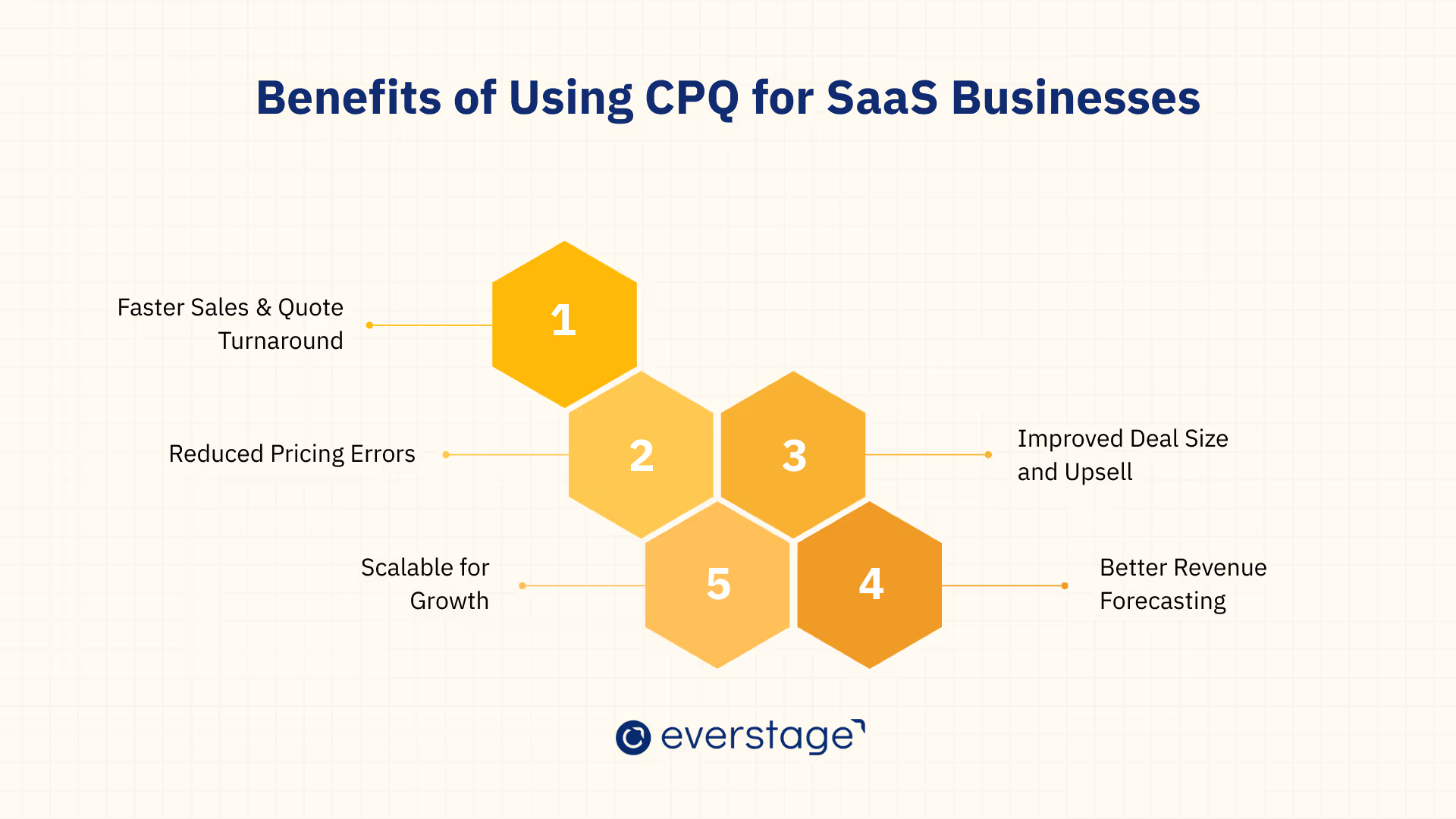
Once CPQ is in place, its impact goes far beyond faster quoting. For SaaS companies, CPQ becomes a foundational system that improves how deals are built, priced, forecasted, and scaled. The benefits compound as product complexity and deal volume increase.
1. Faster Sales Cycles & Quote Turnaround
In SaaS sales, speed matters. Every delay between discovery and quote increases the risk of deal slippage or buyer disengagement. Manual quoting slows teams down with back-and-forth approvals, recalculations, and revisions.
CPQ accelerates this process by automating configuration and quote generation. Sales reps can build compliant quotes in minutes instead of days because:
- Product rules and pricing logic are pre-defined
- Discounts and approvals follow automated workflows
- Quotes are generated instantly with accurate totals
The result is shorter sales cycles, quicker responses to buyer requests, and fewer stalled deals, especially in competitive or enterprise sales motions.
2. Reduced Errors & Pricing Inconsistencies
Pricing errors are one of the most expensive hidden costs in SaaS sales. Misquotes can lead to lost deals, margin erosion, or billing disputes that damage customer trust.
CPQ minimizes these risks through rule-based pricing and validation. It ensures that:
- Only approved products and bundles can be sold
- Pricing is applied consistently across reps and regions
- Discounts stay within defined guardrails
By removing manual calculations and guesswork, CPQ creates a single source of truth for pricing. This improves accuracy, protects margins, and ensures fairness across customers.
3. Improved Deal Size & Upsell/Cross-sell Opportunities
CPQ doesn’t just protect revenue, it helps grow it.
Through guided selling and intelligent bundling, CPQ can surface relevant upsell and cross-sell options during the quoting process. Instead of relying on a rep’s memory or experience, the system can:
- Recommend higher-value packages
- Suggest complementary add-ons based on the base product
- Encourage expansion-friendly configurations
This makes upselling feel natural and consistent, not forced or accidental. Over time, CPQ helps SaaS teams increase average deal size while maintaining pricing discipline.
4. Better Sales & Revenue Forecasting / Analytics
Every quote contains valuable data, such as what customers buy, how they’re priced, and which configurations convert best. Without CPQ, much of this insight is fragmented or lost.
CPQ captures configuration and pricing data across all deals, creating visibility into:
- Popular product combinations
- Discount patterns and pricing effectiveness
- Expansion and renewal behavior
This data feeds more accurate forecasting and enables revenue teams to make informed decisions about packaging, pricing strategy, and pipeline health. Forecasts become more reliable because they’re grounded in real quoting behavior, not assumptions.
5. Scalability as You Grow: Supporting More Products, More Deals
What works at early-stage SaaS breaks quickly as the business scales. Adding more plans, features, regions, or customers multiplies quoting complexity and error risk if processes remain manual.
CPQ allows SaaS companies to scale without proportional operational overhead. As the business grows:
- New products and pricing rules can be added centrally
- Sales teams follow the same logic regardless of size or location
- Complexity increases without chaos
This makes CPQ especially valuable during periods of rapid growth, product expansion, or international scaling, when consistency and control matter most.
At this stage, CPQ stops being a quoting tool and becomes a core revenue infrastructure, powering how pricing, deals, and growth scale together.
For SaaS companies with complex pricing models, CPQ delivers measurable business impact.
In fact, according to Nucleus Research, organizations that implemented CPQ realized an average ROI of 121%, with payback in less than 18 months. These gains come from increased sales speed, reduced rework, and greater control as pricing complexity grows.
That’s why understanding which CPQ features truly support SaaS complexity is essential before committing to a solution.
Top Features to Evaluate in CPQ Solutions for SaaS
Not all CPQ tools are built for SaaS. Many were originally designed for one-time product sales and struggle with subscriptions, flexible pricing, and ongoing contract changes. When you’re evaluating CPQ solutions for a SaaS business, the focus should be on pricing flexibility, lifecycle support, and integration depth, not just quote creation.
Below are the key features that matter most, and why they directly impact how your sales and revenue teams operate.
1. Subscription & Usage‑based Pricing Support
SaaS pricing is rarely one-dimensional. Most companies sell across a mix of models, such as:
- Per-seat or per-user pricing
- Usage-based pricing (API calls, data volume, transactions)
- Time-based subscriptions (monthly, annual, multi-year)
- Hybrid models that combine fixed and variable components
A CPQ solution must handle all of these natively, without workarounds. It should support recurring charges, usage tiers, contract ramps, and proration logic when customers upgrade or change plans mid-cycle.
Without this flexibility, teams are forced back into spreadsheets for “special” deals, which defeats the purpose of CPQ. Strong subscription and usage-based support ensures pricing accuracy across the full contract lifecycle, not just at the initial quote.
2. Flexible Bundling & Product Configuration Capabilities
SaaS products are increasingly modular. Customers expect to buy only what they need, while sales teams want to package offerings in a way that drives value and expansion.
A SaaS-ready CPQ should support:
- Core products with optional modules and add-ons
- Custom bundles for different segments or deal sizes
- Configuration rules that manage dependencies and exclusions
- Pricing and discount logic at the product, bundle, or customer level
This flexibility allows sales teams to create tailored packages without breaking pricing rules or relying on institutional knowledge. At the same time, it gives product and finance teams control over how offerings are assembled and priced.
3. Approval Workflows and Discount/Quote Controls
Discounting is often where pricing discipline breaks down as SaaS teams scale. Without clear guardrails, reps may over-discount to close deals quickly, creating long-term margin issues and inconsistent customer pricing.
Effective CPQ solutions include built-in approval workflows that:
- Enforce discount thresholds automatically
- Route exceptions to the right approvers
- Track overrides for auditability and compliance
These controls balance flexibility with governance. Sales teams can move fast within defined boundaries, while leadership retains visibility and control over pricing decisions that impact revenue and margins.
4. Integration with CRM, Billing & ERP Systems
CPQ doesn’t operate in isolation. To deliver real value, it must sit cleanly within the broader quote-to-cash process.
Key integrations to evaluate include:
- CRM: Ensures quotes are tied to opportunities, accounts, and pipeline forecasting
- Billing systems: Aligns quoted pricing with subscription billing, invoicing, and renewals
- ERP or finance systems: Supports revenue recognition, reporting, and compliance
Tight integration ensures that what is quoted is exactly what gets billed and recognized, reducing handoffs, rework, and downstream errors. For SaaS companies with recurring revenue, this alignment is critical for clean renewals and predictable forecasting.
5. Analytics, Reporting & Renewal/Expansion Management
CPQ is also a data source. Every quote reflects customer preferences, pricing sensitivity, and deal structure. The right CPQ solution makes this data visible and actionable.
Look for capabilities that support:
- Reporting on product mix, discounting, and deal structures
- Insights into pricing effectiveness and conversion trends
- Renewal and expansion quote generation tied to existing contracts
These features help revenue teams move beyond reactive selling. Instead of guessing which packages work best or where margins are leaking, leaders can use CPQ data to refine pricing strategy, improve forecasts, and drive higher net revenue retention.
SaaS companies use a range of CPQ tools depending on their size, complexity, and tech stack. Some well-known CPQ platforms are widely adopted in large enterprise environments, while others are designed specifically for modern SaaS pricing and subscription models.
For SaaS businesses looking for a solution purpose-built around recurring revenue, Everstage CPQ is a dedicated CPQ platform tailored for SaaS models.
It offers strong support for subscription-based and usage-based pricing, flexible product configuration, approval workflows, and seamless integration with CRM, billing, and ERP systems, making it well-suited for SaaS companies that need both flexibility and control as they scale.
Choosing the right CPQ features is only half the equation; the real impact comes from how effectively those capabilities are implemented across your sales and revenue workflows.
This is where modular CPQ becomes especially important, because implementation success often hinges on how well you can manage add-ons, pricing tiers, and trial structures in real sales scenarios.
Modular CPQ: Handling Add-ons, Tiers, and Trials
Modular pricing is now the default for SaaS. Customers expect flexibility, while revenue teams need consistency and control. This is where modular CPQ proves its value, not in theory, but in how it handles everyday deal scenarios without introducing friction or errors.
A well-implemented CPQ system treats add-ons, tiers, and trials as first-class building blocks, not exceptions that require manual fixes.
1. Managing Add-ons
Add-ons are a powerful growth lever in SaaS, but only if they’re managed consistently. When add-ons are priced or applied manually, teams often run into issues like incorrect eligibility, inconsistent discounts, or forgotten attachments that leave revenue on the table.
Modular CPQ solves this by defining add-ons as reusable components that are governed by clear rules. With CPQ, you can:
- Attach add-ons to specific base plans or customer segments
- Enforce eligibility rules and dependencies automatically
- Apply consistent pricing and discount logic across deals
This ensures add-ons are always quoted correctly and presented at the right moment in the sales process. For sales teams, it removes guesswork. For finance and product teams, it ensures that add-ons are sold in ways that align with pricing strategy and margins.
2. Simplifying Tiered Pricing Models
Tiered and volume-based pricing is common in SaaS, but difficult to manage manually. As usage grows, pricing must adjust accurately based on predefined thresholds, whether that’s the number of users, transactions, or feature limits.
CPQ simplifies this by embedding tier logic directly into the quote. Instead of relying on calculations outside the system, CPQ can:
- Automatically apply the correct price tier based on usage or volume
- Handle step-up pricing as customers cross thresholds
- Support multiple tier structures across plans or regions
This automation reduces errors and ensures that customers are priced fairly and transparently. It also allows your team to offer sophisticated pricing models without slowing down the sales process or increasing operational risk.
3. Managing Trial Conversions
Trials are often the entry point into a SaaS product, but converting them into paid plans can be messy without structure. Manual conversions introduce delays, inconsistent pricing, and unclear contract terms, especially when trials vary by duration, feature access, or user limits.
CPQ helps streamline trial-to-paid conversions by predefining upgrade paths. With modular CPQ in place, you can:
- Map trial plans to paid tiers automatically
- Apply the correct pricing and contract terms upon conversion
- Handle proration and billing transitions without manual intervention
This creates a smoother handoff from product-led motions to sales-assisted deals. Customers experience a clear, predictable upgrade process, while revenue teams maintain control over pricing and contract integrity.
Together, these capabilities make modular pricing manageable at scale. Instead of treating add-ons, tiers, and trials as special cases, CPQ turns them into standardized, repeatable motions that support growth without adding complexity.
Once modular pricing and packaging are in place, the next step is ensuring CPQ is implemented effectively across teams and systems so these capabilities deliver consistent results at scale.
How to Implement CPQ in Your SaaS Business: Best Practices
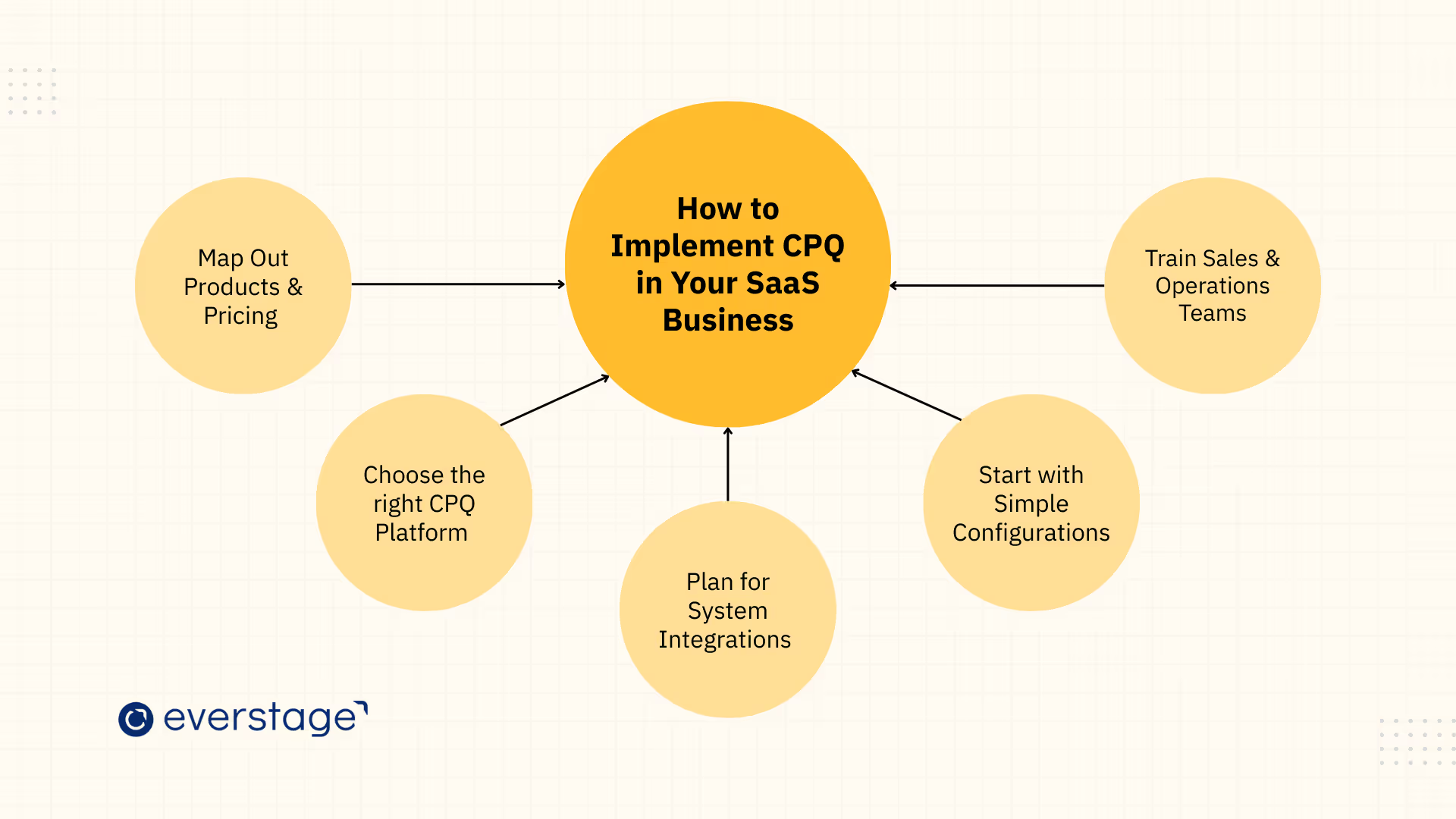
Implementing CPQ isn’t just a software rollout; it’s a quote-to-cash upgrade. CPQ sits at the front of that process and connects to CRM, billing, and finance systems, so the decisions you make early (data, rules, integrations) shape everything downstream.
1. Map Out Your Product & Pricing Models Clearly
Every successful CPQ implementation starts with clarity. Before configuring workflows or rules, you need a complete and shared understanding of how your SaaS products are structured and priced today, and how they’re expected to evolve.
Begin by documenting:
- All products, modules, and add-ons
- Usage variables, billing frequencies, and contract terms
- Discount logic, approval thresholds, and exception handling
- Renewal, upgrade, downgrade, and expansion paths
- Trial-to-paid conversion rules and proration logic
This exercise does more than prepare you for CPQ configuration. It aligns sales, finance, RevOps, and product teams around a single commercial model, reducing ambiguity before it turns into misquotes or revenue leakage.
2. Choose a CPQ Platform Aligned to Your Needs
Once your pricing and product structure are clearly defined, selecting the right CPQ platform becomes far more straightforward. Instead of comparing tools based on generic feature lists, you can evaluate them against your actual sales complexity and growth plans.
Focus on how well each platform supports:
- Your pricing models, including subscriptions, usage-based, or hybrid structures
- Your sales motion, whether product-led, enterprise, or partner-driven
- Your existing tech stack and integration requirements
- Your team size today and how you expect it to scale
The goal is not to choose the most powerful CPQ on the market, but the one that best fits how your business sells now, and how it plans to sell in the future.
3. Plan for CRM/Billing/ERP Integrations Early
CPQ delivers its full value only when it connects cleanly with the rest of your revenue stack. If integrations are treated as an afterthought, quoting accuracy may improve, but downstream issues in billing or revenue recognition will persist.
Early in the implementation, define how data should flow between systems:
- CRM is the system of record for accounts, opportunities, and pipeline
- CPQ as the source of pricing logic, configurations, and quotes
- Billing systems for subscriptions, invoicing, and renewals
- ERP or finance systems for reporting and compliance
By planning integrations upfront, you ensure that what gets quoted is exactly what gets billed and recognized, eliminating manual handoffs and costly rework later.
4. Start with Simple Configurations, Gradually Add Complexity
One of the most common CPQ mistakes is trying to automate every edge case from day one. While it’s tempting to encode all pricing scenarios upfront, doing so often slows adoption and increases confusion.
A more effective approach is iterative:
- Launch with core plans, standard add-ons, and basic discount rules
- Validate that quotes flow cleanly from CRM to billing
- Gradually introduce bundles, tiered pricing, ramps, and custom logic
This phased rollout builds trust in the system. As teams gain confidence, you can add sophistication without overwhelming users or destabilizing workflows.
5. Train Sales & Operations Teams, Define Governance
Even the best-configured CPQ will fail if teams don’t understand how to use it, or if ownership is unclear. Training and governance ensure CPQ remains accurate as products, pricing, and teams evolve.
Effective implementation includes:
- Role-based training for reps, managers, and RevOps administrators
- Clear ownership of pricing rules, product catalogs, and approvals
- Simple documentation and a defined process for changes
By treating CPQ as a living system rather than a one-time setup, you ensure it continues to support growth instead of becoming a bottleneck.
Conclusion
CPQ SaaS is no longer optional for SaaS businesses managing complex pricing, modular products, and recurring revenue. As sales models evolve, manual quoting creates friction, errors, and scalability limits. CPQ brings structure to configuration, pricing, and quoting, helping teams move faster without losing control.
By standardizing pricing logic and automating quote creation, CPQ improves sales velocity, reduces costly errors, and supports sustainable growth. It allows SaaS companies to expand product offerings, introduce flexible pricing, and scale deal volume without increasing operational burden.
That said, CPQ delivers real value only when implemented thoughtfully. Clear pricing models, strong CRM and billing integrations, and ongoing enablement are essential to ensure long-term success. Choosing the right CPQ solution means aligning it with your current sales motion and future growth plans.
For SaaS companies selling subscription and usage-based offerings, Everstage CPQ helps streamline quoting, minimize pricing errors, and scale with confidence through flexible pricing support and deep revenue-stack integrations.
Want to see how Everstage CPQ can work for your team? Book a demo to explore how you can simplify quoting and accelerate SaaS growth.
Questions worth asking
The things most people want to know before they commit.
What is CPQ SaaS, and how does it work for subscription businesses?
CPQ SaaS is cloud-based Configure, Price, Quote software built for subscription and usage-based business models. It automates product configuration, pricing logic, and quote generation, allowing SaaS sales teams to create accurate quotes quickly while supporting renewals, upgrades, and contract changes.
Why do SaaS companies need CPQ software instead of spreadsheets?
Spreadsheets don’t scale with SaaS pricing complexity. As products, add-ons, and pricing models grow, spreadsheets increase the risk of errors, delays, and inconsistent pricing. CPQ replaces manual calculations with rule-based automation, improving accuracy, speed, and control across the sales process.
Can CPQ handle usage-based and tiered pricing models in SaaS?
Yes. Modern CPQ solutions are designed to support usage-based, tiered, ramp, and hybrid pricing models. They automatically apply pricing logic based on users, consumption, or thresholds, ensuring consistent and accurate pricing across all deal types and contract terms.
How does CPQ improve sales velocity and reduce pricing errors?
CPQ improves sales velocity by automating configuration and quote creation, eliminating manual back-and-forth and approval delays. At the same time, built-in pricing rules and validations reduce errors by ensuring quotes follow approved pricing, discount limits, and product eligibility rules.
When is the right time for a SaaS company to implement CPQ?
A SaaS company should consider CPQ when pricing becomes complex, sales cycles slow due to quoting delays, or errors increase as the team scales. It’s especially valuable when selling modular products, usage-based plans, or managing frequent renewals and expansions.
What features should SaaS companies look for in a CPQ solution?
SaaS companies should look for CPQ features that support subscription and usage-based pricing, flexible bundling, approval workflows, CRM and billing integrations, and analytics for renewals and expansions. The right solution should align with current pricing needs while supporting future growth.