

TL;DR
This guide compares 10 sales compensation software platforms for 2026, including Everstage, Xactly, CaptivateIQ, Anaplan and Salesforce Spiff. Choose based on compensation-plan complexity, who will manage plan changes, rep visibility and total cost, not a single overall ranking.
- Everstage — for self-service plan administration and rep visibility: Shortlist Everstage if your Sales Ops, RevOps or Finance team manages complex or frequently changing plans. Its no-code plan builder, real-time quota attainment dashboards and Crystal commission forecasting support administrators and sellers. Small teams with simple flat-rate plans may need less functionality.
- Xactly — for benchmarking-led compensation programs: Evaluate Xactly if your enterprise uses compensation benchmarking to inform plan design.
- CaptivateIQ — for spreadsheet-style modeling: Consider CaptivateIQ if your compensation team prefers formula-based plan building and wants a sandbox for testing changes.
- Anaplan — for connected planning: Evaluate Anaplan if your organization already uses it for financial planning and wants compensation modeling in the same environment.
- Salesforce Spiff — for Salesforce-centered teams: Include Salesforce Spiff if commission visibility and calculation traceability within your Salesforce workflow are priorities.
- Before buying: Ask each vendor to build your actual plan, demonstrate an administrator-led change and trace a rep’s payout to its source data. Compare implementation responsibilities, integrations and three-year total cost.
The quarter closes, and commission expense is higher than Finance expected. A top performer has earned significantly more than forecast, while several important deals have moved into the next quarter. The compensation plan that looked right in January no longer reflects the current pipeline, product mix, or sales priorities.
The problem is not always the plan itself. It is often the system supporting it. Slow plan changes, disconnected quota data, delayed attainment reporting, and manual payout validation make it difficult to respond when business conditions change.
Sales compensation software should help Sales Ops, RevOps, and Finance adjust plans, forecast commission costs, track attainment, and validate payouts without creating additional administrative work. It should also give sellers a clear view of how their performance translates into earnings.
This guide compares the 10 best sales compensation software platforms in 2026. Each platform is evaluated across plan flexibility, rep visibility, integrations, quota management, financial reporting, and implementation speed
Best Sales Compensation Software Platforms Compared at a Glance
Here's where each platform lands before the details. The Best For column shows your fit, and the Standout Feature shows what sets each apart. The Main Tradeoff shows the compromise you may accept.
Quick Answer
Everstage is the best sales compensation software in our 2026 evaluation. Xactly, CaptivateIQ, Anaplan, Salesforce Spiff, and other platforms are strong alternatives for different team sizes, technology environments, and compensation requirements.
What Is Sales Compensation Software?
Sales compensation software manages your entire variable pay program, from plan design and quota modeling through automated calculation, rep-facing visibility, and payroll handoff. It translates your comp strategy into accurate payouts and real-time attainment data for every rep on your team. If your incentive structure relies heavily on commissions, bonuses, and accelerators, evaluating the best variable compensation software can help you find a platform built specifically for performance-based pay. Teams looking to expand beyond commissions into broader variable pay programs should also evaluate dedicated incentive compensation management software to manage bonuses, SPIFs, and MBOs at scale.
For HR and Payroll teams, the right platform also creates a reliable handoff from approved commissions to payroll systems, with fewer last-minute corrections and clearer employee-facing explanations.
How it compares to adjacent categories: Sales compensation software is the broad category for managing variable pay. Sales commission software focuses specifically on calculating and paying commissions. Incentive compensation management (ICM) software extends into bonuses, SPIFs, MBOs, and multi-component incentive structures. Compensation management software is broader still and often covers base salary, equity, and total rewards across the whole workforce. This guide focuses on the sales-facing variable pay use case.
If you're still running this in spreadsheets or a legacy platform that requires a consultant for every change, here's what that's costing you:
- Sales Ops teams spend dozens of hours per month on manual comp administration that automation reduces sharply.
- Commission errors commonly go unchallenged because reps rarely know they occurred.
- Companies that struggle to adjust compensation plans when strategy changes risk leaving reps focused on outdated incentives.
- Reps with real-time quota attainment visibility make faster decisions about which deals to prioritize. They stop waiting until month-end to see where they stand.
Why Companies Use Sales Compensation Software
Teams adopt a platform to solve specific business problems that spreadsheets and legacy tools handle poorly:
- Reduce manual commission errors: Automated calculation removes the formula mistakes and version-control chaos that erode payout accuracy.
- Improve rep trust: Transparent, real-time earnings visibility ends shadow accounting and reduces the "why was I paid this?" cycle.
- Shorten payout cycles: Automation compresses close timelines from weeks to days.
- Increase visibility into commission liability: Finance can forecast commission spend before month-end instead of reconciling after the fact.
- Align incentives with revenue strategy: Plan changes keep pace with pipeline and territory shifts.
- Reduce disputes: Traceable statements let reps see the math themselves, cutting inquiry volume to finance.
- Improve audit readiness: Clean audit trails and ASC 606 support keep you prepared for SOX and external audits.
Key Features of the Best Sales Compensation Software
Before comparing vendors, understand the core capabilities that define a strong platform. Map each feature to your buying requirements:
- Automated commission calculations: Rule-based payout logic that runs without manual formulas.
- Real-time commission tracking: Live earnings and attainment visibility for reps.
- Quota and attainment dashboards: Team and individual progress against targets.
- No-code plan design: Build tiers, draws, clawbacks, SPIFs, MBOs, and accelerators without engineering.
- Approval workflows: Multi-stage review and override handling with audit logs.
- Dispute management: in-app query resolution with documented communication.
- Audit trails: Traceable, version-controlled records for SOX and ASC 606.
- Payroll handoff: Clean transfer of approved commissions to payroll systems.
- CRM and ERP integrations: Automatic data pulls from Salesforce, NetSuite, HRIS, and data warehouses.
- Forecasting: What-if modeling for reps and commission liability projection for finance.
- Mobile access: Attainment visibility for field reps outside the office.
- Multi-currency support: Payouts and statements in each rep's currency.
Our Evaluation Methodology
Our evaluation draws from:
- 300+ verified reviews from G2's Winter 2026 Grid, Gartner Peer Insights, and Forrester research.
- Conversations with Sales Ops, RevOps, Finance, and compensation leaders who've run comp platform evaluations in the past 18 months
- Implementation data from teams ranging from 50 to 5,000+ payees across SaaS, financial services, and healthcare
- Hands-on review of each platform's plan design experience, quota management capabilities, and rep-facing dashboards
Editorial note: Everstage is included in this evaluation. We scored every platform against the same six criteria. Each vendor entry includes tradeoffs and best-fit scenarios.
6 Evaluation Criteria for Choosing the Best Sales Compensation Software
- Plan Design and Flexibility (25%): Can your team build, test, and modify comp plans without code, IT, or a vendor engagement?
- Rep Visibility and Motivation (20%): Do reps see real-time quota attainment and earnings? Can they forecast their own commission?
- Data Integration (20%): Does it pull from your CRM, HRIS, and ERP automatically, without manual exports?
- Quota and Attainment Management (15%): Can you set, model, and adjust quotas within the platform? Do managers see team attainment in real-time?
- Finance Reporting and Accuracy (15%): Is there a clean audit trail? Can finance forecast commission liability before month-end?
- Implementation Speed (5%): How fast can you realistically go live, and how much ongoing admin burden does it create?
Scoring Scale
- 5 = Exceptional: Industry-leading, exceeds expectations
- 4 = Strong: Meets all requirements effectively
- 3 = Adequate: Covers the basics with some gaps
- 2 = Subpar: Notable limitations that'll create friction
- 1 = Poor: Fails basic requirements
Best Sales Compensation Software Platforms in 2026: Detailed Reviews
#1 Everstage: Best Sales Compensation Software (Score: 29/30)
Best for: Sales Ops, RevOps, and Finance teams managing complex or changing comp plans who want to own plan design, quota updates, attainment visibility, and payout validation without relying on vendor services.
Verdict: Everstage earns the top spot for one reason that consistently came up in our evaluation: Sales Ops teams can own the entire compensation program without technical dependency. Plan design, what-if modeling, quota management, and rep attainment tracking all sit in the hands of the comp team, not a vendor or IT queue.
TL;DR:
- Strengths: No-code plan builder, Crystal AI forecasting, real-time quota attainment, Slack/Teams notifications, SOX audit trail, in-house implementation
- Limitation: More platform than you need for under 20 reps on a flat-rate plan
What Makes It Different
- Many sales comp platforms force a tradeoff between flexibility and simplicity: Everstage delivers both. Your comp admin builds multi-component plans (tiers, draws, clawbacks, SPIFs, MBOs, accelerators) without SQL, IT, or a services engagement. When your strategy changes, your plan changes in hours, not weeks.
- Quota and Attainment: Your VP of Sales sees real-time attainment across the team from a single dashboard. Reps see where they stand against quota without pinging Sales Ops. Mid-quarter course corrections happen because the data is visible, not because someone pulled a report at month-end.
- Crystal AI Forecasting: Crystal helps reps and Finance model expected commission outcomes before deals close. Reps see how pipeline movement and deal timing may affect earnings. Finance forecasts commission liability before month-end. Both sides stop working from guesses.
- Plan Communication: Digital plan distribution via DocuSign, rep acknowledgment tracking, and version-controlled plan history. When a rep says 'I didn't know the rate changed,' you have a timestamped record that they did.
- In-House Implementation: Everstage's own team handles the buildout, not a third-party partner. That means one accountable team from kickoff to go-live. Most teams go live in 4–8 weeks depending on plan complexity and data readiness. Your plans are fully built and validated before go-live, so your comp program avoids running on half-migrated logic while the rest catches up.
- Enterprise Readiness: For larger revenue organizations, Everstage supports complex approval workflows, role-based access, audit trails, CRM/ERP/HRIS integrations, and security standards including SOC 2 Type II, ISO 27001, GDPR, and ISO 42001.
Why It Ranks #1
- Plan Design and Flexibility: 5/5
- Rep Visibility and Motivation: 5/5
- Data Integration: 5/5
- Quota and Attainment Management: 5/5
- Finance Reporting and Accuracy: 5/5
- Implementation Speed: 4/5
The platform's depth means data prep and validation require real effort before go-live, which keeps this from a perfect 5/5.
Where It's Not the Right Fit
- Teams with fewer than 20 payees may find Everstage’s capabilities more extensive than they need.
- Teams looking only for lightweight commission tracking will find Everstage's broader platform capabilities more than they need.
- Organizations without clean CRM or source-system data should plan for data cleanup before implementation, because commission accuracy depends on reliable source data.
- Teams that lack a CRM or system of record must define a data source before they get full value from automated calculations and dashboards.
- Teams with highly custom document workflows may need API configuration for plan acknowledgment.
For teams that want compensation to connect more directly with deal strategy, Everstage also extends beyond commission calculation into quoting, planning, and revenue workflows.
#2 Xactly (Score: 27/30)
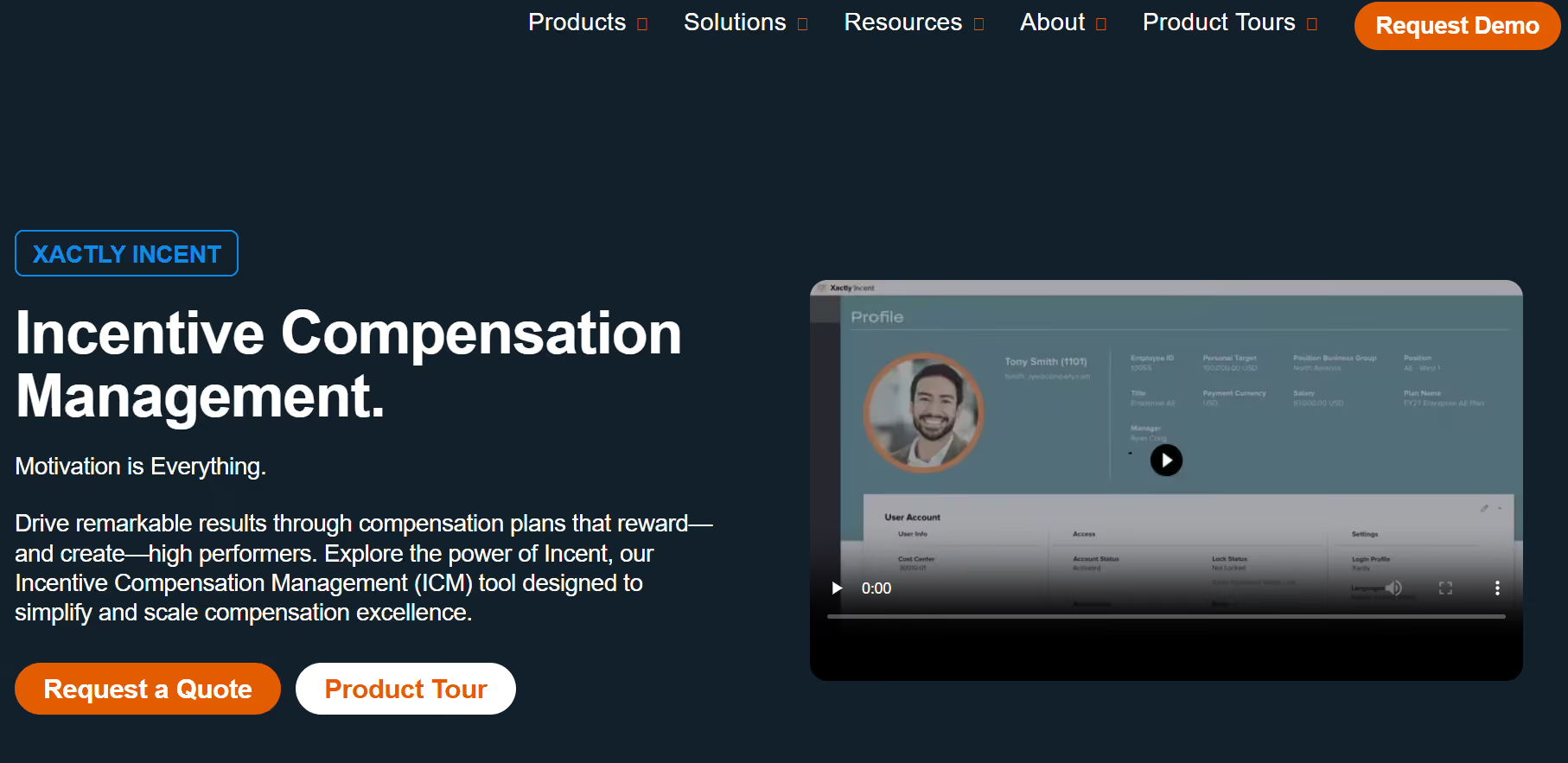
Best for: Enterprise teams that rely heavily on compensation benchmarking and have budget for ongoing professional services.
Verdict: Xactly earns the #2 spot specifically because of its plan design capabilities. If your team uses market benchmarking data to design comp plans, Xactly delivers real value. Its database spans 20+ years of comp data across thousands of companies, a resource no other platform matches. The tradeoff is a professional services model that makes plan changes expensive.
TL;DR:
- Strengths: Largest comp benchmarking database in the market, mature plan governance, strong audit trail, enterprise-grade security
- Limitations: Buyer interviews and public reviews commonly cite professional-services dependency for meaningful plan changes; some users also note dated interface experiences and longer implementation timelines
What Makes It Different
Xactly's differentiator for sales comp design is its benchmarking data. Say your VP of Sales wants to know whether your OTE-to-quota ratio is competitive for your segment. Xactly has that data. It also shows whether your accelerator threshold aligns with how peer companies structure plans. No other platform on this list replicates that capability.
The calculation engine is mature and handles complex comp logic well. Governance workflows, plan version control, and audit trails are genuinely strong. For large enterprises in regulated industries, those capabilities have real value.
The tradeoff is what it costs to get there and stay there. Tier adjustments, rate changes, and quota updates commonly require professional services engagements and can take weeks. If your business changes faster than twice a year, that constraint becomes a strategic liability.
Why It Ranks #2
- Plan Design and Flexibility: 4/5
- Rep Visibility and Motivation: 4/5
- Data Integration: 5/5
- Quota and Attainment Management: 5/5
- Finance Reporting and Accuracy: 5/5
- Implementation Speed: 4/5
Where It Falls Short
- Meaningful plan changes commonly require a vendor engagement, which adds ongoing cost and timeline friction.
- The interface is widely described as outdated and unintuitive, a real adoption issue for reps and non-specialist admins.
- 3-year total cost can be several times the subscription price once you include implementation and ongoing change management.
Xactly ranked #2 on our list, but how does it compare to Everstage? - Everstage vs Xactly
Case study on Why Diligent replaced Xactly with Everstage
#3 CaptivateIQ (Score: 26/30)
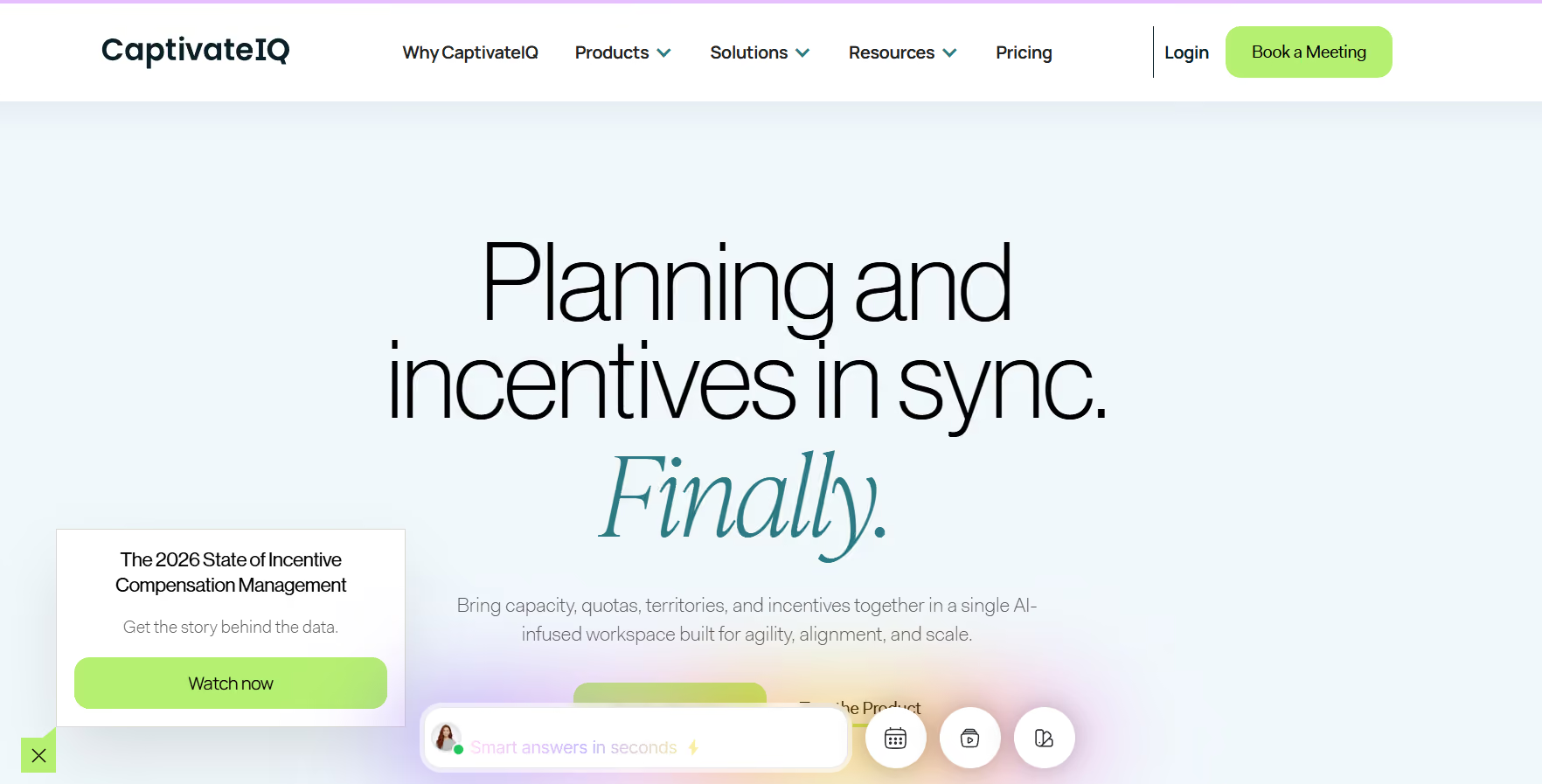
Best for: Compensation teams that prefer spreadsheet-style logic and have the technical resources to manage setup and reporting.
Verdict: If your comp team lives in spreadsheets and wants to bring that logic into an automated platform, CaptivateIQ makes the transition easier than any other tool on this list. The plan-building experience is familiar, the sandbox modeling is genuinely useful, and the calculation accuracy is strong. Setup is demanding but the payoff is real.
TL;DR:
- Strengths: Excel-familiar plan builder, sandbox modeling for plan design, broad integrations, strong calculation accuracy, approval workflows
- Limitations: Technically demanding setup, no mobile app, custom reporting is harder than it should be
What Makes It Different
CaptivateIQ's formula-based interface is purpose-built for comp teams that learned their trade in Excel. The interface keeps the same comp logic you already know. You move existing logic into a platform that runs it automatically and shows reps the results in real-time.
The sandbox modeling is valuable for plan design specifically. Before you roll out a new accelerator structure or change quota thresholds, you can model the financial impact against historical data. That's the 'what happens if we do this?' question your CFO is always asking, and CaptivateIQ answers it before you commit.
The setup barrier is real. CaptivateIQ requires a technically capable admin or a dedicated implementation resource. Teams that underestimate this go live later than planned and frustrated.
Why It Ranks #3
- Plan Design and Flexibility: 5/5
- Rep Visibility and Motivation: 4/5
- Data Integration: 4/5
- Quota and Attainment Management: 4/5
- Finance Reporting and Accuracy: 5/5
- Implementation Speed: 4/5
Where It Falls Short
- Setup is technically demanding. Expect longer-than-planned go-live timelines without a dedicated technical resource.
- The platform lacks a mobile app, a real gap for field sales teams that need attainment visibility outside the office.
- Building custom reports is more complicated than it should be. Users regularly describe it as convoluted.
Learn where Everstage outperforms CaptivateIQ for commission automation.
#4 Anaplan (Score: 25/30)
Best for: Finance-led organizations that already use Anaplan and want compensation planning inside a broader revenue, headcount, and budget model.
Verdict: If your finance team already models headcount, revenue, and budget in Anaplan, extending that to sales compensation planning is a genuinely strong use case. You model comp plan impacts in the same environment as your financial forecasts. Teams outside the Anaplan ecosystem will find the cost and complexity hard to justify for sales comp alone.
TL;DR:
- Strengths: Connected planning across finance and sales comp, powerful scenario modeling, deep ERP integration
- Limitations: Built for planning more than rep-facing compensation; steep learning curve; requires third-party Anaplan specialists to implement
What Makes It Different
Anaplan's value for sales compensation centers on planning integration over operational tracking. When leadership asks 'what does it cost if we raise OTE by 10% and move quota up 15%?', your finance team models that in the same environment where they model everything else. Everything stays in one model instead of a parallel spreadsheet or separate comp tool.
The scenario modeling is powerful for comp plan design. You can simulate the financial and behavioral impact of plan structure changes across historical performance data before you commit. That's meaningful for large organizations where a plan change moves real budget.
Anaplan was built for planning, so rep-facing dashboards and self-service attainment visibility sit outside its core design. Sales teams that need to see earnings and quota progress in real-time will find the experience limited here.
Why It Ranks #4
- Plan Design and Flexibility: 4/5
- Rep Visibility and Motivation: 3/5
- Data Integration: 5/5
- Quota and Attainment Management: 5/5
- Finance Reporting and Accuracy: 5/5
- Implementation Speed: 3/5
Where It Falls Short
- Rep-facing comp visibility sits outside the core use case. Reps rarely check Anaplan for quota attainment.
- Implementation often requires specialized Anaplan resources, which can materially increase deployment cost and timeline for teams adopting it primarily for sales compensation.
- This makes sense mainly if your finance team already runs in the Anaplan ecosystem. Outside that, the cost outweighs the benefit.
Discover the key differences between Everstage and Anaplan for modern revenue teams.
#5 Salesforce Spiff (Score: 24/30)
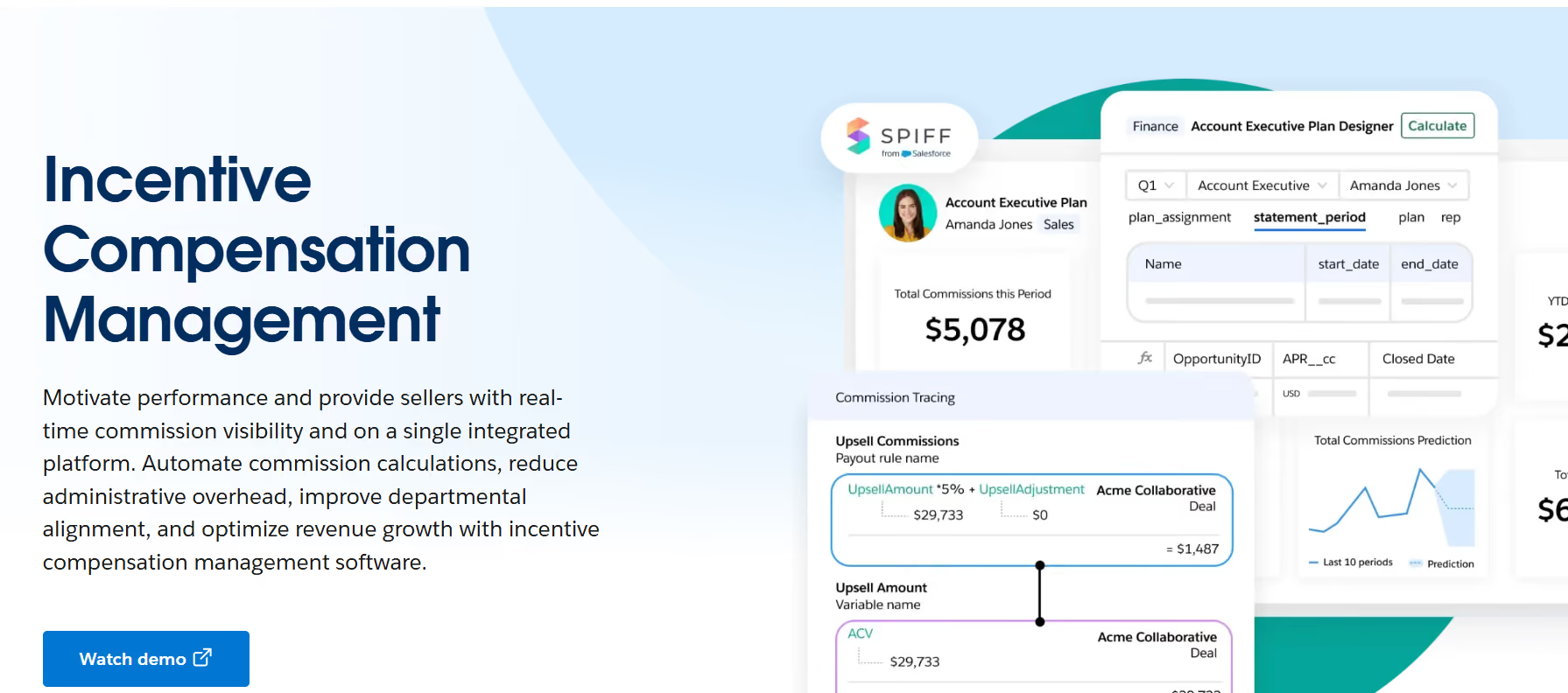
Best for: Teams with a fully Salesforce-native sales motion where rep adoption inside Salesforce is the top priority.
Verdict: If your entire sales motion runs in Salesforce, Spiff's native integration is a real advantage. Reps see quota attainment and commission data inside Salesforce without another login. The question is whether the post-acquisition roadmap will keep pace for teams that need plan complexity to grow with them.
TL;DR:
- Strengths: Native Salesforce comp experience, real-time rep visibility, strong calculation traceability, zero adoption friction
- Limitations: Post-acquisition roadmap uncertainty; plan complexity ceiling; forecasting is basic
What Makes It Different
Spiff's core advantage is zero rep adoption friction. Commission data and quota attainment surface inside Salesforce, where reps already spend their day. The mental model is familiar, and reps keep working in the tool they already use.
The calculation traceability is also strong. Every line of a commission statement traces back to source deal data. When a rep questions their payout, they can see the math themselves without pinging Sales Ops. Dispute volume drops.
Plan complexity is where Spiff shows its mid-market roots. Multi-component plans, draws, clawbacks, and MBOs are manageable but push against its ceiling. Post-acquisition, feature velocity has slowed for teams that need enterprise capabilities built out.
Why It Ranks #5
- Plan Design and Flexibility: 4/5
- Rep Visibility and Motivation: 5/5
- Data Integration: 5/5
- Quota and Attainment Management: 4/5
- Finance Reporting and Accuracy: 4/5
- Implementation Speed: 2/5
Where It Falls Short
- Post-acquisition, customers report slower feature development. A legitimate concern if you need plan complexity to grow with you.
- Commission forecasting leaves out deal attributes like product mix and discount levels.
- The plan configuration syntax has a real learning curve. Budget admin time before go-live.
Discover the key differences between Everstage and Spiff for modern revenue teams.
#6 Performio (Score: 23/30)
Best for: Mid-market teams pulling comp data from multiple systems with inconsistent formatting.
Verdict: The strongest mid-market option for teams pulling comp data from multiple systems with inconsistent formatting. If your commission inputs come from Salesforce, a legacy ERP, and a manual report every month, Performio handles that architecture better than most.
TL;DR:
- Strengths: Flexible data architecture, component-based plan builder, native mobile apps, strong data transformation
- Limitations: No meaningful what-if forecasting, limited native integrations outside Salesforce and NetSuite, complex hierarchy management
What Makes It Different
Performio's component-based plan builder structures comp logic into reusable pieces instead of formula chains. That makes plans easier to audit and easier to modify without unintended downstream effects.
The data flexibility is the real differentiator. Most comp platforms assume reasonably clean CRM data. Performio can ingest data from multiple sources with inconsistent formatting (a common situation in manufacturing, healthcare, and enterprise SaaS) without requiring upstream system changes.
Mobile access for reps is genuine: native iOS and Android apps with real-time attainment visibility. Field sales teams can check where they stand from anywhere.
Why It Ranks #6
- Plan Design and Flexibility: 5/5
- Rep Visibility and Motivation: 4/5
- Data Integration: 3/5
- Quota and Attainment Management: 4/5
- Finance Reporting and Accuracy: 4/5
- Implementation Speed: 3/5
Where It Falls Short
- What-if forecasting is missing. Finance still models comp plan impact scenarios in Excel.
- Native integrations are mainly Salesforce and NetSuite. Other ERP or HRIS platforms require more custom work.
- Complex org hierarchies with multiple reporting lines are difficult to configure and maintain.
Learn where Everstage outperforms Performio for commission automation.
#7 Varicent (Score: 22/30)
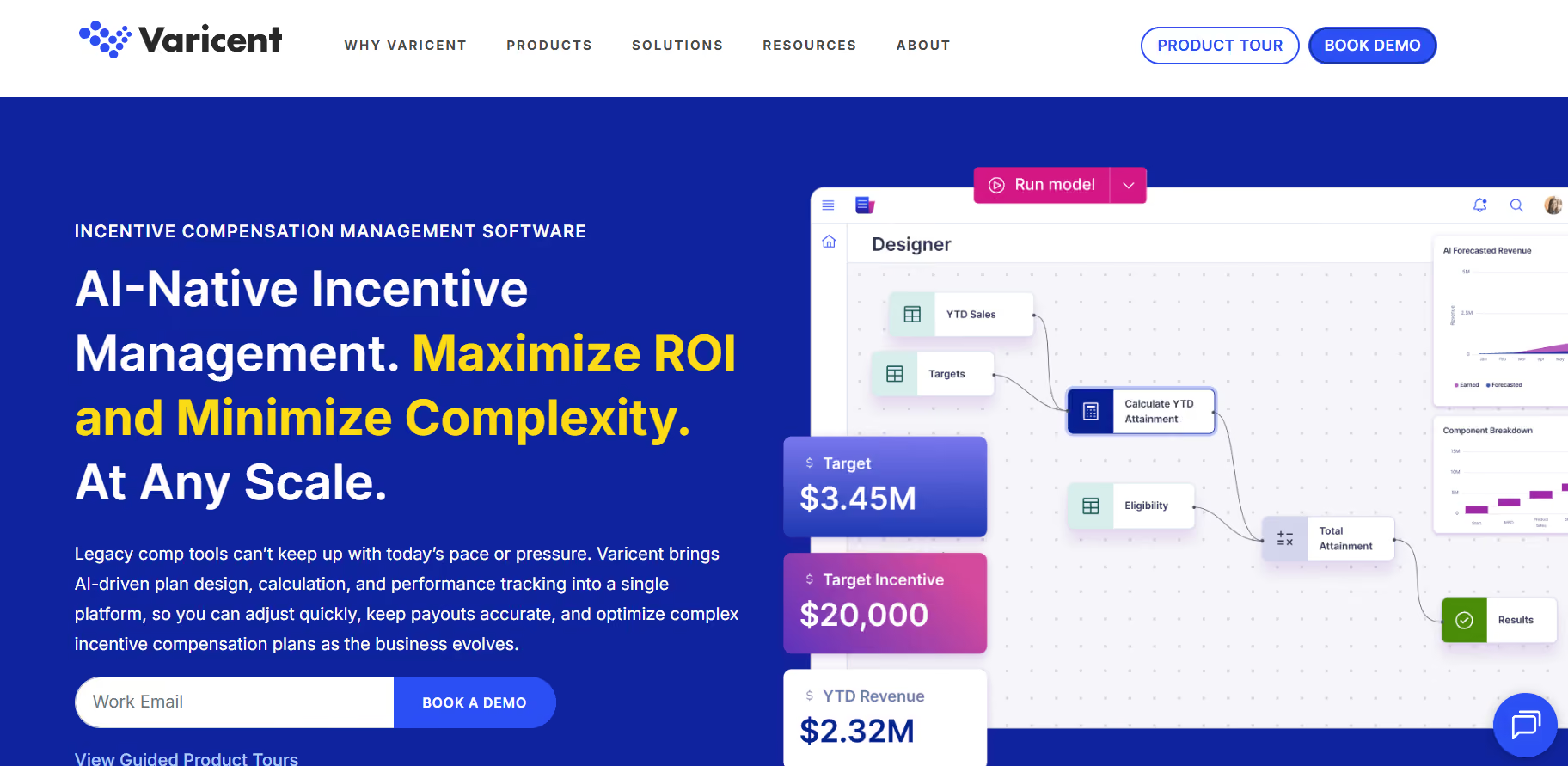
Best for: Enterprise teams with multi-layered territory structures and complex quota hierarchies that have specialist resources to manage the platform.
Verdict: The deepest territory and quota management capabilities on this list. If your comp program involves multi-layered territory structures, complex quota hierarchies, and sophisticated scenario modeling, Varicent handles it. The barrier is technical complexity that most Sales Ops teams lack the internal expertise to manage day-to-day.
TL;DR:
- Strengths: Territory and quota management depth, scenario modeling, compliance reporting
- Limitations: Requires specialist knowledge to manage; poor rep usability; expensive to implement; integration challenges
What Makes It Different
Varicent's scenario modeling for comp plan design is genuinely deep. You can simulate the financial and behavioral impact of incentive structure changes across historical data before you commit. For enterprise organizations where a plan change affects hundreds of reps and millions in variable pay, that pre-deployment modeling has real value.
Territory and quota management is also more sophisticated here than on most platforms, particularly for organizations with complex overlay structures and multi-level quota hierarchies.
The tradeoff: Varicent requires a level of technical expertise most comp teams lack internally. When something breaks or needs updating, diagnosing and fixing it without a specialist gets genuinely hard. Many teams end up with an ongoing consultant dependency they failed to budget for.
Why It Ranks #7
- Plan Design and Flexibility: 4/5
- Rep Visibility and Motivation: 2/5
- Data Integration: 4/5
- Quota and Attainment Management: 5/5
- Finance Reporting and Accuracy: 4/5
- Implementation Speed: 3/5
Where It Falls Short
- High technical floor for effective management. Many comp teams end up dependent on external consultants for ongoing administration.
- Rep-facing dashboards feel clunky. Adoption outside the admin team stays a consistent challenge.
- Connecting to non-standard systems requires significant IT involvement and extends timelines.
Read our Everstage vs Varicent guide for a deeper evaluation.
#8 SAP Commissions (Score: 21/30)
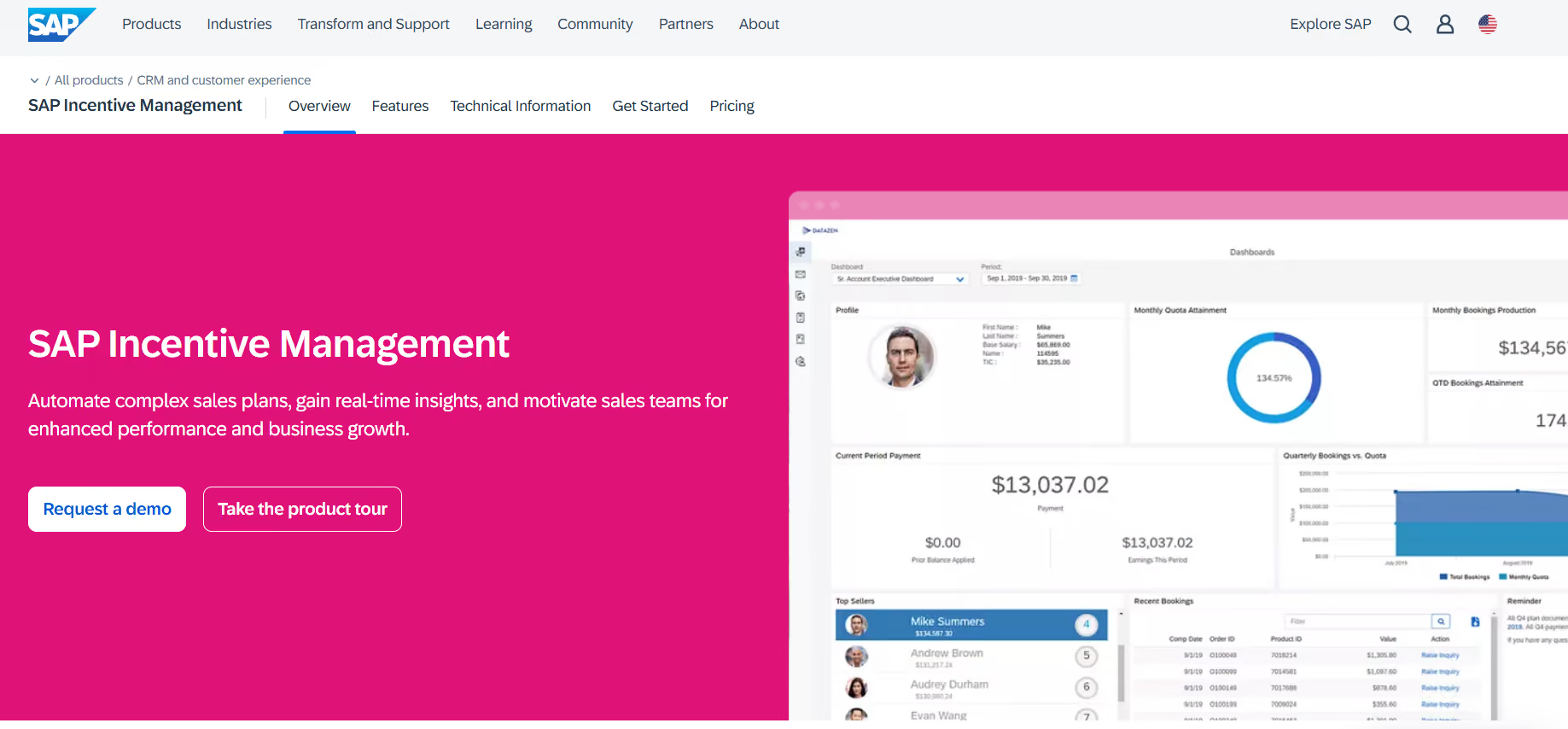
Best for: Large enterprises already standardized on SAP that need commission data to flow from S/4HANA and SuccessFactors.
Verdict: The right fit only if you're already standardized on SAP. Commission data flows from S/4HANA and SuccessFactors without custom integration work, which is a real advantage in that ecosystem. For teams outside SAP, the implementation burden and cost make it hard to justify.
TL;DR:
- Strengths: Deep SAP ecosystem integration, detailed compliance reporting, comprehensive automation
- Limitations: Steepest learning curve in the category; requires SAP implementation partners; query performance degrades with historical data
What Makes It Different
For organizations standardized on SAP, the data continuity argument is real. Your comp data flows from S/4HANA and SuccessFactors without custom integration work, and your compliance reporting connects directly to your broader SAP compliance environment.
Outside SAP-standardized environments, SAP Commissions may be harder to justify for Sales Ops teams that prioritize self-service administration and rep-facing usability. The rep-facing experience is one of the weakest on this list. The interface requires significant admin ramp time. Plan changes require a specialized SAP partner instead of an internal admin.
Why It Ranks #8
- Plan Design and Flexibility: 4/5
- Rep Visibility and Motivation: 2/5
- Data Integration: 5/5
- Quota and Attainment Management: 4/5
- Finance Reporting and Accuracy: 3/5
- Implementation Speed: 3/5
Where It Falls Short
- Rep-facing usability is a common concern in public reviews and buyer conversations, especially for teams prioritizing self-service attainment visibility.
- You'll need a specialized SAP partner for implementation. Direct SAP support for customizations is limited.
- Query performance degrades as historical comp data accumulates, a real issue for long-tenured deployments.
#9 Commissionly (Score: 20/30)
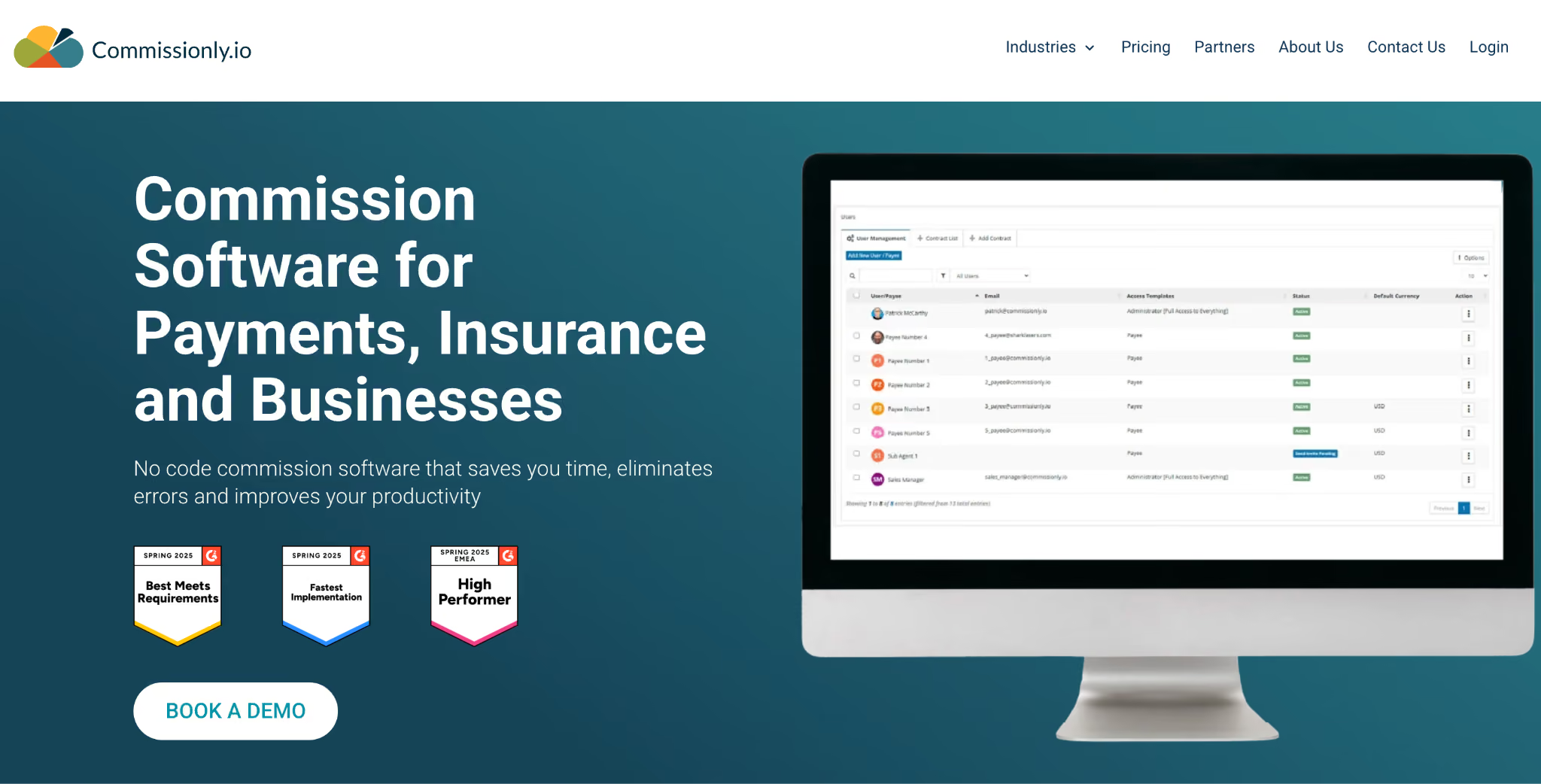
Best for: Small teams with under 150 reps and stable, simple comp logic that want to move off spreadsheets quickly.
Verdict: The fastest path off spreadsheets for a small team with a simple plan structure. If you have under 150 reps, relatively stable comp logic, and need to go live without a heavy implementation project, Commissionly works. It reaches a scaling ceiling past a certain point.
TL;DR:
- Strengths: Easy setup, real-time dashboards, multi-currency, mobile access, fast to deploy
- Limitations: Scalability ceiling around 150 reps, limited plan customization, no audit trail or compliance features
What Makes It Different
Commissionly's value is simplicity and speed. For a small team moving off spreadsheets with a stable, straightforward plan, you can get it configured and live without a long implementation engagement or technical resources.
The rep-facing dashboards are clean and easy to navigate. Reps see earnings and attainment without a complex interface getting in the way. Multi-currency support is solid at this price point.
The ceiling shows up quickly for growing teams. Complex plan logic (draws, clawbacks, MBOs, multi-component structures) pushes past what it handles. The platform lacks an audit trail and compliance reporting, a hard stop for any team with external audit requirements.
Why It Ranks #9
- Plan Design and Flexibility: 2/5
- Rep Visibility and Motivation: 4/5
- Data Integration: 3/5
- Quota and Attainment Management: 3/5
- Finance Reporting and Accuracy: 3/5
- Implementation Speed: 5/5
Where It's Not the Right Fit
- Multi-component plans, draws, clawbacks, or MBOs will push past what it handles.
- The platform omits audit trails and compliance features, a hard stop once external audit requirements exist.
- Integration relies heavily on Zapier instead of native connectors, which creates fragility in automated flows.
#10 Qobra (Score: 19/30)
Best for: European SMB and lower mid-market teams that need multi-currency and GDPR compliance without enterprise overhead.
Verdict: A well-built option for European SMB and lower mid-market teams. Multi-currency and GDPR compliance are genuinely integrated. For teams with complex plan structures or enterprise-scale quota management requirements, it'll feel underpowered quickly.
TL;DR:
- Strengths: Clean interface, multi-currency, GDPR compliance, approval workflows, fast setup
- Limitations: No what-if scenario modeling, limited scalability, shallow quota management
What Makes It Different
Qobra works well for its intended use case: European SMB teams that need multi-currency support and GDPR compliance without the overhead of an enterprise platform. The interface is clean, setup is fast, and the approval workflow for plan changes is easy to use.
Teams with more complex compensation programs, such as multi-component plans or territory-based quotas, will find Qobra short of their requirements. Quota management in particular stays shallow compared to most platforms on this list.
Why It Ranks #10
- Plan Design and Flexibility: 3/5
- Rep Visibility and Motivation: 3/5
- Data Integration: 3/5
- Quota and Attainment Management: 2/5
- Finance Reporting and Accuracy: 3/5
- Implementation Speed: 5/5
Where It Falls Short
- What-if scenario modeling is absent. Finance teams still need Excel to model comp plan impact before changes go live.
- Quota management stays shallow, impractical for teams with complex territory structures or multi-level hierarchies.
- Enterprise teams with fast-growing headcount or complex plan logic will hit a ceiling quickly.
Sales Compensation Software Pricing and Total Cost Factors
Subscription price is usually the smallest number in a comp platform deal. Understanding the full cost picture matters more than the per-seat fee. Here are the cost drivers to compare across vendors:
- Per-payee or per-seat pricing: most platforms charge based on the number of commissionable payees.
- Platform or base fees: a fixed annual cost separate from seat count.
- Implementation fees: one-time buildout and data migration costs.
- Professional services for plan changes: the biggest hidden cost with legacy platforms; changes that should take hours can require paid engagements.
- Integration development: connecting non-native CRM, ERP, or HRIS systems.
- Support packages: tiered support and dedicated CSM access.
- Training: onboarding admins and reps to the platform.
- Renewal escalators: annual price increases baked into multi-year contracts.
A platform your team can manage yourself will commonly cost less over three years than one with an ongoing professional services dependency, even if the subscription price looks similar upfront.
Real-Time Sales Compensation Reporting: What Each Team Needs
Real-time reporting means something different depending on who's looking. A strong platform serves all four stakeholders, beyond Sales Ops administrators:
- Reps need earnings visibility and deal-level payout explanations, so they can see how they're being paid and forecast their own commission.
- Finance needs commission accruals, payout forecasting, and audit trails, so they can project liability before month-end and stay audit-ready.
- Managers need team attainment and coaching signals, so they can spot which reps are ahead, behind, or need support mid-quarter.
- RevOps needs plan performance analytics and quota coverage, so they can assess whether the incentive design is actually driving the right behavior.
How to Match Sales Compensation Software to Team Size and Plan Complexity
Platforms differ in fit. Match the tool to your operating model instead of the highest score:
- Small teams (under 50 reps, simple flat-rate plans): a lightweight payout tool like Commissionly handles it. Enterprise governance stays optional here.
- Mid-market teams (50–500 reps, changing multi-component plans): no-code flexibility matters most, so your team can change plans without vendor dependency.
- Enterprise teams (500+ reps, regulated environments): enterprise governance, audit trails, and role-based access become critical.
- Complex incentive programs (multi-layered territories, deep quota hierarchies): territory and quota depth should drive your shortlist.
How to Choose the Best Sales Compensation Software: 7 Questions to Ask
These cut through vendor demos faster than a feature checklist.
1. Can your team design and change plans without calling the vendor?
For teams that change plans more than once a year, this should be non-negotiable. Ask vendors to demonstrate a live plan change during the demo: a tier adjustment, a rate modification, a new SPIF structure. No vendor involvement. Time it. If the answer involves a support ticket or professional services, your comp strategy will often lag your business by weeks.
2. Can you model the impact of a plan change before it goes live?
Your CFO will ask this question. Before you change an accelerator threshold or restructure quota, can you run that scenario against last quarter's actual performance and see the projected commission impact? Ask vendors to show you this live. The gap between 'we have modeling' and 'here's exactly what it shows' is significant.
3. Do reps see real-time quota attainment, or do they wait until month-end?
Reps who can see where they stand against quota mid-period sell differently. Ask vendors to show you the rep dashboard. Ask specifically: when a deal closes in Salesforce today, how long before it shows on the rep's attainment screen? Then ask what happens when a deal is updated, credited differently, or split between reps.
4. How does plan communication and acknowledgment work?
When your comp plan changes, how does it get to reps? How do you track that they've read and acknowledged it? Ask vendors to walk through the plan distribution workflow, from publishing to rep acknowledgment. If the answer is 'we email them a PDF,' you have a calculator instead of a comp platform.
5. What does quota management actually look like?
Setting quotas and adjusting them mid-year are two different problems. Ask vendors: how do you handle a quota adjustment for a rep who joined mid-quarter? How do you model the team quota if you add three new reps in Q2? How does territory reassignment affect quota calculations? Bring your real scenarios instead of hypotheticals.
6. What does 3-year total cost of ownership look like?
Subscription price is usually the smallest number. Get a fully-loaded estimate: implementation, professional services for annual plan changes, integration development, training, and ongoing support. Compare that number across vendors beyond the per-seat fee. A platform you can manage yourself will commonly cost less over three years than one with a professional services dependency.
7. Who implements, and what's their accountability model?
Many vendors hand implementation to third-party partners. Ask specifically: is this your team or a partner? What's the go-live timeline for a team with our plan complexity? Ask for a reference from a customer your size who went live in the past 12 months, ideally beyond a marquee logo from 2019.
Demo evaluation scorecard: during vendor calls, score each platform on plan change speed, calculation traceability, reporting latency, data source mapping, admin usability, rep experience, and implementation accountability. A consistent scorecard makes side-by-side comparisons far easier than notes alone.
Common Sales Compensation Software Mistakes to Avoid
The most expensive selection and implementation errors are predictable. Watch for these failure patterns:
- Buying for current plan complexity only: your plans will get more complex. Choose for where you're going, beyond where you are today.
- Underestimating data cleanup: dirty CRM data is the most common go-live blocker. Budget for it.
- Ignoring rep adoption: a platform reps ignore fails, however strong the admin experience is.
- Failing to validate historical payouts: run parallel calculations before go-live so you catch discrepancies early.
- Overlooking plan change costs: ask what every future change will cost before you sign.
- Leaving finance out early: late-stage finance objections rank among the most common implementation delays.
- Choosing without testing real comp logic: ask vendors to model your actual plans during the demo instead of a pre-built example.
Sales Compensation Software Implementation Checklist
The comp teams that struggle after go-live almost always underprepared before it. Here's what the right approach looks like:
Phase 1: Design Alignment (Weeks 1-2)
- Document every active comp plan in writing, including the informal rules that only exist in someone's head. Call this your comp bible. It surfaces inconsistencies you missed before.
- Align your cross-functional team: Sales Ops, Finance, Sales Leadership, HR, and Payroll. Late-stage objections from any of these groups are the most common implementation delay.
- Define your quota management model: how are quotas set, how are they adjusted mid-year, and how does territory change affect them? Document this before you configure anything.
- Map your data sources: which fields in Salesforce, your HRIS, and your ERP feed commission calculations? Find the gaps now, ahead of go-live.
Phase 2: Data and Configuration (Weeks 3-4)
- Clean your CRM data first. Inconsistent close dates, missing deal fields, and duplicate records are the most common go-live blockers.
- Build your highest-volume plan first and validate it against real historical data before moving to edge cases.
- Configure quota management alongside plan logic instead of afterward. Attainment visibility depends on quotas being correct.
- Set up your rep-facing dashboard before you ask reps to use it. If they see inaccurate data on day one, trust takes months to rebuild.
Data prep is 30-40% of your total implementation effort. Teams that rush it spend months fixing errors that trace back to dirty source data.
Phase 3: Testing and Validation (Weeks 5-6)
- Run parallel calculations against your last two full periods. Every discrepancy needs an explanation before you go live.
- Validate your edge cases: draws, clawbacks, partial-period hires, mid-quarter quota changes, multi-product deals.
- Have your VP of Sales or a sales manager review the attainment dashboard with real data. If they spot something off, fix it before the team sees it.
Phase 4: Go-Live and Adoption (Weeks 7-8)
- Brief reps before they see the new platform. Tell them what changed, where to find attainment, and how to raise a concern if something looks wrong.
- Set a clear dispute process from day one. Who do reps contact? What's the resolution SLA? Ambiguity here is where trust erodes fastest.
- Validate the payroll handoff before go-live: confirm approved commissions transfer cleanly to your payroll system without manual corrections.
- Collect structured feedback at 30 and 60 days. The issues that surface in week four are rarely the ones reps mention in week one.
Everstage's in-house implementation team helps teams work through these steps before go-live, so plan logic, data flows, dashboards, and payroll handoff are validated before reps start using the platform.
Sales Compensation Software Results: Real-World Use Cases
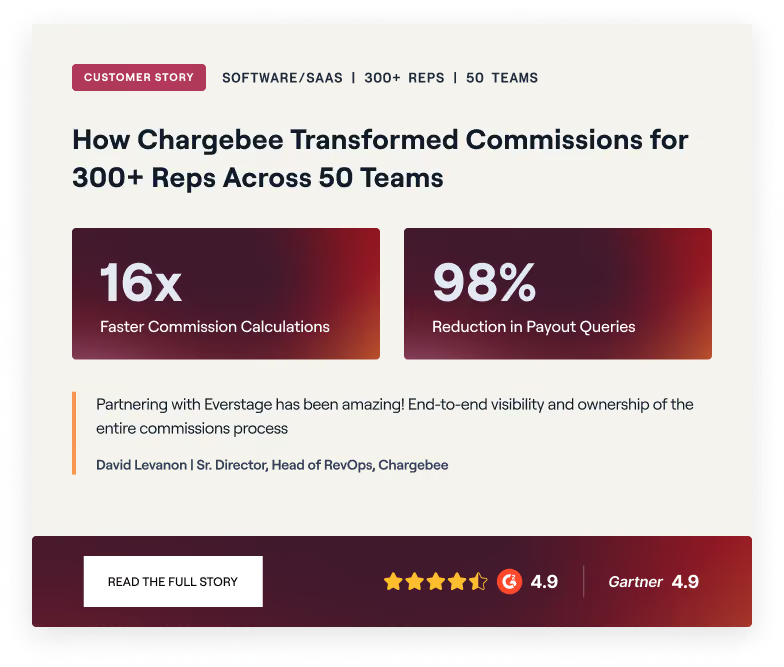
The situation: Popmenu's Sales Ops team was calculating variable pay manually in Excel every month. Payouts ran 45 days after month-end. Reps stayed in the dark about earnings until the check cleared.
What changed: Everstage went live in 7 weeks. The implementation team started with goals ahead of technical setup. Reps could see attainment and projected earnings in real-time from day one.
The results:
- Commission processing: from 3-6 hours per week to 1-1.5 hours per month
- Payout cycle: from 45 days post-month-end to 15 days
- SPIF tracking: fully automated, manual calculation eliminated
The situation: HackerRank was running incentive comp across 50 separate spreadsheets. Finance, Payroll, and HR were regularly working from different numbers. Deferred commission tracking created audit risk because a reliable system of record was missing.
What changed: Everstage automated the full process including deferred commission tracking. It's been in production since 2022.
The results:
- Processing speed: 5x improvement compared to spreadsheets
- Deferred commission accuracy: consistent and auditable for the first time
- Quota modifications: from hours of manual rework to minutes, with full audit trail
- Leadership reporting: custom dashboards comparing attainment to comp spend every quarter
The situation: Nitro's finance and RevOps teams were spending significant time each month manually calculating commissions for 100+ payees. Plans included MBO components beyond what Salesforce could track. Validation alone took 10+ days before payroll.
What changed: Nitro's Senior Compensation Analyst (from a non-technical background) built and owns all active plans in Everstage herself, including MBO components.
The results:
- 100+ payees managed by one admin without code or IT involvement
- Real-time attainment dashboards for all reps. Commission inquiry volume to finance dropped significantly.
- Reps forecast their own earnings from their Salesforce pipeline using Crystal
- Every calculation has a clean audit trail finance can explain in seconds
Which Sales Compensation Platform Should You Choose?
- Choose Everstage if you want Sales Ops, RevOps, and Finance to own plan design, quota changes, payout visibility, and commission forecasting without vendor dependency.
- Choose Xactly if benchmarking data is central to your compensation design process and you have budget for professional services.
- Choose CaptivateIQ if your team wants spreadsheet-style logic in an automated system and has technical resources for setup.
- Choose Anaplan if compensation planning needs to live inside your broader finance planning model.
- Choose Salesforce Spiff if your sales motion is fully Salesforce-native and rep adoption inside Salesforce is your top priority.
- Choose Performio if you pull comp data from multiple messy sources and need flexible data transformation.
- Choose SAP Commissions if you're a large enterprise already standardized on SAP.
- Choose Commissionly if you're a small team with simple plans that needs to move off spreadsheets fast.
- Choose Qobra if you're a European SMB that needs built-in multi-currency and GDPR compliance.
Your comp platform should move as fast as your sales strategy. If every plan change requires a vendor engagement, your comp design will often lag behind your business. Self-service works as core infrastructure. It makes comp a real lever for revenue performance instead of a quarterly administrative event.
Rep visibility changes behavior. Reps who see real-time quota attainment and earnings forecasts make more informed decisions about which deals to prioritize and when. For Sales Ops and Finance teams, that visibility also creates a clearer connection between incentive design, pipeline behavior, and commission spend.
The hidden cost of comp platforms is almost always in the change management. Ask every vendor you evaluate: what does it cost to change a plan? What does it cost to adjust quotas mid-year? The answers tell you what your comp program will cost to run, beyond the purchase price.
Your Next Steps
- Document your current pain: is it plan design agility, rep visibility, calculation accuracy, or finance forecasting? Let that drive which criteria matter most in your evaluation.
- Audit your quota management process: how are quotas set today, how often do they change, and how much manual work does each change require?
- Get your CRM data in order before you evaluate platforms. Data quality issues discovered after contract signing delay go-live and create trust problems with reps.
- Ask every vendor to model a plan change with your actual comp structure during the demo. Use your real plans instead of a pre-built example.
- Get a reference from a company your size that went live in the past 12 months. Ask them specifically about quota management, plan change flexibility, and what they'd do differently.
Ready to see how Everstage would handle your plans, quotas, payout rules, and rep visibility? Schedule a demo →
What's the one part of your sales compensation program that takes the most time and creates the most friction every quarter? That's usually where the platform decision matters most.
FAQs
- What is the best sales compensation software for growing revenue teams?
The best fit depends on your operating model. Growing revenue teams that change plans as they scale need self-service plan design and real-time rep visibility most. In our evaluation, Everstage scored highest (29/30) for teams that want Sales Ops and Finance to own plan design, quota changes, and payout visibility. Xactly, CaptivateIQ, and Anaplan are strong alternatives depending on your priorities.
- What features should sales compensation software include?
Core features include automated commission calculations, real-time commission tracking, quota and attainment dashboards, no-code plan design, approval workflows, dispute management, audit trails, payroll handoff, CRM and ERP integrations, forecasting, mobile access, and multi-currency support. Map each feature to your specific buying requirements before comparing vendors.
- How much does sales compensation software cost?
Most platforms use per-payee or per-seat pricing and stay quote-based instead of publicly listed. The subscription fee is usually the smallest cost driver. Factor in implementation, professional services for plan changes, integration development, training, support, and renewal escalators to understand true 3-year total cost of ownership.
- How long does sales compensation software implementation take?
Implementation timelines vary based on plan complexity, data quality, and integration requirements. Modern no-code platforms commonly go live in weeks, while legacy enterprise ICM tools can take several months. Clean CRM data and early testing of real comp logic are the biggest factors in a fast, accurate go-live.
- Can sales compensation software replace spreadsheets?
Yes. Replacing spreadsheets is the most common reason teams adopt sales compensation software. Automation removes manual calculation errors, gives reps real-time visibility, shortens payout cycles, and creates audit trails that spreadsheets lack. Data cleanup before migration is essential for accuracy.