


TL;DR
This guide compares 10 incentive compensation management software platforms for 2026, including Everstage, Anaplan, Xactly, Performio, Salesforce Spiff and CaptivateIQ. Build your shortlist around plan complexity, administrative ownership, governance and seller visibility.
- For no-code administration and rep visibility: Shortlist Everstage if your team needs to configure incentive plans and help reps understand current and forecasted earnings. Very small teams with simple flat-rate commissions may need less functionality.
- For an existing planning ecosystem: Evaluate Anaplan if your finance team already uses it and wants to assess incentive compensation alongside broader planning.
- For enterprise benchmarking requirements: Include Xactly in your evaluation and confirm how benchmarking, governance and ongoing plan administration would work for your team.
- For Salesforce-centered or finance-led workflows: Evaluate Salesforce Spiff for your Salesforce workflow, and CaptivateIQ if your administrators prefer spreadsheet-style modeling.
- Before buying: Ask each vendor to configure your actual tiers, splits, accelerators, clawbacks and approvals. Compare implementation ownership, ongoing change effort and three-year cost.
A compensation plan change should not become a lengthy professional-services project. Yet some ICM platforms require vendor or consultant support whenever teams adjust thresholds, crediting rules, accelerators, or approval workflows.
That dependency affects more than implementation costs. Delayed changes can leave sellers working under outdated incentives. Calculation errors can spread across hundreds of payees, while incomplete audit trails create additional work for Finance and compliance teams.
The right ICM software gives compensation administrators greater control over plan changes, calculations, governance, forecasting, and seller communication. It should support complex requirements without making routine updates dependent on external resources.
This guide compares the 10 best incentive compensation management platforms for 2026 across customization, integrations, scalability, ease of use, reporting, and workflow automation. It also explains each platform’s ideal use case, implementation model, and key limitations.
Best Incentive Compensation Management Software in 2026: Comparison at a Glance
Here's a summary comparison before the detailed reviews, so you can quickly identify the right fit for your organization:
Quick Answer
Everstage is the best incentive compensation management software in our 2026 evaluation, scoring 29/30. Anaplan, Xactly, Performio, Salesforce Spiff, and other platforms are strong alternatives for different planning environments, data requirements, and team sizes.
Quick Picks by Buying Situation
Want a fast recommendation before reading the full reviews? Match your situation to the platform type below.
What Is Incentive Compensation Management Software?
ICM software automates and governs your entire variable pay program. It covers plan design, quota modeling, calculation, payment, and compliance reporting. It does far more than calculate commissions. It handles governance, audit trails, and real-time visibility that keep your comp process trustworthy at scale. Choosing the best incentive management system means looking past calculation accuracy toward governance, audit readiness, and real-time visibility.
If you still manage this in spreadsheets or a legacy platform that needs a consultant for every change, here's the real cost:
- 3–5% of total variable comp lost to overpayments annually, according to Gartner research. On a $5M budget, that's up to $250,000 in preventable leakage.
- In some legacy ICM deployments, plan changes can require additional professional services that materially increase cost and timeline.
- Finance teams close the books 3–5 days faster when commission calculations are automated
- 20–30% fewer commission disputes when reps have real-time visibility into their earnings
What Makes the Best Incentive Compensation Management Software in 2026?
Defining what "best" means in 2026 helps before you compare individual tools. The strongest platforms share non-negotiable capabilities across admin experience, payee experience, finance controls, and compliance:
- Plan agility: Your team can build and change plans without code or a vendor ticket.
- Crediting and exception handling: Splits, overlays, and edge cases are handled without breaking downstream logic.
- Governance and audit trails: Version control, approval routing, digital acknowledgment, and immutable calculation logs.
- Scenario modeling: Simulate plan changes against historical and future performance before rollout.
- Integration quality and data validation: Native connectors to CRM, ERP, HRIS, and data warehouses, with validation on ingest.
- Payee visibility: Real-time dashboards and statements that trace every payout back to source data.
- Leadership reporting: Commission liability visibility for finance before month-end.
- Implementation support: A clear owner accountable from kickoff to go-live.
Types of Incentive Compensation Management Software
The platforms in the incentive compensation management software category generally fall into several types, each suited to different compensation structures, team sizes, and operational requirements.
How We Evaluated the Best Incentive Compensation Management Software
Our evaluation draws from:
- 300+ verified reviews from G2's Winter 2026 Grid, Gartner's ICM Market Guide 2026, and Forrester's Wave Report
- Conversations with sales comp professionals and finance leaders who've recently switched platforms
- Implementation specialists who've deployed ICM solutions for teams of 50 to 5,000+ payees
- Detailed review of each vendor's governance capabilities, compliance features, and support model
Disclosure: Everstage publishes this guide. We scored Everstage on the same six criteria applied to every platform. We drew on third-party reviews, public product documentation, customer stories, and practitioner input to inform the assessment.
Key Criteria for Choosing Incentive Compensation Management Software
- Customization Capability: Can your team build and change plans (multi-component structures, draws, clawbacks, SPIFs, MBOs) without code or a vendor ticket?
- Available Integrations: Does it connect natively to your CRM, ERP, HRIS, and data warehouse?
- Scalability: Will it handle growth (more payees, more plan complexity, more regions) without a re-implementation?
- Ease of Use: Can your comp admin, finance team, managers, and reps navigate it without training every quarter?
- Real-Time Reporting & Analytics: Does finance get commission liability visibility before month-end? Do reps get live dashboards?
- Automated Workflows: How much of the process (approvals, calculations, exceptions, payroll handoff) runs without manual intervention?
Scoring Scale
Each platform is scored from 1 to 5 across six criteria, for a maximum total score of 30.
- 5 = Exceptional: Industry-leading, exceeds expectations
- 4 = Strong: Meets all requirements effectively
- 3 = Adequate: Covers the basics with some gaps
- 2 = Subpar: Notable limitations that'll create friction
- 1 = Poor: Fails basic requirements
10 Best Incentive Compensation Management Software Platforms: Features, Fit and Limitations
#1 Everstage: Best Incentive Compensation Management Software (Score: 29/30)
Verdict: Everstage earns the top spot largely on how it handles plan administration. Most platforms require IT involvement or vendor support for complex changes. Everstage lets comp administrators build, modify, and test plans directly, enabling faster cycles and less reliance on outside resources.
Best fit: Mid-market and enterprise revenue teams with 20+ commissionable payees, multi-component plans, and recurring plan changes across multiple data sources. These teams face finance or audit requirements that outgrow spreadsheets and legacy tools.
Main trade-off: Very small teams with simple flat-rate commissions will find this ICM depth more than they need.
TL;DR:
- Strengths: No-code plan builder, real-time dashboards, Crystal AI forecasting, Slack/Teams notifications, SOX audit trail, in-house implementation
- Limitation: Best suited to teams with 20+ payees; a simple flat-rate structure needs less
What Makes It Different
If your current ICM setup means calling a vendor every time leadership wants a new comp structure, Everstage was built to fix that. See our full breakdown of Everstage's incentive software, covering the plan builder, rep visibility, governance, and compliance, for a closer look at how it works.
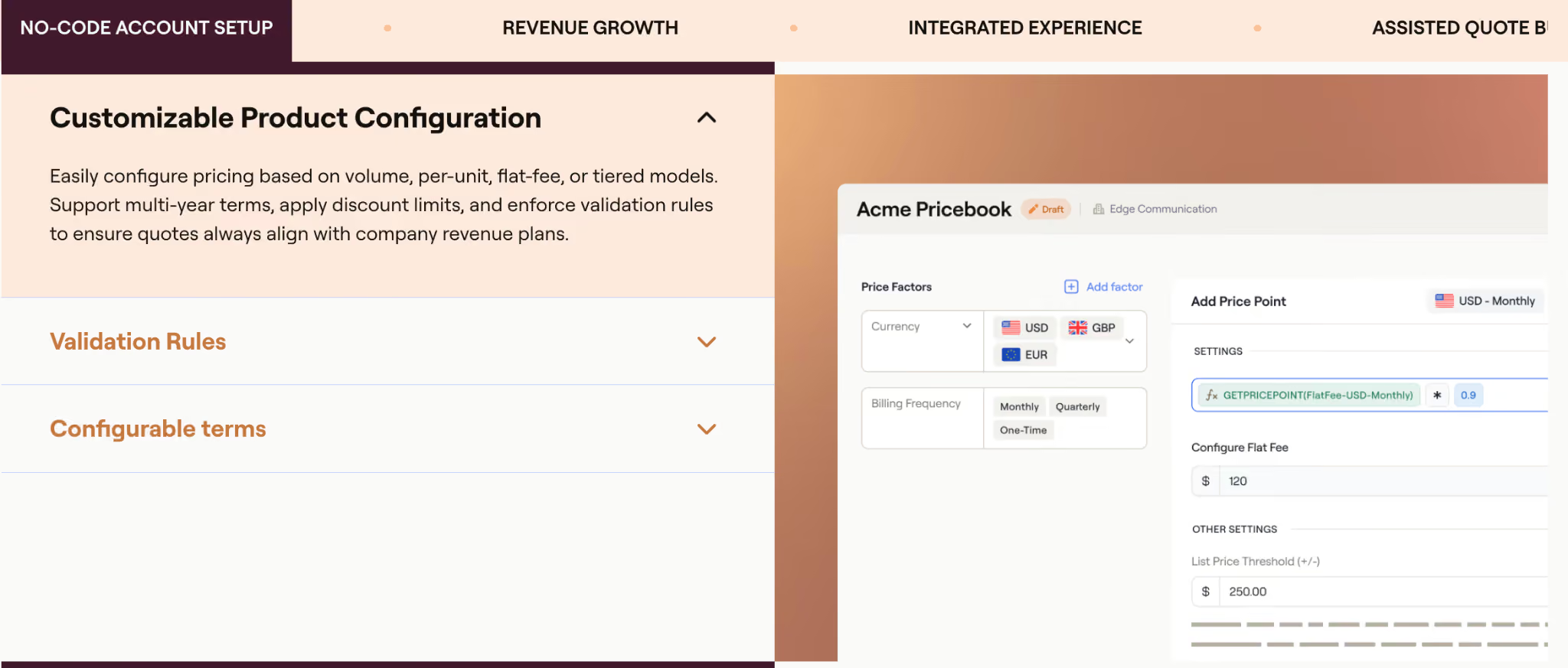
- No-Code Plan Builder: Your comp admin builds multi-tiered commissions, draws, clawbacks, SPIFs, MBOs, and accelerators without SQL, IT, or a services engagement. Most teams take full plan ownership within the first few weeks of going live.
It pulls data from Salesforce, your HRIS, ERP, and data warehouses automatically. That removes manual exports and data wrangling before every commission run.
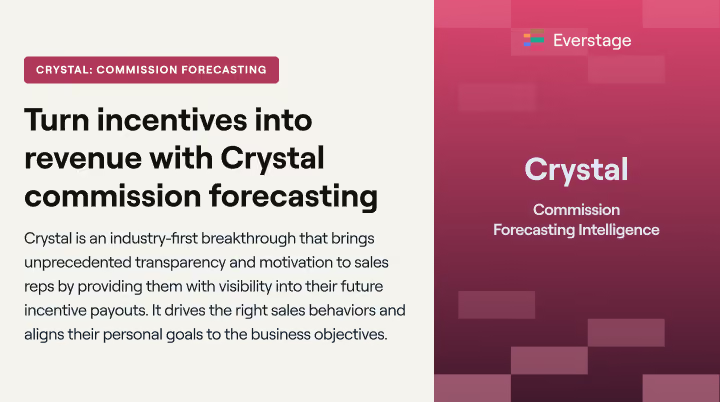
- Crystal AI Forecasting: Crystal helps reps and finance teams model expected commission impact from live pipeline data. Reps see how deal size, product mix, discounting, and contract duration affect earnings before they close. Finance gets commission liability forecasts before month-end.
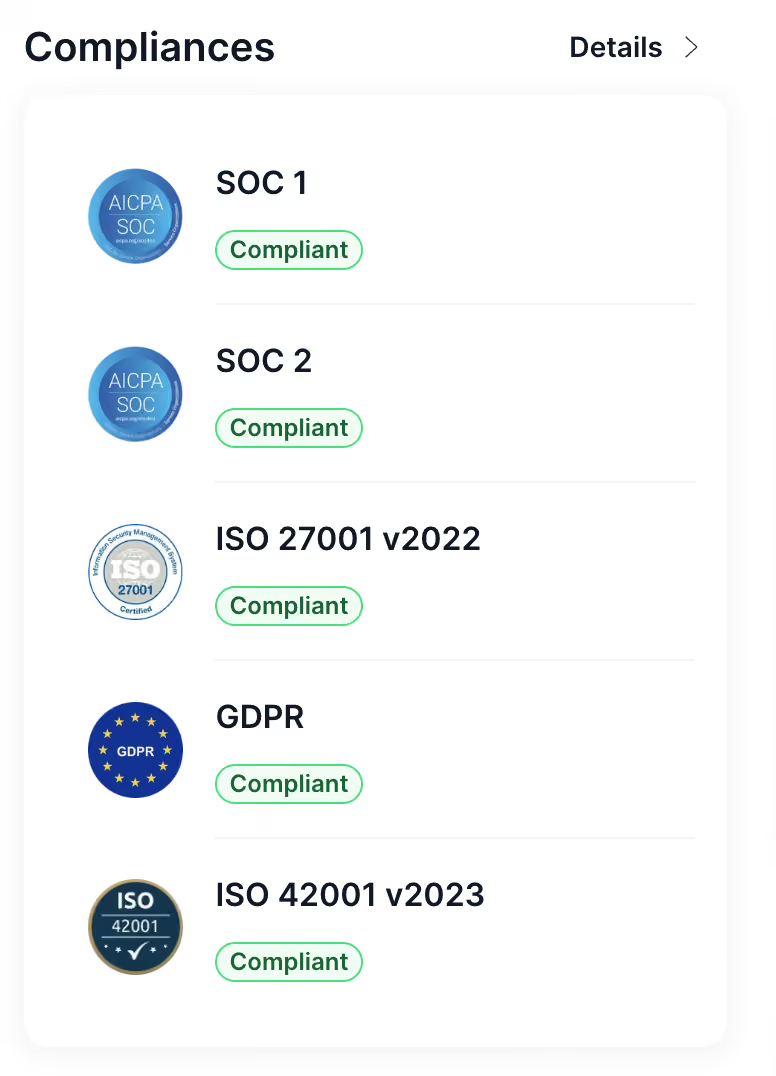
- Governance and Compliance: Full SOX audit trails, digital plan acknowledgment via DocuSign, version-controlled plan management, and ASC606-compliant reporting. All of it sits in the core platform, included as standard.
- Rep Experience: Your reps skip logging into yet another tool. Commission updates reach them in Slack, Teams, email, mobile, or directly in Salesforce. That is what it takes to end the 'black box' problem.
- In-House Implementation: Everstage's own team runs implementation instead of a third-party partner. One accountable team owns the work from kickoff to go-live, typically in 6–8 weeks. If migration disruption worries you, your plans are fully rebuilt and validated before launch. Commission operations continue without a gap.
Why It Ranks #1
- Customization Capability: 5/5
- Available Integrations: 5/5
- Scalability: 5/5
- Ease of Use: 5/5
- Real-Time Reporting & Analytics: 5/5
- Automated Workflows: 4/5
Where It's Not the Right Fit
- Fewer than 20 payees with a simple flat-rate structure. Enterprise-grade ICM would exceed your needs there.
- Comp analysts who've built deeply personal Excel-based workflows may need time to adjust
- If you use a contract management tool outside of DocuSign, plan acknowledgment will need an API integration
#2 Anaplan (Score: 27/30)
Verdict: A powerful enterprise planning platform, best when you already run Anaplan for FP&A and want to extend it to incentive comp instead of adding another vendor.
Best fit: Large enterprises already using Anaplan for finance planning, headcount modeling, and revenue forecasting.
Main trade-off: For teams outside the Anaplan ecosystem, the cost and implementation complexity are hard to justify for ICM alone.
TL;DR:
- Strengths: Connected planning across finance, sales, and comp; strong scenario modeling; deep SAP and Oracle integration
- Limitations: ICM is one module in a broader platform, not purpose-built; needs external Anaplan specialists to implement; steep learning curve
What Makes It Different
Anaplan's value for incentive comp comes from planning integration. If your finance team models headcount, revenue, and budget in Anaplan, you can model comp plan impacts in the same environment beside your financial forecasts. That helps finance-led organizations.
- The scenario modeling is powerful: You can simulate the financial and behavioral impact of a plan change across historical data before you commit. For large organizations where plan changes move significant budget, that matters.
- Where Anaplan stops short: It's a planning suite, not a purpose-built ICM platform. Rep-facing dashboards, no-code plan building, and dispute management fall outside its design strengths. Teams that skip Anaplan for planning will pay a lot for capabilities they will never use.
Why It Ranks #2
- Customization Capability: 4/5
- Available Integrations: 5/5
- Scalability: 5/5
- Ease of Use: 3/5
- Real-Time Reporting & Analytics: 5/5
- Automated Workflows: 5/5
Where It Falls Short
- For rep-facing dashboards, dispute workflows, or self-service plan building, this tool falls short.
- Implementation typically requires third-party Anaplan specialists, and total deployment costs can be significant for many organizations
- Users consistently flag workspace limitations, formatting constraints, and an interface that feels unintuitive day-to-day
If your team is deciding between connected planning and purpose-built ICM, read our Everstage vs Anaplan comparison.
#3 Xactly (Score: 26/30)
Verdict: Xactly has been around the longest and holds some of the deepest benchmarking data in the industry. If you evaluate it now, ask whether a services-heavy operating model fits your budget, change frequency, and internal ownership goals. That model gets harder to sustain as plans change more often and programs grow more complex.
Best fit: Large enterprises in regulated industries that actively use benchmarking data and have budget for a services-led change model.
TL;DR:
- Strengths: Largest comp benchmarking database in the market, mature governance workflows, enterprise-grade security
- Limitations: Plan changes often need a vendor engagement; dated interface; high total cost of ownership
What Makes It Different
Why teams choose it: Twenty-plus years of compensation data is Xactly's real differentiator. If your team uses market benchmarking data to design plans, that database carries genuine value. It also ranks among the more mature platforms for governance and audit requirements in regulated industries.
The day-to-day reality is harder to ignore. In some legacy implementations, tier adjustments, rate changes, and quota updates require professional services engagements that raise cost and timeline. For many buyers, this becomes an operating model to account for in 3-year TCO.
Main trade-off: For comp teams that need frequent self-service plan iteration, a services-heavy change model can become difficult to manage over time.
Why It Ranks #3
- Customization Capability: 4/5
- Available Integrations: 5/5
- Scalability: 5/5
- Ease of Use: 3/5
- Real-Time Reporting & Analytics: 5/5
- Automated Workflows: 4/5
Where It Falls Short
- Meaningful plan changes often require a vendor engagement, adding cost and timeline friction for many teams.
- 3-year total cost of ownership can run well above the subscription once implementation and change management are included
- The interface is widely described as outdated and clunky, a real adoption issue for non-specialist admins.
- Support response times on complex issues are a consistent frustration in user reviews
If you're weighing Xactly's benchmarking depth against Everstage's self-service plan administration and in-house implementation model, read our Everstage vs Xactly comparison.
Case study on why Diligent replaced Xactly with Everstage
#4 Performio (Score: 25/30)
Verdict: A solid mid-market ICM platform with a flexible data architecture. If your commission data lives across multiple systems with inconsistent formatting, Performio handles it well.
Best fit: Mid-market teams in manufacturing, healthcare, or enterprise SaaS with commission data spread across multiple messy sources.
TL;DR:
- Strengths: Flexible data model, component-based plan builder, mobile access, strong data transformation
- Limitations: Lacks meaningful what-if forecasting; limited native integrations outside Salesforce and NetSuite; complex hierarchy management
What Makes It Different
Most ICM platforms assume your data arrives reasonably clean. Performio drops that assumption. It ingests data from multiple sources with inconsistent formatting, a common situation in manufacturing, healthcare, and enterprise SaaS, while leaving your source systems unchanged.
The component-based plan builder structures comp logic into reusable pieces instead of formula chains. That makes plans easier to audit and easier to modify, with less risk of downstream breakage.
Mobile access is a genuine differentiator here: Native iOS and Android apps for reps who need earnings visibility in the field.
Why It Ranks #4
- Customization Capability: 5/5
- Available Integrations: 3/5
- Scalability: 4/5
- Ease of Use: 4/5
- Real-Time Reporting & Analytics: 4/5
- Automated Workflows: 5/5
Where It Falls Short
- What-if forecasting is missing. If finance needs commission liability projections before month-end, you will build them in Excel.
- Native integrations are mainly Salesforce and NetSuite; other ERP or HRIS platforms mean more implementation work
- Complex org hierarchies with multiple reporting lines are hard to set up and maintain
If your team is comparing flexible data handling with stronger forecasting, governance, and rep visibility, read our Everstage vs Performio comparison.
#5 Salesforce Spiff (Score: 24/30)
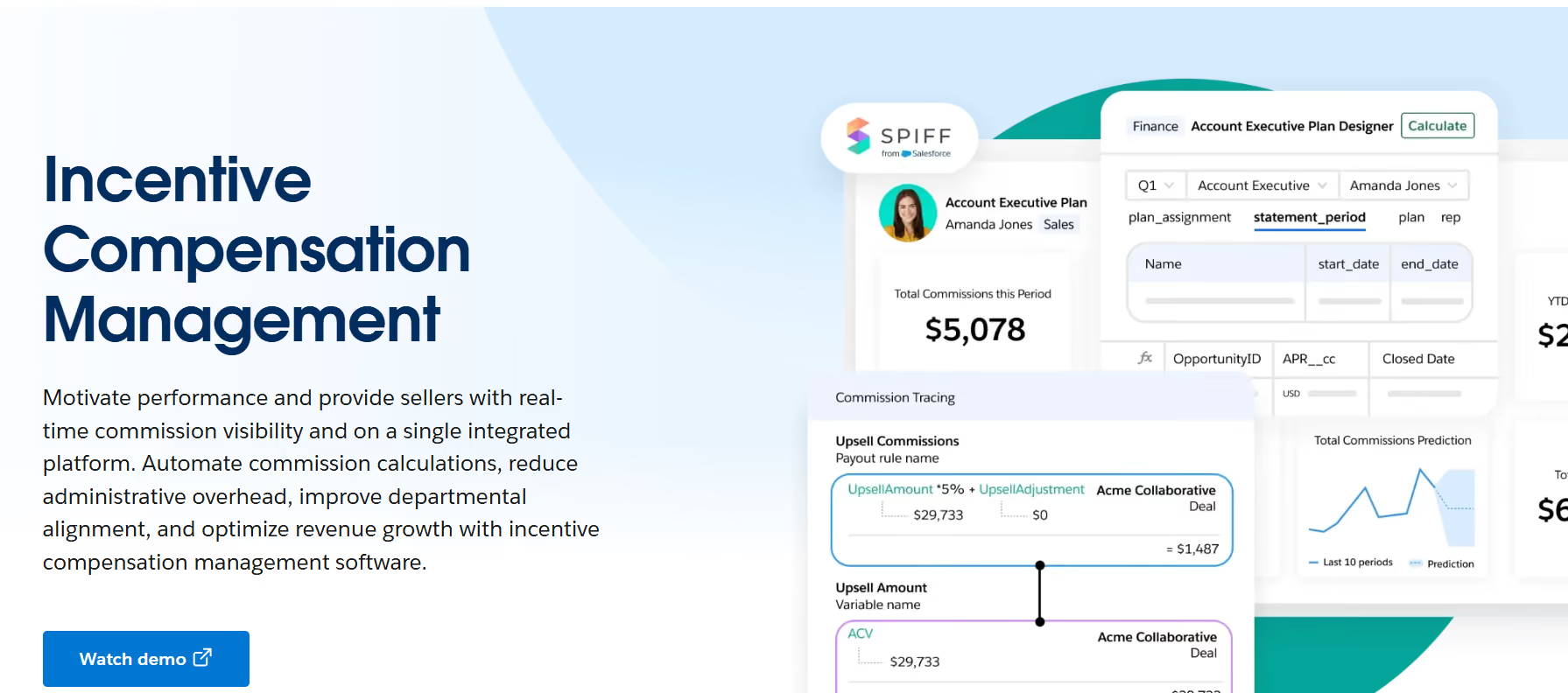
Verdict: If your entire sales motion lives in Salesforce, Spiff is the most natural fit. Commission data surfaces where your reps already work, with no extra login. The open question is whether Salesforce's acquisition slows the product roadmap for teams that need enterprise ICM depth.
Best fit: Teams whose sales motion runs entirely in Salesforce and value native data continuity.
TL;DR:
- Strengths: Native Salesforce experience, visual plan builder, real-time rep visibility, strong calculation traceability
- Limitations: Post-acquisition roadmap uncertainty; governance features stay shallow for true enterprise ICM; basic forecasting
What Makes It Different
Spiff's native Salesforce integration removes the data sync problems that plague most ICM implementations. Reps see their commission data inside Salesforce, with one login and easy adoption. The calculation traceability is strong: every line of a commission statement traces back to source data, which cuts dispute volume.
The governance side tells a different story. Spiff started as a mid-market commission tool. Enterprise ICM requirements like plan version control, advanced approval workflows, and compliance reporting sat outside its original design target. That gap is real.
Why It Ranks #5
- Customization Capability: 4/5
- Available Integrations: 5/5
- Scalability: 4/5
- Ease of Use: 3/5
- Real-Time Reporting & Analytics: 4/5
- Automated Workflows: 4/5
Where It Falls Short
- Post-acquisition, some customers report slower feature development, a legitimate concern for teams that need enterprise ICM features built out.
- Commission forecasting skips deal attributes like product mix, discount levels, and contract duration, a gap for finance teams.
- The plan configuration syntax has a real learning curve; budget time for your admin to get comfortable with it.
See the key differences between Everstage and Spiff for modern revenue teams.
#6 CaptivateIQ (Score: 23/30)
Verdict: If your comp team thinks in spreadsheet logic and wants to bring that into an automated platform, CaptivateIQ makes the transition easier than most. The trade-off is setup complexity and the absence of a mobile app.
Best fit: Finance-led comp teams that learned commission logic in Excel and want a familiar formula interface.
TL;DR:
- Strengths: Excel-familiar formula interface, extensive data integrations, incentive modeling sandbox, approval workflows
- Limitations: Technically demanding setup, no mobile app, custom reporting is harder than it should be
What Makes It Different
CaptivateIQ's formula-based interface is its defining feature. If your finance team already lives in spreadsheets, the conceptual leap to CaptivateIQ stays smaller than the leap to most other ICM platforms. That reduces adoption friction, especially for comp admins who learned commission logic in Excel.
The sandbox modeling environment is valuable: You can test incentive structure changes before pushing them live, while production calculations stay untouched. Its integrations span Salesforce, HubSpot, Snowflake, Redshift, and NetSuite.
Why It Ranks #6
- Customization Capability: 5/5
- Available Integrations: 4/5
- Scalability: 3/5
- Ease of Use: 3/5
- Real-Time Reporting & Analytics: 4/5
- Automated Workflows: 4/5
Where It Falls Short
- Setup is technically demanding. Expect longer-than-planned timelines without a dedicated technical resource.
- The missing mobile app is a real gap for field sales teams that need earnings visibility outside the office
- Building custom reports is more complicated than it should be. Users regularly describe it as convoluted.
Learn where Everstage outperforms CaptiveIQ for commission automation.
#7 SAP Commissions (Score: 22/30)
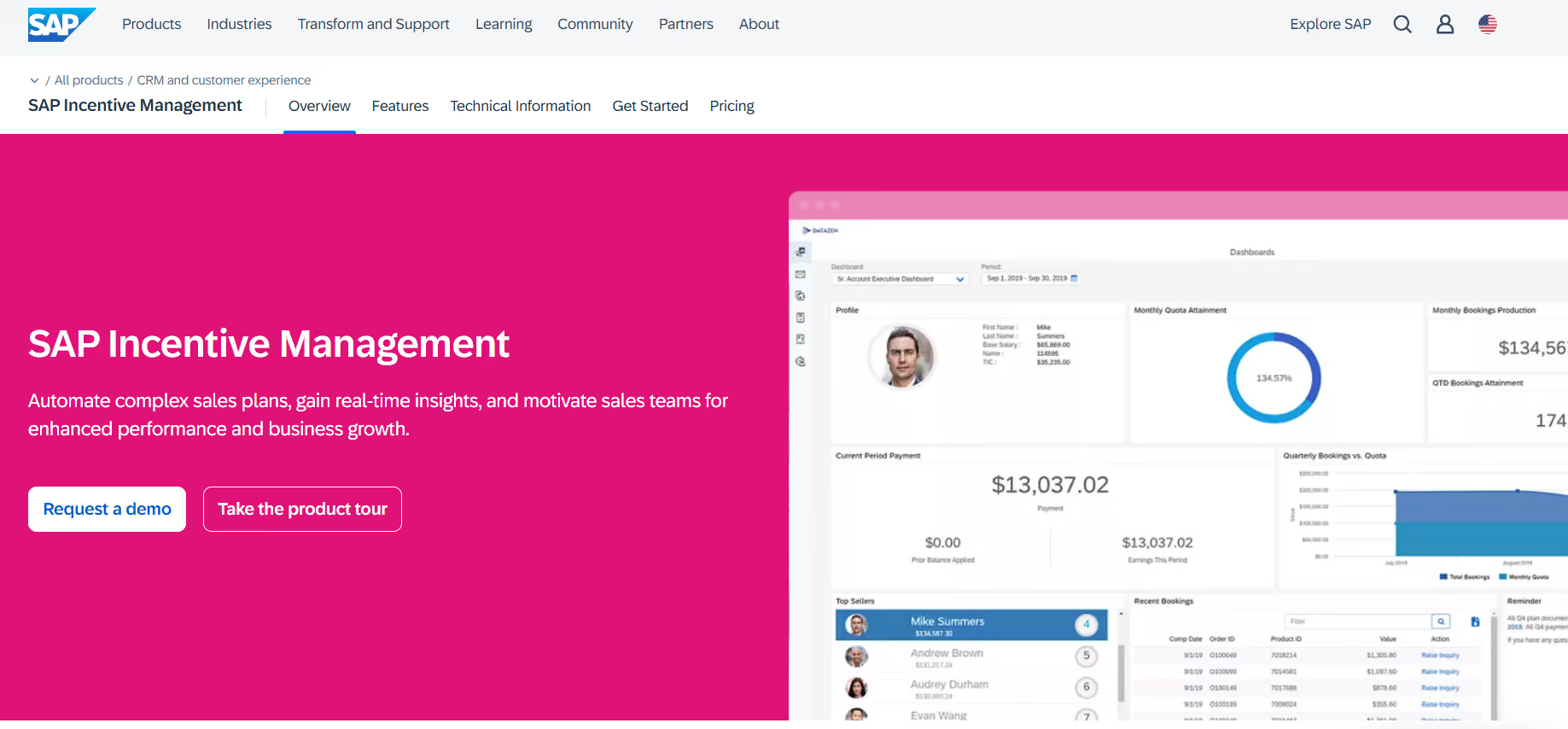
Verdict: If your organization runs on SAP across S/4HANA, SuccessFactors, and SAP Analytics Cloud, this platform's native data continuity is hard to replicate. For teams outside the SAP ecosystem, the implementation burden and interface make it hard to justify.
Best fit: Large enterprises standardized on SAP with regulated compliance requirements.
TL;DR:
- Strengths: Deep SAP ecosystem integration, comprehensive automation, detailed compliance reporting
- Limitations: One of the steepest learning curves in the category; needs third-party SAP partners to implement; performance degrades with historical data
What Makes It Different
For organizations standardized on SAP, the data continuity argument is real. Your commission data flows directly from S/4HANA and SuccessFactors without custom integration work, a match standalone ICM tools struggle to make in that environment.
The compliance depth is also real. Detailed audit trails, role-based access controls, and regulatory reporting features suit large enterprises in regulated industries where external auditors review ICM outputs directly.
Why It Ranks #7
- Customization Capability: 4/5
- Available Integrations: 5/5
- Scalability: 5/5
- Ease of Use: 2/5
- Real-Time Reporting & Analytics: 3/5
- Automated Workflows: 3/5
Where It Falls Short
- You'll need a specialized SAP implementation partner. Direct SAP support for complex customizations is limited.
- The interface is consistently rated among the hardest in the category; your comp admin will need significant ramp time
- Query performance degrades as historical data accumulates, a real issue for long-tenured deployments.
#8 Varicent (Score: 21/30)
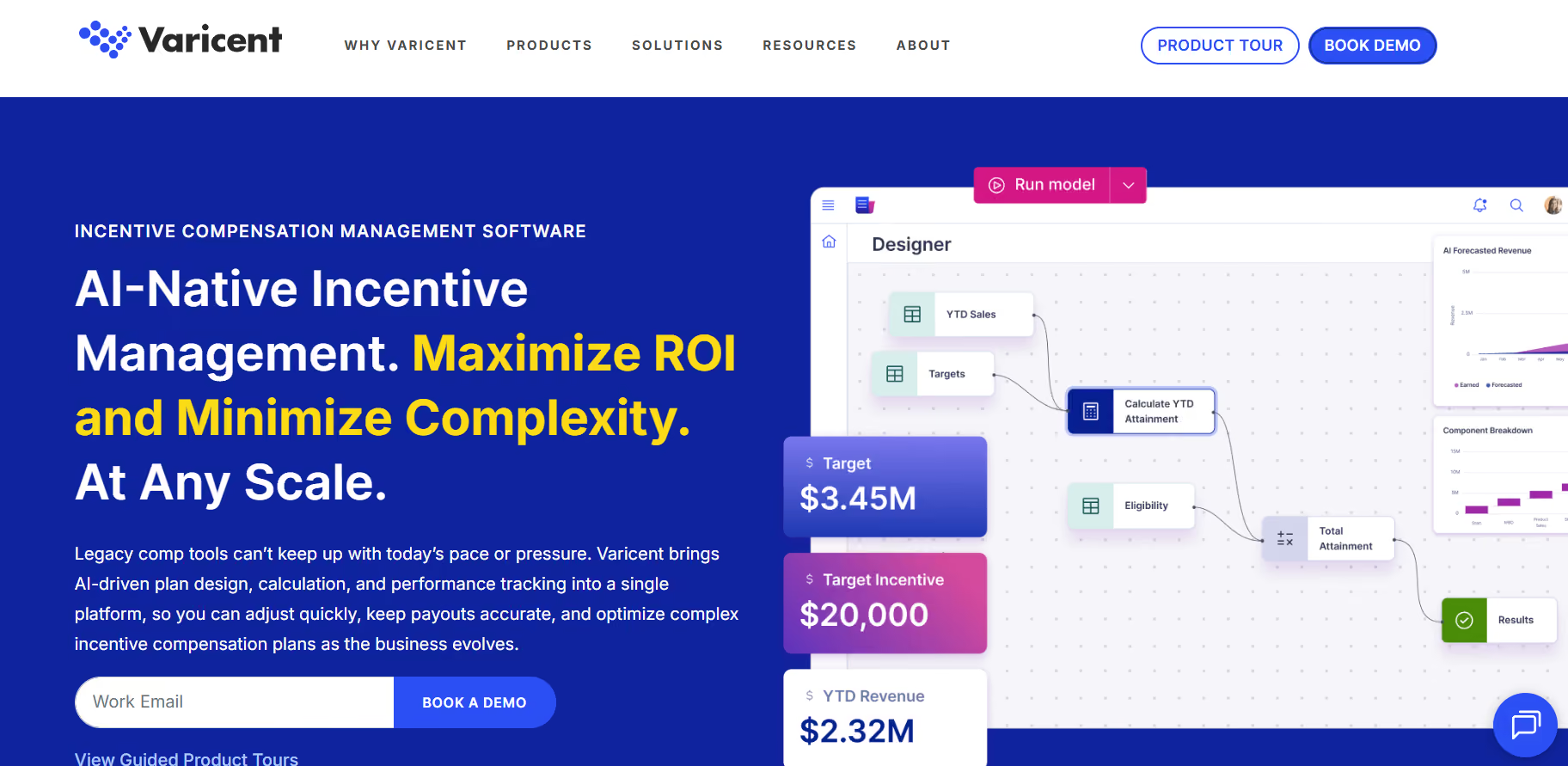
Verdict: Deep incentive modeling and territory management capabilities, though the technical complexity runs high. Without a dedicated Varicent specialist or budget for ongoing consultants, day-to-day management becomes a bottleneck.
Best fit: Large enterprises with complex territory and quota needs and dedicated technical resources.
TL;DR:
- Strengths: Incentive modeling depth, quota and territory management, compliance reporting, scenario planning
- Limitations: Requires specialist-level knowledge to manage; poor usability; integration challenges; expensive to implement
What Makes It Different
Varicent's scenario modeling lets you simulate the financial and behavioral impact of incentive structure changes before you deploy. That helps large organizations where a plan change moves real budget. Territory and quota management runs deeper here than on most platforms in this list.
The day-to-day reality is that Varicent demands a level of technical expertise most comp teams lack internally. Plans that are hard to build are also hard to audit and troubleshoot. When something breaks, diagnosing the cause is difficult without a specialist.
Why It Ranks #8
- Customization Capability: 4/5
- Available Integrations: 4/5
- Scalability: 5/5
- Ease of Use: 2/5
- Real-Time Reporting & Analytics: 3/5
- Automated Workflows: 3/5
Where It Falls Short
- High technical floor for effective management. Many comp teams end up dependent on external consultants for ongoing administration.
- Users consistently describe the interface as unintuitive; adoption outside the core admin team is a challenge
- Connecting to non-standard systems requires significant IT involvement and extends implementation timelines
Read our Everstage vs Varicent guide for a deeper evaluation.
#9 Commissionly (Score: 20/30)
Verdict: A clean, simple tool for SMBs moving off spreadsheets. If you need enterprise ICM for governance, SOX compliance, and complex plan logic, you will hit the ceiling quickly.
Best fit: Small businesses with stable, simple plan structures moving off spreadsheets for the first time.
TL;DR:
- Strengths: Easy to navigate, real-time dashboards, multi-currency support, mobile access
- Limitations: Limited plan customization; scalability ceiling around 100 reps; missing compliance and audit trail features
What Makes It Different
Commissionly handles basic commission automation well. For a small team moving off spreadsheets with a stable plan structure, it delivers a real improvement without enterprise-platform complexity.
For anything resembling enterprise ICM, such as governance workflows, SOX audit trails, multi-component plans, MBOs, or real-time liability forecasting, it reaches its limits fast.
Why It Ranks #9
- Customization Capability: 2/5
- Available Integrations: 3/5
- Scalability: 3/5
- Ease of Use: 4/5
- Real-Time Reporting & Analytics: 3/5
- Automated Workflows: 5/5
Where It's Not the Right Fit
- Multi-component plans, draws, clawbacks, or MBOs will push you past what it can handle
- Audit trail and SOX compliance features are absent. That is a hard stop for any organization with external audit requirements.
- Integration leans on Zapier instead of native connectors, which creates fragility in automated data flows
#10 Qobra (Score: 19/30)
Verdict: A good fit for European SMBs that need multi-currency support and GDPR compliance built in. For mid-market or enterprise teams with complex ICM requirements, it'll feel underpowered quickly.
Best fit: European SMB and lower mid-market teams needing multi-currency and GDPR compliance out of the box.
TL;DR:
- Strengths: Clean interface, multi-currency, GDPR compliance, automated approval workflows
- Limitations: Lacks what-if modeling; limited scalability; incomplete payout transparency; shallow analytics
What Makes It Different
Qobra is purpose-built for European SMB and lower mid-market teams. Multi-currency handling and GDPR compliance are well executed and central to the product. For that specific use case, it works.
For enterprise ICM buyers who need complex plan structures, reporting hierarchies, and commission leakage prevention, the platform falls short of those requirements.
Why It Ranks #10
- Customization Capability: 3/5
- Available Integrations: 3/5
- Scalability: 2/5
- Ease of Use: 4/5
- Real-Time Reporting & Analytics: 2/5
- Automated Workflows: 5/5
Where It Falls Short
- What-if scenario modeling is absent. Finance teams still rely on Excel to forecast commission liability.
- Enterprise teams with large or fast-growing headcount will run into ceiling constraints
- Payout statements lack calculation context, which erodes rep trust in the commission process
ICM Software Pricing and Total Cost of Ownership
Subscription price is usually the smallest number in an ICM contract. To compare vendors fairly, look at the full cost picture across the entire relationship.
Common pricing and cost components to evaluate:
- Per-payee or platform fee: Most modern ICM tools price by the number of commissionable payees.
- Implementation fee: One-time cost to configure plans, connect data, and validate.
- Integration cost: Custom connectors for ERP, HRIS, or data warehouses beyond native integrations.
- Professional services for plan changes: On some legacy platforms, every meaningful change is a paid engagement.
- Support tiers: Premium support or a dedicated CSM may carry additional cost.
- Change requests: Ongoing configuration work billed after go-live.
- Hidden costs: Internal time spent managing the vendor relationship and re-validating calculations.
3-year TCO checklist: subscription + implementation + annual plan-change services + integration development + training + ongoing support. Compare that total across vendors, not just the license fee. Everstage includes implementation, onboarding, and ongoing support in the contract, which removes several of the variable line items that inflate legacy TCO.
How to Choose Incentive Compensation Management Software: 7 Questions to Ask
These questions expose the most important differences between vendors and save you from a decision you will regret 18 months in. Watch for red flags along the way: vendor dependency for plan changes, unclear audit logs, weak exception handling, limited data validation, opaque pricing, and third-party implementation handoffs.
1. Can your team make plan changes without calling the vendor?
If the answer is no, you are buying a services relationship, not software. It charges you every time your comp strategy needs to change. Ask vendors to demonstrate a live plan change, such as a tier adjustment, rate modification, or new SPIF, in front of you and without their services team. Time it.
2. What does plan governance actually look like?
You need more than calculation accuracy. You need draft and test modes so changes can be validated before they go live. Multi-level approval routing. Digital plan distribution and rep acknowledgment. Version history that shows exactly who changed what and when. Ask to see all of this in the demo.
3. How does it handle SOX compliance and audit trail requirements?
For public companies or those with institutional investors, your ICM process is subject to SOX controls. Your platform needs immutable calculation logs, data lineage tracking, role-based access controls, and SOC 2 certification. Ask for a sample audit report from a previous period, not a slide that says 'audit-ready.'
4. What does 3-year total cost of ownership actually look like?
Subscription price is usually the smallest number. Get a fully-loaded estimate: implementation, professional services for annual plan changes, integration development, training, and ongoing support. Compare that number across vendors, not just the license fee.
5. Can finance see commission liability before month-end?
If your platform only calculates after the period closes, your CFO is still forecasting in Excel. Look for real-time accrual dashboards, pipeline-based commission forecasting, and mid-period preliminary calculations. Ask them to demonstrate a liability forecast as of today, live.
6. How does it handle draws, clawbacks, MBOs, and SPIFs?
Push vendors past a simple 'yes.' Make them build it. Bring your most complex comp scenario to the evaluation and ask them to configure it on the spot. The gap between 'we can handle that' and 'watch us build it now' is significant.
7. Who actually implements, and who's accountable if it goes wrong?
Many vendors hand off implementation to third-party partners. The team that sold you the platform differs from the team building it, and accountability gets diffuse. Ask directly: is this your team or a partner? What is the timeline for an organization like ours? Can you share references from customers with similar plan complexity?
How to Manage Commission Disputes and Exceptions
Disputes are one of the most visible pain points for payees, finance, and sales leadership. Common causes include crediting errors, unclear plan rules, territory changes, split deals, clawbacks, data sync delays, and payout timing.
Strong ICM software should give you a structured way to handle them:
- Calculation traceability: Every line of a statement traces back to source data.
- Dispute intake workflows: Reps raise queries in-app rather than over email.
- Approval routing: Disputes route to the right stakeholder automatically.
- Notes and evidence attachments: Context stays with the case.
- Status tracking and SLA reporting: Every case moves toward resolution, and finance can measure resolution time.
The goal is consistency. A dispute worth $100 and one worth $10,000 follow the same rules, so reps trust the process.
ICM Software Implementation Checklist
The comp teams that struggle with ICM implementations almost always underinvested in preparation, not in platform choice. Here's how to go live smoothly:
Phase 1: Discovery and Planning (Weeks 1–2)
- Pull together your cross-functional team: Comp, Finance, RevOps, IT, and Sales Leadership
- Document every active plan, calculation rule, and edge case, including the informal rules that live only in someone's head. This becomes your 'comp bible.' It surfaces inconsistencies you had missed.
- Audit your data sources: CRM, ERP, HRIS, and any manual inputs that feed commission calculations
- Define what success looks like: calculation accuracy targets, processing time reduction, rep adoption rate
- Map your current governance workflows: who approves plan changes, how are plans distributed, how is rep acknowledgment documented
Phase 2: Data Preparation (Weeks 3–4)
- Standardize org hierarchy data: reporting structures, territories, roles, and regions across all source systems
- Validate and clean rep and transaction data before it flows into the new platform
- Document your data mapping: how fields in your CRM, ERP, and HRIS map to ICM platform inputs
Data prep is 30–40% of your total implementation effort. Teams that rush this phase spend months fixing calculation errors that trace back to dirty source data. Give it the time it needs.
Phase 3: Platform Configuration (Weeks 5–7)
- Configure user roles and access controls aligned to your governance requirements
- Build your active incentive plans, starting with the highest-volume ones to get early wins
- Set up approval workflows and digital plan distribution
- Establish integrations with CRM, HRIS, and payroll
- Build initial dashboards for admins, managers, and reps, tailored to what each group needs to see.
Phase 4: Testing and Validation (Weeks 8–9)
- Run parallel calculations against your existing process using at least three months of historical data
- Get user acceptance testing done with real stakeholders from comp, finance, and sales ops
- Validate every plan component: draws, clawbacks, SPIFs, MBOs, multi-tier accelerators
- Test integration data flows for completeness and timing, not just whether they connect.
Phase 5: Go-Live and Adoption (Weeks 10–12)
- Roll out in phases: admins first, then managers, then reps
- Run role-specific training; identify internal champions who can support peers through the change
- Set clear escalation paths for the first 90 days
- Collect structured feedback at 30, 60, and 90 days. Surface problems early instead of waiting for them to appear.
Common ICM Implementation Failure Modes and How to Avoid Them
An ideal process is only half the story. Most struggling implementations trace back to a handful of avoidable risks.
Real-World ICM Software Results and ROI Benchmarks
Popmenu: From 45-Day Payout Cycles to 15 Days
The situation: Popmenu's team was calculating SPIFs manually in Excel every month. Commission payouts ran 45 days after month-end, long enough to erode rep trust and create real cash flow uncertainty.
What changed: Everstage went live in 7 weeks, half the time their previous vendor had taken. The Everstage team asked questions about goals, not just technical setup.
The results:
- Commission processing: from 3–6 hours per week to 1–1.5 hours per month
- Payout cycle: from 45 days post-month-end to 15 days
- SPIFs: fully automated, replacing manual Excel calculations
HackerRank: 50 Spreadsheets to One Source of Truth
The situation: HackerRank was processing incentive comp across 50 separate spreadsheets. Complex plans and deferred commissions created audit risk. Finance, Payroll, and HR were regularly working from different numbers.
What changed: Everstage automated the entire comp process, including deferred commission tracking. It's been in production since 2022.
The results:
- Processing speed: 5x improvement vs. spreadsheets
- Deferred commission accuracy: consistent and auditable for the first time
- Quota modifications: from hours of manual work to minutes, with full audit trail
- Leadership reporting: custom dashboards comparing achievement to incentive spend quarterly
Nitro: One Admin, 100+ Payees, No Code
The situation: Nitro's finance and RevOps teams spent significant time manually calculating commissions for 100+ payees. Plans included MBO components that fell outside Salesforce's tracking. Validation alone took more than 10 days before payroll.
What changed: Nitro's Senior Compensation Analyst, a non-technical role, built all active plans in Everstage herself, including the MBO components.
The results:
- 100+ payees managed by a single admin without code or IT involvement
- Real-time attainment dashboards for all reps. Commission inquiry volume to finance dropped significantly.
- Crystal forecasting live: reps project future earnings directly from their Salesforce pipeline
- Dispute management: every calculation has a clean audit trail finance can explain in seconds
Final Takeaways
Three things came through consistently across this evaluation:
Self-service is the most important factor for total cost of ownership. Platforms that let your team own plan changes, free of vendor tickets or consultant fees, save meaningful cost each year. They also give you the agility to iterate on comp strategy in real time.
Governance and compliance count as baseline requirements. SOX audit trails, plan version control, and digital acknowledgment workflows matter for any organization with external audit exposure. Keep them in the contract.
Who implements matters as much as what you implement. The comp teams that get the most from ICM investments invested time in data preparation and stakeholder alignment before go-live.
A quick decision framework by situation:
- Fast-growing mid-market teams: Prioritize no-code self-service and fast implementation.
- Public-company audit requirements: Prioritize SOX audit trails, version control, and SOC 2.
- Global multi-currency teams: Prioritize multi-currency, localization, and regional compliance.
- Finance-led planning teams: Consider connected planning platforms, but weigh ICM depth carefully.
- SMB teams off spreadsheets: Prioritize simplicity and ease of use over enterprise depth.
Your Next Steps
- Audit your current process: document specific pain points (calculation errors, plan change timelines, compliance gaps, rep visibility issues, month-end forecasting struggles)
- Define your requirements: which of the six evaluation criteria matter most given your team's situation and compliance obligations
- Bring all your stakeholders in early: Comp, Finance, Sales Leadership, and IT. Late-stage objections are the most common implementation risk.
- Request a proof-of-concept, not just a demo: ask vendors to build your actual plans with your real data before you commit
- Compare 3-year total cost of ownership across vendors, not just subscription pricing
Want to test Everstage against your actual compensation plans? Book a demo and see how your plan changes, approvals, forecasting, and payout workflows would work in practice.
The right ICM platform turns variable pay from an administrative burden into a strategic lever for revenue performance.
Frequently Asked Questions
1. What Is the Difference Between ICM and Sales Performance Management Software?
ICM focuses on designing, calculating, and governing incentive compensation. Sales performance management is broader and may also include territory planning, quota allocation, capacity planning, forecasting, and seller performance analysis.
2. Does ICM Software Replace Payroll Software?
No. ICM software calculates and approves variable compensation before sending finalized payout data to payroll. Payroll software handles salary payments, deductions, taxes, and employee disbursements.
3. Can ICM Software Manage Incentives for Non-Sales Employees?
Yes. Some platforms support bonuses and goal-based incentives for customer success, recruitment, partnerships, and other teams. Buyers should test the platform using their specific performance measures and eligibility rules.
4. How Does ICM Software Handle Mid-Period Employee Changes?
ICM software can use effective dates to manage promotions, transfers, territory changes, departures, and plan reassignment. It should prorate applicable earnings while preserving the original rules and change history.
5. How Does ICM Software Support ASC 606 Reporting?
Some platforms track incremental sales commission costs and produce amortization schedules for ASC 606 reporting. Finance teams should confirm whether this capability is native, configurable, or dependent on an accounting integration.
Ready to see how Everstage handles your actual compensation plans?