

.avif)
TL;DR
- Eliminate overlap and boost sales efficiency by defining clear territory boundaries aligned with your ICP and revenue goals
- Align sales goals with compensation to drive performance and motivation
- Use customer data to identify high-value opportunities and underserved regions
- Avoid territory imbalance and data quality issues by following a structured planning framework with quarterly reviews
- Review and adjust the plan each quarter to maintain alignment with business objectives
- Use templates and checklists to accelerate implementation and drive predictable revenue growth

A well-structured sales territory plan is just as important as your sales compensation strategy, especially for SaaS or B2B revenue leaders managing distributed teams. According to the Sales Management Association (SMA) (2024) reports, 58% of B2B companies rate their territory design efforts as ineffective. The number reflects the need for a structured plan to eliminate coverage gaps and drive growth.
A strategic territory plan aligns each sales rep with the right accounts in the right regions. Coverage improves while internal competition decreases. Without clear boundaries, resources are misallocated and sales efforts become fragmented.
This guide walks you step-by-step through creating a sales territory plan built around fairness, driving sustainable growth. You will finish with the tools and strategies to design a plan that maximizes your team's efficiency and sets the foundation for long-term success.
What Is a Sales Territory Plan?
A sales territory plan is a structured strategy that defines how reps cover specific regions or accounts to maximize revenue. The plan serves as a blueprint ensuring each rep is allocated the right set of customers within a defined area, vertical, or account type.
The core purpose is to balance workloads and ensure comprehensive market coverage. Defining boundaries based on geography or account size enables reps to manage their time more efficiently. The efficiency boost lifts both sales performance and team morale.
Territory Planning vs. Account Planning
Territory planning and account planning differ in scope and objective. Understanding these differences is key to optimizing both processes.
Comparison of sales territory planning and account planning across focus, objective, scope, and timeframe.
Sales territory planning sets up clear boundaries for where and how reps operate. Account planning then specifies the tactics reps use to engage those accounts within their designated territories.
With these definitions established, let's examine why building a territory plan correctly can be a powerful growth multiplier.
Key Benefits of a Well-Structured Territory Plan
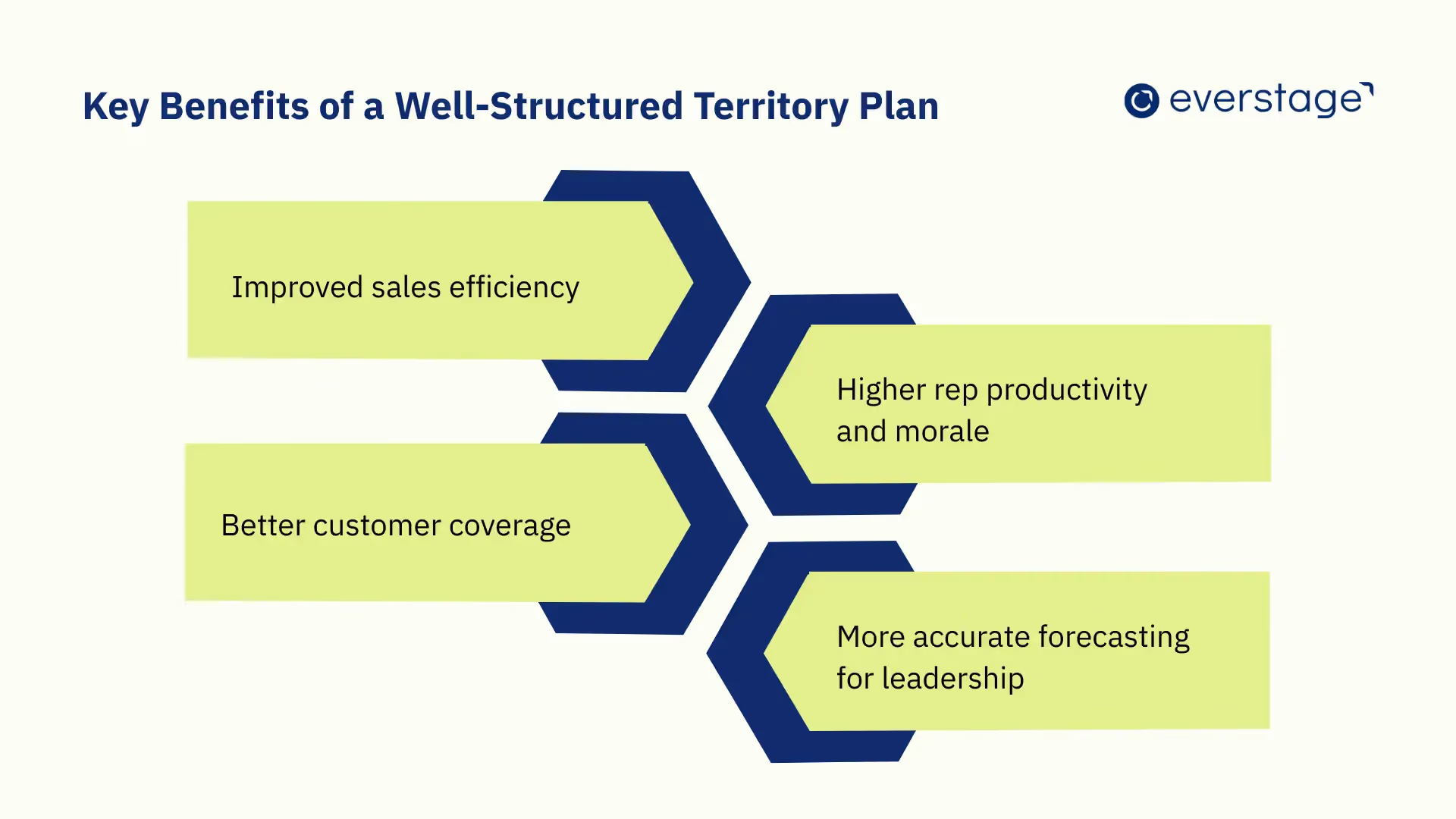
Reduced overlap and higher quota attainment are two immediate payoffs of a well-structured territory plan. If you lead RevOps or Sales at a scaling B2B company, territory design directly impacts rep retention and predictable revenue growth. Here's how an optimized territory plan drives success:
1. Improved Sales Efficiency (More Coverage, Less Overlap)
Clear territory boundaries, eliminate wasted time from multiple reps chasing the same accounts. Overlap disappears, and your team stops competing for identical leads.
With defined regions or sectors, each rep focuses on customers within their specific territory. Time spent on high-value prospects increases. More opportunities are pursued simultaneously without duplicated efforts.
2. Higher Rep Productivity and Morale
Clear territory assignments and well-defined expectations increase rep productivity. A structured plan makes it easier for reps to prioritize their efforts. Reps feel empowered to manage their regions without competing with colleagues.
Balanced and fair territories build trust in the system, which lifts morale. Confidence in hitting sales targets reduces turnover and burnout. Lower attrition, in turn, boosts overall team performance.
3. Better Customer Coverage and Stronger Relationships
Dedicated territory assignments give each customer the attention they deserve. When reps focus on a specific set of accounts, they have more time to build rapport and understand customer needs.
Tailored sales strategies improve customer satisfaction and retention. Over time, stronger relationships generate repeat business and referrals, creating a steady revenue stream.
4. More Accurate Forecasting for Leadership
Structured territory data and consistent performance tracking make forecasting reliable. A clear territory plan provides a framework for tracking results across different regions or market segments.
Visibility into each territory's performance lets leadership predict sales trends and allocate resources effectively. Accurate forecasts prevent surprises and ensure the business is prepared to meet its revenue goals.
5. ROI Impact: Cost of Sales, Quota Attainment, and Revenue Growth
Optimized coverage and eliminating inefficiencies reduce the cost of sales. When reps focus on the right prospects in the right territories, close rates improve, lifting quota attainment across the team.
Predictable revenue and a higher return on sales investments follow. Companies with optimized territory plans frequently increase revenue without a proportional rise in sales costs, making territory design a key profitability driver.
Risks of Poor Territory Planning
Missed revenue and rep attrition are two of the most damaging consequences of poor territory design:
- Missed revenue: Unbalanced territories leave high-potential regions underserved while reps in saturated areas compete for the same deals.
- Rep turnover: Perceived unfairness in territory assignments is a leading cause of sales rep attrition. Top performers leave when their territory limits earning potential.
- Customer churn: Inconsistent coverage leads to missed follow-ups and lost accounts.
- Inaccurate forecasting: Without clear territory data, leadership makes decisions based on incomplete pipeline information.
These benefits show that a well-structured territory plan functions as a growth engine. Improved efficiency, stronger customer relationships, and accurate forecasts prime your sales team for success.
Let's walk through the exact framework you can follow to create a territory plan delivering these outcomes
How to Create a Sales Territory Plan: Step-by-Step Process
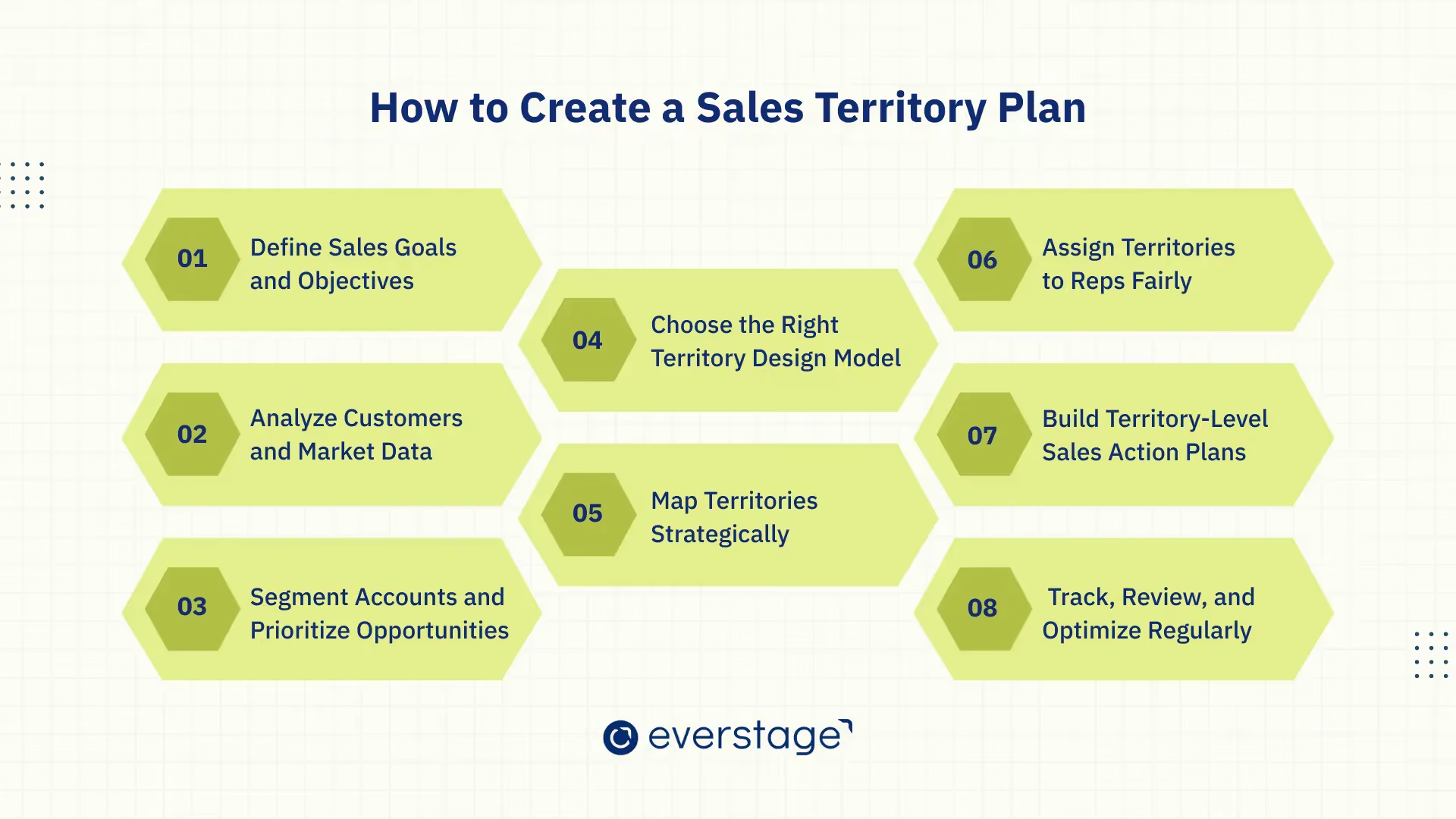
Building a sales territory plan requires careful thought and execution across nine steps. A structured process ensures your sales team is focused, efficient, and set up for success. Below is a framework to guide you through each essential step.
Step 1: Define Sales Goals and Objectives
Choosing between new customer acquisition and expansion within existing accounts shapes every territory decision ahead. Each objective influences how territories are structured.
A SaaS company might focus on acquiring new customers in emerging markets. A medical device company could prioritize expanding its presence within hospital networks. These goals should align with the broader company strategy so sales efforts contribute to the overarching business vision.
Ensure that your goals also align with your sales compensation structure. Reps should be incentivized to meet the right objectives, whether bringing in new clients or nurturing existing relationships.
Everstage helps you align sales territories with broader business goals, ensuring each region is structured for maximum impact.
With real-time data and performance insights, you can design balanced territories and set achievable quotas. Everstage also makes it easier to identify growth opportunities and keep your team focused on the right markets.
Step 2: Analyze Customers and Market Data
CRM distribution analysis and external market research form the foundation of effective territory design. Start by reviewing your CRM to understand the current distribution of customers across your regions. The data provides a snapshot of where existing customers are located and how they perform.
Supplement CRM data with external inputs like market share and competitor presence to gain a deeper understanding of each region.
Look for revenue concentration patterns using the 80/20 rule, which reveals roughly 20% of customers generate 80% of total revenue.
Applied to territories, this insight identifies which regions or segments contribute the most to your bottom line. You can then ensure high-value areas receive the right level of sales coverage and resources.
Perform a white space analysis to find regions or segments that are underserved. Identifying these gaps allows you to balance workloads and maximize overall sales potential.
Step 3: Segment Accounts and Prioritize Opportunities
Tiering accounts by revenue potential and Customer Lifetime Value (CLV) ensures resources go where they yield the greatest return. Segment your accounts into categories such as Tier A, Tier B, and Tier C.
- Tier A: High-value strategic accounts which require more focus and resources.
- Tier B: Mid-sized accounts with solid growth potential.
- Tier C: Smaller accounts or leads managed by SDRs for prospecting.
CLV helps you understand which accounts have the most long-term value. High-potential clients then get the attention they deserve.
Tiering your accounts prioritizes efforts and ensures resources are allocated for the greatest return.
Step 4: Conduct a Sales Territory SWOT Analysis
Evaluating internal strengths alongside external threats reveals which territories hold the most promise. A SWOT analysis (Strengths, Weaknesses, Opportunities, Threats) is an effective tool for this evaluation.
- Strengths: Identify areas where your team excels, such as a strong customer base in a specific region or experienced local reps.
- Weaknesses: Recognize areas needing improvement, such as limited brand awareness or inconsistent follow-up.
- Opportunities: Look for untapped regions or competitor gaps open for capture.
- Threats: Consider external risks such as new competitors or regulatory changes.
Use the SWOT results to inform your territory design. Aligning territories with your team's strengths and market opportunities increases the likelihood of hitting revenue targets.
Step 5: Choose the Right Territory Design Model
Selecting between geographic, vertical, account-based, and hybrid models depends on your company size and product complexity. Here's a decision matrix to guide your selection:
Territory design model decision matrix comparing ideal company size, product type, market factors, and implementation tips.
Pros and Cons by Model
Pros, cons, and best use cases for each territory design model.
The model you choose should align with your sales cycle length and team maturity. If you sell enterprise software across regions, a hybrid model lets you maintain local coverage while dedicating resources to key accounts.
Step 6: Map Territories Strategically
Balanced boundaries and visual mapping tools like dedicated sales territory mapping platforms help you spot regions needing adjustment. Determine the boundaries of each territory while ensuring they are balanced in opportunity and workload.
Distribute territories fairly to prevent reps from stepping on each other's toes. Avoid overlapping territories, which cause confusion and reduce team collaboration.
Step 7: Assign Territories to Reps Fairly
Matching rep experience to territory complexity and aligning quota potential with compensation are two keys to fair assignments. Senior reps with experience managing complex deals might be better suited for larger, strategic accounts. Junior reps or SDRs could handle smaller accounts or lead-generation-focused territories.
Make sure the quota potential of each territory aligns with rep compensation. A territory that is too large or difficult to manage can demotivate reps. Fair assignments maintain morale and give everyone a reasonable chance of meeting their quotas.
Step 8: Build Territory-Level Sales Action Plans
Account prioritization by tier and weekly activity targets give each rep a clear roadmap for their assigned territory. Each plan should include a forecast for the territory's revenue.
You might set a goal for a rep to target 10 Tier A accounts each month, with the expectation of conducting two demos per account. Concrete action plans keep reps focused and organized, working towards measurable targets. Providing templates speeds up this process.
Here's a territory-level action plan template example:
Template for a territory-level sales action plan covering account prioritization, weekly activities, and performance metrics.
Step 9: Track, Review, and Optimize Regularly
Quarterly KPI reviews and real-time dashboards keep your territory plan aligned with shifting markets. Sales teams and opportunities change, and your plan should be flexible enough to accommodate those changes. Set up regular reviews to track key performance indicators KPIs and ensure territory effectiveness.
Here are KPIs to track, along with calculation methods and industry benchmarks:
Sales Volume Per Territory
Sales volume per territory represents the total revenue or units sold within a defined geographic or account-based territory. Sales volume per territory provides a snapshot of how each region performs compared to others, serving as a leading indicator of market potential.
Industry Benchmark: Varies by industry, customer segment, and pricing model. No standard benchmark exists because factors such as market maturity and customer base differ greatly.
Quota Attainment Rate
Quota attainment rate evaluates the percentage of sales reps meeting or surpassing their assigned quotas. The rate indicates how realistic your sales targets are and how effectively teams perform against organizational goals.
Industry Benchmark: According to Forrester, the average quota attainment rate across industries is around 47–50%, meaning fewer than half of sales reps hit their targets.
Market Penetration Rate
Market penetration rate indicates how much of your target market has been captured in a specific territory. The metric reflects your brand's reach and the effectiveness of sales efforts within the area.
Industry Benchmark: Market penetration rate varies widely by industry. According to KPI Depot, consumer products may aim for 60–80% penetration in mature markets, while SaaS or B2B services typically range between 5–20% due to niche targeting.
Sales Cycle Length
Sales cycle length captures the average time for a deal to progress from initial engagement to closing. Sales cycle length helps assess the efficiency of your sales process and pipeline management.
Industry Benchmark: Sales cycle length depends heavily on deal size and product complexity. Benchmarks vary across industries.
Quarterly reviews should assess market changes, rep feedback, and overall performance. Use analytics dashboards to track performance metrics in real time, linking them to both compensation and territory goals. Swift adjustments improve results.
Key triggers for territory realignment include:
- A rep consistently exceeding or missing quota by more than 20% for two consecutive quarters
- Significant market shifts such as a new competitor entering a region or a major customer churning
- Company expansion into new geographies or verticals
- Mergers, acquisitions, or organizational restructuring changing team composition
Following these nine steps gives you a robust framework for creating and managing a territory plan driving revenue growth.
Common Challenges in Sales Territory Planning
Territory imbalance and rep resistance are two of the most frequent obstacles in territory planning. Here are five common challenges and how to overcome them:
1. Territory Imbalance Uneven distribution of accounts or revenue potential across territories is the most frequent issue. Some reps end up with too many high-value accounts while others struggle with low-potential regions. How to fix it: Use data-driven territory mapping tools to balance revenue potential and workload across all territories. Revisit assignments quarterly.
2. Rep Resistance to Change Sales reps resist territory changes when they have built relationships in their current accounts. Resistance slows adoption and hurts morale. How to fix it: Involve reps in the planning process early. Communicate the rationale behind changes transparently and align territory adjustments with compensation incentives to ease the transition.
3. Data Quality Issues Incomplete or outdated CRM data leads to flawed territory designs. Inaccurate customer data produces inaccurate territory boundaries. How to fix it: Conduct a CRM data audit before territory planning begins. Establish data hygiene standards and assign ownership for ongoing data maintenance.
4. Unclear Territory Boundaries Ambiguous boundaries create overlap, leading to internal competition and customer confusion about their point of contact. How to fix it: Document territory rules explicitly by geography, named accounts, or industry vertical. Make these rules accessible to the entire sales organization.
5. Lack of Ongoing Optimization Many organizations treat territory planning as a one-time annual exercise. How to fix it: Schedule quarterly territory reviews tied to KPI performance. Use real-time dashboards to monitor territory health and trigger realignment when metrics fall outside acceptable ranges.
Best Practices for Sales Territory Planning
Data-driven decisions and rep involvement are two practices consistently producing effective territory plans:
- Start with data, skip intuition: Base every territory decision on CRM data and performance analytics instead of gut feelings or historical precedent alone.
- Align territories with compensation: Ensure territory assignments connect directly to quota and incentive structures so reps are motivated to work their assigned regions.
- Balance workload and opportunity: Factor in account count, revenue potential, and deal complexity to create equitable assignments. Geography alone is insufficient.
- Involve your sales team: Reps have frontline insight into customer relationships and market conditions. Include their input during planning to increase buy-in and accuracy.
- Use technology: Use territory mapping software and sales planning platforms like Everstage to automate data analysis and model scenarios before committing to changes.
- Review and adjust quarterly: Markets shift, and reps turn over. Build a cadence of quarterly reviews to keep territories aligned with current conditions.
- Document everything: Maintain a clear record of territory rules, assignment rationale, and change history. Transparency reduces disputes and accelerates onboarding for new reps.
- Measure what matters: Track KPIs like quota attainment, market penetration, and sales cycle length to evaluate territory effectiveness objectively.
Suggested read: What is Sales Outsourcing?
Sales Territory Plan Examples and Templates
A concrete example and a ready-to-use checklist make it easier to build your own territory plan. Below is a sample layout you can adapt to your organization:
Sample Sales Territory Plan
Sample sales territory plan for a West Coast enterprise SaaS territory assigned to a senior AE.
Sales Territory Planning Checklist
Use this checklist to ensure you have covered every critical step:
☐ Define clear sales goals and objectives aligned with company strategy
☐ Audit and clean CRM data for accuracy
☐ Analyze customer distribution, revenue concentration, and white space
☐ Segment and tier accounts (A/B/C) by revenue potential and CLV
☐ Complete a SWOT analysis for each territory or region
☐ Select the appropriate territory design model (geographic, vertical, account-based, or hybrid)
☐ Map territories using data-driven tools to balance workload and opportunity
☐ Assign territories to reps based on experience, skills, and quota alignment
☐ Build territory-level action plans with weekly activities and revenue forecasts
☐ Align territory assignments with compensation and incentive plans
☐ Set up KPI tracking dashboards for real-time performance monitoring
☐ Schedule quarterly territory reviews and define realignment triggers
☐ Document all territory rules, boundaries, and assignment rationale
☐ Communicate the plan to all stakeholders and gather rep feedback
Effective Sales Territory Planning
Defining goals, segmenting accounts, and optimizing quarterly form the backbone of an effective territory plan. Following a clear framework creates a strong foundation for revenue growth.
A territory plan is a living system which must adapt to shifting markets and business objectives. Regular updates keep your sales team focused on high-value opportunities and agile enough to respond to new challenges.
Pair your territory plan with sales compensation analytics to maximize effectiveness. Aligning territories with the right compensation structure ensures reps are incentivized to target the right accounts.
Everstage lets you integrate territory planning and sales compensation management in one platform. With real-time data and actionable insights, you can design balanced territories, set achievable quotas, and align incentives.
Ready to align your territories, quotas, and compensation for maximum growth? Book a demo with Everstage today.
Questions worth asking
The things most people want to know before they commit.
What does a good sales territory plan look like?
A good sales territory plan defines territory boundaries clearly and balances workload and revenue potential across reps. The plan aligns with company-wide sales goals and includes measurable KPIs for tracking performance.
Accounts are segmented into tiers (A/B/C), and reps are assigned based on skills and experience. A quarterly review cadence adapts the plan to market changes. The best plans also integrate territory assignments with compensation structures to keep reps motivated.
What is a 30-60-90 day sales territory plan?
A 30-60-90 day sales territory plan is a phased onboarding framework for new reps or managers taking over a territory. In the first 30 days, the focus is on learning: understanding the territory, reviewing CRM data, and meeting key accounts.
During days 31–60, the rep begins executing by building pipeline and refining account priorities. In the final phase (days 61–90), the rep shifts to optimization: closing initial deals and establishing a sustainable cadence. This structured approach accelerates ramp time and sets clear expectations from day one.
What are the key components of a sales territory plan?
Key components of a sales territory plan include market segmentation, resource allocation, sales goal alignment, territory mapping, and performance tracking. The plan should be dynamic, allowing for adjustments based on market conditions and sales performance.
Why is a sales territory plan important for sales success?
A sales territory plan ensures that sales teams focus their efforts where they are most likely to succeed. It helps allocate resources effectively, track performance, and adjust strategies for optimal coverage. By aligning territories with sales goals, businesses can drive better results and maximize revenue.
How do I define sales territories based on market data?
Defining sales territories involves analyzing market data to identify areas with high customer potential. You can segment regions by geography, industry, customer size, or any other relevant factor. By using data-driven insights, you ensure that each territory is optimally aligned with market demand and sales goals.
How can I optimize my sales territories to maximize revenue?
To optimize sales territories, focus on analyzing sales data and adjusting territories based on performance. Allocate resources to high-potential regions, monitor sales results, and make necessary adjustments. Implement strategies like targeted customer segmentation and performance tracking to ensure that each territory contributes to revenue growth.