
TL;DR
Guided selling in CPQ helps automate product configuration, pricing, and quote generation through structured workflows that guide sales reps step by step, reducing manual errors and improving quoting efficiency.
- Accelerate sales cycles by guiding reps through complex configuration and pricing decisions in real time
- Improve quote accuracy with rule-driven workflows that prevent incompatible product combinations
- Enhance sales performance through structured discovery flows and contextual product recommendations
- Scale efficiently across teams while maintaining consistency, governance, and pricing control
Introduction
Your sales rep is on a call with a prospect who needs pricing for an enterprise software package. Custom integrations, 500 user licenses, premium support, volume discounts. Standard request.
The rep puts them on hold. Opens the product catalog. Checks three spreadsheets. Reviews the discount policy. Verifies which add-ons work together. Calculates pricing manually. 25 minutes later, they finally deliver a quote that still needs manager approval.
By then, the prospect has moved on to a competitor who sent a quote in under 10 minutes.
This scenario plays out constantly in B2B sales. Reps spend more time fighting with tools than selling. Quotes take too long. Configurations get wrong. Pricing stays inconsistent. And deals stall because the process itself creates friction.
CPQ in guided selling solves this. It walks reps through product selection, configuration, and pricing using intelligent workflows. The system enforces rules automatically, recommends the right products based on customer needs, and generates accurate quotes in minutes instead of hours.
The difference is simple: instead of expecting reps to memorize every product rule and pricing tier, you give them a system that already knows. They focus on the customer conversation. The system handles everything else.
Companies using guided selling are seeing real results. Quotes go out faster. Errors drop. Win rates improve. And sales teams can scale without drowning in complexity.
Whether you sell SaaS, industrial equipment, or professional services, CPQ guided selling is becoming table stakes for modern sales operations. This guide covers what it is, how it works, and how to implement it effectively.
Let's dig in.
What is CPQ Guided Selling?
CPQ guided selling combines Configure, Price, Quote software with intelligent workflows that guide sales reps through the entire quoting process. Instead of reps figuring out product configurations and pricing on their own, the system asks targeted questions, recommends solutions, and enforces rules automatically.
Think of it as a GPS for complex sales. Traditional CPQ gives you the tools to build a quote. Guided selling shows you exactly which path to take based on what the customer actually needs.
Overview of CPQ and Guided Selling
CPQ software automates three core functions: configuring products, calculating prices, and generating quotes. It replaces spreadsheets and manual processes with a centralized system that ensures consistency.
Guided selling takes CPQ further by adding intelligence to the workflow. It prompts reps with questions like "What industry is this customer in?" or "What's their user count?" and uses those answers to recommend appropriate products, enforce compatibility rules, and apply the right pricing automatically.
The result is a system that not only automates quote creation but also actively prevents mistakes before they happen.
How CPQ Guided Selling Enhances Sales Processes
CPQ guided selling improves sales in four specific ways:
- It eliminates guesswork in product selection. Reps answer questions about customer needs, and the system recommends products that fit. No more scrolling through catalogs or wondering which add-ons make sense together.
- It enforces configuration rules in real time. The system knows which products work together and which don't. If a rep tries to configure something invalid, the system catches it immediately instead of after the quote goes out.
- It applies pricing dynamically. Volume discounts, regional pricing, contract terms, and promotional offers are all calculated automatically based on deal parameters. No manual math. No outdated price sheets.
- It speeds up approvals. Standard quotes that meet policy guidelines go through instantly. Edge cases route to the right approver with full context attached. No more emails bouncing between managers trying to figure out who needs to sign off.
When you add it all up, CPQ guided selling turns quote generation from a multi-day process into something that happens during the customer call. Reps stay focused on selling. The system handles the complexity.
CPQ Guided Selling vs Traditional Selling
CPQ guided selling and traditional selling approaches differ fundamentally in how they handle complexity, accuracy, and scale. Understanding these differences shows why many organizations are moving away from manual processes.
Workflow Efficiency and Sales Velocity
Traditional selling relies on manual handoffs. A rep takes customer requirements, checks the product catalog, emails pricing questions to finance, waits for discount approval, revises the quote based on feedback, and eventually sends it out days later. Each step introduces a delay.
CPQ guided selling consolidates all of this into a single workflow. The rep answers questions in the system, which automatically recommends products, applies pricing rules, routes approvals, and generates the final quote. What used to take three days now takes 20 minutes.
The velocity difference compounds across your entire sales team. If each rep handles 10 quotes per month, cutting turnaround time from three days to one hour means your team can process significantly more opportunities without adding headcount.
Accuracy, Control, and Risk Reduction
Manual quoting processes accumulate errors. A rep uses an outdated price sheet. They miss a product dependency. They apply the wrong discount tier. Finance catches it during review and sends it back for revision. The customer waits longer. Trust erodes.
CPQ guided selling eliminates these errors by enforcing rules at the point of configuration. The system won't let a rep select incompatible products. It automatically applies current pricing. It flags quotes that exceed discount thresholds before they go out.
This control reduces risk in two ways. First, fewer quote revisions mean fewer delays and happier customers. Second, pricing consistency protects margins; you're not leaving money on the table or giving away discounts that weren't approved.
Customer Experience and Scalable Growth
From the customer's perspective, traditional selling feels disjointed. They have one conversation with the rep, then wait days for a quote. When it arrives, it might not reflect what they asked for, triggering another round of back-and-forth.
CPQ guided selling delivers a smoother experience. Reps can generate quotes during the call or immediately after. The quote accurately reflects the conversation because the system captured requirements in structured form. Customers get what they need faster, which builds confidence in your ability to execute.
As your business grows, traditional processes break down. More products, more pricing rules, more exceptions, manual approaches can't keep up. CPQ guided selling scales naturally because the system enforces consistency regardless of how complex your catalog becomes or how many reps you add.
These differences highlight why organizations adopt CPQ-guided selling as they grow. Manual processes work when you have five reps selling three products. They collapse when you have 50 reps selling 300 SKUs across multiple regions.
Key Benefits of CPQ Guided Selling
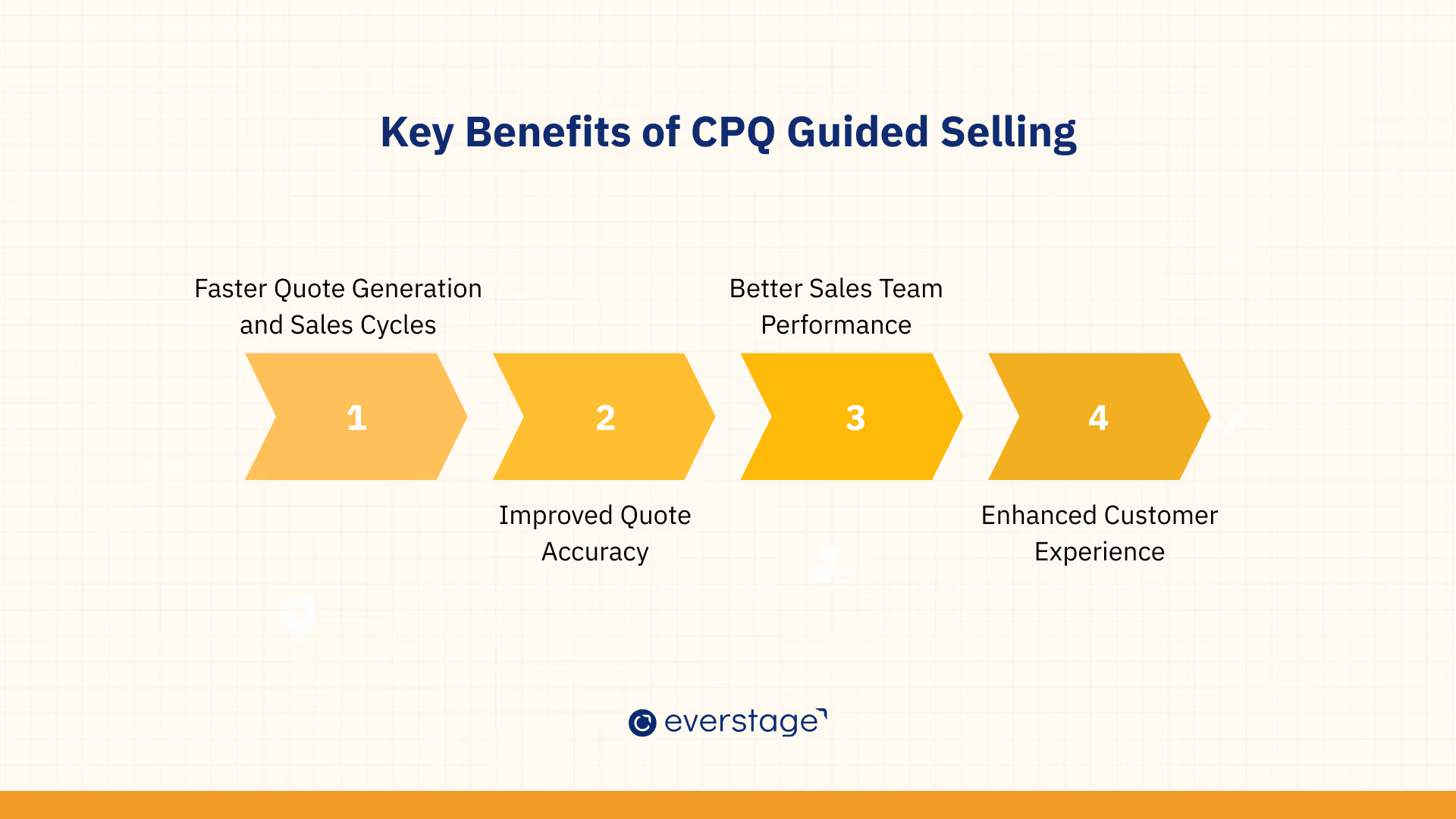
CPQ guided selling delivers measurable improvements across speed, accuracy, performance, and customer satisfaction. Here's what changes when you implement it.
1. Faster Quote Generation and Sales Cycles
The most immediate impact is speed. Quotes that used to take hours or days now take minutes.
Traditional quoting requires reps to gather information, research products, check pricing, validate configurations, and wait for approvals. Each step adds time. CPQ guided selling compresses all of this into a single session. The rep answers questions, the system handles the rest, and the quote goes out while the customer is still engaged.
Faster quotes mean shorter sales cycles. When prospects receive pricing quickly, they can make decisions quickly. Deals that might have dragged on for weeks close faster because you've removed the waiting time.
This speed advantage matters most in competitive situations. If you can quote in 10 minutes and your competitor takes two days, you control the conversation. The customer moves forward with you simply because you responded first.
2. Improved Quote Accuracy
Manual quoting processes introduce errors at every step. Wrong SKUs, outdated pricing, incompatible product combinations, and incorrect discount calculations. Each mistake requires revision, which delays the deal and damages credibility.
CPQ guided selling process prevents errors before they happen. The system enforces product compatibility rules, applies current pricing automatically, validates discount policies, and ensures every quote follows company standards.
This accuracy matters for two reasons. First, customers trust quotes that are right the first time. They don't have to second-guess whether the numbers will change during review. Second, your operations team isn't constantly fixing mistakes or handling exception requests that shouldn't exist.
3. Better Sales Team Performance
CPQ guided selling makes every rep more productive, regardless of experience level.
New reps ramp faster because the system guides them through complex configurations they don't fully understand yet. They can handle sophisticated deals within weeks instead of months because the knowledge is built into the workflow.
Experienced reps close more deals because they spend less time on administrative work. Instead of building quotes manually, they focus on customer conversations, objection handling, and relationship building, the activities that actually move deals forward.
The performance lift isn't just about individual productivity. When your entire team operates from the same system with consistent rules, forecast accuracy improves. Sales managers get better visibility into pipeline health because quotes reflect real opportunities, not aspirational configurations that won't pass review.
4. Enhanced Customer Experience
Customers notice the difference immediately. They ask for pricing and get it fast. The quote reflects exactly what they discussed. Revisions happen quickly if needed. The entire interaction feels professional and competent.
This experience builds trust. When prospects see that you can quote complex solutions accurately and quickly, they assume you can deliver the same level of execution throughout the relationship. The quoting process becomes a competitive differentiator, not just an administrative step.
CPQ guided selling also enables personalization at scale. The system can tailor product recommendations based on industry, company size, use case, and buying patterns. Customers receive solutions designed for their specific needs rather than generic packages.
The cumulative effect of these benefits of guided selling is significant. Sales cycles compress, win rates improve, team productivity increases, and customers get better experiences from first contact through close.
How CPQ Guided Selling Works
CPQ guided selling follows a structured workflow that guides sellers from discovery through quote delivery while enforcing configuration, pricing, and approval policies in real time.
Step 1: Initiate Guided Selling and Capture Deal Context
The process starts when a rep launches guided selling from a CRM opportunity. The system immediately captures key context: customer type, region, industry, contract terms, and existing agreements. This context determines which products are available, what pricing applies, and which approval rules govern the deal.
For example, if the opportunity is tagged as "Healthcare - Enterprise," the system knows to show HIPAA-compliant products and apply enterprise pricing tables specific to that vertical.
Step 2: Guide Discovery and Recommend Solutions
The system presents a structured set of questions to clarify customer needs. These aren't random; they're designed to identify the right solution based on use case, scale, and requirements.
As the rep answers questions, CPQ recommends appropriate products, bundles, and add-ons. If a customer needs document management for 1,000 users with advanced security, the system suggests the relevant tier and compatible modules automatically.
This guided discovery prevents reps from missing key requirements or recommending products that don't fit the customer's actual needs.
Step 3: Configure and Price Using Governed Rules
Once products are selected, CPQ enforces configuration rules automatically. It validates product dependencies, prevents incompatible combinations, and flags missing required components before the quote progresses.
Pricing happens simultaneously. The system applies volume discounts, regional pricing adjustments, promotional offers, and contract-specific terms from a centralized source. Reps see accurate pricing in real time without manual calculations.
Step 4: Validate and Route for Approvals
Before the quote goes out, CPQ validates it against pricing policies, margin thresholds, and compliance requirements. Standard deals that meet guidelines proceed automatically. Edge cases that exceed discount limits or require special terms trigger approval workflows.
Approvals route to the right person with full context: why this quote needs review, what's outside normal parameters, and what business justification supports it. This eliminates the email chains where managers try to figure out what they're approving and why.
Step 5: Generate and Deliver the Quote
Once approved, CPQ generates a professional quote document using the appropriate template. The quote includes accurate configurations, final pricing, payment terms, and any special conditions that apply.
The system synchronizes everything back to CRM and downstream systems for fulfillment and billing. Finance sees the same numbers the customer sees. Operations knows exactly what to deliver. Everyone works from a single source of truth.
This five-step workflow turns quote generation from a days-long process into something that happens in minutes, with built-in accuracy and consistency at every stage.
CPQ Guided Selling Best Practices by Role
CPQ guided selling is most effective when it is applied with clear ownership and role-specific responsibilities.
The following best practices outline how key roles can apply CPQ guided selling in ways that improve consistency, accuracy, and scalability without constraining effective selling.
Best Practices for Sales Operations Leaders
- Define where guidance adds value: Not every deal needs full guided selling. Identify which sales motions benefit most: high-volume transactions, compliance-heavy deals, or complex configurations. Preserve flexibility for strategic opportunities that require custom approaches.
- Establish a governed single source of truth: Centralize all product rules, pricing logic, and approval policies within CPQ. When guided selling pulls from a unified source, reps get consistent answers, and you avoid the chaos of conflicting information across spreadsheets and documents.
- Govern change and measure impact: Apply version control to all rule changes. Test updates before deployment. Track metrics like quote turnaround time, accuracy rates, approval exceptions, and adoption across teams. Use this data to continuously improve how guided selling performs.
Sales ops should treat CPQ guided selling as infrastructure that requires ongoing maintenance, not a one-time implementation.
Best Practices for Sales Representatives
- Use guided selling to structure discovery: Don't skip the question flows. They're designed to uncover customer needs systematically and prevent you from missing key requirements. Following the structure leads to better-fit solutions and fewer revisions.
- Act on real-time system feedback: When CPQ flags a validation warning or margin issue, address it immediately. Waiting until the quote review creates delays. The system is telling you something needs attention; respond early to avoid rework.
- Build trust through consistency: Customers notice when quotes are accurate and professional. Delivering clean quotes that reflect approved configurations and pricing reinforces your credibility and makes negotiations smoother.
Reps should see guided selling as a tool that lets them focus on selling rather than administrative work.
Best Practices for Product and Pricing Teams
- Own configuration and pricing logic for products: Treat CPQ rules, bundles, and pricing models as strategic assets. Document them clearly. Update them proactively when products or policies change. Poor rule maintenance leads to bad quotes.
- Balance flexibility with guardrails: Give customers meaningful choices while preventing combinations that create operational risk, margin erosion, or delivery problems. The best CPQ rules enable appropriate customization without allowing chaos.
- Use CPQ insights to inform strategy: Analyze which products sell together, how discounting patterns affect margins, and where approval exceptions cluster. This data reveals what's working in your product portfolio and what needs adjustment.
Product and pricing teams should view guided selling as a feedback loop that shows how their strategies perform in real customer interactions.
When each role applies these practices, CPQ guided selling becomes more than automation; it becomes a strategic system that improves decision-making across the entire quote-to-cash process.
CPQ Guided Selling for Complex Industries
Different industries face different quoting challenges. CPQ guided selling addresses these complexities in specific ways that match how each sector operates.
1. Manufacturing and Industrial Equipment
Manufacturing companies deal with highly configurable products. A single piece of equipment might have hundreds of options: materials, specifications, tooling requirements, production timelines, installation services, and maintenance packages.
Manual quoting breaks down quickly. Reps struggle to remember which configurations are physically possible, which materials work together, and which customizations require special tooling or extended lead times.
CPQ guided selling handles this by encoding engineering rules directly into the configuration workflow. When a rep selects a base unit, the system shows only compatible options. It automatically calculates pricing based on material costs, production capacity, and order volume. It flags combinations that create manufacturing bottlenecks or require custom tooling.
The result is quotes that are both technically feasible and operationally deliverable. Sales doesn't promise configurations that engineering can't build. Production gets orders they can actually fulfill.
2. B2B SaaS and Technology Solutions
SaaS companies face a different complexity: subscription models with multiple pricing variables. Feature tiers, user seats, usage limits, add-on modules, implementation fees, annual versus monthly billing, multi-year discounts, and expansion rights all affect the final price.
Traditional quoting forces reps to calculate these variables manually, often using separate spreadsheets for different components. The process is slow and error-prone, especially when customers want custom combinations.
CPQ guided selling automates the entire subscription pricing structure. It handles seat-based pricing with volume breaks, calculates implementation fees based on complexity, applies contract length discounts, and generates renewal pricing that accounts for growth projections.
For usage-based pricing models, guided selling can incorporate consumption estimates and show customers how pricing scales as usage increases. This transparency builds trust and prevents billing surprises later.
3. Professional Services and Solutions
Professional services firms struggle with project scoping. How many hours will this engagement require? Which team members should be staffed? What's the right rate for this client and project type? Should this be fixed-fee or time-and-materials?
CPQ guided selling uses historical project data to recommend accurate scopes. It analyzes similar past engagements, factors in team availability and expertise, and suggests pricing that reflects both market rates and your firm's profitability targets.
This reduces the back-and-forth of scope revisions and helps you quote projects that actually close at healthy margins. The system can also enforce minimum margins, flag projects that fall below profitability thresholds, and route risky deals for additional review.
The common thread across all these industries is that CPQ-guided selling handles complexity that manual processes can't scale. It learns from your data, enforces your rules, and generates accurate quotes faster than spreadsheets ever could.
Key Features of CPQ Guided Selling Tools
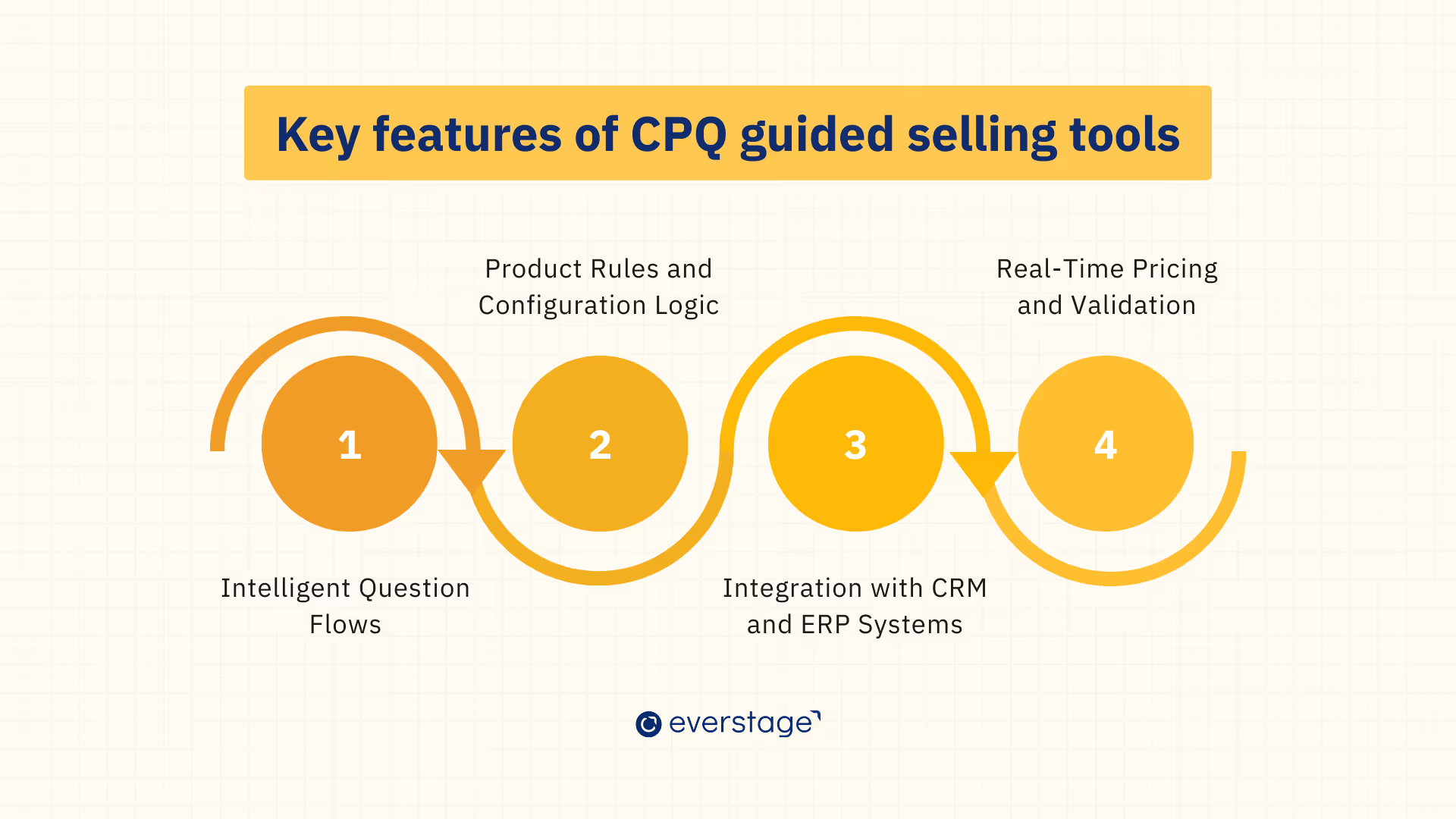
Effective CPQ guided selling platforms share core capabilities that enable intelligent, automated quoting. Here's what separates functional systems from powerful ones.
1. Intelligent Question Flows
Question flows guide reps through discovery by asking the right questions in the right order. These aren't static forms; they adapt based on previous answers.
If a rep indicates the customer is in healthcare, the next questions focus on compliance requirements and patient data handling. If the customer needs 1,000+ users, the flow jumps to enterprise features and volume pricing. Irrelevant questions disappear automatically.
Good question flows feel like a conversation, not a survey. They gather exactly the information needed to recommend the right solution without overwhelming reps with unnecessary inputs.
2. Product Rules and Configuration Logic
Configuration rules prevent errors by enforcing product compatibility at the point of selection. These rules know which products work together, which options require specific base configurations, and which combinations are technically impossible or commercially unviable.
For example, if Product A requires Integration Module B to function, the system either bundles them automatically or prevents the rep from quoting Product A without Module B. If a configuration exceeds manufacturing capacity or requires custom tooling, the system flags it before the quote advances.
This logic protects both sales and operations. Sales doesn't quote impossible configurations. Operations doesn't receive orders they can't fulfill.
3. Integration with CRM and ERP Systems
CPQ guided selling needs clean data from other systems to work effectively. Integration with CRM pulls customer information, opportunity details, and historical purchase data. Integration with ERP provides real-time inventory levels, production capacity, and fulfillment timelines.
These connections eliminate manual data entry and ensure everyone works from the same information. When a rep generates a quote, the configuration automatically syncs to CRM, ERP, and billing systems. Finance sees accurate numbers. Operations know what to build. Customer success understands what was sold.
Seamless integration is what turns CPQ from a quoting tool into a revenue operations platform.
4. Real-Time Pricing and Validation
Static pricing tables can't account for the variables that affect modern deals: deal size, customer segment, contract length, competitive pressure, regional differences, and current promotions.
CPQ guided selling applies dynamic pricing based on these factors. It calculates volume discounts automatically, adjusts for multi-year commitments, applies regional pricing rules, and factors in customer-specific agreements.
Validation happens simultaneously. The system checks quotes against margin thresholds, discount policies, and approval requirements in real time. Standard deals proceed immediately. Edge cases route for review with full context about why approval is needed.
This real-time processing means reps know instantly whether a deal meets guidelines or needs escalation. No waiting until the end to discover a quote that won't pass review.
How to Implement CPQ Guided Selling in Your Business
Implementing CPQ guided selling requires planning, clean data, and cross-functional alignment. Here's how to approach it strategically.
1. Assessing Your Readiness
Before implementing CPQ guided selling, evaluate whether your organization is ready. Ask these questions:
- Is your product catalog documented and structured? CPQ needs clear product hierarchies, dependencies, and compatibility rules. If your catalog exists primarily in people's heads or scattered spreadsheets, you'll need to formalize it first.
- Are your pricing rules consistent and current? CPQ guided selling enforces the rules you give it. If pricing varies by rep or region without clear logic, standardize it before implementation.
- Does your team support process change? Guided selling changes how reps work. If your sales culture resists structure or prefers freeform quoting, expect adoption challenges. Address this upfront through leadership alignment and change management.
Organizations with complex products, inconsistent quoting processes, and growing sales teams typically see the highest ROI from CPQ-guided selling.
2. Steps to Implement CPQ Guided Selling
Step 1: Map your current quoting process: Document how quotes happen today. Identify bottlenecks, error points, and manual handoffs. This baseline shows what you're solving for and helps measure improvement later.
Step 2: Define product rules and pricing logic: Work with product, pricing, and operations teams to formalize configuration rules, compatibility requirements, and pricing structures. This is the foundation, skip it and your guided selling won't work correctly.
Step 3: Design question flows for key sales motions: Create guided selling flows for your most common deal types. Start simple. A flow for standard deals, one for enterprise deals, and one for renewals covers most scenarios initially.
Step 4: Configure approval workflows and policies: Define what requires approval, who approves it, and what context they need. Standard deals should auto-approve. Exceptions should route intelligently with clear justification.
Step 5: Integrate with CRM and downstream systems: Connect CPQ to your existing tech stack so data flows automatically. Test thoroughly to ensure quotes sync correctly and nothing breaks in production.
Step 6: Pilot with a small team before full rollout: Choose experienced reps who will provide honest feedback. Run parallel processes initially, let them use both old and new methods to compare. Refine based on what you learn.
3. Training Your Sales Team
Training determines adoption. Here's what works:
- Show the why, not just the how. Reps resist change when they don't understand the benefit. Demonstrate how guided selling makes their jobs easier: faster quotes, fewer revisions, less admin work.
- Use real scenarios, not generic examples. Walk through actual deals your team closed recently. Show how guided selling would have handled them faster and more accurately.
- Provide ongoing support, not just initial training. Create documentation, quick reference guides, and a Slack channel for questions. The first month determines whether reps embrace or abandon the system.
- Celebrate early wins. When reps close deals faster using guided selling, highlight it. Peer influence drives adoption faster than mandates.
4. Choosing the Right CPQ Platform
Not all CPQ platforms handle guided selling equally. Evaluate based on:
- Ease of configuration: Can your team build and modify question flows without engineering support? Systems that require developer resources for simple changes become bottlenecks.
- Integration capabilities: Does it connect easily to your CRM, ERP, and billing systems? Pre-built integrations save months of custom development.
- Scalability: Will it handle your product complexity as you grow? Test it with your most complex configurations before committing.
- User experience: Will your reps actually use it? If the interface is clunky or slow, adoption suffers regardless of features.
Implementation done right turns CPQ guided selling from a project into a permanent competitive advantage. Done poorly, it becomes shelfware that nobody uses.
Common Challenges with CPQ Guided Selling
CPQ guided selling delivers significant benefits, but implementation isn't always smooth. Here are the most common obstacles and how to navigate them.
1. Data Consistency and Synchronization Issues
CPQ guided selling depends on accurate data from multiple sources: product catalogs, pricing tables, customer records, and inventory systems. When this data is inconsistent or outdated, the system makes wrong recommendations or applies incorrect pricing.
Common problems include duplicate product records with different SKUs, pricing that differs between CRM and ERP, customer information that hasn't been updated in years, and inventory levels that don't sync in real time.
The solution starts before implementation. Audit your data across all systems. Clean up duplicates, standardize naming conventions, and establish processes for keeping data current. Assign ownership; someone needs to be responsible for maintaining product catalogs, pricing tables, and system integrations.
Data quality isn't a one-time fix. It requires ongoing governance and regular audits to prevent drift.
2. User Adoption and Training
Sales reps resist new tools, especially if they've been quoting successfully using their own methods. They see guided selling as extra steps that slow them down rather than tools that help them.
This resistance is strongest among top performers who believe the system doesn't understand complex deals the way they do. They'll find workarounds, ignore the system, or continue quoting manually if allowed.
Address adoption through early involvement. Include reps in design decisions so they feel ownership over the process. Show concrete examples of how guided selling helps them personally, faster approvals, fewer revisions, and more time for actual selling.
Training matters, but so does ongoing support. Reps need quick answers when they hit edge cases. A Slack channel or dedicated support person during the first 90 days makes the difference between adoption and abandonment.
Also, recognize that some deals genuinely need manual intervention. Build escape valves for truly custom scenarios, so reps don't feel trapped by the system.
3. Integration with Legacy Systems
Many organizations run on older ERP, CRM, or billing systems that weren't designed to integrate with modern CPQ platforms. These legacy systems may lack APIs, use outdated data formats, or require custom middleware to connect.
Integration challenges create two problems. First, data doesn't flow automatically, forcing manual entry and creating errors. Second, implementation timelines stretch from months to years as IT builds custom connections.
The practical approach is staged integration. Start with CRM integration since that's where opportunities live. Add ERP integration next for inventory and fulfillment visibility. Layer in billing and contract management after the core workflow is stable.
For legacy systems that truly can't integrate, consider interim solutions like scheduled data syncs or export/import processes. Not ideal, but better than waiting indefinitely for perfect integration.
Also, evaluate whether certain legacy systems should be replaced rather than integrated. Sometimes the cost of maintaining old technology exceeds the cost of modernizing.
4. Rule Complexity and Maintenance
As your product portfolio grows, configuration rules multiply. You start with simple dependencies: Product A requires Module B. Then you add exceptions, unless the customer has the Enterprise tier, in which case Module C substitutes for Module B in certain regions.
Over time, rule complexity becomes unmanageable. Rules conflict with each other. Nobody remembers why certain logic exists. Making changes breaks unexpected things.
Prevent this through disciplined governance. Document every rule with a clear business justification. Review rules quarterly and retire outdated logic. Test changes in sandbox environments before deploying to production.
Also, avoid over-engineering. Not every edge case needs a custom rule. Sometimes it's better to route unusual deals through manual review than to build complex automation that few people understand.
The companies that succeed with CPQ guided selling treat it as a living system that needs care and maintenance, not a set-it-and-forget-it solution.
How to Choose the Right CPQ Guided Selling System
Selecting the right CPQ platform determines whether guided selling becomes a competitive advantage or an expensive problem. Here's how to evaluate your options.
1. Evaluating CPQ Platforms for Guided Selling
Start by clearly defining your requirements. Assess how complex your products are, how many SKUs you manage, and which pricing variables influence deals, such as discounts, regions, or usage-based models. Identify the systems that must integrate seamlessly, including CRM, billing, and finance tools.
Avoid relying on generic demos. Instead, test platforms using your most complex real-world scenarios. If a system struggles to handle edge cases during evaluation, those challenges will only grow after implementation. Also consider long-term effort and cost, including setup, training, ongoing updates, and internal resources required to maintain the platform.
2. Key Features to Look for in a CPQ Guided Selling Solution
An effective CPQ-guided selling system should reduce operational friction. Look for no-code or low-code configuration so sales operations teams can update guided flows without engineering support. Flexible approval workflows are critical to reflect real-world pricing and discount policies.
Real-time validation and pricing prevent errors during quote creation, while audit trails and version control support compliance and governance. Mobile accessibility is equally important; reps should be able to confidently build and adjust quotes during live customer conversations, not just at their desks.
3. Comparing Different CPQ Guided Selling Tools
When comparing tools, focus less on labels and more on fit. Some platforms prioritize deep operational control, while others emphasize speed, usability, and adaptability. The right choice depends on how your sales teams sell, how often rules change, and how quickly you need to move.
Everstage CPQ stands out by combining guided selling, intelligent workflows, and compensation visibility into a single revenue performance platform. It enables sales teams to configure deals confidently, automate approvals, and maintain pricing governance, without adding complexity or slowing execution.
Instead of stitching together multiple systems, Everstage helps teams sell faster with clarity, control, and scalability built in.
Conclusion
CPQ guided selling has moved from optional to essential for B2B sales teams handling complex products and pricing. The difference between winning and losing deals often comes down to speed and accuracy, two things manual quoting processes simply can't deliver consistently.
The numbers tell the story. Companies implementing CPQ guided selling see quote turnaround times drop from days to minutes, configuration errors nearly disappear, and sales teams spend more time building relationships instead of fighting spreadsheets. These aren't incremental improvements. There are fundamental shifts in how sales operate.
But here's what matters most: guided selling doesn't just make your internal processes faster. It makes your customer experience better. Prospects get accurate quotes quickly. They trust that the solution you're recommending actually fits their needs. And when implementation happens, there are no surprises because the configuration was right from the start.
Success requires more than buying software. You need clean data, clear business rules, proper training, and ongoing maintenance. The companies that treat CPQ guided selling as strategic infrastructure see returns within months. Those that treat it as a one-time project struggle with adoption and end up with expensive shelfware.
If your sales team is drowning in product complexity, if quotes take too long, if errors are costing deals, or if new reps take months to ramp up, CPQ guided selling solves these problems directly.
Tools like Everstage CPQ help businesses automate configuration, optimize pricing, and generate accurate quotes while maintaining control over approvals and compliance. Book a demo to see how guided selling can transform your sales process.
Questions worth asking
The things most people want to know before they commit.
What is CPQ guided selling and how does it differ from traditional CPQ?
CPQ guided selling adds intelligent workflows to standard CPQ by actively guiding sales reps through product selection using structured questions and smart recommendations. While traditional CPQ requires reps to know which products to configure, guided selling asks questions about customer needs and automatically suggests appropriate products, bundles, and configurations based on those responses.
How long does it take to implement CPQ guided selling?
Implementation timelines typically range from a few weeks to several months, depending on product catalog complexity, integration requirements, and customization needs. Most companies see measurable ROI within 6-12 months through faster quote turnaround times, reduced errors, and improved sales productivity.
Can CPQ guided selling integrate with existing CRM systems?
Yes, CPQ guided selling integrates directly with major CRM platforms like Salesforce, Microsoft Dynamics, HubSpot, and NetSuite to pull customer data and sync finalized quotes automatically. These integrations ensure sales reps work within their familiar CRM workflow while accessing powerful configuration and pricing capabilities without manual data entry.
What industries benefit most from CPQ-guided selling?
Industries with complex product configurations and multi-layered decision-making benefit most, including manufacturing (engineer-to-order products), B2B SaaS (subscription models), medical devices (compliance-heavy configurations), industrial equipment, specialty vehicles, IT managed services, and professional services. Any business selling customizable or configurable products with complex pricing sees significant value.
Does guided selling require technical expertise to use?
No, modern CPQ guided selling platforms feature user-friendly interfaces with intuitive question flows that guide users through configuration without technical knowledge. Sales reps can handle complex configurations by simply answering guided questions, while admins may need training for rule creation and system maintenance.
How does guided selling improve sales team performance?
Guided selling accelerates new rep ramp time from months to weeks by embedding product knowledge directly into the quoting workflow, while experienced reps eliminate administrative busywork and handle more deals. The system levels performance across the entire team by ensuring consistent product recommendations, pricing application, and quote accuracy regardless of individual experience.