TL;DR
- Sales outsourcing lets businesses accelerate revenue growth by partnering with external sales experts and advanced technologies while keeping operations focused and flexible.
- Access specialized sales talent and proven sales tools without expanding your internal team, particularly valuable for SaaS and tech scale-ups managing complex compensation and global expansion.
- Drive efficiency and scale quickly by delegating lead generation, appointment setting, and outbound sales activities to proven outsourced teams.
- Optimize costs compared to hiring and onboarding full-time employees , and outsourced teams can cost significantly less than building an in-house sales org from scratch.
- Choose the right outsourcing model (full-cycle, lead gen only, SDR/BDR) and partner by evaluating industry expertise, technology stack, and cultural fit for maximum impact
SaaS and B2B revenue teams usually hit this wall when growth outpaces hiring capacity. Pipeline targets rise, new markets open, and headcount budgets stay flat. Building a full sales org for every new segment or territory takes months, adds fixed cost and what’s more, it often locks the business into a bet before demand is proven.
In this context, sales outsourcing gives revenue leaders a way to test new growth lanes with trained sellers, repeatable playbooks, and established sales operations already in place. It cuts down the burden of permanent hiring, but it doesn’t run on autopilot. Outsourced teams still need strong onboarding, clean ICPs, clear handoffs, and tight management from the internal team.
Follow this guide to know what sales outsourcing is, why you should do it, the types of outsourcing models available, a step-by-step process, how to choose the right partner, the do's and don'ts, and more.
What is Sales Outsourcing?
Sales outsourcing is when you delegate part of your sales process to a third party, typically because the internal team lacks the time, resources, or expertise to manage the full cycle. Outsourcing keeps businesses flexible while freeing up bandwidth for more complex, strategic work.
Lead generation, managing inbound and outbound calls, appointment setting, and pipeline qualification are some of the activities an outsourced sales team handles.
Why Outsource Sales?
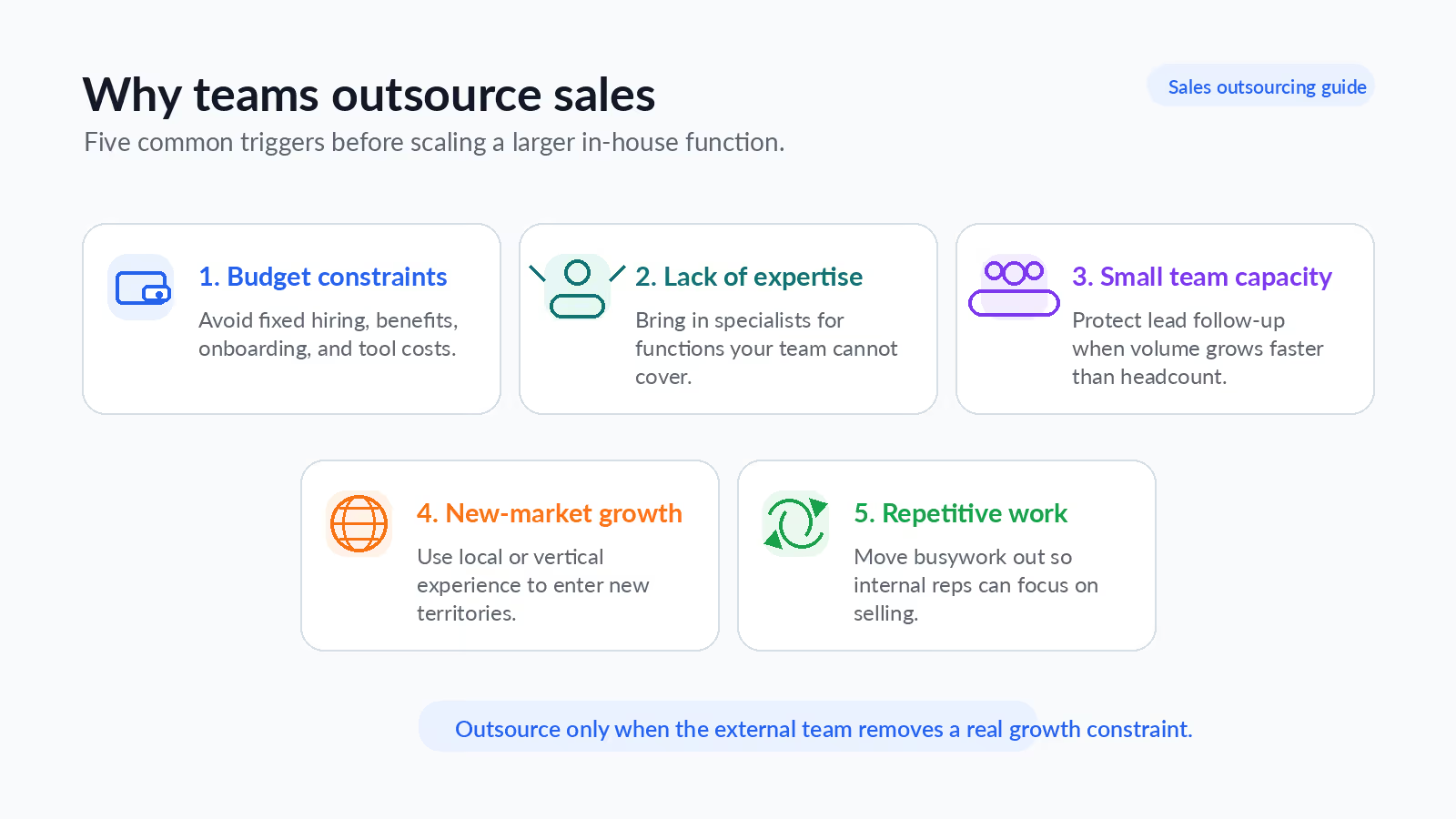
Most teams outsource because internal capacity hits a ceiling before revenue targets do. Budget runs out before headcount can scale, expertise gaps open in new verticals, and repetitive pipeline work crowds out higher-value selling. Each of these situations below is a signal that an external team removes a constraint your internal org can't clear on its own:
1. Budget constraints
Hiring a third-party sales team can cost less than the full expense of recruiting employees, including health insurance, office space, commissions, and onboarding costs.
2. Lack of expertise
Your internal team may lack the expertise and experience to handle certain sales functions. In this case, outsource those functions to someone who can get the job done.
3. When your team is small
When your team isn't big enough to handle the high volume of leads being generated, it's better to outsource so those leads don't go to waste.
4. Company growth
If you're looking to scale or enter a new territory, the hurdles can be different from what you've faced before. Your team may not be well-equipped to handle them. By outsourcing sales to an expert, you have better chances of earning new customers.
5. Repetitive tasks
Handing over repetitive busywork to outsourced teams frees up your internal team to focus on higher-value activities.
4 Types of Sales Outsourcing Models
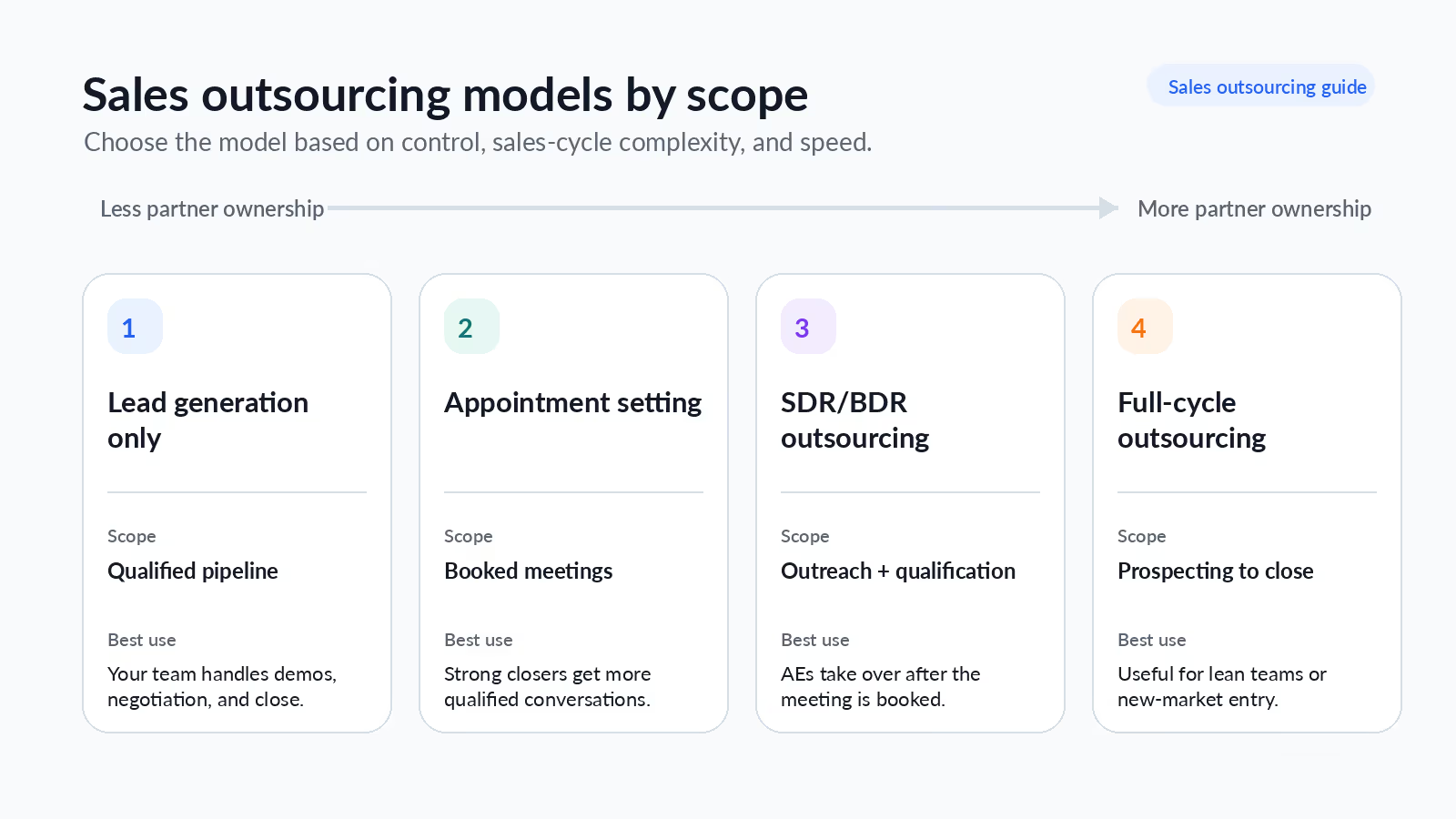
Sales outsourcing arrangements vary widely. The right model depends on your business goals, sales cycle complexity, and budget. Here are the most common types:
- Full-cycle outsourcing: The outsourced team manages the entire sales process, from prospecting and lead qualification through closing deals. This works well for startups or companies entering new markets without an established sales infrastructure.
- Lead generation only: The outsourced team focuses exclusively on filling your pipeline with qualified leads. Your internal team handles demos, negotiations, and closing. This is the most common entry point for companies new to outsourcing.
- SDR/BDR outsourcing: You outsource the Sales Development Representative or Business Development Representative function, covering cold outreach, appointment setting, and initial qualification. Your AEs take over once a meeting is booked.
- Appointment setting: A narrower version of SDR outsourcing focused specifically on booking qualified meetings for your sales team. Ideal when your reps are strong closers but need more at-bats.
Pricing models vary as well. For instance:
- Retainer-based: A fixed monthly fee for dedicated sales resources.
- Commission-based: The outsourced team earns a percentage of closed revenue.
- Pay-per-performance: You pay per qualified lead, booked meeting, or closed deal.
- Fixed project fee: A one-time fee for a defined scope of work.
Choosing the right model depends on how much control you want to retain, your budget, and how quickly you need results. Many companies start with lead generation or SDR outsourcing and expand from there.
Suggested Read: How to Determine the Right Sales Ramp-Up Time for Reps
When Does it Make Sense to Outsource Sales?
Have a complete view of your entire sales function and identify which parts you want to outsource and which ones you want to keep in-house. If you don't get buy-in from your other sales functions, do not go ahead with outsourcing. Without alignment across your sales functions, emails go unfollowed by calls and demos stall mid-cycle, damaging your reputation.
Sales Outsourcing Pricing Models and Cost Factors

At first, an outsourced sales team may look expensive. Compared to the full cost of setting up an internal team, outsourcing often comes out ahead.
When you set up an in-house team, the additional costs include:
- Training and onboarding costs
- Insurance benefits
- Commissions and bonuses
- Management personnel
- Office space and services
According to Glassdoor and industry benchmarks, the average base salary of sales reps including benefits is around $60,000, and for sales management personnel, it is $120,000. So your total cost of an in-house team would look like:
$60,000 × No. of Sales Reps + $120,000 + Commissions + Bonuses + Tools
When you outsource, it's possible to have a smaller team and adjust it as needed. In general, an outsourced salesperson charges between $1,000 to $5,000 per project. If you want to make them a permanent part of your sales team, costs vary depending on company size and scope.
Comparing the cost factor
Who Should Consider Sales Outsourcing?
Now, let’s come to the question of who should consider sales outsourcing and under which circumstances:
1.Startups with budget constraints
When you're a startup, there are high chances of running your business with a minimal budget. Investing in a quality sales team can be a difficult task. If you hire an outsourced sales team, they can help you reach your sales goals quickly and effectively, considering it'll be a team of experienced salespeople.
You can also enter new markets faster. Invest in an in-house sales team after you have the budget to hire the right people. Gartner's research found 70% of sellers feel overwhelmed by the technologies required of them, a burden that falls hardest on startups without dedicated RevOps or sales enablement functions to manage the stack.
2.Businesses with complex products
Prospects now spend a lot more time researching your product and comparing with competitors. According to Gartner, B2B buyers spend only 17% of their total purchase journey meeting with potential suppliers, making every touchpoint count.
Tracking the right metrics across a complex sales cycle matters as much as the headcount handling it. The most important KPIs for sales reps give you a baseline for what to measure regardless of whether your team is in-house or outsourced.
An outsourced sales team has the required tools and experience to handle leads and ensure they aren't lost.
3.Businesses looking to enter a new market
Entering a new market and establishing a presence there can cost significant time and effort for your in-house sales team. Involve someone who already is familiar with the market you're entering, so you can speed up your sales process.
Their expertise, connections, and established relationships can benefit your business. Avoid wasting resources on inefficient approaches.
The Sales Outsourcing Process: Step-by-Step Overview
Understanding the typical stages of sales outsourcing helps you set realistic expectations and plan for a smooth transition. Here's how the process works.
Step 1: Internal assessment. Audit your current sales function. Identify which activities are consuming the most time, where your team lacks expertise, and which functions would benefit most from external support.
Step 2: Define scope and goals. Decide exactly what you want to outsource, whether lead generation, appointment setting, full-cycle sales, or a specific territory. Set clear KPIs: number of qualified leads, meetings booked, pipeline generated, or revenue closed.
Step 3: Partner selection. Evaluate potential partners based on industry experience, technology stack, track record, and cultural fit. Request case studies and references from companies similar to yours.
Step 4: Onboarding and knowledge transfer. Share your value proposition, buyer personas, competitive positioning, sales playbooks, and CRM access with the outsourced team. This phase typically takes 2–4 weeks.
Step 5: Integration with internal teams. Connect the outsourced team with your marketing, product, and customer success functions. Establish communication cadences, shared dashboards, and escalation paths.
Step 6: Execution and ramp-up. The outsourced team begins executing against your defined scope. Expect a 60–90 day ramp period before results stabilize.
Step 7: Performance management and optimization. Review KPIs weekly and monthly. Adjust messaging, targeting, and resource allocation based on performance data. Treat the outsourced team as an extension of your own.
Managing commission payouts for a growing or outsourced sales team adds another layer of complexity. Everstage's incentive management platform connects CRM data directly to payout calculations, giving every rep, in-house or outsourced, real-time visibility into what they've earned.
How to Choose a Sales Outsourcing Partner
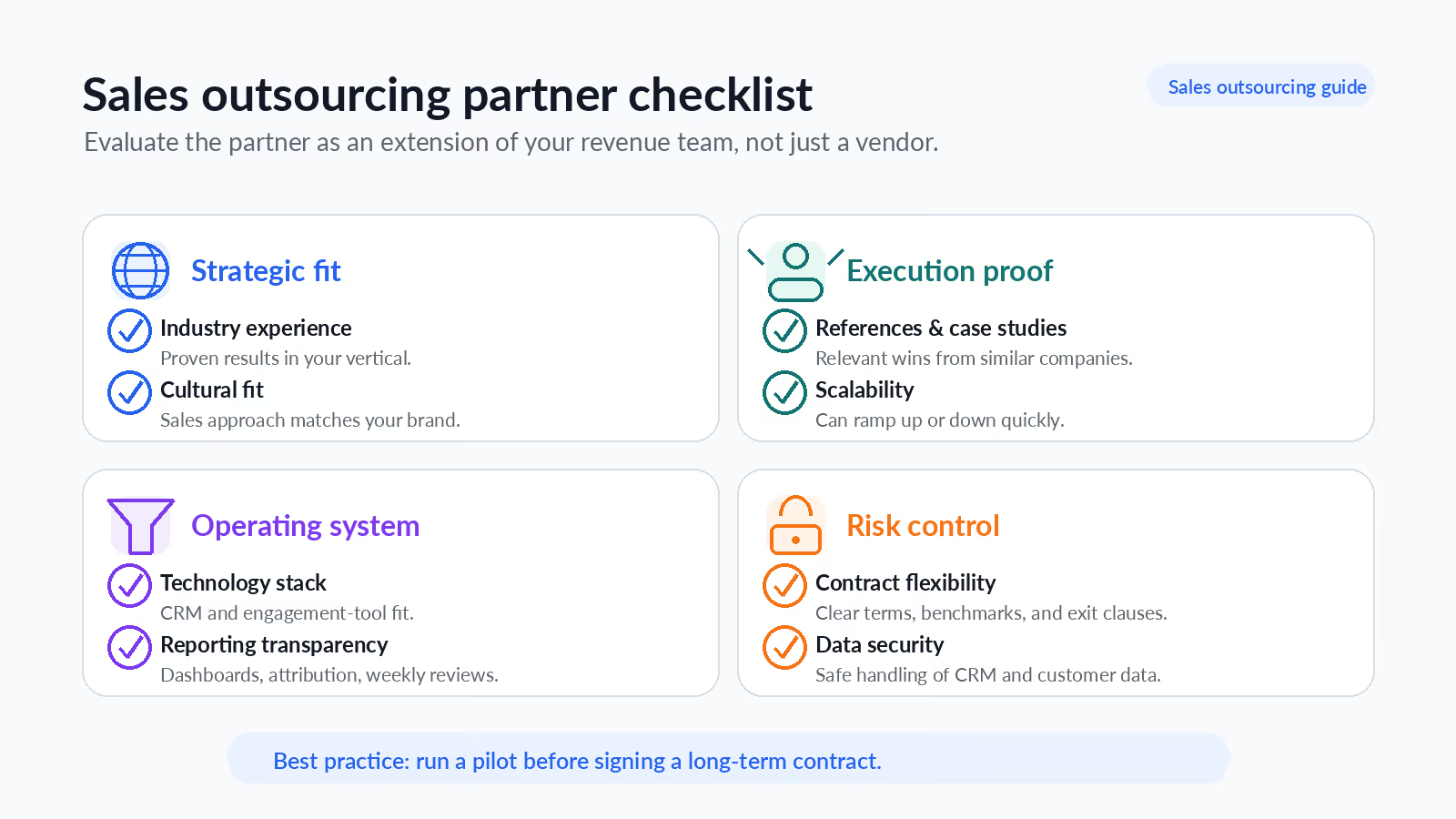
Selecting the right outsourcing partner is one of the most consequential decisions in this process. Use this checklist to evaluate potential providers:
- Industry experience: Do they have proven results in your vertical (SaaS, manufacturing, healthcare, financial services)?
- Technology stack: What CRM, sales engagement, and analytics tools do they use? Can they integrate with your existing systems?
- Reporting and transparency: Do they provide real-time dashboards, weekly reports, and clear attribution of results?
- Cultural fit: Does their communication style, work ethic, and approach to sales align with your brand values?
- References and case studies: Can they share specific results from companies similar to yours in size, industry, and sales motion?
- Scalability: Can they ramp up or down quickly as your needs change?
- Contract flexibility: What are the contract terms? Is there a minimum commitment period? What does the exit clause look like?
- Data security: How do they handle your customer data, CRM access, and confidential business information?
Don't just evaluate capabilities on paper. Run a pilot engagement or request a proof of concept before committing to a long-term contract.
When Not to Outsource Sales Functions
Sometimes, companies have well-packaged products and glossy sales materials, all without a proper product/market fit. In this case, no matter what a business tries, you cannot sell the product because customers are focused on solving their other major problems. The business is left with no choice but to take an entirely different approach.
Other scenarios where outsourcing is a poor fit include the following.
- No clear ICP or buyer persona: If you haven't defined who you're selling to, an outsourced team will burn through budget without results.
- Undefined sales process: If your internal team hasn't documented a repeatable sales motion, outsourcing will amplify the chaos rather than solve it.
- Highly relationship-driven enterprise sales: When deals depend on deep, long-term executive relationships and domain expertise not easily transferred, keeping it in-house is usually the better call.
Whichever model you choose, ensure your partner has complete clarity on what they sell and what the reporting and KPI structure looks like.
The Do's and Don'ts of Sales Outsourcing
What are some of the best practices of sales outsourcing? Let’s take a look:
1. Place More Emphasis on the Capabilities of the Sales Team
You consider a lot of factors when hiring an outsourced sales team, and cost is just one of them. If you place too much emphasis on cost, you may miss hiring the experienced folks who can actually get the job done. Gartner’s December 2024 research found sales organizations simplifying seller roles are 4.5x more likely to be top performers, a strong case for prioritizing capability over cost in partner selection.
Here are the factors to consider.
- Define what you expect from your outsourced partner in terms of results
- Ensure your partner has the capability to help your company grow
- Get to know their areas of expertise (consumer sales, B2B sales, etc.)
- The depth of knowledge they have in your vertical of business
- Their proven track record with enterprise, mid-market, and SMB companies
- When you want to enter a new market, what would be the contribution from the outsourced team?
- What tools does the team use to accelerate sales?
- The kind of return you can expect from the investment
When you reach out to a third party, have absolute clarity on what your needs are as a business and why you want the help of an outsourced sales team.
2. Play an Active Role in the Partnership
You cannot expect the sales process to go smoothly once you've hired an outsourced team and completed onboarding. You have to be completely involved in the partnership throughout. Actively communicate with your partner and invest the necessary time to make it worthwhile.
To maximize the engagement with your partner.
- Have regular meetings with your outsourced sales team. Stay connected through weekly touch-base meetings to discuss performance gaps and key initiatives.
- Ensure they're involved in your internal meetings where you discuss forecasting, strategy, and pipeline reviews.
- Set clear goals for your outsourced sales team. Both parties should be aligned and know what success looks like.
3. Ensure Sales and Marketing Are Aligned
When you hire an outsourced team, it can get difficult to keep them aligned with the overall marketing process. If your teams aren't aligned, you risk missing follow-up calls and technical workshops, hurting your reputation and slowing growth. The two teams need to work in sync to hit their respective metrics.
To ensure sales and marketing are aligned.
- Your marketing team should regularly interact with the sales team. Insights from the sales team can be extremely valuable to your business.
- Develop buyer personas so both teams have their eyes set on the same audience. Ensure both teams have the right understanding of your targets.
- Have your sales team share data with the marketing team, which can further help marketing improve their lead generation and qualification process.
4. Don't Get Lost in the Selection Process
There's no doubt you'd want to partner with the best in the business. Dragging the selection process only costs time and money, and delays your path to revenue goals.
Consider these questions while selecting an outsourced sales team.
- Do you and the partner align on KPIs? What evaluation tools and metrics do they use to measure results?
- Do they offer innovative solutions to reach your sales goals, or just answer what you asked for?
- What will be the ratio of sales reps to managers?
5. Have Patience with Results
When you hire an internal salesperson, you give them time to learn before expecting results. Similarly, the outsourced sales team needs time to learn as well. In general, it takes around 90 days for them to understand your value proposition, business strategy, and begin delivering results.
For a smooth onboarding of your sales team.
- Create an open communication channel so your outsourced team can contact you whenever they need to.
- Give your reps the necessary training and provide materials on your products and services.
- Have a variable compensation model in place that rewards reps based on their performance. Performance-based incentives give reps a clear reason to deliver.
6. Don't Choose a Basic Call Center
You'll come across call centers impersonating outsourced sales teams, but the two aren't the same. Call centers generally provide customer care and support, while sales teams drive revenue.
Here's what you should expect from your outsourced sales team.
- A quota-carrying sales team
- Coverage of new geographies and areas you didn't have access to
- Improvements to your current sales process
- Forecasting and analysis, not just reporting
- Processes built for predictability
Scale Revenue Faster With the Right Sales Outsourcing Partner
Outsourcing sales can give you a competitive edge in expanding your revenue and entering new markets effectively. You'd have better access to the right talent, technology, and tools, while an in-house build carries fixed costs, hiring timelines, and management overhead. Follow the do's and don'ts above to make outsourcing work, and treat the partnership as an extension of your own team from day one.
Once your outsourced team is running, managing their commissions and incentives becomes the next operational challenge. For RevOps teams tracking payouts across distributed reps, Everstage's incentive management platform automates commission calculations and gives every rep real-time earnings visibility. Book a demo with Everstage to see how commission management works without the manual overhead.
Frequently Asked Questions
1.What signs indicate it's time to outsource sales?
If your internal team is overwhelmed by lead volume, your sales cycle is lengthening, you're entering a new market without local expertise, or your cost-per-hire is exceeding your budget, these are strong signals outsourcing could help. Another clear indicator is when your reps are spending more time on administrative tasks than actual selling. If any of these apply, it's worth evaluating an outsourced partner.
2.How do I measure the success of a sales outsourcing program?
Track KPIs aligned with your original goals: qualified leads generated, meetings booked, pipeline created, conversion rates, and revenue closed. Also measure ramp time (how quickly the outsourced team becomes productive), cost per acquisition compared to your in-house team, and the quality of leads entering your pipeline. Weekly and monthly reviews with your outsourced partner keep performance on track.
3.Will the outsourced sales team use my company's CRM and tools?
Most reputable outsourced sales teams can work within your existing CRM (Salesforce, HubSpot, etc.) and sales engagement tools. This ensures data stays centralized, reporting is consistent, and your internal team has full visibility into outsourced activities. Clarify tool access and integration requirements during the partner selection process.
4.What is the typical contract length for sales outsourcing services?
Contract lengths vary by provider and scope. Most outsourced sales engagements run on 6- to 12-month contracts, with some providers offering month-to-month arrangements after an initial commitment period. Shorter pilot engagements of 3 months are also common for companies testing outsourcing for the first time. Always negotiate clear exit clauses and performance benchmarks.
5.What is the difference between a sales outsourcing company and a call center?
A call center primarily handles inbound customer support and basic outbound calling scripts. A sales outsourcing company provides quota-carrying reps who own pipeline generation, conduct discovery calls, run demos, and close deals. They bring strategic sales expertise, forecasting capabilities, and process optimization, not just call volume. Always verify your partner has dedicated sales professionals, not repurposed support agents.