

.avif)
TL;DR
- Sales territory management divides customer accounts by geography, industry, size, or needs and assigns them to the right reps to maximize coverage and revenue.
- Balanced territories boost sales productivity by 10%–20%, reduce rep burnout, and eliminate overlap between teams.
- A structured territory plan includes defining objectives, analyzing market data, segmenting accounts, and assigning reps with clear goals and ongoing monitoring.
- AI-powered tools like Everstage automate territory assignments using historical performance and rep capacity for faster, fairer decisions.
- Regular territory reviews, at least annually, keep your plan aligned with shifting market conditions and business goals.

What is Sales Territory Management?

Sales territory management groups customer accounts by geography, industry, company size, or buyer type, then assigns each group to a specific rep or team. It helps sales leaders cover the market without overloading reps, gives customers a consistent point of contact, and creates territory-level performance data for quota planning and forecasting.
The primary goal of territory management is to promote your sales team's efficiency by customizing strategies for each segment. SaaS sales leaders and RevOps teams at high-growth organizations benefit from this because every rep focuses on where they can win most.
A strong territory plan balances workloads and sets fair targets. It gives customers one consistent point of contact. Clean data from well-defined territories helps track revenue, win rates, and pipeline health.
According to Salesforce's State of Sales report, only 28% of sales reps expect to hit their annual quota, which is a six-year low. Poor territory design is one of the leading structural causes behind missed targets.
Types of Sales Territories for SaaS Companies
Geographic boundaries and industry verticals represent two of the most common ways to carve sales territories. Your market, products, and buyer profiles determine which model fits best. Let's take a look:
Overview of six common sales territory types with definitions, best use cases, and examples.
For a deeper breakdown of all seven territory models - including hybrid structures and how each plays out across SaaS, healthcare, manufacturing, and other industries -see our full guide to types of sales territory
A geographical territory model divides the market by physical location, such as countries, states, or regions. Each sales representative or team manages the leads and accounts within a defined geographic boundary.
Businesses selling physical goods or high-value digital products benefit most from location-based assignments. A logistics management software company, for example, might assign one team to the U.S. East Coast and another to Asia-Pacific, with separate teams covering Latin America and the West Coast.
2. Industry-Based Territories
In the industry-based model, sales ownership is organized by verticals such as healthcare and fintech. Reps develop deep knowledge of industry-specific problems, regulatory regimes, and purchasing cycles.
A data analytics and compliance SaaS vendor, for instance, might assign one team to healthcare organizations and another to financial services. Because problems and requirements vary by vertical, specialization lets reps speak the language of their buyers and position credibly against competitors.
3. Customer Type Territories
Customer-type territories divide accounts based on size, purchase behavior, or lifecycle stage. Sales teams can tailor strategies to distinct market segments, including SMB and enterprise.
To give an example, a SaaS CRM vendor might assign one sales team to focus exclusively on small businesses. Another team may handle mid-market firms (50–500 employees) needing more integrations. A third team might serve enterprise customers with complex contracts and multiple stakeholders.
In essence, each team's sales strategy, pricing, and onboarding process will differ accordingly.
4. Product Type Territories
Product-type territories divide sales responsibilities according to individual product lines or services. Companies with a broad and varied portfolio benefit because teams can specialize in one area instead of spreading their focus too thin.
Sales teams use knowledge sessions and product demos to build expertise. Deep product knowledge allows them to communicate value effectively and handle technical questions with confidence.
Suppose a SaaS vendor provides both a basic project management tool and an advanced AI-driven forecasting analytics module. The sales organization might have one team dedicated to the project management product and another for the AI forecasting add-on.
Reps focused on the advanced product would become experts in data science and predictive modeling. They could sell more effectively to data-driven clients.
5. Channel Sales Territories
Channel territory models assign reps or teams to manage indirect sales through resellers and system integrators. Some SaaS businesses sell both directly and via partners, including OEM partners and affiliate networks.
A cloud infrastructure SaaS might sell its core service through its own sales team. It could also rely on technology partners and systems integrators in specific regions or industries.
6. Named Accounts Territories
Named account territories assign high-potential or high-value customers to particular reps who are accountable for deep growth and retention. Each rep owns the full relationship with their assigned account.
A large-scale IoT platform provider with a small number of strategic customers might assign one rep exclusively to "Acme Telecom" and another to "Global Manufacturing Corp," ensuring the depth of engagement those accounts need.
How to Create an Effective Sales Territory Plan
Creating an effective sales territory plan starts with clear objectives and ends with ongoing monitoring. A step-by-step approach is the difference between a good and a bad territory.
Below are the essential steps to guide you through the process:
1. Define Your Objectives
Clear business objectives, such as increasing market share or improving customer retention, serve as the foundation for your entire territory strategy. Without a defined direction, sales efforts lack focus and fail to yield optimal results.
Increasing market share focuses on expanding your company's presence by acquiring new customers. Expanding into new regions involves targeting new geographical areas, especially if your company is looking to grow internationally.
2. Analyze Market Data
Customer demographics and sales history are two critical data inputs that help identify the most profitable opportunities within each potential territory. The more data you have, the better decisions you can make regarding how to segment and allocate territories.
Customer demographics help you understand the key characteristics of your target audience in each region. Sales history reveals which accounts generate the highest lifetime value.
Leveraging these data points lets you prioritize areas with the highest growth potential and allocate sales resources efficiently.
3. Perform Market Segmentation
Dividing your target market into smaller groups based on geography and customer size ensures a tailored approach to sales efforts. Segmentation directs reps toward the right prospects and opportunities.
Well-defined segments prevent reps from wasting time on customers unlikely to convert. Instead, they can focus on high-potential leads and close deals more effectively.
4. Assign Sales Teams
Matching the right sales rep to the right market based on expertise and territory characteristics is the goal of this step. Several factors should guide your assignment decisions.
Experience and industry knowledge play a key role. Sales reps familiar with a particular vertical will be more effective in building relationships and closing deals.
Assigning reps based on their strengths ensures each territory is covered by someone best equipped to succeed. Reps who understand the geography or culture of a specific region grasp local nuances and customer needs more quickly.
To understand how compensation trends are shaping territory assignments and quota planning across the industry, this report offers valuable benchmarks.
5. Set Goals and Metrics
Revenue targets and lead generation goals are two essential KPIs every territory should include. These goals guide sales efforts, provide motivation, and serve as benchmarks for measuring success.
If your objective is to build a strong pipeline, you might set goals for the number of qualified leads generated. Territories that prioritize maintaining existing accounts might use customer retention as the primary metric.
Regularly monitoring and adjusting these goals ensures that sales teams remain focused and on track.
6. Monitor Results
Regular assessment of sales activities and results allows you to adjust strategies as necessary. Performance monitoring provides valuable feedback that can guide future territory planning.
Open communication between sales reps and managers is another critical aspect. Reps can share insights into field challenges and what is working well. Managers can then adjust tactics and reallocate resources where needed.
7. Review and Realign Territories
Territory planning requires ongoing revision, at a minimum annually or whenever significant changes occur. Shifts in market conditions, new product launches, and team turnover all warrant reassessment.
Common triggers for realignment include:
- Consistent underperformance or overperformance in specific territories
- Market expansion or contraction in key regions
- Changes in your product portfolio or pricing model
- New competitive threats or emerging customer segments
During each review, compare actual results against territory goals and assess workload balance. Gather frontline feedback from your reps. Use the data to redraw boundaries, reassign accounts, or adjust quotas, so your territory plan stays aligned with current business realities.
Most territory plans fail not because of bad intent, but because they're built on spreadsheets that can't keep up with your team.
Benefits of Sales Territory Management
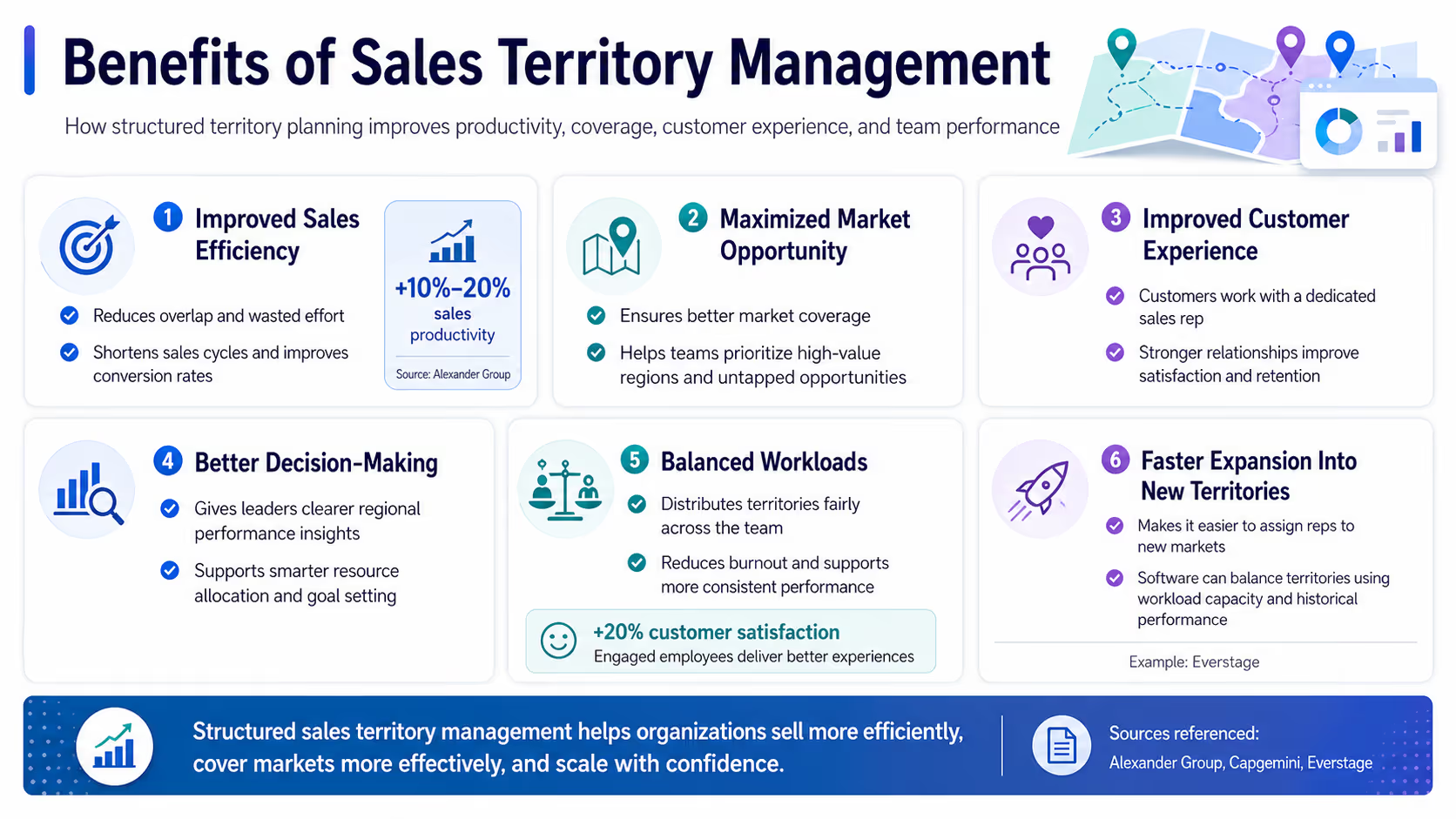
Reduced overlap and balanced workloads rank among the top advantages of structured territory management. Here are the key benefits a well-implemented plan delivers across your sales organization:
1. Improved Sales Efficiency
A clear territory streamlines sales efforts by reducing overlap and eliminating wasted resources. With each sales rep assigned a specific region, efforts are focused on the right prospects, which minimizes the risk of missed or duplicated opportunities.
Research by Alexander Group shows that sales organizations that design and optimize sales territories see a 10%-20% increase in sales productivity.
Structured assignments improve conversion rates and shorten sales cycles. As per the data, sales organizations which simplify seller roles are 4.5x more likely to be among the top-performing organizations than those that do not. Simply put, clear territory assignments are one of the fastest ways to reduce role complexity.
2. Maximized Market Opportunity
Effective territory management ensures complete market coverage. Without a structured approach, certain regions may be oversaturated while others go underutilized, leading to missed revenue potential.
Sales leaders can prioritize high-value areas and capitalize on untapped opportunities. Structured coverage lays the foundation for scalable growth.
3. Improved Customer Experience
A well-organized territory system allows customers to build long-term relationships with a dedicated sales rep instead of interacting with multiple representatives. Continuity fosters trust and strengthens customer loyalty, as reps become more attuned to individual client needs.
Stronger relationships drive higher satisfaction and better retention. For enterprise accounts, especially, that consistency is a meaningful competitive advantage.
4. Better Decision-Making
Territory management equips leadership with clearer data, making it easier to track regional performance. With insights into each territory's dynamics, leaders can make informed decisions about resource allocation and goal setting.
Data-backed planning minimizes guesswork and ensures the team's efforts align with company objectives.
5. Assign Balanced Workloads
Proper territory distribution ensures that workloads are fairly allocated across the team. Without it, some reps may be overwhelmed while others sit idle.
Balanced workloads help sales teams avoid burnout and achieve more consistent performance. Fairness boosts morale and keeps the team engaged. Studies show that highly engaged employees deliver measurably better customer experiences, with research indicating around a 10% higher customer loyalty and satisfaction for organizations with high engagement levels, plus significantly higher customer retention and profitability.
If keeping your reps motivated through balanced territories and fair incentives is a priority, this guide explores the psychology behind what drives top sales performance.
6. Assign Reps to New Sales Territories
Expanding into new markets requires strategic sales coverage and dedicated attention to new accounts. Territory management makes it easier to assign reps to new regions. Each rep takes ownership of growing the business in their assigned area.
Territory management software like Everstage balances and assigns territories to sales reps based on their workload capacity and historical performance.
Territory Sales Management: Best Practices for Long-Term Success
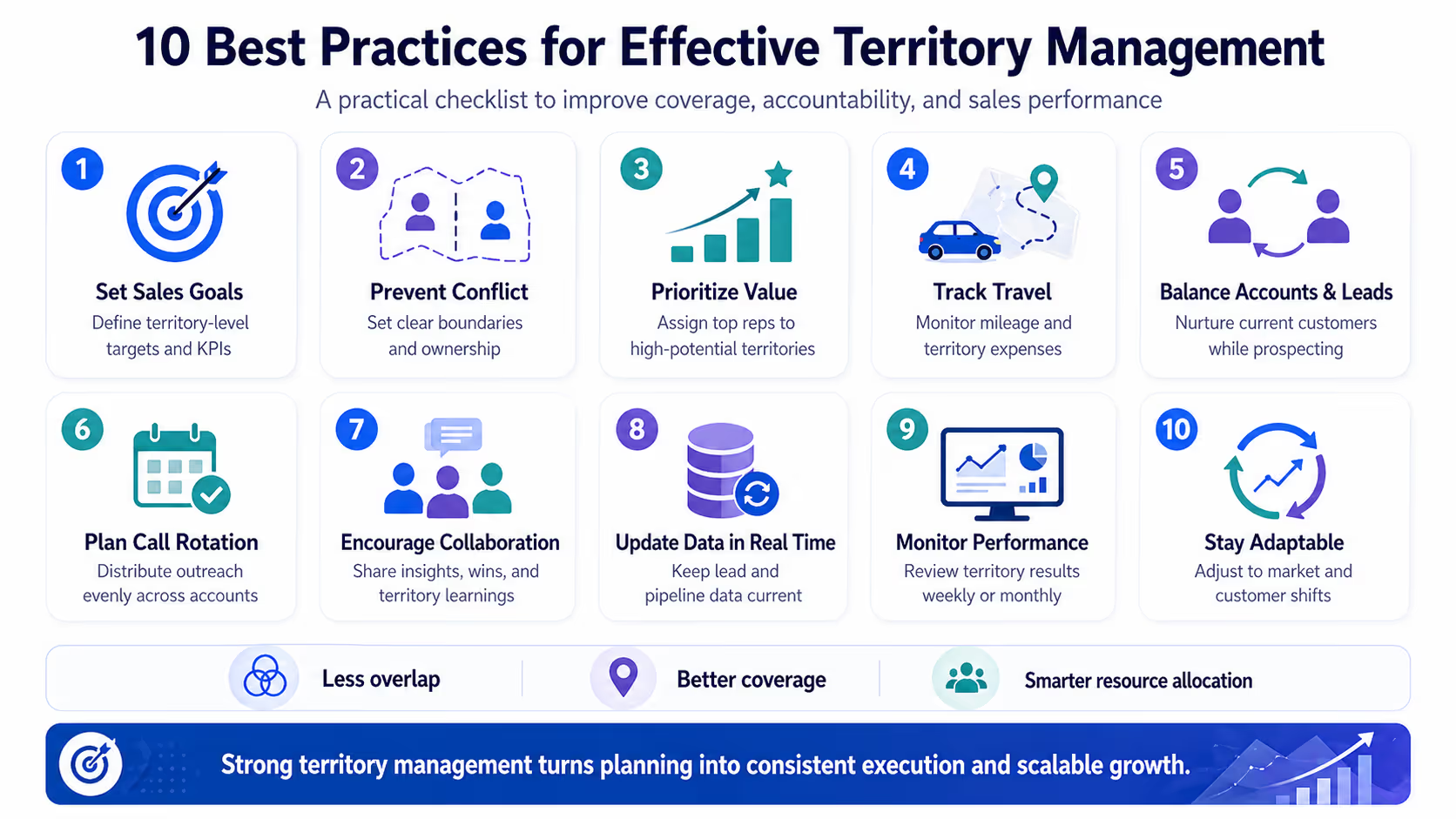
Setting territory-level goals and preventing overlap are two foundational practices. Implement the following to get the most out of your territory management:
1. Set Territory-Level Sales Goals
Ensure that each territory has specific, measurable sales goals. Clear goals provide a roadmap and boost accountability. Each rep should understand their targets and work toward achieving them.
2. Prevent Conflict
Overlapping territories lead to confusion and conflict between sales reps. Clearly define the boundaries of each territory and communicate them effectively.
Clear assignments ensure that each rep has ownership over their accounts. Reps understand exactly what they are responsible for and where their efforts should be directed. Collaboration improves as a result.
3. Prioritize Valuable Territories
High-potential areas deserve your best sales reps. Prioritize these regions and assign top performers strategically. Companies maximize returns when experienced salespeople are placed where they can make the biggest impact.
4. Track Mileage and Expenses
Keep track of sales reps' mileage and travel expenses related to territory coverage. Tracking these metrics provides valuable insight into how efficiently reps spend their time. Optimized routes reduce unnecessary costs.
5. Meet the Needs of Current Accounts
Balancing existing customer nurturing with new lead prospecting sustains long-term growth. Bringing in new clients is essential, and maintaining strong relationships with existing customers ensures repeat business and loyalty.
6. Create a Call Rotation Plan
A well-structured call rotation schedule ensures reps evenly distribute their efforts across accounts. It prevents fatigue from repetitively focusing on a small set of clients.
Rotation also maintains consistency in customer contact. Customers receive regular attention without overwhelming individual salespeople.
7. Focus on Team Collaboration
Encouraging collaboration between reps in different territories benefits the entire team. When reps exchange information about successful techniques or unique challenges, they learn from each other's experiences.
A collaborative culture leads to better overall performance. Reps support one another and collectively optimize their regional strategies.
8. Update Data in Real-Time
Ensure that territory data is regularly updated to reflect the latest information. Quick adjustments and informed decision-making depend on current data.
Real-time data on leads and pipeline opportunities is essential for keeping strategies accurate. Stale data leads to misallocated resources.
9. Monitor Sales Territory Performance
Tracking performance across territories on a weekly or monthly cadence highlights underperforming areas and their root causes. Managers can then provide targeted coaching or reallocate resources to maximize effectiveness.
10. Stay Up-to-Date
As market conditions and customer needs shift, your sales territories may need adjustment. Industry shifts and competitive changes may all impact your territory management approach. Be ready to adapt your strategy accordingly.
The Problem with Traditional Sales Territory Management
Spreadsheet-based assignments and manual operational tasks define traditional territory management, and both lack the data needed to support sound decisions. Guesswork-driven territories frequently miss the right customer accounts.
Teams may assign sales territories improperly. One team gets assigned to a dead territory while another is overloaded with work. These imbalances contribute to team dissatisfaction and lost revenue.
Among B2B sellers, 70% feel overwhelmed by the number of technologies required to do their work and 72% by the number of skills required for their roles. Research indicates that overwhelmed sellers are around 40–45% less likely to hit quota, and that poorly designed territory management only amplifies this load and further depresses quota attainment
According to Forrester, "When sales territories are out of balance, organizations spend too much money and time on low-potential customers, while spending too little on high-potential customers. As a result, sales organizations can leave millions of dollars in lost productivity unrealized."
For a deeper look at how compensation structures and incentive benchmarks are evolving alongside these challenges, this resource provides useful context.
Modern Approaches to Sales Territory Management
AI-powered automation and real-time analytics represent two advances reshaping how teams assign and manage territories. The key lies in crafting a tailored approach that aligns with your company's goals, whether you segment by geography, industry, or customer type.
McKinsey research finds that implementing generative AI in sales and marketing can unlock an incremental 10–15% uplift in sales productivity, while sales reps who effectively partner with AI tools are 3.7x more likely to meet quota than those who do not.
Everstage offers an AI-driven approach to sales territory management by assigning balanced territories using historical performance data and the capacity of each sales rep. Its AI capabilities automate territory management with proactive recommendations, eliminating the guesswork that plagues manual methods.
Why Everstage for Territory Management
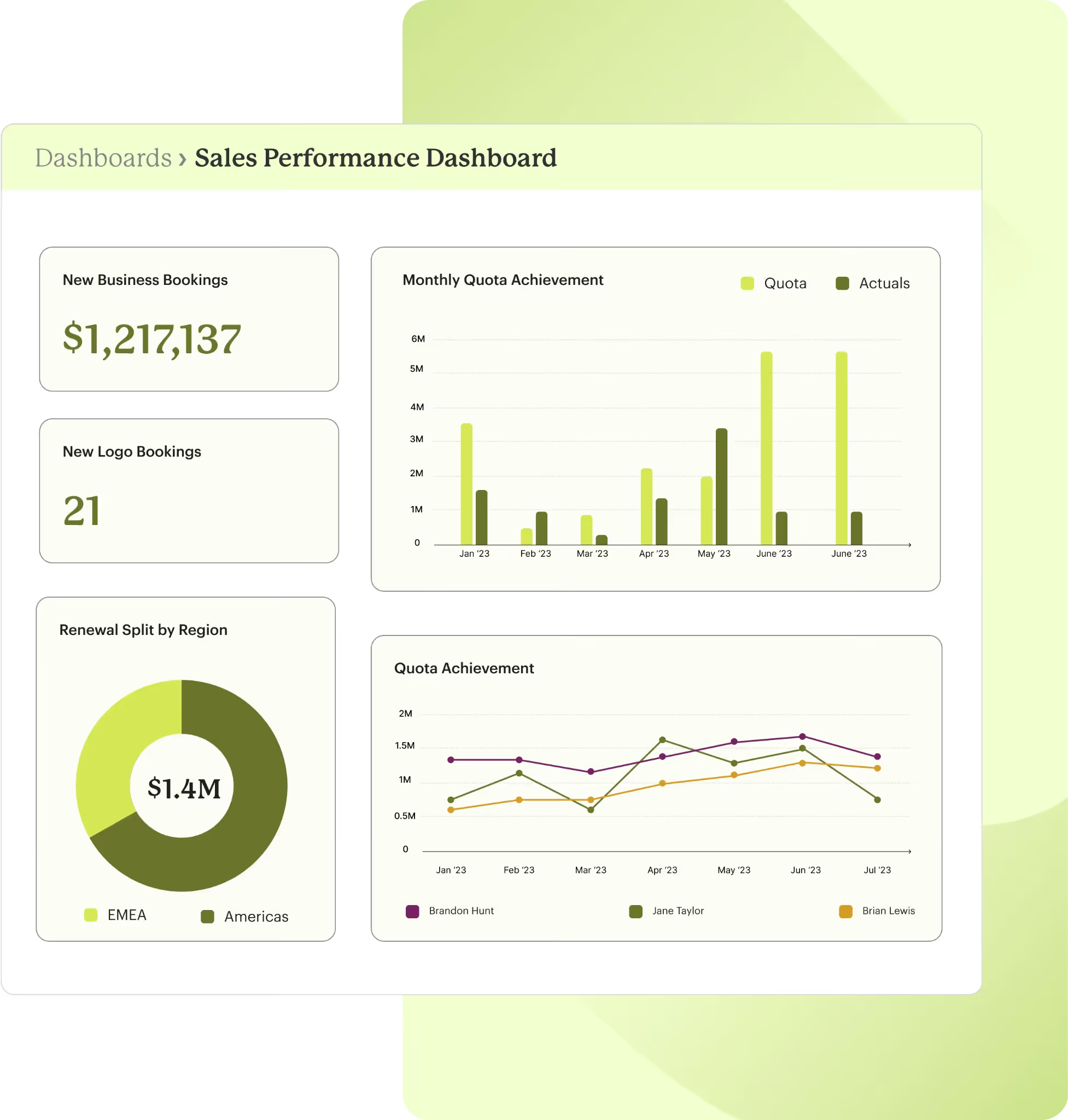
- AI-driven territory balancing with proactive recommendations that adapt to your team's performance
- Real-time analytics and reporting for fast, data-backed decision-making
- Seamless CRM integration with your existing sales stack
- Proven ROI: Organizations using optimized territory management see a 10%–20% increase in sales productivity
Everstage helps RevOps and sales leaders balance territories, set fair quotas, and tie comp plans to performance in one platform.
Here's a practical resource that walks you through how motivation and gamification can amplify the performance gains you get from well-designed territories.
Book a demo with Everstage to see how AI-powered territory management works for your team.
Questions worth asking
The things most people want to know before they commit.
How often should sales territories be reviewed?
Sales territories should be reviewed at least annually or whenever significant changes occur in market conditions or sales performance. Regular reviews ensure territories align with business goals and adapt to shifting buyer needs.
What happens if sales territories are not managed properly?
Poor territory management leads to overlapping responsibilities and imbalanced workloads. It causes frustration among sales reps and reduces overall productivity, resulting in missed revenue opportunities.
Can sales territories change over time?
Yes, sales territories should shift as markets change and customer needs adjust. Regular reviews and adjustments are necessary to ensure territories remain aligned with business goals and current sales performance.
What degree do you need to be a territory sales manager?
Territory sales manager positions typically require a bachelor's degree in business, marketing, or communications. An MBA can help with career advancement, particularly for enterprise-level roles. Relevant sales certifications and hands-on experience are equally valued by employers.