

.avif)
TL;DR
Effective sales territory management helps reps focus on the right accounts, boost efficiency, and drive sustainable growth through data, structure, and collaboration.
- Start with data: analyze customers, segment markets, and rank accounts by potential to target high-value opportunities.
- Align reps’ strengths and workloads with the right territories to improve coverage and conversion rates.
- Use tools and KPIs to map, track, and regularly rebalance territories, ensuring fairness and efficiency.
- Involve reps, managers, and operations in collaborative planning to build buy-in, reduce overlap, and sustain growth.
If you’ve ever been handed a sales territory and thought, “Where do I even start?”, you’re not alone. Managing a sales territory can feel overwhelming as there are too many accounts to cover, not enough hours in the day, and the constant pressure of hitting quota. It’s easy to get stuck in the weeds, chasing low-value leads while missing out on high-potential opportunities.
But here’s the good news: when you know how to manage a sales territory the right way, everything changes. You’ll start to see clearer paths to revenue, avoid territory overlap, reduce wasted travel time, and most importantly, spend your energy on the accounts that truly matter, strengthening each customer relationship along the way.
In this guide, we’ll walk you step by step through proven sales territory management strategies. By the end, you’ll not only know how to manage your sales territory effectively but also how to grow it sustainably, without burning out.
Why Effective Sales Territory Management Matters
Think about it: no matter how talented you are as a sales rep, there are only so many hours in the week. If your territory isn’t well structured, you’ll end up chasing the wrong accounts, doubling up with teammates, or spending half your time stuck in traffic instead of closing deals. That’s where effective sales territory management comes; it’s what separates average performers from top sellers.
When you manage your territory well, you:
- Balance your workload so you’re not stretched too thin or underutilized.
- Improve coverage by making sure every account and region gets the right level of attention.
- Reduce travel costs and wasted time because you’re working smarter, not harder.
- Unlock higher revenue potential and profitability since your efforts are focused on where the biggest opportunities are.
For example, imagine stepping into a new territory where accounts are scattered across three cities. At first glance, it feels impossible to cover everything. But once you reorganize your accounts geographically, clustering them by proximity, you suddenly double your coverage without working longer hours. That’s the power of smart territory planning.
Key Frameworks & Planning Steps for Managing Sales Territories
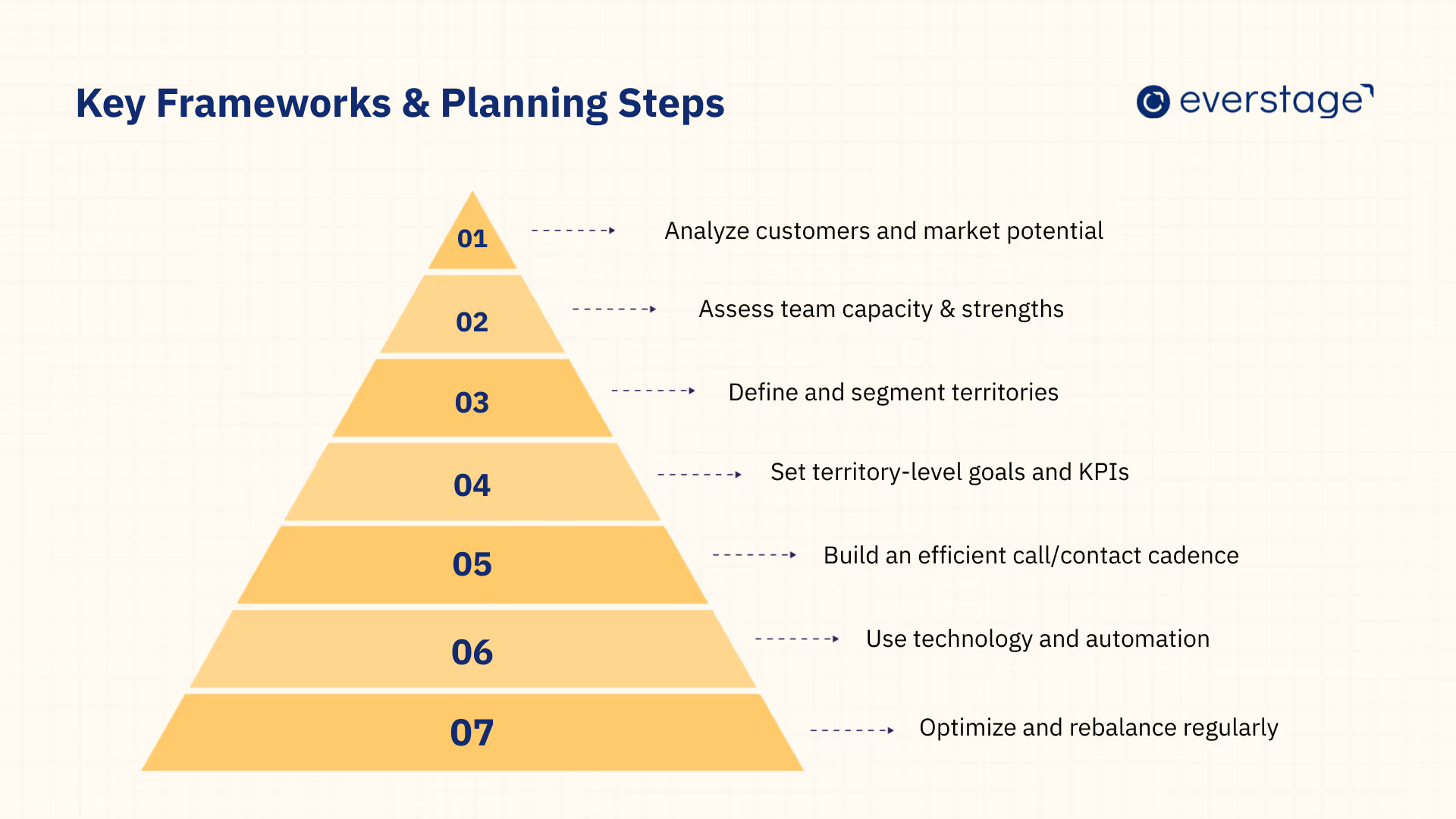
Managing a sales territory is all about following a clear, repeatable process. Here’s a step-by-step framework you can use to bring order and strategy to your territory planning.
Step 1: Analyze Customers and Market Potential
Before you start dialing or booking meetings, you need to understand your playing field. Look at your customers and prospects by geography, industry, revenue, demographics, customer type, and the quality of existing customer relationships. This helps you see where the real potential lies.
For instance, SaaS companies often focus on high-growth verticals like fintech or healthtech because these markets are quicker to adopt, expand, and open cross-sell opportunities.
Actionable Steps:
- Create a simple segmentation grid (e.g., geography × industry) to group accounts.
- Rank customer segments based on potential growth in the next 6–12 months.
- Build a shortlist of top segments to prioritize in your plan.
Step 2: Assess Team Capacity & Strengths
Even the best territory map won’t work if the wrong reps are covering the wrong accounts. Every salesperson brings unique strengths, whether it’s deep product knowledge, industry expertise, or local connections. Aligning reps to accounts based on these factors ensures better coverage and stronger conversion rates.
Actionable Steps:
- List out your reps’ strengths, travel ranges, and expertise areas.
- Match high-value accounts with reps who have the right background.
- Reallocate workloads if you spot bandwidth gaps or mismatches.
Step 3: Define and Segment Territories
Once you understand your market and team, it’s time to carve out the territories themselves. Territories can be based on geographic location, account type, company size, or product line, whatever makes the most sense for your sales motion. Many teams plot accounts on a map to make coverage zones clear and avoid overlaps.
Actionable Steps:
- Choose your segmentation criteria (geography, account type, or product).
- Plot accounts visually using CRM mapping tools such as Lucidchart or Map My Customers, or even a simple whiteboard.
- Adjust until coverage feels balanced, fair, and achievable.
Step 4: Set Territory-Level Goals and KPIs
A territory is only effective if it’s tied to measurable goals. These goals create accountability and give reps a clear sense of what success looks like. You might focus on revenue targets, pipeline growth, or coverage frequency, supported by KPIs like quota attainment or account coverage ratio.
Actionable Steps:
- Classify accounts into A/B/C tiers based on potential.
- Set specific sales activities and their targets for each tier (e.g., call frequency).
- Pick 2–3 KPIs to track progress and adjust sales strategy.
Step 5: Build an Efficient Call/Contact Cadence
Planning means little without consistent execution. That’s why you need a contact cadence, structured touchpoints that balance visibility with respect for the prospect’s time. A clear cadence ensures no accounts are neglected, while top-tier ones get the attention they deserve.
Actionable Steps:
- Define touch frequency by account tier (e.g., weekly for A, monthly for C).
- Map these touches across different channels (calls, emails, LinkedIn).
- Schedule cadence rotations in your CRM or calendar for accountability.
Step 6: Integrate Technology Into Sales Territory Planning
Your CRM isn’t just a storage tool; it’s a strategic asset. By layering internal data with external market insights, you can rebalance territories, identify white spaces, and automate routine tasks. This ensures sales representatives spend more time selling and less time managing admin.
Actionable Steps:
- Audit your CRM tools to see what’s underused (mapping, forecasting, AI insights).
- Integrate external data sources to enrich account profiles.
- Automate reporting and follow-ups to reduce manual sales efforts.
Step 7: Optimize and Rebalance Regularly
Territory planning isn’t a one-time exercise. Markets shift, potential customers churn, and sales representatives move around. Rebalancing regularly keeps morale high and ensures accounts don’t fall through the cracks. Teams that revisit territories quarterly often see improved coverage and reduced attrition.
Actionable Steps:
- Schedule quarterly or biannual reviews on the calendar.
- Collect rep feedback on workload fairness and account quality.
- Reassign accounts when imbalances or market changes arise.
The Role of Stakeholder Involvement in Territory Planning
Effective sales territory management isn’t something you can pull off in isolation. To make territories fair, efficient, and truly aligned with business goals, you need multiple stakeholders involved in the planning process.
Cross-functional collaboration: When sales and marketing team members work together, new leads are distributed more effectively, and targeting improves. Marketing insights about buyer personas and campaigns can guide territory design so sales reps focus on the right accounts from the start.
Rep involvement for on-the-ground insights: No one knows the market better than the sales reps who are talking to customers daily. Their input helps ensure territories are not just theoretically sound but also practical, accounting for local dynamics, travel feasibility, and customer nuances.
Operations and leadership oversight: Sales operations and sales leaders bring the big-picture view. They make sure territories balance capacity, minimize unnecessary travel, and align with broader revenue objectives. Their oversight also reduces conflict by ensuring fair distribution of opportunities.
Take the case of Postman, which scaled its sales team rapidly across multiple regions. Relying on spreadsheets creates bottlenecks, disputes, and visibility gaps. By adopting Everstage, Postman automated commission processes and gave both reps and managers real-time visibility into territory performance.
The impact was significant: they achieved 95% time savings in commission processing, scaled to manage 300% more commissionable sales reps, and improved accuracy to 99.5%. With everyone working from a single source of truth, disputes dropped, morale improved, and territories were balanced more effectively.
When all these voices are included in the planning process and supported by the right platform, the outcome is stronger. You’ll see higher rep satisfaction, fewer disputes, and a smoother execution because everyone has had a say in shaping the strategy.
Advanced Strategies & Best Practices for Effective Sales Territory Management
Once you’ve got the basics of sales territory management in place, it’s time to level up. These best practices and advanced strategies can help you unlock even more efficiency and growth from your territories.
1. Data-Driven Territory Optimization
Effective territory management relies on sales data, not guesswork. Companies using data-driven sales engines achieve 15–25% higher EBITDA and above-market growth as per McKinsey. Tools like Everstage reveal account potential, balance workloads, and highlight gaps, helping reps focus efforts where revenue opportunities are strongest.
2. Collaborative Territory Planning
Territories stick better when people feel ownership. Involving managers, reps, and even operations in planning avoids blind spots and ensures buy-in. When everyone’s voice is heard, execution is smoother.
3. Prioritization and Focus Strategies
Not all accounts deserve the same level of attention. Frameworks like the Pareto Principle (80/20 rule) or RFM (recency, frequency, monetary value) help you focus on the most profitable customers.
4. Territory Expansion and Growth Mindset
If you’re managing a new sales territory, your first instinct might be to cover everything at once. Instead, start structured: map out accounts, identify quick wins, and then expand coverage gradually.
Measuring Success in Sales Territory Management
Territory management only works if impact is measured. According to McKinsey’s By the Numbers report, data-driven decision-making boosts sales by 2–5%, agility adds 5–10%, and talent analytics improve productivity by 10–20%. Tracking metrics at both the territory and rep level ensures growth is real, not just activity.
Metrics to Track:
- Revenue per territory – Are territories generating the expected income?
- Coverage percentage – What proportion of accounts are actually receiving consistent customer engagement?
- Customer base growth – Are you adding new accounts or expanding existing ones?
- Rep productivity – Are reps hitting call activity and pipeline goals?
- Quota attainment – Are revenue and pipeline targets being met across territories?
Example Table:
Regularly reviewing this data helps you identify what’s working and where rebalancing may be needed. It also creates accountability; reps can see their progress clearly, and leadership can make informed adjustments.
Pro Tip: Want to dive deeper into KPIs and measurement frameworks? Check out Everstage’s Sales Performance Monitoring Guide for a comprehensive breakdown of the metrics top-performing sales teams use to track, measure, and improve results.
Conclusion
Managing a sales territory is challenging, but with the right structure in place, it becomes a powerful growth engine. When you take the time to analyze your market, align territories with rep strengths, set measurable goals, and use technology to your advantage, you build a system that not only drives revenue but also makes your sales process smoother and more rewarding.
Now it’s your turn. Take a step back, look at your current territory setup, and ask yourself: Are you working smart, or just working hard? Start applying one or two of the strategies we covered today and watch how quickly things begin to shift.
And if you want to accelerate that transformation, it’s time to bring in the right platform. With Everstage planning, you can connect territory planning with real-time performance tracking, quota attainment, and incentive management. You’ll know exactly where to focus, how to grow, and how to keep your reps motivated.
Ready to turn your territory into a revenue powerhouse? Book a demo with Everstage today and see how you can unlock smarter, faster growth.
Questions worth asking
The things most people want to know before they commit.
What is the first step in managing a new sales territory?
The first step is to analyze your customers and market potential. You’ll want to understand where the biggest opportunities lie, by geography, industry, or target customer type, before deciding how to allocate your time and resources.
How often should I review or rebalance my sales territory?
Most companies find that quarterly reviews strike the right balance. Markets shift, reps move, and customer needs evolve, so rebalancing every few months keeps territories fair, efficient, and aligned with growth goals.
What tools are most helpful for sales territory management?
A CRM with territory mapping features is essential. Layering in automation tools, data visualization platforms, and mobile sales apps helps you save time, reduce overlap, and identify hidden opportunities.
How do I prioritize accounts within my territory?
Use frameworks like the 80/20 rule or ABC classification. Focus the majority of your effort on the accounts most likely to drive revenue growth, while maintaining a sustainable cadence with mid- and low-tier accounts.
What challenges do reps face when managing a territory?
Common challenges include territory overlap with other reps, inefficient travel schedules, unclear account ownership, and the risk of neglecting smaller but high-potential accounts. A structured sales plan helps eliminate these roadblocks.
How can sales territory management improve team morale?
When territories are balanced and fair, reps feel more confident about their chances of success. Regular optimization reduces burnout, ensures workload equity, and creates a stronger sense of ownership, all of which boost morale.