
.avif)
TL;DR
Pharma sales force effectiveness helps pharmaceutical companies align strategy, data, and people to turn every sales interaction into a measurable impact and lasting customer engagement.
- Improve healthcare professional (HCP) engagement through CRM, AI, and omnichannel strategies
- Use data analytics and KPIs to measure performance and forecast growth
- Overcome barriers like compliance, silos, and limited access with smarter sales enablement
- Empower sales representatives with automation, real-time insights, and incentive alignment for sustainable ROI
For years, pharma leaders have chased the same goal: to make the sales force more effective. More calls, tighter targets, stronger incentives. Yet despite all that effort, growth still plateaus. The problem isn't a lack of hustle. It's that most teams are over-measured and under-aligned. Dashboards look healthy, but prescriptions don't move.
That disconnect is at the heart of pharma sales force effectiveness today. In a market driven by complex data and evolving physician behavior, activity alone doesn't equal influence. The real differentiator? Knowing which doctors matter, when to reach them, and how to create value that lasts beyond a single call.
In this blog, we'll uncover how top pharma companies rebuild sales effectiveness from the inside out, using data, strategy, and consulting-driven precision to turn effort into measurable growth.
What is Pharma Sales Force Effectiveness (SFE) and Why It Matters
Pharma sales force effectiveness (SFE) is how well your sales team turns effort into measurable results. It's not about call volumes; it's about how every interaction with healthcare professionals (HCPs) drives real prescribing decisions. In short, it's the balance between activity and impact.
SFE combines targeting accuracy, customer engagement, and data analytics to guide smarter decisions in real time. As P360 notes, integrating insights from CRM systems and market intelligence helps reps focus on the right HCPs with the right message. When done right, SFE transforms sales reps into trusted partners who influence, not just inform.
Why Sales Force Effectiveness is Critical in Pharma and Biopharma
Access to HCPs is shrinking, specialty therapies are complex, and competition is fierce. In this environment, SFE isn't optional; it's survival. A rep who understands an HCP's needs, uses data-driven insights, and delivers value through omnichannel engagement builds stronger relationships and market presence.
SFE aligns your team with what matters most: relevance, timing, and measurable outcomes that protect both market share and credibility.
Key Drivers of Sales Force Performance
- Accurate segmentation and targeting help identify which healthcare professionals (HCPs) truly influence prescribing decisions, allowing reps to focus their time and resources where impact is highest.
- CRM systems and field intelligence tools give your sales team real-time visibility into engagement patterns, enabling smarter call planning and personalized customer interactions that build trust and credibility.
- Data analytics and AI-driven insights transform selling from intuition-based to evidence-based, empowering sales reps to prioritize accounts, optimize routes, and improve forecasting accuracy.
- Incentives linked to outcomes and not just activity, motivate representatives to pursue meaningful conversations that drive real behavior change rather than chasing call numbers.
- Cross-functional collaboration between sales, marketing, and medical affairs ensures consistent messaging and seamless customer engagement across every touchpoint, whether in-person or through omnichannel channels.
- Continuous coaching and feedback loops enable managers to course-correct in real time, translating KPIs and performance metrics into actionable development for every rep.
Together, these drivers shift pharma sales force effectiveness from transactional activity to purposeful influence. They create alignment between data, people, and strategy, turning your pharmaceutical sales organization into a cohesive engine that grows market share and deepens relationships with healthcare providers.
If you want a deeper view of how compensation trends are shaping sales performance across industries this year, this report breaks down the benchmarks clearly.
Industry Challenges and Barriers to Pharma Sales Force Effectiveness
.avif)
Pharma sales force effectiveness (SFE) is all about overcoming the daily realities that weaken it. Despite huge investments in technology and training, many pharmaceutical companies still face barriers that keep their sales reps from realizing true commercial impact.
Limited HCP Access and Prescriber Engagement
Limited access to healthcare professionals (HCPs) is the biggest threat to modern pharma sales effectiveness. Across markets, hospitals and clinics are tightening policies on rep visits, leaving fewer in-person opportunities. Even when access is granted, many physicians prefer digital interactions over traditional detailing.
This shift demands smarter, omnichannel engagement strategies that blend remote meetings, webinars, and CRM-driven insights. According to PharmaExec, only one in three doctor interactions is perceived as valuable, so every call must count. Reps who combine clinical expertise with digital empathy build stronger, trust-based relationships that sustain engagement.
Regulatory and Compliance Complexities
Strict regulatory frameworks shape every conversation a sales representative has. From GDPR to HIPAA, compliance rules limit how granular customer data can be and what messaging can be shared. These constraints make agility difficult, but not impossible.
Smart teams embed compliance checkpoints into their CRM workflows, using data analytics to track approved materials and engagement timelines. Leaders at P360 highlight that compliant automation doesn't just reduce risk; it also accelerates execution by keeping everyone aligned.
Competitive Market Pressures and Specialty Drugs
As pipelines shift toward specialty therapies and biopharma innovations, sales cycles get longer and more complex. Reps now face highly educated HCPs and smaller prescriber bases, where one conversation can make or break market share.
Competitors that leverage AI-driven call planning and real-time analytics are already setting the standard. According to Quantzig, predictive SFE models helped a pharma client boost script performance without adding headcount, proof that data-led precision outpaces brute force.
Organizational Silos and Misaligned Priorities
Perhaps the most overlooked barrier to sales force effectiveness in pharma is internal misalignment. Sales, marketing, and medical affairs often operate in silos, each optimizing their own KPIs rather than shared outcomes.
Breaking this requires cross-functional collaboration supported by shared customer relationship management (CRM) systems and unified key performance indicators (KPIs). When data, content, and field strategy are synchronized, organizations move from reactive selling to proactive influence.
Each challenge reveals where alignment, data integration, and smarter execution can transform performance. In the next section, we'll explore the key metrics and frameworks that help measure, optimize, and scale true pharmaceutical sales effectiveness.
Key Metrics and Measurement Frameworks for Sales Force Effectiveness in Pharma
%20(4).avif)
Pharma sales force effectiveness (SFE) is only as strong as the metrics that define it. Measuring what matters is the difference between managing activity and managing impact. In a world where sales teams are flooded with dashboards, the goal is better decisions.
The right metrics connect rep behavior, customer engagement, and commercial outcomes into one clear performance story.
Let's explore the frameworks that make pharmaceutical sales effectiveness measurable and meaningful.
Activity Metrics vs Outcome Metrics
Activity metrics, like call volume or email outreach, capture effort but not influence. They tell you who's busy, not who's effective. By contrast, outcome metrics focus on results: script lift, market share growth, and engagement quality.
Top pharma companies use a blended model, balancing execution data with business outcomes. McKinsey's research shows that leading B2B sales organizations free up ~20 % more selling capacity by offloading non-selling tasks, enabling them to outperform peers with more outcome-oriented performance systems. The shift turns pharma sales effectiveness metrics into strategic levers, not vanity stats.
Territory ROI, Call Coverage, and Prescription Growth
Tracking territory ROI reveals which geographies or segments deliver the highest return per rep. It's not about covering every HCP; it's about focusing on those who influence the most prescriptions.
Call coverage identifies gaps in rep reach and helps ensure consistent engagement across priority HCP tiers. When tied to prescription growth per call, it becomes a powerful measure of real impact.
Data Sources: CRM, Prescriber Data, and Market Insights
Modern SFE is fueled by CRM systems, prescriber-level data, and market insights. CRMs track longitudinal engagement, while real-world evidence (RWE) and claims data highlight prescribing behavior and treatment adoption.
When these data streams converge, they deliver actionable insights, like which HCPs are responsive to digital channels or which messages convert best. As Intuition Labs notes, integrating omnichannel engagement data into CRM systems helps sales leaders identify which interactions drive the highest conversions, improving overall campaign efficiency and field productivity.
Regulatory and Compliance Impact on SFE Metrics
Regulations define what can be measured and shared. Compliance frameworks such as GDPR and HIPAA limit the granularity of HCP analytics, but they also raise quality standards.
Smart organizations bake compliance into their measurement models, ensuring audit-ready transparency while keeping teams agile.
Benchmarking and Competitive Analysis
Without context, metrics are meaningless. Benchmarking against top-performing reps or competitors helps uncover best practices and capability gaps. Competitive analysis, like share-of-voice or engagement benchmarks, shows where your team stands in crowded therapy areas.
When metrics align with business intent, sales force effectiveness in pharma stops being a reporting exercise and becomes a roadmap for growth. The right frameworks don't just measure success, they guide it.
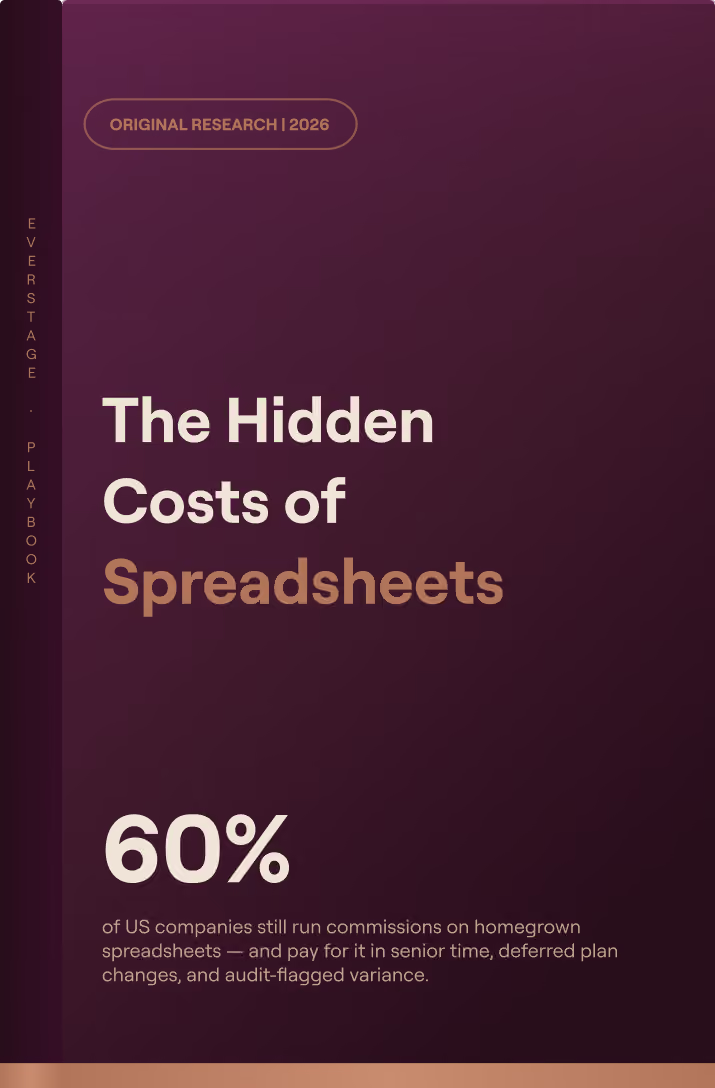
If you're weighing whether spreadsheets are still keeping up with your measurement needs, this quick calculator helps quantify the hidden costs.
Segmentation, Targeting, and Sales Force Sizing Strategies
In pharma, the difference between a "busy" sales team and a truly effective one lies not in volume, but in focus. The smartest pharmaceutical companies use rich data to segment, prioritize, and size their field force around real influence, not just reach.
Smarter Segmentation
Top firms adopt AI-powered CRM models that reveal which HCPs are likely to change their prescribing behavior, not just which ones write the most scripts. IQVIA's Dynamic HCP Profiling identifies those decision-makers and shapes focused outreach.
Rather than generic segments, segmentation now includes:
- Patient alignment: Which physicians treat the populations your therapy targets
- Engagement style: Who is responsive via digital channels, in-person calls, or hybrid models
- Influence reach: Which physicians shape peer behavior in a therapeutic network
Targeting That Drives Results
Once your segmentation is precise, targeting turns insight into action. Leading sales reps deploy AI-assisted models & CRM insights to decide when, how, and which channel to engage each HCP.
This means:
- Omnichannel sequencing of emails, virtual meetings, and in-person calls
- Tailored content that matches each HCP's therapeutic interests
- Timing based on real-time signals captured in CRM
This approach makes each interaction more meaningful and sets the stage for deeper influence.
Right-Sizing the Field Force
Sizing your sales team is not just about headcount; it's about alignment with opportunity. Predictive models now guide where reps add value and where they risk oversaturation.
A global pharma organization recently applied these techniques and reduced redundant physician visits while increasing ROI in high-potential zones. It was not a cut; it was a smarter reallocation of effort.
When segmentation, targeting, and sizing operate as a unified system, your pharma sales effectiveness transforms from guesswork into strategy. Instead of chasing volume, your field force contributes to outcomes, relationships, and sustainable growth.
Sales Enablement and Consulting Approaches for Pharma SFE
Every successful pharmaceutical sales organization has one thing in common: structure. Sales enablement gives direction to daily execution, while consulting frameworks ensure that strategy, skills, and systems move in sync. Together, they form the foundation of effective pharma sales force effectiveness (SFE) programs.
Strategy Frameworks That Drive Execution
The most effective pharma companies use structured frameworks like the McKinsey 7S model to align strategy, structure, systems, and skills. These frameworks ensure that every rep, manager, and regional head operates toward measurable outcomes, not just activity volume.
Sales playbooks and field-sizing models developed by consulting firms such as ZS Associates and BCG bring consistency across geographies. They help reps tailor conversations by therapy area, product lifecycle stage, and physician need, transforming data into repeatable sales behaviors.
Training, Coaching, and Behavioral Enablement
In a highly regulated industry, the difference between an average and a great sales rep lies in adaptability. Continuous training ensures reps understand not just products, but also payer dynamics, patient outcomes, and compliance obligations.
Pharma leaders are now investing in AI-powered learning tools and real-time coaching, allowing teams to improve during active campaigns. Deloitte notes that life sciences companies that adopt data-driven and adaptive marketing cycles gain deeper customer engagement and are better positioned for improved commercial outcomes.
Short, frequent learning cycles and peer-led feedback loops help sales teams translate clinical knowledge into meaningful HCP engagement, driving confidence and credibility.
Aligning Incentives for Measurable Outcomes
Traditional activity-based incentives reward effort, not impact. Modern pharma sales effectiveness strategies link rewards to metrics like territory ROI, customer engagement quality, and prescription growth.
Platforms such as Everstage enable transparent performance tracking, ensuring that every rep understands how their behavior aligns with company KPIs. The result is higher motivation, fairer recognition, and data-backed accountability.
Sales enablement isn't about more tools or meetings; it's about empowering reps with clarity, context, and confidence. When consulting frameworks, training programs, and incentive models work together, sales effectiveness in pharma becomes a culture, not just a metric
To design incentive plans that actually shift rep behavior, this guide unpacks the psychology behind what motivates sales teams to perform.
Omnichannel Engagement and Digital Transformation in Pharma Sales
The modern pharma sales model is no longer built on frequency; it's built on relevance. As healthcare interactions move beyond in-person visits, pharma companies must integrate digital, hybrid, and real-world engagement channels to maintain credibility with healthcare professionals (HCPs).
True sales force effectiveness (SFE) now depends on how intelligently sales, marketing, and medical teams orchestrate every interaction through a connected, data-driven ecosystem.
AI-Powered Call Planning and Predictive Insights
Artificial intelligence has become the backbone of effective sales planning. Instead of static call lists, leading pharmaceutical companies use AI-powered CRM systems to analyze prescribing behavior, therapy adoption rates, and engagement patterns.
Predictive algorithms score each HCP based on:
- Conversion likelihood: Past prescribing trends, therapy switches, and competitive overlaps.
- Engagement propensity: Response to digital channels like webinars or email campaigns.
- Territory value: Real-time sales potential adjusted for local market dynamics.
Gartner forecasts that 80% of Chief Sales Officers will depend on AI-augmented call planning by 2030 to stay competitive. In pharma, this translates into smarter scheduling, reduced no-show rates, and higher sales rep productivity without increasing headcount.
Digital Detailing and Omnichannel HCP Engagement
The digital transformation of pharmaceutical sales is not about replacing reps; it's about augmenting them. Through digital detailing platforms, AI chat assistants, and remote engagement tools, sales teams now deliver clinical value in multiple formats.
Leading firms use personalized digital content that aligns with therapeutic interests and patient outcomes. For example, Novartis, in partnership with Aktana, developed an AI-powered "personal assistant" for its sales representatives, enabling over 100,000 daily HCP interactions to become more personalized, data-informed, and contextually relevant
Consistent, context-aware communication across omnichannel touchpoints, from webinars to social channels - builds sustained HCP trust and brand equity.
Real-Time Dashboards and Integrated Tech Stacks
Technology is the connective tissue of modern SFE. Integrated tech stacks combine CRM, marketing automation, and field reporting to deliver real-time visibility into performance and prescribing trends.
These dashboards empower commercial teams to:
- Adjust territory strategies instantly based on data trends.
- Align marketing spend with HCP engagement ROI.
- Enable sales leaders to forecast more accurately using unified analytics.
Organizations that embed analytics into everyday decision-making achieve faster response cycles, stronger customer engagement, and measurable lift in sales effectiveness metrics.
Digital transformation in pharma isn't just a technology upgrade; it's a commercial evolution. By embedding AI, omnichannel strategy, and CRM intelligence into daily operations, pharma sales teams move from transactional outreach to continuous, insight-driven influence.
That's what defines the next generation of pharma sales effectiveness: intelligent, agile, and data-connected.
If you're evaluating whether to build comp tooling internally or invest in a dedicated platform, this calculator surfaces the real trade-offs.
Best Practices for Continuous Sales Force Improvement
In the pharmaceutical industry, sustained sales performance depends on constant refinement. The most effective pharma companies treat sales force effectiveness (SFE) as a living system, one that learns from data, adapts to market dynamics, and empowers sales reps to engage healthcare professionals more meaningfully.
Agile Response to Market Dynamics
Pharma's landscape changes fast, new drug approvals, evolving treatment guidelines, and competitive pricing shifts redefine prescribing behavior overnight. Agile commercial models help sales teams realign priorities in real time.
McKinsey reports that companies using agile structures improve decision-making speed and cross-functional collaboration, helping them stay responsive in volatile markets
For pharma sales representatives, agility means leveraging CRM analytics and predictive modeling to focus on high-potential HCPs or therapeutic areas. When field plans adjust dynamically, sales force effectiveness metrics like territory ROI and engagement quality improve naturally.
Feedback Loops and Field Insights
No dashboard can replace frontline experience. Reps interact with healthcare professionals (HCPs) daily and often see emerging trends first. Capturing that insight through structured feedback loops, within CRMs, follow-up forms, or digital check-ins, turns field intelligence into strategic guidance.
IQVIA highlights the importance of combining omnichannel engagement data, including digital channel interactions and field feedback, to create a unified customer view and enhance CRM-driven strategies.
This insight-led approach helps sales leaders and marketing teams fine-tune engagement strategies, adjust messaging, and deliver value that aligns with customer needs.
Building a Data-Led Sales Culture
A high-impact field force doesn't just use data; it trusts it. Transparent KPIs and real-time performance dashboards let reps see how every interaction affects outcomes like prescription growth, HCP engagement, and territory efficiency.
Bain & Company reports that companies with strong data and analytics capabilities, who deploy more digital tools and ensure high adoption, outperform their peers in revenue and market share growth.
When analytics, coaching, and incentives are aligned, pharma sales teams evolve from reactive to proactive, driving smarter decisions and lasting commercial advantage.
Continuous improvement in pharma sales force effectiveness isn't about chasing numbers. It's about curiosity, using every conversation, every dashboard insight, and every rep experience to refine how value is delivered to healthcare providers. That's how modern pharmaceutical sales organizations stay competitive, compliant, and connected.
Challenges and Pitfalls to Avoid in SFE Programs
Every pharma company wants its sales team to perform better. But improving pharma sales force effectiveness is rarely straightforward. Even with the right tools and strategies, many initiatives lose momentum when data, alignment, or field engagement fall short. Let's look at the most common barriers that hold teams back and how to fix them.
Data Quality Gaps and Analytics Overload
Data is the backbone of pharma sales effectiveness, yet it's also one of its biggest weak spots. Many pharmaceutical companies struggle with poor CRM data quality, missing call notes, outdated HCP details, and inconsistent reporting. These errors distort sales force effectiveness metrics and make it hard for teams to make confident decisions.
There's also the problem of too much data. Reps often juggle multiple dashboards, reports, and KPIs without knowing which ones actually matter. Forrester Research observes that while many organizations collect large volumes of data, few enable clear decision-making and action from that data, slowing down outcomes and productivity.
The best-performing sales teams focus on a few "decision-ready" metrics that show a clear link between activities and outcomes, such as prescribing behavior, engagement quality, or territory ROI. That's what turns analytics into action.
Change Management and Field Resistance
Change is hard, especially in an industry built on established routines. Many sales reps resist new digital tools, automation systems, or revised incentive structures because they fear losing control or seeing their work devalued.
According to McKinsey, transformation programs in the life sciences industry succeed when leaders communicate clearly, involve reps early, and celebrate small wins that build momentum. For pharma sales teams, this means making new systems like CRM automation or AI-assisted call planning feel like support, not surveillance.
When reps understand how these tools help them connect better with healthcare professionals (HCPs), adoption rates climb and performance follows.
Misalignment Across Teams and Objectives
Even the most advanced pharma sales organizations can struggle when sales, marketing, and medical affairs operate in silos. One team tracks activity metrics, another focuses on digital engagement, and no one aligns around a shared view of customer engagement.
Breaking those walls starts with shared CRM systems and unified data analytics dashboards. When every team can see the same information, they can plan better, align messaging, and improve HCP engagement without duplicating effort.
As Deloitte points out, sustainable commercial success now depends on connected, omnichannel execution rather than isolated team performance.
Avoiding these pitfalls is less about technology and more about teamwork. Clean data, collaborative goals, and open communication transform pharma sales effectiveness programs into engines of growth.
When the field force understands how their data feeds into strategy and why their engagement matters, they start thinking less about hitting activity targets and more about delivering real outcomes. That's where pharma sales force effectiveness truly begins to show its value.
Conclusion
In the pharmaceutical industry, success no longer comes from how many sales reps you have but from how effectively they work. The best pharma companies focus on pharma sales force effectiveness (SFE) as a continuous process that blends data-driven insights, strategy, and human connection.
The future of pharmaceutical sales is built on smarter sales strategies, stronger customer engagement, and a unified view of performance across every channel. A sales representative equipped with real-world analytics, actionable KPIs, and intuitive CRM tools can respond faster to market dynamics, anticipate customer needs, and create a meaningful impact in every conversation with healthcare professionals.
SFE is about empowering people, not overwhelming them. By combining automation, AI-driven forecasting, and personalized engagement strategies, pharma leaders can streamline operations and strengthen trust across the entire field force.
That's where Everstage makes a difference. It transforms sales performance management through automation and transparency, helping pharma companies connect incentives with outcomes. By offering AI-powered dashboards, goal tracking, and performance metrics that truly matter, Everstage turns complexity into clarity, giving teams the confidence to focus on what drives results.
If your goal is to future-proof your pharmaceutical sales operations and unlock measurable ROI, now is the time to act. Start turning insights into action and building the sales culture your teams deserve.
See how Everstage empowers pharma sales teams with data, motivation, and precision. Book a demo today.
Questions worth asking
The things most people want to know before they commit.
How does digital transformation impact pharma sales force effectiveness?
Digital transformation enables sales representatives to use AI-powered tools, CRM systems, and predictive analytics to personalize outreach. This improves HCP engagement, streamlines workflows, and drives higher efficiency across omnichannel communication.
What skills should modern pharma sales reps develop to improve SFE?
Today’s pharmaceutical sales representatives need strong data literacy, digital communication skills, and clinical knowledge. Understanding CRM analytics, market trends, and customer engagement strategies helps them deliver more relevant, value-driven conversations.
How does incentive alignment improve pharma sales force effectiveness?
Aligning KPIs and rewards with customer outcomes rather than activity counts motivates reps to focus on quality interactions. Transparent performance metrics and data-backed recognition foster accountability and stronger sales behavior.
What role does AI play in optimizing pharma sales strategies?
Artificial intelligence supports sales force effectiveness by predicting prescribing patterns, suggesting next best actions, and automating routine reporting. This lets sales reps spend more time engaging healthcare providers and less time on admin tasks.
How can pharma companies ensure compliance while improving sales effectiveness?
Pharma firms can maintain compliance by embedding approval workflows into CRM platforms, providing ongoing training, and using data-driven insights to monitor ethical standards. Balancing engagement strategies with transparency builds trust among stakeholders.
What are examples of successful pharma SFE initiatives?
Leading pharmaceutical companies use case studies showcasing AI-driven call planning, optimized field force deployment, and real-time dashboards. These initiatives show measurable improvements in sales performance, market share, and customer satisfaction.