


Varicent vs Xactly: 2026 In-Depth Comparison
Enterprise compensation software evaluation typically centers on comprehensive commission features versus specialized calculation focus. Varicent and Xactly compete with different approaches to complex payout structure management.

Introduction
Incentive compensation management platforms were first built to replace spreadsheets with more structured systems, and many of those early tools still shape how large organizations manage commissions today. Varicent and Xactly are two such platforms that have been present in this space for years. Both are designed to automate the process of calculating and paying commissions at scale, aiming to bring reliability to what has traditionally been a manual and error-prone process. Their long-standing presence makes them recognizable names, but the real question is whether they meet the needs of today’s evolving revenue teams.
Experience shows that each carries significant hurdles. Varicent implementations are often lengthy, requiring coding skills, consultant support, and ongoing admin effort, with reporting that slows down as data volume grows. Xactly’s infrastructure has also aged, leading to limited integration flexibility, heavy manual workarounds, and a lack of forward-looking insights. While both tools fulfill the basic need of paying commissions, teams often find them restrictive and difficult to adapt. Everstage offers a modern alternative with no-code plan design, real-time processing, predictive insights, and faster deployment, giving organizations a way past the barriers that slow down legacy platforms.

Head-to-Head Comparison
Setup & Admin Configuration
Functionality | Varicent | Xactly | Everstage |
|---|---|---|---|
Data management | Handles large data volumes but performance slows with complex datasets. | Handles commission data reliably, but setup often requires spreadsheets and manual reconciliation. | Native integrations with CRMs, ERPs, HRIS; bi-directional Salesforce sync without ecosystem lock-in. |
Plan modeling | Provides modeling, but no true simulation tool for testing impact of plan changes. | Provides modeling tools, though more rigid and less flexible for advanced scenarios. | No-code drag-and-drop with sandbox + Time Machine for safe simulations. |
Custom permissions & access control | Role-based access works, though flexibility and audit depth are limited. | Supports role-based access, though customization depth is limited. | Granular RBAC with detailed audit trails, balancing flexibility and compliance. |
Quota management | Quotas supported, but updating them across roles or territories can be cumbersome. | Handles standard quota assignments, but adapting to dynamic structures is challenging. | Automated quota engine adapts to territories, hierarchies, and role changes. |
Commission Processing
Functionality | Varicent | Xactly | Everstage |
|---|---|---|---|
Payout approvals | Approval processes supported, but workflows often manual and slow to adapt. | Approval processes are supported, but often involve manual workflows. | Customizable automated workflows streamline approvals across the org. |
Contextual overrides | Overrides possible but require heavy admin effort and lack audit depth. | Adjustments are possible, though they may rely on manual steps with limited auditability. | Flexible override system with compliance-friendly audit trails. |
Query resolution | Queries often handled via tickets or manual reconciliations, slowing response times. | Commission questions are addressed, but visibility is often delayed until end-of-period. | AI-powered query resolution with instant, auditable answers. |
Contract management | Supports contract-linked payouts, but workflows are basic and limited. | Can support contract-linked payouts, though workflows are fairly basic. | Built-in contract workflows include e-signatures and automation. |
User management | Admin-heavy setup; requires coding knowledge or consultants for configuration. | Provides admin controls, though heavy reliance on IT or consultants adds overhead. | Full lifecycle management across roles and geographies with intuitive setup. |
Insights & Reporting
Functionality | Varicent | Xactly | Everstage |
|---|---|---|---|
Real-time calculations | Accurate payouts, but batch processing slows visibility on large data sets. | Processes payouts accurately, though calculations often run in batches with delayed visibility. | True real-time calculations across systems, ensuring instant payout visibility. |
Payout forecasting | Forecasting exists but lacks scenario modeling or sandboxing. | Offers forecasting, but primarily retrospective with limited scenario testing. | Crystal-powered forecasting with precise, scenario-based payout simulations. |
Personalized dashboards | Reporting available, but limited customization and slower performance with scale. | Dashboards exist, but analytics are limited and often supplemented with spreadsheets. | BI-powered dashboards with predictive, customizable insights for every stakeholder. |
The Limitations of Varicent vs Xactly

Implementation & Time-to-Value

Flexibility, Integrations & Analytics

User Experience

Pricing Transparency & Support

Scalability Challenges

Security & Compliance
Voice of the Customer
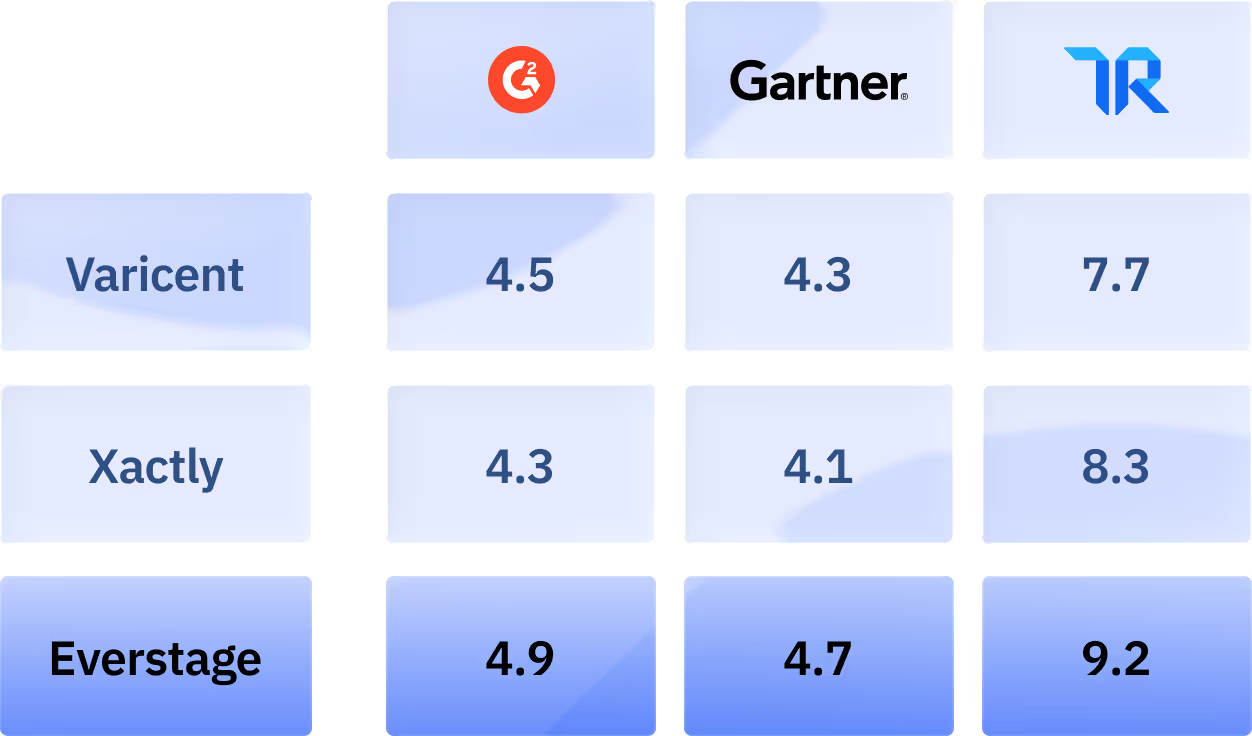
Customer reviews offer an unfiltered look at how each platform performs in real-world environments. Below is a snapshot of feedback themes taken from G2, Capterra, and TrustRadius.


Varicent vs Xactly: Finding the Balance
Varicent and Xactly are two players in the commission management market, both with long histories in the space. Varicent has evolved from earlier-generation systems, while Xactly reflects platforms that have been in place for many years. Both tend to face similar challenges with extended implementation cycles, consultant reliance, and adapting older approaches to the needs of modern revenue teams.
Across evaluations, we often hear similar priorities:
- Finance leaders value faster implementation cycles and predictable costs.
- RevOps teams want reliable testing environments and intuitive plan design.
- Executives look for transparency, scalability, and clear ROI.


For organizations that want enterprise-grade capabilities without long rollouts or added complexity, Everstage is designed to provide that balance
Frequently asked questions
Are Varicent and Xactly still worth considering in 2026?
Not entirely. Varicent's sandbox is still one of the strongest in the category for testing plan changes against historical data. Xactly fits global enterprises in regulated industries with established procurement comfort. Both face real operating burden from legacy architecture, which is why many teams now evaluate modern platforms like Everstage alongside them.
Is Varicent better than Xactly for enterprise rollouts?
Depends on the rollout. Varicent typically scores higher in enterprise-scale stability and sandbox depth, making it well-suited to one-time complex setups. Xactly handles mid-cycle plan changes more smoothly through effective dating. The trade-off in both cases is the specialist work required to keep them running, which platforms like Everstage hand back directly to RevOps teams.
What does migrating off Varicent or Xactly to a modern platform typically involve?
Most switches start by rebuilding your existing Varicent or Xactly plan logic in the new platform. Historical commission data gets imported, both systems run in parallel for one or two cycles to verify accuracy, then users cut over. Everstage runs a free proof of concept on one of your plans first, so you can validate before committing.
How do implementation timelines of Varicent compare with that of Xactly?
Varicent implementations typically take 6 to 9 months, with longer timelines for organizations needing custom rule logic or multi-entity setups. Xactly runs in a similar range, often 4 to 8 months, with most of the time spent on data integration and rule configuration. Both timelines extend further when sandbox testing and parallel-run validation are factored in before go-live.
What are the hidden costs I should watch for when evaluating Varicent or Xactly?
Watch for systems integrator fees that often exceed the license cost itself, sandbox or non-production environment charges billed separately, annual license escalators tied to payee count growth, and training pass-throughs when admin staff turn over. Ongoing change-request fees for plan updates outside the standard contract are another common surprise, especially during the second year of ownership.
What does ongoing admin and maintenance look like after Varicent or Xactly is live?
Both platforms typically need a dedicated comp admin or a small team to manage plan changes, data reconciliation, and reporting. Routine updates like mid-year accelerator tweaks or new SPIFs often require system integrator support or internal staff trained in the platform's rule language. Year-end plan rollouts usually involve a multi-week effort across RevOps, finance, and external consultants.