


Varicent vs Anaplan: 2026 In-Depth Comparison
Sales performance management choices examine integrated SPM suites versus platforms offering compensation as one module. Varicent and Anaplan reflect different approaches between dedicated sales tools and multi-use modeling systems.

Introduction
Managing commissions at scale has driven organizations to adopt platforms that promise automation and structure. Varicent and Anaplan are two such systems, though both reflect earlier generations of sales compensation technology. Varicent represents long-established systems that have evolved over time, while Anaplan positions itself as an enterprise planning platform with compensation capabilities. Both aim to reduce manual work and bring consistency to incentive management.
Challenges surface once these tools are in practice. Varicent projects are weighed down by coding requirements, consultant dependence, and reporting that slows under scale. Anaplan introduces learning curves, modeling complexity, and infrastructure built for planning rather than agile execution. While each can calculate and pay commissions, teams seeking flexibility and speed may find them limiting. Everstage offers a modern approach with no-code design, real-time processing, predictive insights, and rapid deployment, removing barriers that slow legacy and planning-heavy platforms.

Head-to-Head Comparison
Setup & Admin Configuration
Functionality | Varicent | Anaplan | Everstage |
|---|---|---|---|
Data management | Handles large data volumes but performance slows with complex datasets. | Connectors handle many sources, but model upkeep grows heavy at scales. | Native integrations with CRMs, ERPs, HRIS; bi-directional Salesforce sync without ecosystem lock-in. |
Plan modeling | Provides modeling, but no true simulation tool for testing impact of plan changes. | Multi-dimensional rules work, but model builders are often required. | No-code drag-and-drop with sandbox + Time Machine for safe simulations. |
Custom permissions & access control | Role-based access works, though flexibility and audit depth are limited. | Role security exists, but fine-tuning takes time and expert admins. | Granular RBAC with detailed audit trails, balancing flexibility and compliance. |
Quota management | Quotas supported, but updating them across roles or territories can be cumbersome. | Purpose-built T&Q sets targets, but territory rework needs modeling cycles. | Automated quota engine adapts to territories, hierarchies, and role changes. |
Commission Processing
Functionality | Varicent | Anaplan | Everstage |
|---|---|---|---|
Payout approvals | Approval processes supported, but workflows often manual and slow to adapt. | Workflows are supported, but multi-step designs require model changes. | Customizable automated workflows streamline approvals across the org. |
Contextual overrides | Overrides possible but require heavy admin effort and lack audit depth. | Effective dating helps audits, but one-off fixes still add admin load. | Flexible override system with compliance-friendly audit trails. |
Query resolution | Queries often handled via tickets or manual reconciliations, slowing response times. | Dashboards update fast, but deeper dispute context needs configured views. | AI-powered query resolution with instant, auditable answers. |
Contract management | Supports contract-linked payouts, but workflows are basic and limited. | Plan docs and versions track, but end-to-end contract flow needs add-ons. | Built-in contract workflows include e-signatures and automation. |
User management | Admin-heavy setup; requires coding knowledge or consultants for configuration. | RBAC is robust, but bulk org changes pass through model specialists. | Full lifecycle management across roles and geographies with intuitive setup. |
Insights & Reporting
Functionality | Varicent | Anaplan | Everstage |
|---|---|---|---|
Real-time calculations | Accurate payouts, but batch processing slows visibility on large data sets. | Boards refresh rapidly, but heavy models slow iterative change cycles. | True real-time calculations across systems, ensuring instant payout visibility. |
Payout forecasting | Forecasting exists but lacks scenario modeling or sandboxing. | Scenarios support what-ifs, but accuracy depends on model maintenance. | Crystal-powered forecasting with precise, scenario-based payout simulations. |
Personalized dashboards | Reporting available, but limited customization and slower performance with scale. | Visual boards are rich, but persona-level views need more setup. | BI-powered dashboards with predictive, customizable insights for every stakeholder. |
The Limitations of Varicent and Anaplan

Implementation & Time-to-Value
Flexibility & Integrations
User Experience

Pricing Transparency & Support

Scalability Challenges

Security & Compliance
Voice of the Customer
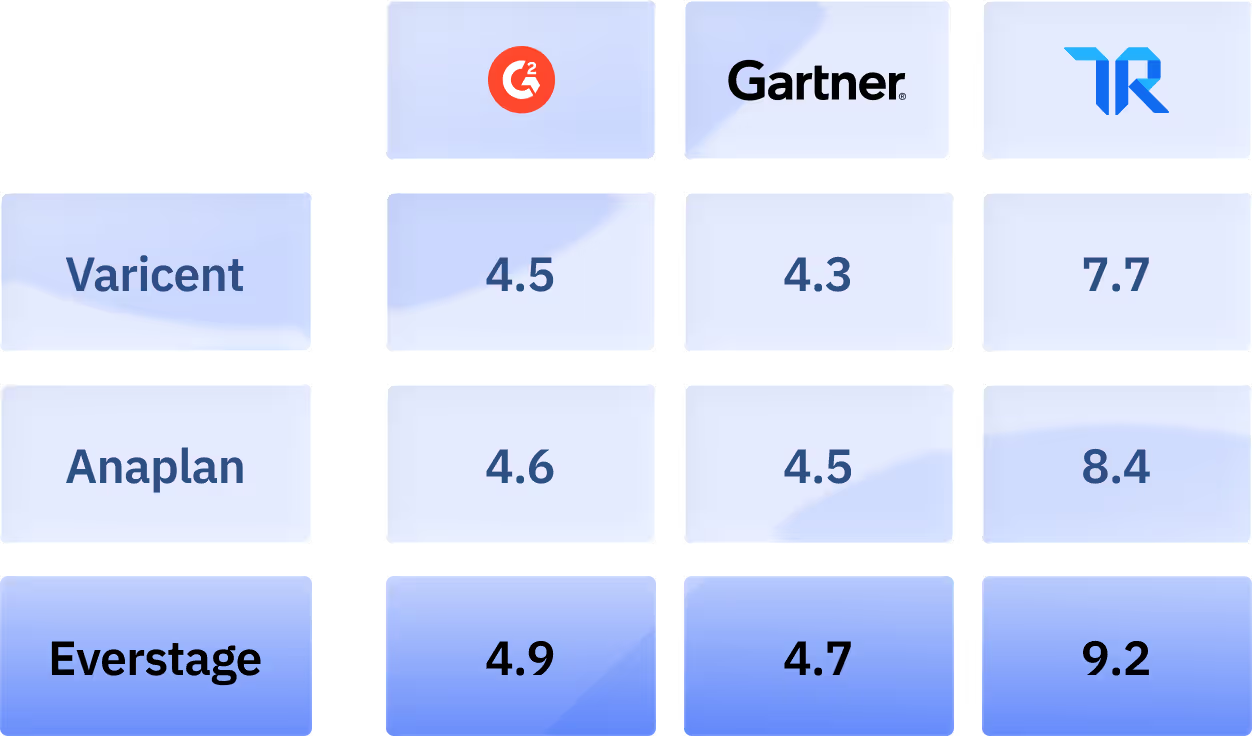
Customer reviews offer an unfiltered look at how each platform performs in real-world environments. Below is a snapshot of feedback themes taken from G2, Capterra, and TrustRadius.


Varicent vs Anaplan: Finding the Balance
Varicent and Anaplan are often considered for complex programs but take different routes. Varicent uses enterprise configurations that can require scripting and services for change. Anaplan concentrates logic in models that enable control but move through builder cycles. Both handle advanced scenarios, while teams consider performance at scale, change effort, and integration management.
Across evaluations, we often hear similar priorities:
- Finance leaders value faster implementation cycles and predictable costs.
- RevOps teams want reliable testing environments and intuitive plan design.
- Executives look for transparency, scalability, and clear ROI.


For organizations seeking flexibility without ongoing rework or service dependence, Everstage is designed to provide that balance. It offers fast implementation, proactive support, and complete, real-time visibility.
Frequently asked questions
Is Anaplan a real ICM platform, or a planning platform with ICM as a module?
Anaplan is a connected planning platform with ICM as one module alongside finance, supply chain, and workforce planning. Customers using Anaplan only for sales compensation often describe it as "a toolbox" where they have to build everything from scratch, rather than a finished commission management product.
How do Varicent's Symon.AI and Anaplan's PlanIQ compare for sales compensation?
Varicent's Symon.AI is built directly into the SPM workflow, with anomaly detection, scenario modeling, and embedded data visualization for compensation planning. Anaplan's PlanIQ runs predictive forecasting through external machine learning systems like Amazon Forecast. Forrester called Varicent "the only solution evaluated with an in-depth set of AI capabilities."
Where do day-to-day plan changes actually happen on Varicent and Anaplan: admin, COE, or consultant?
On Varicent, plan changes typically need an admin with coding or scripting skills, with consultants stepping in for complex changes. On Anaplan, plan changes route through a model-builder team or Center of Excellence. Either way, business teams cannot self-serve plan changes the way they can on no-code platforms.
How do teams migrate from Varicent or Anaplan to Everstage?
Everstage's in-house team rebuilds your existing plans in a no-code test environment, imports historical commission data, and runs payouts in parallel with your current system to validate accuracy before go-live. It does not require master Anaplanners or external consultants. Full audit trails are preserved.
Why are enterprises switching from Varicent or Anaplan to Everstage?
Two reasons stand out: faster plan changes when business needs shift, and better visibility for sales reps. Everstage's no-code platform lets business teams modify plans directly, while AI-powered query resolution gives reps instant answers to commission questions. On G2, Everstage scores 4.9/5.
Between Varicent and Anaplan, who provides better ongoing support?
Varicent fixes often involve consultants. Anaplan changes lean on model experts. Everstage provides proactive, in-house support and dedicated success managers.