


Quotapath vs Performio: 2026 In-Depth Comparison
Incentive software decisions compare accessible forecasting platforms with robust calculation engines. Quotapath and Performio showcase different priorities between sales rep visibility and administrative processing power.

Introduction
Managing sales commissions requires software that can grow alongside evolving compensation strategies. Quotapath and Performio approach this need from different angles, each with its own structural limitations. Performio positions itself as a configurable platform designed to handle varied incentive programs through administrative setup. Quotapath focuses on providing visibility into earnings with less emphasis on plan complexity. Both attempt to replace spreadsheet-based workflows, though organizations often discover constraints once their compensation needs mature.
Practical experience reveals distinct friction points with each tool. Performio demands considerable administrative effort to configure and maintain, with complexity accumulating as plan variations multiply across teams. Quotapath simplifies the initial experience but lacks the architectural foundation required for layered commission logic, leaving teams without adequate tools when incentive structures become more nuanced. Both platforms calculate payouts, yet gaps in manageability and sophistication remain evident. Everstage provides a modern alternative with no-code plan design, real-time processing, predictive analytics, and faster deployment, addressing the shortcomings that emerge in both admin-heavy configuration tools and feature-constrained tracking platforms.

Head-to-Head Comparison
Setup & Admin Configuration
Functionality | Quotapath | Performio | Everstage |
|---|---|---|---|
Data management | Built for smaller teams, handles basic CRM sync but struggles with complex datasets and large volumes. | Handles commission data reliably, but setup often requires spreadsheets and manual reconciliation. | Native integrations with CRMs, ERPs, HRIS; bi-directional Salesforce sync without ecosystem lock-in. |
Plan modeling | Simple backend designer limited to basic calculations and requires support help for changes. | Provides modeling tools, though more rigid and less flexible for advanced scenarios. | No-code drag-and-drop with sandbox + Time Machine for safe simulations. |
Permissions & access | Provides basic role separation for admins and users, lacks detailed audit control and granularity. | Supports role-based access, though customization depth is limited. | Granular RBAC with detailed audit trails, balancing flexibility and compliance. |
Quota management | Manages quotas and attainment but updates need manual intervention and lag in CRM reflection. | Handles standard quota assignments, but adapting to dynamic structures is challenging. | Automated quota engine adapts to territories, hierarchies, and role changes. |
Commission Processing
Functionality | Quotapath | Performio | Everstage |
|---|---|---|---|
Payout approvals | Approval workflows exist but lack automation and scalability for complex structures. | Approval processes are supported, but often involve manual workflows. | Customizable automated workflows streamline approvals across the org. |
Contextual overrides | Limited override flexibility and audit transparency, leading to dependency on support teams. | Adjustments are possible, though they may rely on manual steps with limited auditability. | Flexible override system with compliance-friendly audit trails. |
Query resolution | Delay in syncing commission data creates confusion, requiring manual clarification via support. | Commission questions are addressed, but visibility is often delayed until end-of-period. | AI-powered query resolution with instant, auditable answers. |
Contract management | Plan distribution and sign-off available but no full workflow or version tracking. | Can support contract-linked payouts, though workflows are fairly basic. | Built-in contract workflows include e-signatures and automation. |
User management | Simple hierarchy mapping but changes or team reassignments often need support intervention. | Provides admin controls, though heavy reliance on IT or consultants adds overhead. | Full lifecycle management across roles and geographies with intuitive setup. |
Insights & Reporting
Functionality | Quotapath | Performio | Everstage |
|---|---|---|---|
Real-time calculations | Data updates take hours to reflect, causing visibility delays for reps and managers. | Processes payouts accurately, though calculations often run in batches with delayed visibility. | True real-time calculations across systems, ensuring instant payout visibility. |
Payout forecasting | Offers deal-based forecasts but lacks accuracy for variable or multi-rate plans. | Offers forecasting, but primarily retrospective with limited scenario testing. | Crystal-powered forecasting with precise, scenario-based payout simulations. |
Personalized dashboards | Limited reporting and analytics requiring backend help; lacks granular role-based visibility. | Dashboards exist, but analytics are limited and often supplemented with spreadsheets. | BI-powered dashboards with predictive, customizable insights for every stakeholder. |
The Limitations of Quotapath and Performio

Implementation & Time-to-Value

Flexibility & Integrations

User Experience

Pricing Transparency & Support

Scalability Challenges

Security & Compliance
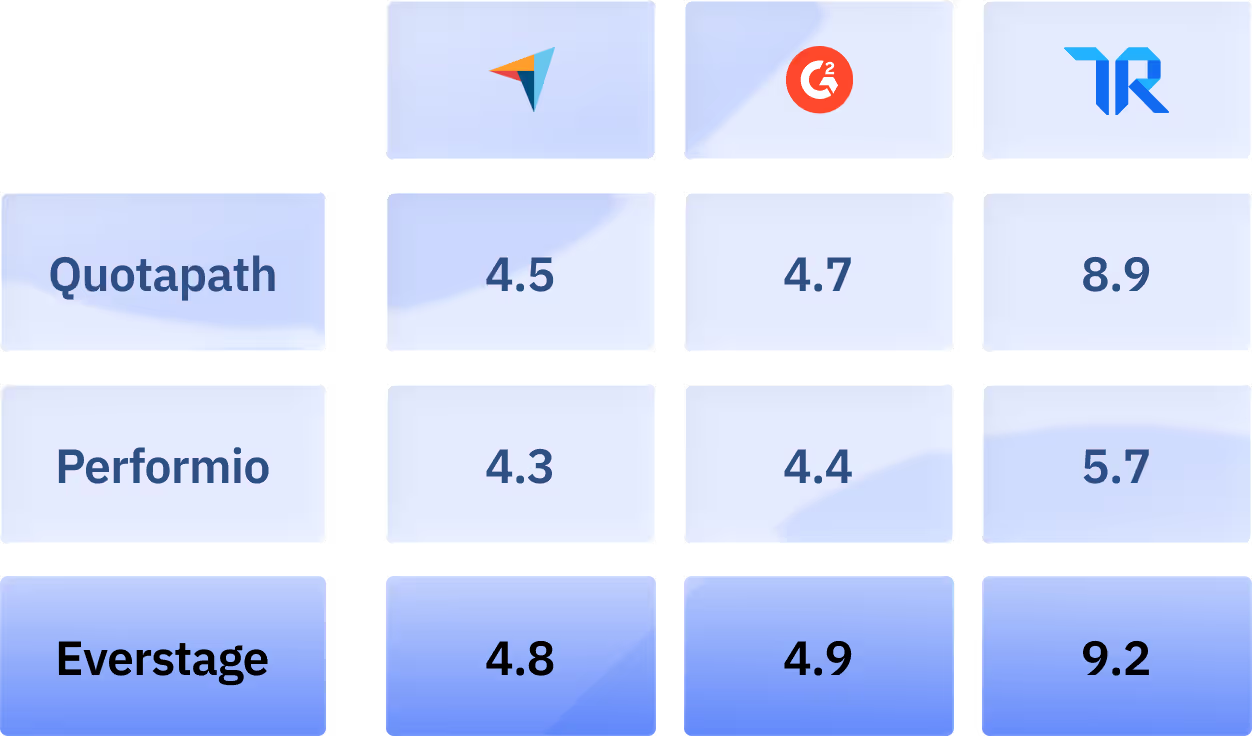
Voice of the Customer
Customer reviews offer an unfiltered look at how each platform performs in real-world environments. Below is a snapshot of feedback themes taken from G2, Capterra, and TrustRadius.




Quotapath vs Performio: Finding the Balance
Quotapath and Performio approach commission management with different emphases on simplicity versus configuration depth. Performio provides administrative controls for building varied incentive programs, though this configurability often translates into growing maintenance burdens as plan complexity increases. Quotapath reduces setup friction but sacrifices the architectural capabilities needed for multi-dimensional commission logic and advanced payout rules. Both platforms deliver commission calculations, yet their design choices reflect distinct priorities that surface as organizations scale.
Across evaluations, we consistently hear similar priorities:
- Finance leaders value faster implementation cycles and predictable costs without accumulating administrative overhead.
- RevOps teams want reliable testing environments, intuitive plan design, and flexibility to evolve plans without technical bottlenecks.
- Executives look for transparency, scalability, clear ROI, and systems that balance ease of use with sophisticated capability.


For organizations seeking comprehensive functionality without excessive configuration work or structural constraints, Everstage is designed to provide that balance: combining fast go-live, proactive support, and complete visibility into every aspect of sales compensation.
Frequently asked questions
Is there a strong alternative to Quotapath and Performio?
Yes. Everstage eliminates Performio's configuration burden and Quotapath's feature gaps. With no-code design, automated workflows, and real-time processing, Everstage ensures faster go-live without administrative overhead.
Should I use Quotapath or Performio for sales compensation?
Performio suits organizations with administrative resources for configuration. Quotapath works for basic visibility. Everstage delivers comprehensive functionality with intuitive design, eliminating configuration complexity and capability constraints.
Which platform handles complex commission calculations better between Quotapath and Performio?
Performio processes complexity through extensive configuration effort. Quotapath lacks depth entirely. Everstage handles sophisticated calculations with no-code design, delivering real-time accuracy without administrative burden.
How do implementation timelines of Quotapath compare with Performio?
Performio implementations extend with complexity increases. Quotapath deploys faster but hits limits. Everstage consistently delivers 6-8 week implementations with in-house onboarding, regardless of plan complexity or sophistication.
What are the hidden costs when evaluating Quotapath or Performio?
Performio requires ongoing administrative effort and service fees. Quotapath forces platform replacement. Everstage offers transparent, all-inclusive pricing with proactive support included and no hidden costs or migration expenses.
Between Quotapath and Performio, which platform provides better ongoing support?
Performio support escalates to services for changes. Quotapath provides basic assistance. Everstage includes proactive in-house support with dedicated success managers, ensuring fast resolution at no additional charge.