


Performio vs Varicent: 2026 In-Depth Comparison
Commission software decisions demand understanding calculation scalability versus advanced analytics capabilities. Performio and Varicent bring different strengths to complex sales compensation management and payout processing automation.

Introduction
Managing commissions is one of the most complex responsibilities for finance and RevOps teams, especially as sales organizations scale. Manual spreadsheets quickly become unmanageable, which is why companies adopt platforms like Performio and Varicent. Varicent represents long-established systems that have been in the market for years, while Performio presents itself as a configurable solution designed to add more structure to incentive management. Both aim to reduce the inefficiencies of manual work and bring consistency to the commission process.
However, neither platform delivers without tradeoffs. Varicent’s legacy foundation makes implementations long and costly, with heavy coding requirements, consultant dependence, and reporting that slows down under scale. Performio, on the other hand, provides configuration options but often demands extensive administrative effort, becoming cumbersome as compensation plans grow more complex. Each tool can calculate and pay commissions, but gaps in adaptability and ease of management remain. Everstage provides a modern alternative with no-code plan design, real-time processing, predictive forecasting, and faster deployment, helping organizations overcome the limitations that slow down both legacy and admin-heavy systems.

Head-to-Head Comparison
Setup & Admin Configuration
Functionality | Performio | Varicent | Everstage |
|---|---|---|---|
Data management | Imports from varied data sources, though setup can need admin effort. | Handles large data volumes but performance slows with complex datasets. | Native integrations with CRMs, ERPs, HRIS; bi-directional Salesforce sync without ecosystem lock-in. |
Plan modeling | Block-based builder simplifies plans, though advanced use needs effort. | Provides modeling, but no true simulation tool for testing impact of plan changes. | No-code drag-and-drop with sandbox + Time Machine for safe simulations. |
Custom permissions & access control | Role-based access with audit logs, though customization is limited. | Role-based access works, though flexibility and audit depth are limited. | Granular RBAC with detailed audit trails, balancing flexibility and compliance. |
Quota management | Quotas and thresholds supported, though updates across roles are tedious. | Quotas supported, but updating them across roles or territories can be cumbersome. | Automated quota engine adapts to territories, hierarchies, and role changes. |
Commission Processing
Functionality | Performio | Varicent | Everstage |
|---|---|---|---|
Payout approvals | Approval workflows exist, but advanced conditional logic can be limited. | Approval processes supported, but workflows often manual and slow to adapt. | Customizable automated workflows streamline approvals across the org. |
Contextual overrides | Overrides are logged with audit history, though complex ones add effort. | Overrides possible but require heavy admin effort and lack audit depth. | Flexible override system with compliance-friendly audit trails. |
Query resolution | Queries handled in portal, though resolution still relies on admin input. | Queries often handled via tickets or manual reconciliations, slowing response times. | AI-powered query resolution with instant, auditable answers. |
Contract management | Contract logic supported, though full lifecycle and e-signature are absent. | Supports contract-linked payouts, but workflows are basic and limited. | Built-in contract workflows include e-signatures and automation. |
User management | Role and hierarchy management supported, though scaling can be rigid. | Admin-heavy setup; requires coding knowledge or consultants for configuration. | Full lifecycle management across roles and geographies with intuitive setup. |
Insights & Reporting
Functionality | Performio | Varicent | Everstage |
|---|---|---|---|
Real-time calculations | Real-time dashboards supported, though large volumes may cause delays. | Accurate payouts, but batch processing slows visibility on large data sets. | True real-time calculations across systems, ensuring instant payout visibility. |
Payout forecasting | Forecasting supported, though complex scenario modeling needs support. | Forecasting exists but lacks scenario modeling or sandboxing. | Crystal-powered forecasting with precise, scenario-based payout simulations. |
Personalized dashboards | Dashboards are configurable, though some users report feature limits. | Reporting available, but limited customization and slower performance with scale. | BI-powered dashboards with predictive, customizable insights for every stakeholder. |
The Limitations of Performio and Varicent

Implementation & Time-to-Value

Flexibility & Integrations

User Experience

Pricing Transparency & Support

Scalability Challenges

Security & Compliance
Voice of the Customer
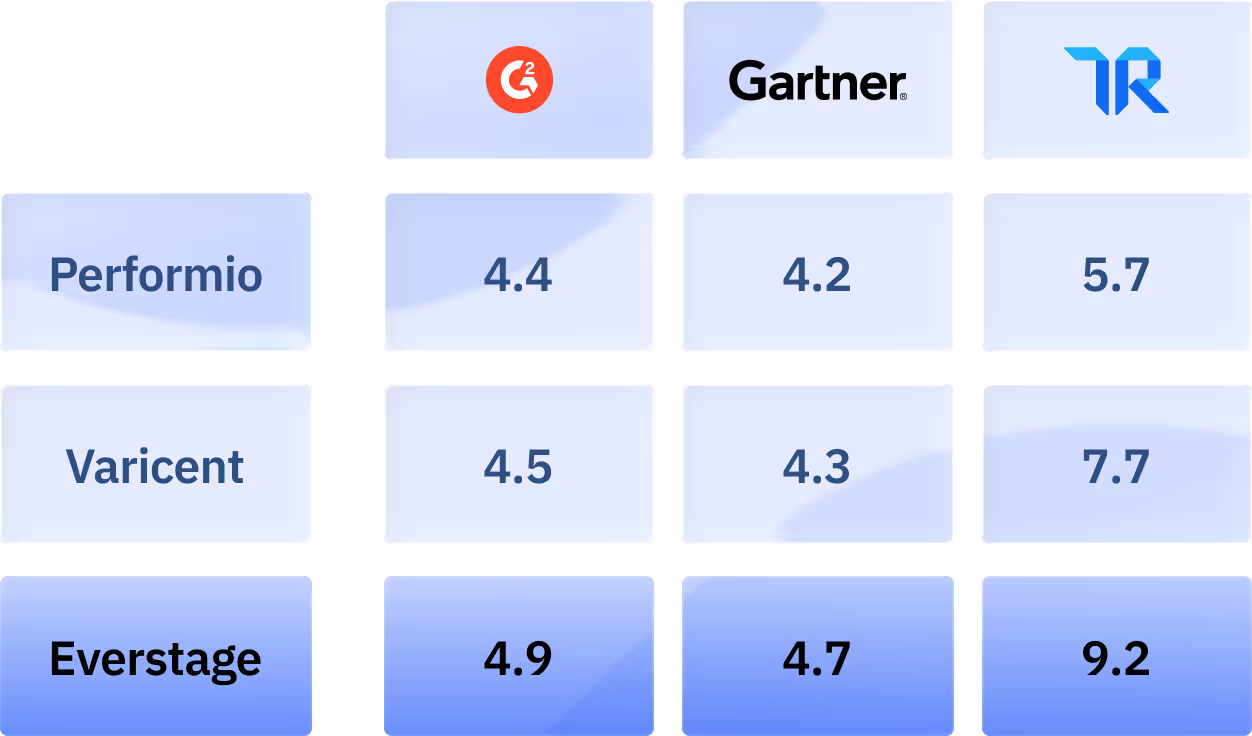
Customer reviews offer an unfiltered look at how each platform performs in real-world environments. Below is a snapshot of feedback themes taken from G2, Capterra, and TrustRadius.


Performio vs Varicent: Finding the Balance
Performio and Varicent represent different approaches to incentive compensation software. Performio is positioned around configurability, while Varicent reflects long-established systems. Both address key aspects of commission management but face challenges with rollout timelines, ease of administration, and keeping pace with the flexibility revenue teams often require.
Across evaluations, we often hear similar priorities:
- Finance leaders value faster implementation cycles and predictable costs.
- RevOps teams want reliable testing environments and intuitive plan design.
- Executives look for transparency, scalability, and clear ROI.


For organizations that want enterprise-grade capabilities without long rollouts or added complexity, Everstage is designed to provide that balance
Frequently asked questions
Is there a strong alternative to Performio and Varicent?
Yes. Everstage solves Performio’s admin-heavy setup and Varicent’s coding reliance. With no-code design, sandbox testing, and real-time processing, Everstage delivers flexibility, speed, and scalability without consultant or admin drag.
Is Performio better than Varicent for configurability?
Performio provides configurable plan components but increases admin work. Varicent supports enterprise setups but needs coding. Everstage delivers configurability and enterprise strength through no-code tools and scalable architecture.
Which platform manages plan modeling and scalability better between Performio and Varicent?
Varicent handles large enterprises but slows with heavy coding cycles. Performio offers flexible modeling but adds admin load. Everstage combines scale and modeling with no-code sandbox tools and real-time performance across all plan types.
How do implementation timelines of Performio compare with that of Varicent?
Performio rollouts lengthen with multi-plan configuration and data mapping. Varicent projects stretch 6–9 months with consultants. Everstage enables 6–8 week go-live with in-house onboarding and zero reliance on external resources.
What are the hidden costs I should watch for when evaluating Performio or Varicent?
Performio adds costs for integration upkeep and admin services. Varicent incurs consultant fees, hidden charges, and support costs. Everstage ensures transparent, all-inclusive pricing with in-house support and no hidden extras.
Between Performio and Varicent, which platform provides better ongoing support?
Performio users cite reliance on additional services. Varicent requires consultant involvement for complex fixes. Everstage delivers proactive in-house support with dedicated success managers to ensure responsive help at no extra cost.