


Everstage vs Performio: 2026 In-Depth Comparison
Configurable commission platforms sound great until configuration becomes your full-time job. Performio and Everstage both handle complex compensation structures, but with contrasting philosophies. One offers rich features that demand constant admin attention; the other delivers intuitive automation that scales without the overhead.

Introduction
Commission platforms promise to free finance teams from spreadsheet hell, yet many simply relocate that complexity behind a vendor's interface. The question isn't whether a system can handle your most intricate compensation structure but whether it can do so without turning your admins into full-time system operators. True automation means plans that maintain themselves through territory changes, role transitions, and organizational shifts without constant manual intervention.
Performio approaches commission management through configurable components that provide significant flexibility for building diverse plan structures. Organizations gain control over their compensation logic but often find that maintaining those configurations requires dedicated admin resources as complexity grows. Everstage takes a different path, automating the underlying infrastructure so teams configure outcomes rather than mechanics. With intelligent defaults and adaptive workflows, Everstage reduces the ongoing maintenance burden that accompanies feature-rich configurability in traditional platforms.

Head-to-Head Comparison
Setup & Admin Configuration
Functionality | Performio | Everstage |
|---|---|---|
Data management | Imports from varied data sources, though setup can need admin effort. | Native integrations with CRMs, ERPs, HRIS: bi-directional Salesforce sync without ecosystem lock-in. |
Plan modeling | Block-based builder simplifies plans, though advanced use needs effort. | No-code drag-and-drop with sandbox and Time Machine for safe simulations. |
Custom permissions & access control | Role-based access with audit logs, though customization is limited. | Granular RBAC with detailed audit trails, balancing flexibility and compliance. |
Quota management | Quotas and thresholds supported, though updates across roles are tedious. | Automated quota engine adapts to territories, hierarchies, and role changes. |
Commission Processing
Functionality | Performio | Everstage |
|---|---|---|
Payout approvals | Approval workflows exist but advanced conditional logic can be limited. | Customizable automated workflows streamline approvals across the org. |
Contextual overrides | Overrides are logged with audit history, though complex ones add effort. | Flexible override system with compliance-friendly audit trails. |
Query resolution | Queries handled in portal, though resolution still relies on admin input. | AI-powered query resolution with instant, auditable answers. |
Contract management | Contract logic supported, though full lifecycle and e-signature are absent. | Built-in contract workflows include e-signatures and automation. |
User management | Role and hierarchy management supported, though scaling can be rigid. | Full lifecycle management across roles and geographies with intuitive setup. |
Insights & Reporting
Functionality | Performio | Everstage |
|---|---|---|
Real-time calculations | Real-time dashboards supported, though large volumes may cause delays. | True real-time calculations across systems, ensuring instant payout visibility. |
Payout forecasting | Forecasting supported, though complex scenario modeling needs support. | Crystal-powered forecasting with precise, scenario-based payout simulations. |
Personalized dashboards | Dashboards are configurable, though some users report feature limits. | BI-powered dashboards with predictive, customizable insights for every stakeholder. |
Why Everstage Outperforms Performio
Implementation & Time-to-Value
Performio limitation:
Implementations slow as admins configure multiple plan types and align complex data sources. The process demands significant upfront effort to map integrations and build plan logic, delaying value delivery and consuming resources that could be focused on strategic initiatives.
Everstage advantage:
Delivers go-live in 6-8 weeks with in-house onboarding, zero consultant requirements, and fast adoption. Our implementation team handles data integration, plan configuration, and training efficiently, getting you processing accurate commissions while Performio customers are still mapping data flows.
Admin Workload & Maintenance Burden
Performio limitation:
Rich functionality requires continuous admin attention as compensation complexity grows. While the component-based builder provides flexibility, maintaining those configurations demands dedicated resources, turning what should be automated into an ongoing management responsibility.
Everstage advantage:
Intelligent automation reduces ongoing admin burden through adaptive workflows and self-maintaining structures. Plans handle territory changes, role transitions, and organizational shifts automatically, freeing admin teams to focus on strategy rather than constant system maintenance.
User Experience & Accessibility
Performio limitation:
Feature-rich platform requires extensive training for effective use, leaving non-technical users struggling with plan changes and system navigation. The learning curve creates dependencies on trained specialists, slowing organizational agility when compensation needs adjustment.
Everstage advantage:
Intuitive no-code design enables smooth adoption across all user types without intensive training. Admins configure plans effortlessly, managers access insights immediately, and payees engage with earnings data confidently, all through interfaces designed for business users, not technical specialists.
Plan Design Flexibility & Speed
Performio limitation:
Component-based builder simplifies certain plan types but complex logic increases configuration workload. Each new plan structure requires careful assembly of multiple components, and modifications demand understanding of how pieces interact, slowing iteration speed.
Everstage advantage:
No-code drag-and-drop builder with sandbox testing lets users design sophisticated plans in minutes. Model changes safely, test against historical data, and launch confidently, all without technical knowledge or risk to production calculations.
Reporting Capabilities & Performance
Performio limitation:
Reports are solid but creating custom views takes effort, and some users report feature limitations when building executive-level analytics. Organizations often find themselves exporting data to external tools for the insights their stakeholders actually need.
Everstage advantage:
BI-powered analytics engine delivers customizable dashboards for every stakeholder without external tools. Build sophisticated reports with dynamic filters, predictive insights, and role-based security that answer strategic questions directly within the platform.
Scalability & Total Cost of Ownership
Performio limitation:
Handles high volumes but complex plan logic raises admin load at enterprise scale. Advanced features and customization services add hidden costs over time, and the cumulative burden of maintenance inflates total ownership spend beyond initial projections.
Everstage advantage:
Real-time processing scales seamlessly with elastic architecture that handles enterprise growth without performance degradation. Transparent, all-inclusive pricing with proactive support ensures predictable costs and manageable budgets as your organization expands.
Voice of the Customer
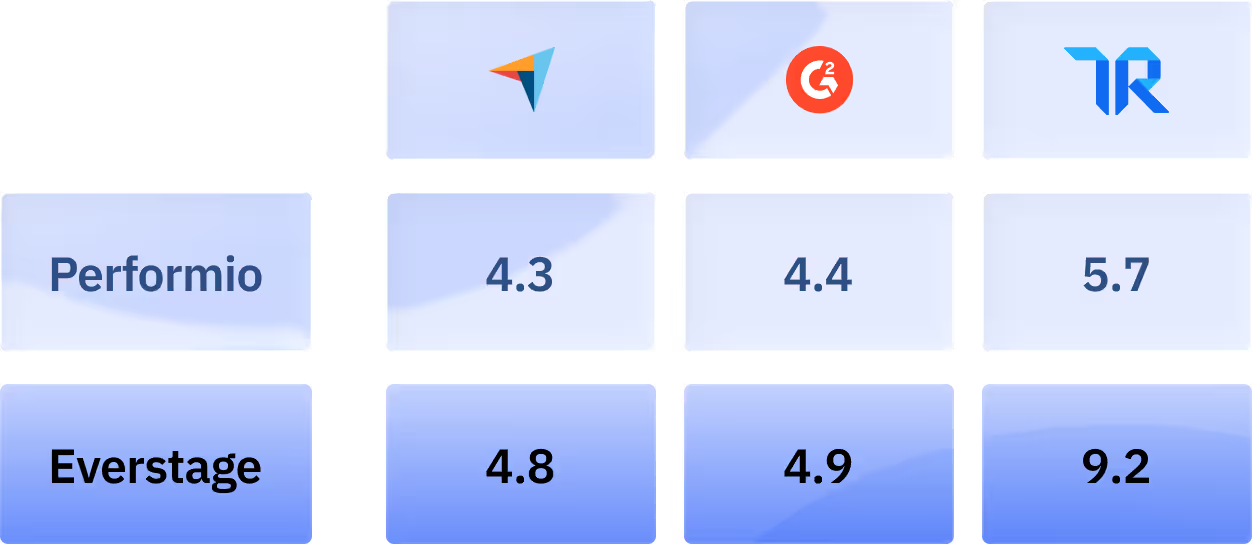
Customer reviews offer an unfiltered look at how each platform performs in real-world environments. Below is a snapshot of feedback themes taken from G2, Capterra, Gartner, and TrustRadius.




Performio vs Everstage: Finding the Balance
Performio and Everstage both address complex compensation needs, but with contrasting philosophies on how organizations should manage that complexity. Performio offers configurable components that provide flexibility for building diverse plan structures. While this configurability appeals to teams seeking control, organizations often discover that maintaining those configurations requires dedicated admin resources as plans evolve and scale.
When evaluating commission platforms, leadership teams assess how well solutions serve their specific needs:
- Finance leaders seek faster implementations that deliver value within quarters rather than across them, predictable costs without hidden customization fees, and platforms that scale without requiring proportional increases in admin headcount. They need systems that provide financial accuracy while remaining operationally efficient.
- RevOps teams want intuitive design that reduces ongoing maintenance burden, testing capabilities that enable confident plan changes, and automation that handles organizational shifts without constant manual intervention. They expect platforms that free up strategic capacity rather than consuming it with system management.
- Sales executives demand transparent earnings visibility that builds trust with their teams, real-time performance insights that inform pipeline decisions, and platforms that motivate through clarity rather than create confusion through complexity. They need compensation systems that drive behaviors instead of generating disputes.


Everstage delivers sophistication with simplicity built in
Organizations need commission software that handles complex compensation structures without turning configuration into a full-time job, combining powerful automation, intuitive management, and reduced admin overhead as complexity grows.
Frequently asked questions
Is there a strong alternative to Performio?
Yes. Everstage delivers enterprise-grade outcomes with true no-code design, reduced admin burden, and faster implementations (6-8 weeks), all without the ongoing maintenance overhead that grows with complexity.
Is Everstage easier to manage than Performio as plans scale?
Everstage uses intelligent automation that reduces admin burden as complexity grows. Performio's component-based builder requires continuous admin attention and dedicated resources to maintain configurations.
How long does Everstage implementation take compared to Performio?
Performio implementations slow as admins configure multiple plan types and align complex data sources. Everstage consistently delivers go-live in 6-8 weeks with in-house teams and efficient deployment processes.
Does Everstage offer better user experience than Performio?
Everstage's intuitive no-code design enables smooth adoption without intensive training. Performio's feature-rich platform requires extensive training, leaving non-technical users struggling with plan changes and navigation.
How do reporting capabilities compare between Everstage and Performio?
Everstage's BI-powered analytics deliver customizable dashboards without external tools. Performio provides solid reports but creating custom views takes effort, and users often export data for executive-level analytics.
Can Everstage handle the same data volume as Performio with better performance?
Both Everstage and Performio handle high data volumes, but Everstage's real-time processing scales seamlessly without performance degradation. Performio's admin load increases at enterprise scale, inflating operational overhead.