


Everstage vs Anaplan: 2026 In-Depth Comparison
Planning suites are powerful, yet every comp tweak can become a modeling ticket. Anaplan and Everstage both address complex compensation, but from different starting points. One optimizes connected planning at scale with specialist builders. The other is purpose built for ICM with true no-code design, faster go lives, and BI grade visibility for business users.

Introduction
Comp changes should not require a queue of modeling tickets. Quarter close demands speed, clean data in, clear payouts out, and forecasts everyone trusts. When territories shift or accelerators update, teams need a system that adapts in hours, not quarters. The right ICM connects sources, explains results, and provides an auditable trail that satisfies finance, empowers operations, and gives reps confidence in every line item.
Anaplan brings compensation into a broad connected planning platform, which is powerful for organizations investing in specialist builders and cross model governance. Yet it typically leads to longer rollouts, dedicated expertise, and slower iteration when plan rules change mid quarter. Everstage focuses purely on modern ICM. It provides true no code plan design, enterprise grade integrations, real time calculations, and BI level analytics that business users can run with. Guided workflows reduce risk, sandboxing enables safe what if scenarios, and predictable go lives in weeks keep momentum high. The result is faster answers for finance, simpler administration for RevOps, and transparent earnings views that reps trust.

Head-to-Head Comparison
Setup & Admin Configuration
Functionality | Anaplan | Everstage |
|---|---|---|
Data management | Robust pipelines inside connected planning, heavy to maintain for ICM alone. | Native integrations across CRM, ERP, HRIS with dependable real time sync. |
Plan modeling | Extremely flexible through modeling, slower to change for business users. | True no code plan design with safe sandboxing and fast iteration. |
Custom permissions & access control | Enterprise controls exist but need expert configuration. | Granular RBAC and audit trails ready for compliance on day one. |
Quota management | Possible via models, setup effort is high. | Flexible quota engine for territories, ramps, and mid cycle changes. |
Commission Processing
Functionality | Anaplan | Everstage |
|---|---|---|
Payout approvals | Can be modeled, often complex for ops to maintain. | Click to configure approvals and multi step automations that scale. |
Contextual overrides | Achieved via model adjustments, harder to audit. | Controlled overrides with full traceability and risk controls. |
Query resolution | Resolution lives outside the model in tickets and threads. | Built in dispute handling with instant, auditable explanations. |
Contract management | Handled in adjacent systems. | Native workflows including e-signatures and downstream automation. |
User management | Centralized via workspace admins, steep learning curve. | Intuitive lifecycle management across teams and regions. |
Insights & Reporting
Functionality | Anaplan | Everstage |
|---|---|---|
Real-time calculations | Batch oriented recalcs depending on model design. | True real time processing for immediate visibility. |
Payout forecasting | Powerful scenarios with modeling effort and dedicated owners. | Crystal powered what ifs that business users can run instantly. |
Personalized dashboards | Strong boards, require builder time to maintain. | BI grade dashboards with predictive insights and role based views. |
Why Everstage Outperforms Anaplan
Implementation & Time-to-Value
Anaplan limitation:
Deployments depend on trained model builders and cross model governance, which elongates timelines for compensation use cases. Projects progress methodically, but plan launch windows slip as teams balance modeling standards with the urgency of upcoming quota periods.
Everstage advantage:
Purpose built ICM with go live in 6–8 weeks. Guided setup, clean handoff, and no reliance on specialist builders accelerate value. While model driven programs finalize designs, your teams are already calculating payouts and validating results in production.
Admin Complexity & Skill Dependency
Anaplan limitation:
Ownership requires specialist skills, formal training, and ongoing builder capacity. Even small rule changes enter a queue, and urgent tweaks compete with broader planning initiatives, which slows iteration and pushes routine compensation updates onto long range calendars.
Everstage advantage:
True no code plan design lets RevOps and finance ship changes safely without tickets. Governance and versioning are built in, so business users iterate with confidence and reduce reliance on scarce model builder resources for everyday compensation operations.
Platform Scope vs Focus
Anaplan limitation:
The connected planning footprint is powerful, yet ICM is one model among many, which adds coordination overhead. Cross domain dependencies, release windows, and workspace policies influence compensation velocity, limiting how quickly plans adapt to field realities.
Everstage advantage:
A platform focused solely on ICM combines enterprise controls with speed. Compensation evolves on its own cadence, free from broader planning dependencies, while integrations and RBAC preserve data integrity and auditability across regions and business units.
Plan Design, Testing & Agility
Anaplan limitation:
Complex plan behavior is achievable, but experiments and edge case testing require modeled structures and builder time. Safe what ifs compete with production priorities, so teams favor conservative changes over rapid iteration during fast moving quarters.
Everstage advantage:
Visual plan design with a dedicated sandbox enables unlimited scenario modeling against historical data. Time Machine style analysis quantifies impact before rollout, so leaders choose the best design with evidence and admins publish updates without production risk.
Reporting & Stakeholder Visibility
Anaplan limitation:
Boards and reports are robust, yet adjustments are tied to the modeling lifecycle and builder bandwidth. Leadership asks for a new slice and teams schedule it, turning straightforward visibility requests into backlog items that slow decisions.
Everstage advantage:
BI level dashboards with role based views are ready to tailor in minutes. Finance, RevOps, and sales leaders get the filters and drill paths they need immediately, while payees receive transparent earnings breakdowns that reduce disputes and build trust.
Scalability & Total Cost of Ownership
Anaplan limitation:
Specialist staffing, partner consulting, and model maintenance drive ongoing cost beyond licenses. As models expand, the effort to maintain, optimize, and support compensation increases, which strains budgets and reduces the agility that revenue teams expect.
Everstage advantage:
All inclusive pricing and proactive, in house support lower administrative drag. No consultant dependency, predictable renewals, and a platform that business users operate directly combine to reduce total cost and keep teams focused on outcomes instead of upkeep.
Voice of the Customer
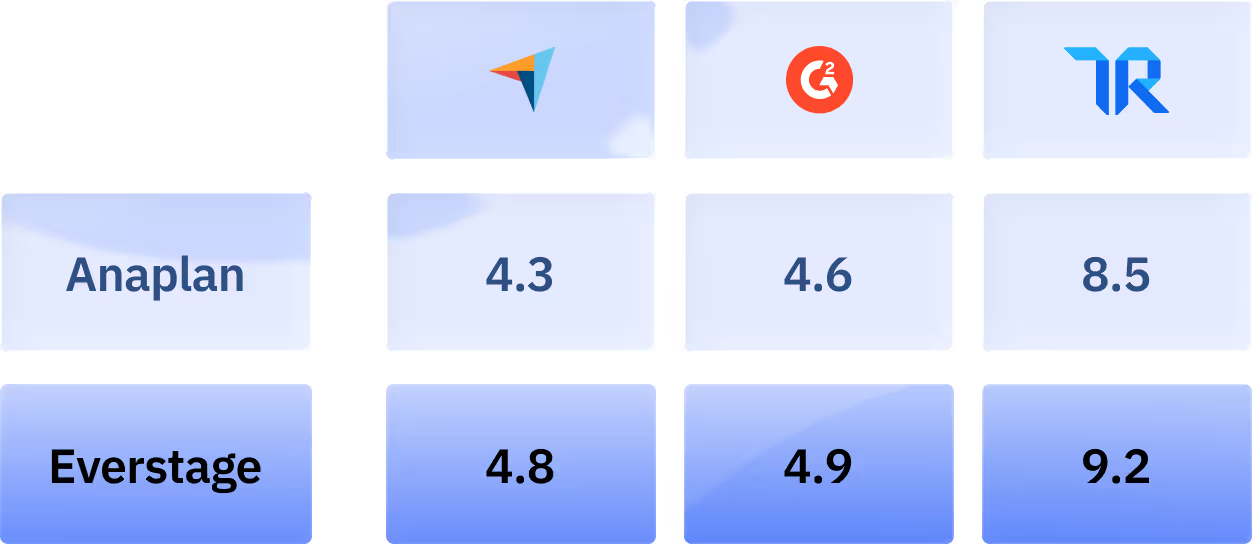
Customer reviews offer an unfiltered look at how each platform performs in real-world environments. Below is a snapshot of feedback themes taken from G2, Capterra, Gartner, and TrustRadius.




Anaplan vs Everstage: Finding the Balance
Anaplan and Everstage both solve compensation at scale, but from different philosophies. Anaplan brings ICM into a connected planning fabric that rewards organizations with dedicated builders and strict release governance. That power can slow iteration when plan rules change mid quarter. Everstage focuses on purpose built ICM so compensation keeps its own fast cadence.
When evaluating commission platforms, leadership teams assess how well solutions serve their specific needs:
- Finance leaders need implementations that land within a quarter, transparent pricing that avoids partner creep, and audit-ready compliance without standing up a modeling team. They expect enterprise control, accurate accruals, and budgets that remain predictable so capital plans stay intact while compensation evolves on schedule.
- RevOps teams want business-user-friendly tools that do not require certified builders, safe testing to model rule changes quickly, and the freedom to adapt structures as strategy shifts. They expect iteration in days, not release windows, with clear audit trails to keep finance confident. Guardrails prevent risky edits.
- Sales executives expect real-time performance visibility for coaching, transparent earnings that build trust, and systems that motivate through clarity rather than complexity. They need compensation signals that reflect live pipeline, not delayed numbers after jobs run overnight. Faster insight shortens feedback loops and drives action.


Everstage delivers sophistication with simplicity built in
Organizations need commission software that provides enterprise control without specialist builders, enabling versioned no code changes, real time calculations, and rapid deployment that keeps compensation on the business timeline.
Frequently asked questions
Is there a strong alternative to Anaplan for ICM?
Yes. Everstage focuses on modern ICM with true no code design, faster go-lives in 6 to 8 weeks, and real time calculations, without the builder dependency common in modeling suites.
Is Everstage easier to administer than Anaplan?
Yes. Everstage lets RevOps and finance ship changes without certified builders. Versioning, approvals, and audit trails keep governance intact while users move quickly.
How long does Everstage implementation take compared to Anaplan?
Anaplan deployments often require trained model builders and release cycles. Everstage delivers production go live in 6 to 8 weeks with guided setup and a clean handoff.
Does Everstage reduce dependency on specialist builders?
Yes. Everstage is no code, so everyday plan work stays with business users. Builders can focus on strategy instead of routine compensation changes and maintenance.
How do scenario testing and change control compare between Everstage and Anaplan?
Everstage provides a governed sandbox with Time Machine style simulations so you can replay history, compare scenarios, and publish only when results are proven. Anaplan centers changes in model governance and release cycles, which typically require builder time and coordinated promotions.
How do total costs compare at scale between Everstage and Anaplan?
Everstage reduces ongoing cost by removing specialist dependency. No code administration, faster go-lives and built in analytics mean fewer partner hours and less maintenance overhead. Anaplan often carries builder staffing, partner services, and longer release timelines, which compound total cost as models and teams expand.