


Anaplan vs Spiff: 2026 In-Depth Comparison
Incentive compensation decisions often contrast modeling-based approaches against purpose-built automation tools. Anaplan and Spiff represent different paths between configurable compensation frameworks and specialized commission execution.

Introduction
Sales compensation has become essential for finance, RevOps, and sales leaders who need reliable incentive payouts. Manual spreadsheets and scattered processes lead to errors, delays, and frustration, which is why organizations invest in platforms like Anaplan and Spiff. Anaplan comes from enterprise planning, bringing modeling and forecasting to compensation. Spiff presents itself as a commission platform that simplifies workflows. Both promise structure and automation where manual methods fall short.
Challenges surface once these tools are in practice. Anaplan projects are weighed down by learning curves, modeling complexity, and systems built for planning rather than agile execution. Spiff introduces rigid structures that reduce flexibility and implementations beyond six months. While each manages the basics of paying commissions, teams seeking faster changes and usability may find them limiting. Everstage offers a modern approach with no-code design, real-time processing, predictive insights, and rapid deployment, removing barriers that slow legacy and less adaptable platforms.

Head-to-Head Comparison
Setup & Admin Configuration
Functionality | Anaplan | Spiff | Everstage |
|---|---|---|---|
Data management | Connectors handle many sources, but model upkeep grows heavy at scales. | Syncs tightly with Salesforce, though broader integrations are limited. | Native integrations with CRMs, ERPs, HRIS; bi-directional Salesforce sync without ecosystem lock-in. |
Plan modeling | Multi-dimensional rules work, but model builders are often required. | Low-code builder speeds setup, but lacks a sandbox for safe plan testing. | No-code drag-and-drop with sandbox + Time Machine for safe simulations. |
Custom permissions & access control | Role security exists, but fine-tuning takes time and expert admins. | Record locks support audits but restrict flexibility in role design. | Granular RBAC with detailed audit trails, balancing flexibility and compliance. |
Quota management | Purpose-built T&Q sets targets, but territory rework needs modeling cycles. | Quotas tied to CRM objects; rigid outside Salesforce. | Automated quota engine adapts to territories, hierarchies, and role changes. |
Commission Processing
Functionality | Anaplan | Spiff | Everstage |
|---|---|---|---|
Payout approvals | Workflows are supported, but multi-step designs require model changes. | Lightweight approval flows suit small teams but don’t scale well. | Customizable automated workflows streamline approvals across the org. |
Contextual overrides | Effective dating helps audits, but one-off fixes still add admin load. | One-off overrides are possible, though exception handling grows messy at scale. | Flexible override system with compliance-friendly audit trails. |
Query resolution | Dashboards update fast, but deeper dispute context needs configured views. | In-app commenting resolves disputes, but remains reactive and manual. | AI-powered query resolution with instant, auditable answers. |
Contract management | Plan docs and versions track, but end-to-end contract flow needs add-ons. | Lacks native workflows; often relies on Salesforce add-ons. | Built-in contract workflows include e-signatures and automation. |
User management | RBAC is robust, but bulk org changes pass through model specialists. | Bulk uploads supported, but Salesforce-heavy administration. | Full lifecycle management across roles and geographies with intuitive setup. |
Insights & Reporting
Functionality | Anaplan | Spiff | Everstage |
|---|---|---|---|
Real-time calculations | Boards refresh rapidly, but heavy models slow iterative change cycles. | Real-time commission updates visible in Salesforce, but limited beyond it. | True real-time calculations across systems, ensuring instant payout visibility. |
Payout forecasting | Scenarios support what-ifs, but accuracy depends on model maintenance. | Basic what-if forecasting tied to CRM deals; limited in accuracy. | Crystal-powered forecasting with precise, scenario-based payout simulations. |
Personalized dashboards | Visual boards are rich, but persona-level views need more setup. | Dashboards exist for reps but with minimal customization option. | BI-powered dashboards with predictive, customizable insights for every stakeholder. |
The Limitations of Anaplan and Spiff

Implementation & Time-to-Value

Flexibility & Integrations

User Experience

Pricing Transparency & Support

Scalability Challenges

Security & Compliance
Voice of the Customer
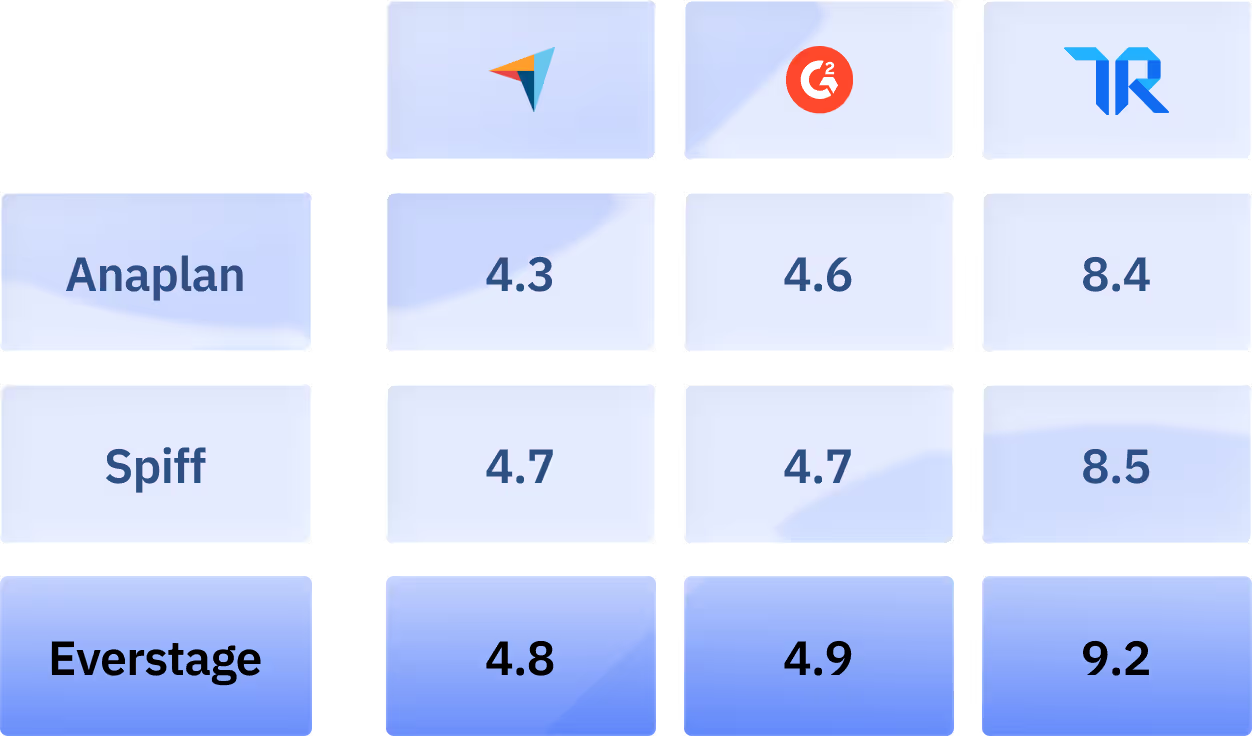
Customer reviews offer an unfiltered look at how each platform performs in real-world environments. Below is a snapshot of feedback themes taken from G2, Capterra, and TrustRadius.




Anaplan vs Spiff:
Finding the Balance
Anaplan and Spiff approach incentive management from different angles. Anaplan uses model-driven builds that enable structured logic but require specialist cycles for change. Spiff centers on low-code configuration that speeds initial setup but can feel rigid when plans span multiple systems or complex exceptions. Both automate payouts, yet their foundations create trade-offs around iteration speed, cross-system flexibility, and the ongoing effort needed to keep plans current.
Across evaluations, we often hear similar priorities:
- Finance leaders value faster implementation cycles and predictable costs without model or partner bottlenecks.
- RevOps teams want reliable testing environments, intuitive plan design, and safe iteration without heavy rework.
- Executives look for transparency, scalability, clear ROI, and a path that avoids lock-in or escalating admin burden.


For organizations that want advanced capability without long rollouts or coordination overhead, Everstage is designed to provide that balance. It combines fast go-live, proactive support, and complete visibility into every aspect of sales compensation.
Frequently asked questions
Is there a strong alternative to Anaplan and Spiff?
Yes. Everstage avoids Anaplan’s model-builder cycles and Spiff’s partner dependencies. No-code modeling, real-time processing, and sandbox testing deliver speed, flexibility, and predictable outcomes without external consultants.
Is Anaplan better than Spiff for complex programs?
Anaplan centralizes rules but changes route through specialists. Spiff is simpler to start but rigid across multi-system logic. Everstage supports complex plans with a no-code builder, safe simulations, and transparent, real-time calculations.
Which platform manages plan modeling and testing better between Anaplan and Spiff?
Anaplan requires model rebuilds for iterations. Spiff lacks a true sandbox for safe what-ifs. Everstage provides a no-code builder plus sandbox and Time Machine so RevOps can test, compare, and deploy changes quickly and safely.
How do implementation timelines of Anaplan compare with Spiff?
Anaplan rollouts extend with model design cycles. Spiff projects slow with partner coordination. Everstage consistently launches in 6–8 weeks using in-house onboarding, removing external dependencies and reducing risk.
What hidden costs should I watch for with Anaplan or Spiff?
Anaplan often needs specialist modelers or COE resources. Spiff adds onboarding surcharges, partner fees, and add-ons. Everstage offers transparent, all-inclusive pricing and proactive support without surprise services.
Between Anaplan and Spiff, who provides better ongoing support?
Anaplan support leans on expert builders for routine changes. Spiff relies on partner pathways. Everstage includes proactive, in-house support with dedicated success managers, enabling faster responses without extra tiers.